Ornamental · Ranunculaceae
Columbine
Aquilegia canadensis
Hand it dappled shade and moist, free-draining soil, and columbine fires off spurred spring flowers that send hummingbirds racing in.
Partial shade
Every 5–10 days
USDA 3–8
1–3 ft · 0.3–0.9 m
Overview
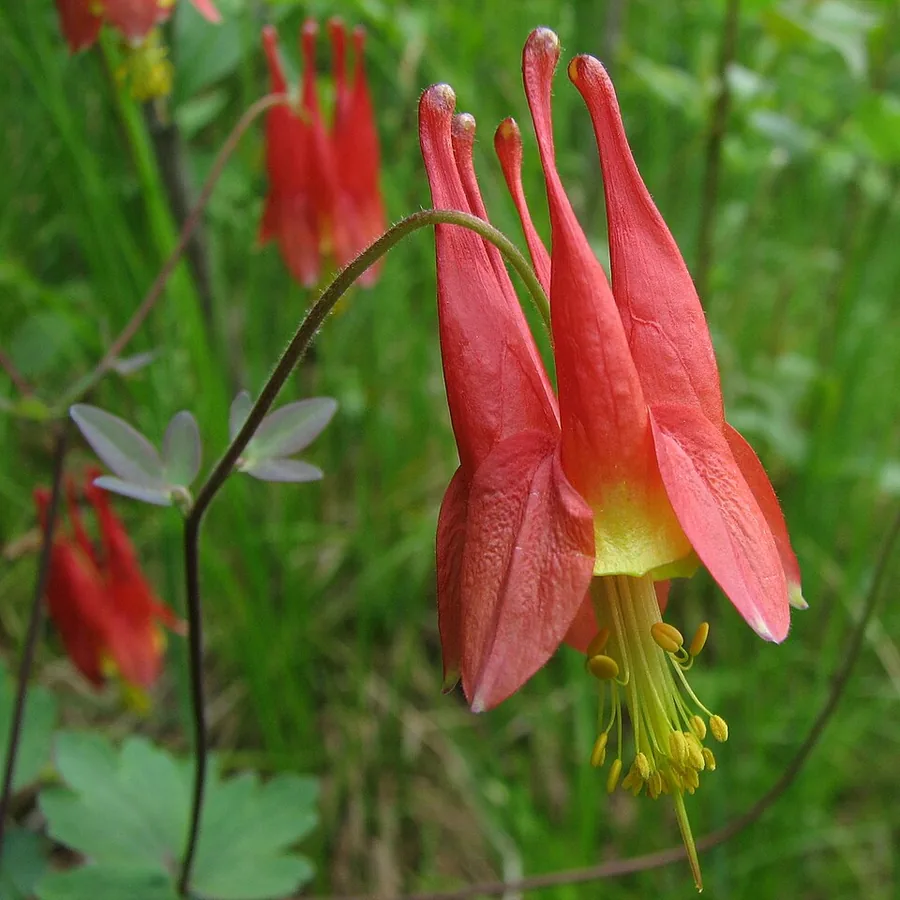
Columbine is a woodland perennial in the buttercup family, and the native Eastern red kind, Aquilegia canadensis, runs wild across much of eastern North America. Its nodding, spurred flowers dance on thin stems above soft, blue-green foliage and pull hummingbirds straight in as spring heats up. It looks delicate, but it hits well above its weight.
This is a rewarding pick for partial shade, thriving at the edge of a border or in a woodland patch where taller plants drop a little cover over it. It powers through hard winters down to USDA zone 3 and keeps charging through summers up to zone 8. Columbine runs short-lived for a perennial, but it self-seeds so freely that a planting renews itself and spreads into loose colonies almost before you notice.
Give it ground that holds moisture yet drains fast, and the hard part is over. The flowers fan out in a wide spread of colors across the genus, from the red and yellow of the native species to the blues, whites, and pinks of the old European types. Let a few seedheads ripen and new plants keep popping up nearby season after season.
Care
The short version: partial shade plus rich, moist, well-drained soil. Water to keep the ground evenly damp without letting it turn soggy, feed it lightly in spring, and cut back tired foliage after bloom to tidy the plant and rein in its self-seeding.
Light
Columbine thrives in partial shade, the dappled light it would catch at a woodland edge. Push it into full sun in cooler regions and it copes, and it takes partial sun fine, but when summers turn fierce a deeper shade keeps it from scorching.
Water
Keep the soil evenly moist but never waterlogged, watering roughly every 5 to 10 days once you count the rain. An established plant shakes off the odd dry spell, but soggy ground through a hot summer invites crown rot, so let the surface dry a touch between waterings.
Soil
Plant it in rich, well-drained loam worked with organic matter, though columbine takes to sand or clay as long as water keeps moving through. It rolls with a wide pH band from 6.0 to 8.0, so most garden soil suits it without any fuss.
Temperature
This cold-hardy perennial powers through, comfortable across USDA zones 3 to 8 and weathering temperatures from -40°F to 90°F (-40°C to 32°C). That deep winter cold actually works in its favor, since the seeds need a chill before they will sprout.
Humidity
Ordinary outdoor humidity is all it asks, so there is no number to chase. Air movement does the heavy lifting, because still, crowded conditions are exactly what let powdery mildew settle on the leaves.
Feeding
Columbine is a light feeder. A single balanced feed or a topdress of compost in spring drives it through the whole season, and piling on more fertilizer just lures aphids onto the soft new growth.
Pruning
Cut the spent flower stems after bloom to spark a second flush and rein in the heavy self-seeding. If the foliage flags by mid-summer, shear it to the ground and fresh leaves charge right back.
Size & spacing
Plants shoot up 1 to 3 feet (30 to 91 cm) tall with a spread of 12 to 18 inches (30 to 46 cm). Give each one that much elbow room so air rips through the clump and mildew never gets going.
When to plant
Columbine charges into spring. Kick off seed indoors in late winter after a cold spell to break dormancy, or sow it straight into the ground in spring or fall. The spurred flowers open from March into May and hold strong for four to six weeks before the plant eases into summer.
Northern hemisphere
Southern hemisphere
Typical months for a temperate climate: start earlier in warm zones, later where spring frosts linger.
- Sow: Late winter, 6 to 8 weeks before last frost; seeds benefit from cold stratification.
- Plant: Spring after last frost, or sow seed outdoors in fall.
- Harvest: Spring (March to May), with bloom lasting about four to six weeks.
Hardiness
USDA hardiness zones: 3–8
Temperature: down to -40°C
Troubleshooting
Columbine is an easy grower, and most trouble pops up on the leaves or down at the base. Jump on the early signs and a quick trim or a watering tweak usually turns it around fast. Match what you are seeing below, then make your move.
Plant caving in and rotting at the base in summer
A plant that flops in the heat with a soft, browning base has run into crown rot, the work of soggy, airless soil. This one bites hard, since an affected plant will not bounce back, so pull it and move on. Loosen up the drainage before you replant, dial back the watering through the peak of summer, and the next planting takes off without the same trouble.
Fix:
- Remove affected plants
- Improve soil drainage before replanting
Pale winding trails carving across the leaves
Spot those pale, winding tracks and you have caught leaf miner larvae at work, feeding away between the top and bottom of the leaf. Breathe easy, because the damage stays purely cosmetic and the plant powers on unbothered. Snap off the mined leaves, then shear the foliage to the ground after bloom and watch a clean, vigorous flush of new growth surge right back.
Fix:
- Remove and destroy mined leaves
- Cut affected foliage to the ground after bloom to flush fresh growth
- Choose resistant species such as Aquilegia canadensis
Soft little insects swarming the buds and tips
Green or black aphids love to pile onto the freshest tips and buds, draining sap until the new leaves twist up and turn sticky. Hit them with a sharp blast of water and most of them scatter on the spot. Bring in insecticidal soap if a colony really digs in, and keep the nitrogen feed light to starve them of the lush, soft growth they chase.
Fix:
- Spray plants with a strong jet of water
- Apply insecticidal soap if populations are heavy
Powdery white dust creeping over the foliage
A talc-like white dust spreading across the leaves means powdery mildew has moved in, a fungus that thrives where the air stalls and plants jam together. Open things up: space your columbines so air sweeps freely through them, and clear out any leaves it has reached. Aim the water at the soil instead of over the top, keep the foliage dry, and the mildew loses its grip fast.
Fix:
- Improve air circulation by spacing plants
- Remove and destroy infected foliage
Toxicity
Columbine is only mildly toxic, and the showy flowers are low-risk, so it earns a spot in plenty of gardens without worry. The catch sits in the seeds and roots, which carry cardiogenic toxins and cyanogenic glycosides that can upset the stomach if eaten in quantity. Routine gardening needs no special handling, just keep pets and children from making a meal of the seedpods.
Toxic to
Cats · Dogs · Horses · Rabbits · Livestock · Birds · People
Cats Mild
A cat that goes after the seeds or roots may drool, vomit, or run a loose stomach. The flowers and leaves stay low-risk, and any upset shows up only once a fair amount goes down.
Dogs Mild
Most dogs trot off none the worse. It takes a real chew through the seeds or roots to spark drooling and a quick round of vomiting or diarrhea.
Horses Mild
Horses generally walk right past columbine, so a stray mouthful does next to nothing. Only a hefty feed of the seed-bearing or root parts is likely to rattle the gut.
Rabbits Mild
Keep rabbits clear of the seedpods and roots, where the cyanogenic compounds pack in tightest. A quick nibble on the foliage rarely brings more than a passing tummy ache.
Livestock Mild
Cattle, goats, and sheep tend to dodge the plant, so poisoning stays rare. Hammer the seeds or roots with heavy grazing, though, and mild digestive upset can follow.
Birds Mild
The flowers pull hummingbirds straight in for the nectar with zero harm. The seeds carry the cyanogenic glycosides, so keep poultry from gorging on the ripe pods.
People Caution
Columbine is no snack. The flowers are low-risk, but the seeds and roots pack cardiogenic toxins, so eating them in quantity can upset the stomach and is best skipped, especially by children.
No special handling is needed for routine gardening; wash hands after extended contact and supervise pets and children around the seeds.
Helpline numbers

United States
ASPCA Animal Poison Control: (888) 426-4435 (fee applies)
Poison Control: (800) 222-1222



Canada
Poison Centres: 1-844-764-7669
Varieties
Columbine sweeps from a tough native wildflower to big, showy garden hybrids. Here are the ones you are most likely to chase down.
Aquilegia canadensis (Eastern red columbine)
The native star here, flaunting nodding red and yellow spurred flowers on wiry stems and breezing past the leaf miner that hammers its relatives.
Aquilegia vulgaris (Granny's bonnet)
The classic European columbine throws blooms in blue, violet, white, pink, or red, though it takes leaf miner damage much harder than the native does.
Aquilegia chrysantha (Golden columbine)
A heat-loving southwestern species that pushes out long-spurred yellow flowers and powers through summer, just keep the drainage sharp since it rots at the crown fast in wet ground.
Aquilegia × hybrida (Hybrid columbine)
The garden hybrids steal the show with the biggest, often bicolor long-spurred flowers in the widest color range, bursting open from mid-spring into early summer.
How to propagate
Columbine all but propagates itself, and you can jump in to help with saved seed or a careful division of an established clump.
SeedEasy
Sow indoors in late winter with cold stratification, or direct sow outdoors in spring or fall. · Seedlings typically flower in their second year.
Seed is the easiest way to crank out more columbine, and the plant practically runs the show itself, self-seeding into loose colonies wherever it likes the spot. Fire up seed indoors in late winter after a cold spell to crack dormancy, or scatter it outdoors in spring or fall. Either way, the first flowers arrive in the seedling's second year, since that opening season goes into building a sturdy crown.
DivisionModerate
Early spring or fall. · One growing season; columbine has a deep taproot and resents disturbance, so divide carefully.
Division is on the table in early spring or fall, but it is the tougher route. Columbine drives down a deep taproot and bristles at being disturbed, so ease the clump apart and slot the pieces straight back into the ground. Hand it one growing season to settle and a careful division will catch, though seed still wins as the surest bet.
Myths
Columbine is deadly poisonous and should never be grown around pets or children.
Forget the scare, because the genus runs only mildly toxic and extension sources flag no serious poisoning problems at all. The seeds and roots do carry cyanogenic compounds, so a big mouthful of those can stir up mild stomach upset, but the plant is safe to grow with normal supervision and the flowers are low-risk.
Every columbine gets chewed to ribbons by leaf miner.
It all hinges on which one you plant. The native Aquilegia canadensis shrugs off leaf miner while hybrids and other species often take a beating, so picking a resistant species is the simplest fix.