Ornamental · Ranunculaceae
Nigella
Nigella damascena
Sow it once and love-in-a-mist comes back on its own, threading airy blue flowers and horned pods through the spring border.
Full sun
USDA 2–11
18–30 in · 45–75 cm
Overview
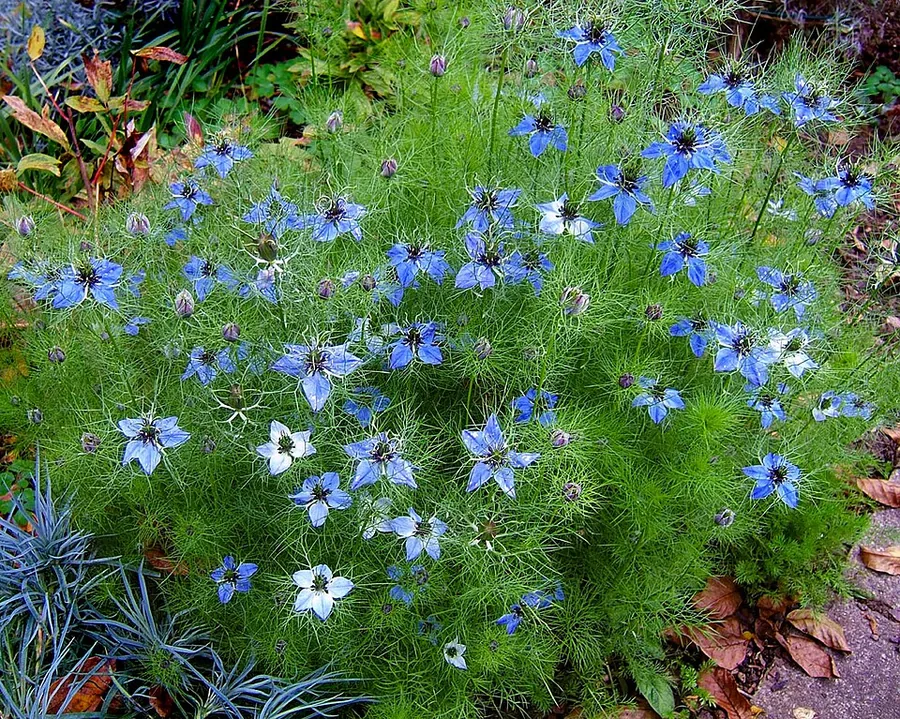
Love-in-a-mist is an old cottage-garden gem that pulls its weight twice over, first with the fine, feathery foliage that wraps every flower in a soft haze. Blooms open in cool blues, whites, and pinks, then hand off to fat, horned seed pods that make growing it worthwhile all on their own. A hardy annual in the buttercup family, it springs up easily from seed and settles into most ordinary garden soil.
The best part is how little it demands to deliver. Drop the seed where you want the plants, hand them some sun, and watch them race from sowing to flower in a couple of months. Just mind the long taproot, which makes the plant sulk if you move it, so sow it in place and skip the transplants.
It runs on the cool side of the calendar and makes the most of it. The show fires up in late spring and rolls into summer, then the plants ease off as the heat climbs and swell into papery pods. Leave a few to split and the plant reseeds itself, bursting back the next spring with zero effort from you.
Care
The short version: hand it full sun and average, well-drained soil, and sow it straight into the ground in early spring. Keep it evenly moist, feed it little, and let a few pods drop seed so it storms back next year.
Light
Hand nigella full sun and it flowers hardest and stands sturdiest. It scrapes by in part shade, but the plants stretch and the bloom thins out, so aim for the bright spot.
Water
Keep the soil evenly moist through the growing season and never let it dry out completely while the plants are working. Once they are up and cruising, they shrug off ordinary garden conditions without fuss.
Soil
Average, well-drained soil does the trick, whether that is loam, clay, or sand. It shrugs off pH swings and grows fine anywhere from 6.0 to 8.0, so most gardens need zero special prep.
Humidity
Plain outdoor air is all it wants, so there is nothing to fiddle with. Good airflow carries the day, keeping the fine foliage dry and clean.
Feeding
This light eater thrives in plain soil, so feed it sparingly if at all. Pour on the rich stuff and you just grow leaf instead of flowers.
Pruning
Deadhead the spent blooms to stretch the flowering, or leave them to swell into the horned seed pods the plant is grown for. Leaving pods also lets it self-sow and come roaring back next year.
Size & spacing
Plants shoot up to about 18 to 30 inches (45 to 75 cm) tall with a slim spread of 6 to 18 inches (15 to 45 cm). Thin or space them so air rips freely between the feathery stems.
When to plant
Nigella runs on cool weather and a short, fast calendar. Sow it straight into the garden in early spring the moment the ground can be worked, keep sowing every few weeks into midsummer, and rack up bloom from roughly June through August before the heat calls time.
Northern hemisphere
Southern hemisphere
Typical months for a temperate climate: start earlier in warm zones, later where spring frosts linger.
- Sow: 6 to 8 weeks before the last spring frost in individual peat pots; transplanting is often disappointing due to a long taproot.
- Plant: Direct sow in the garden as soon as the ground can be worked in early spring; make successive sowings every 3 to 4 weeks until midsummer for continuous bloom.
- Harvest: Blooms late spring through summer (roughly June to August); each plant blooms for only a month or two and declines in summer heat.
Hardiness
USDA hardiness zones: 2–11
Temperature: down to -46°C
Troubleshooting
Nigella is an easy grower with barely any real troubles, and almost everything that goes sideways traces back to its taproot or to summer heat. Catch the early signs below and you will know in a beat whether to jump in or just let nature run.
Seedlings keel over at the base or stall after a move
Here is the one trap to dodge, and dodging it is simple. Love-in-a-mist drives down a long taproot and hates being disturbed, so seedlings quit or die the moment they leave a cell. Cool, soggy seed-starting piles on damping-off too, the fungus that pinches the stem right at the soil line. Sow straight where the plants will grow, or start them in peat pots that go in whole, and keep the mix clean and on the dry side.
Fix:
- Direct sow where plants are to grow, or start in individual peat pots and transplant with minimal root disturbance
- Use sterile potting media and clean containers, and avoid overwatering
Bloom cuts out and the plant browns when summer turns hot
Relax, because this is the plant right on script. Nigella charges into spring and early summer as a cool-weather annual, then bows out fast the moment the days turn hot. The tired plants will not rally, so skip the rescue and lean into the rhythm. Sow a fresh wave every few weeks and let the first crop cruise into seed pods.
Fix:
- Make successive sowings every 3 to 4 weeks so younger plants replace heat-spent ones
- Treat as a cool-season annual and enjoy the ornamental seed pods as bloom fades
A thick rug of weak volunteers erupts the next spring
Turn your back and nigella flings seed from its horned pods, then storms back next spring in crowded mats that stretch thin and leggy. Wade in and thin those volunteers hard so each one grabs room and air. Want fewer next time? Snip off a handful of pods before they split and shed.
Fix:
- Thin volunteer seedlings to allow proper spacing and airflow
- Remove some seed capsules before they shatter to limit self-seeding
Toxicity
Good news up front: this is a low-risk plant, not a dangerous one. The seeds pack a mild alkaloid called damascenine plus some saponins, so keep the ornamental seeds off the menu and keep pets from chewing the pods, though a small taste is nothing to panic about. Just tuck the dried seed heads away from pets and small children who might gnaw on them.
Toxic to
Cats · Dogs · Horses · Rabbits · Livestock · Birds · People
Cats Caution
A quick nibble of leaf barely registers, so a curious taste rarely leads anywhere. A cat that cracks into the seed pods, though, may drool or bring up a meal, so stash the dried capsules off the windowsill where they would get batted about.
Dogs Caution
Let a dog gulp a mouthful of seeds and a mild stomach upset is about the worst that follows. The alkaloid load stays low, so a passing taste of the plant hardly counts as a worry.
Horses Caution
Horses breeze right past it, and the small amounts they meet in a mixed pasture pose little threat. Still, clear the plants from paddocks if a bored horse starts tearing through the flower beds.
Rabbits Caution
Skip the seed heads as a treat, since the saponins can sour a rabbit's sensitive gut. A single bite of leaf, on the other hand, rarely stirs up more than a soft stomach.
Livestock Caution
Goats, sheep, and cattle graze right on past, and trouble only surfaces when an animal wolfs down a large helping of the seed-laden tops. Watch for dullness or loose droppings in that rare event.
Birds Caution
The seeds pack enough alkaloid that they should never land in a pet bird's dish on purpose. Wild birds that snatch a few in the garden carry on just fine.
People Caution
These are not the edible black cumin seeds, so keep the ornamental ones off the menu, since a large quantity can upset the stomach. A child who swallows a pod or two will most likely come through fine, but keep the dried heads well out of small hands.
Keep seeds and seed capsules away from pets and small children who might chew them, though significant poisoning is not well documented.
Helpline numbers

United States
ASPCA Animal Poison Control: (888) 426-4435 (fee applies)
Poison Control: (800) 222-1222



Canada
Poison Centres: 1-844-764-7669
Varieties
A handful of named selections keep showing up, sorted mostly by flower color and how big the seed pods finish. Chase down these ones.
Miss Jekyll
The cottage-garden headliner, firing off soft blue semi-double flowers that stand tall as cut stems.
Miss Jekyll Alba
The same trusty Miss Jekyll, only decked out in pure white rather than blue.
Persian Jewels
A seed mix that throws double flowers in mauve, lavender, purple, rose, light blue, and white all across one patch.
Oxford Blue
A taller standout with deep blue flowers and big dark seed pods that steal the show in dried arrangements.
How to propagate
There is really only one way to grow nigella, and it is a blast: start it from seed, sown right where you want it to flower.
SeedEasy
Direct sow in early spring as soon as soil is workable, with successive sowings every 3 to 4 weeks until midsummer. · Germinates and develops quickly; reaches flowering within roughly 2 to 3 months of sowing.
Seed is the whole game here, and it is a joy to play. Scatter it right where the plants will stand, since the long taproot flat-out refuses a move, and fire off another sowing every 3 to 4 weeks from early spring through midsummer to keep the flowers rolling. Each batch takes off fast and blooms in 2 to 3 months, then drops seed and storms back on its own the next year.
Myths
Love-in-a-mist is the same plant as the black cumin you cook with.
Not a chance, so keep them straight. The kitchen spice comes from Nigella sativa, a separate species grown for its seed. Ornamental Nigella damascena is a different plant, raised for its flowers and horned pods, and its seeds never belong on the spice rack.
Love-in-a-mist transplants as easily as any bedding annual.
Do not bank on it. It drives down a long taproot and balks at being uprooted, so seedlings sulk or die after a move. Sow it straight into the garden instead, or launch it in peat pots you can plant whole.