Ornamental · Ranunculaceae
Marsh Marigold
Caltha palustris
Drop it where the ground stays wet to soggy, and marsh marigold torches the water's edge with gold before almost anything else stirs.
Full sun
Every 1–3 days
USDA 3–7
8–24 in · 20–61 cm
Overview
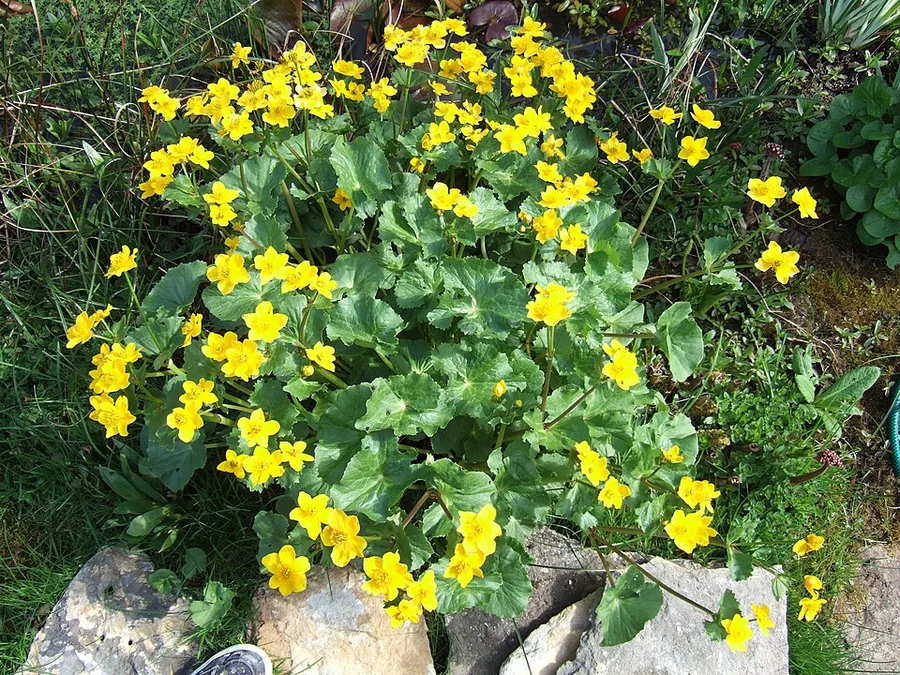
Marsh marigold kicks off spring with a blast of gold, throwing open cupped yellow flowers at the edge of ponds, streams, and boggy ground while the rest of the garden still snoozes. It runs in the buttercup family, and that lineage shows up loud in the glossy petals and the rounded, heart-shaped leaves packed underneath.
This plant chases one thing hard: wet feet. Born in wet meadows and marshes, it charges into constantly moist to wet, humus-rich soil or even shallow standing water, which turns a pond margin, bog garden, or rain garden into prime real estate. Nail that and it asks for next to nothing else.
It is tough as nails and built to last, powering through brutal winters and growing easily as long as the soil never dries out. After the spring fireworks it slides into summer dormancy and dies back, then charges out again the next spring. One heads-up: the fresh plant is an irritant, so keep it clear of pets and children.
Care
The short version: hand it full sun to part shade and soil that stays wet to soggy all season, in rich, mucky ground at the water's edge, and beyond keeping it from ever drying out there is almost nothing left to do.
Light
Marsh marigold soaks up full sun to part shade and flowers hardest with plenty of light. In hot-summer regions, throw a little afternoon shade its way, since that slows the drop into summer dormancy and keeps the foliage running longer.
Water
This is the one to nail. The roots have to stay constantly moist to wet, in saturated soil or even shallow standing water, and the plant should never dry out. Let the ground dry after flowering and it usually dives early into summer dormancy.
Soil
Plant it in wet, humus-rich, mucky soil like the stuff at a pond edge, and it will even shrug off shallow standing water. Any pH from 5.5 to 7.5 does the job, so forget about fussing over soil chemistry.
Temperature
Cold barely registers here. The plant is hardy right down to about -40°F (-40°C) and takes heat up to roughly 86°F (30°C), though hot summers do shove it into an early dormancy.
Humidity
It loves it damp, and that comes free with the wet, marginal spots it craves. High humidity around the foliage suits it, so there is nothing extra to chase once it sits near water.
Feeding
Feeding is a breeze. As growth fires up in spring, hand it a single hit of balanced fertilizer or work in some rich compost, and that carries it clean through the season.
Pruning
Barely any pruning to do. Snip the spent flowers and clear the yellowing leaves as it dies back, and keep in mind that summer dieback is normal and the crown launches fresh growth again the next spring.
Repotting
Split and refresh clumps every 2 to 3 years, or sooner if flowering tails off, the roots fill the pot, or the crown starts lifting above the soil. Keep any divisions wet while they settle.
Size & spacing
Plants shoot to about 8 to 24 inches (20 to 61 cm) tall and spread to roughly 12 to 18 inches (30 to 46 cm) across, building a tidy mound right at the water's edge.
When to plant
Marsh marigold sprints out of the gate every year. It breaks dormancy and flowers in early to mid spring, one of the very first plants to bloom, then often dies back through summer. Plant it in spring or fall in wet ground, and sow seed fresh in late summer to fall.
Northern hemisphere
Southern hemisphere
Typical months for a temperate climate: start earlier in warm zones, later where spring frosts linger.
- Sow: Sow fresh seed in late summer to fall; cold stratification improves germination
- Plant: Spring or fall, in wet soil or pond margins after frost
- Harvest: Early to mid spring (April to June), one of the earliest spring bloomers
Hardiness
USDA hardiness zones: 3–7
Temperature: down to -40°C
Troubleshooting
Marsh marigold throws you very few curveballs, and nearly all of them trace back to one thing: soil that dried out. Learn to spot normal summer dieback against real trouble and you will barely need to lift a finger. Match what you see below before you dive in.
Plant wilts, fades, or never comes back
Nine times out of ten the answer is dry soil. Marsh marigold is a bog plant through and through, its roots begging to stay constantly moist to wet, so a dry stretch will knock it flat or finish it. Get it into a pond margin, bog garden, or rain garden, water hard enough to keep the ground saturated, and pile on mulch to lock that moisture down.
Fix:
- Move or replant at a pond margin, bog garden, or rain garden where soil stays wet
- Water frequently to keep the soil saturated
- Mulch to retain moisture
Leaves yellow and die back in summer
Good news first: yellow summer leaves mean summer dormancy, not disease. Marsh marigold blazes through its spring bloom and then powers down for a rest, and a dry or hot-summer spot sends it under even faster. Just let it sit tight, keep the soil wet, and tidy the withered leaves once the crown has bedded down for the year. It bounces right back next spring.
Fix:
- Leave the plant in place and let foliage die back naturally
- Keep the soil wet to prolong the foliage and reduce stress
- Tidy away yellowed leaves once they have withered
White powder or rusty spots on the leaves
Spot a white film and you have got powdery mildew; spot orange-brown pustules and it is rust. Both sneak in when the air stalls around a crowded clump. Snap off the marked leaves, open the plant up so a breeze can rip through, and stop wetting the foliage late in the day. Knock those two out and this plant sails on, since nothing else really bothers it.
Fix:
- Remove and dispose of affected leaves
- Improve air circulation around the clump
- Avoid wetting foliage late in the day
Toxicity
Here is the one catch: the whole plant is toxic when fresh. As a buttercup-family member it packs protoanemonin, an irritant that fires off when the leaves or stems are crushed or chewed, and it can blister the mouth and skin and upset the stomach. The bitter, burning taste usually stops an animal cold before it eats much, but keep the fresh plant away from pets, livestock, and children anyway.
Toxic to
Cats · Dogs · Horses · Rabbits · Livestock · Birds · People
Cats Toxic
One bite of the fresh plant hits a cat with sharp, irritant sap, and most cats bail out fast. Keep watch for drooling, pawing at the mouth, vomiting, and loose stool.
Dogs Toxic
Chewing the leaves or stems leaves a dog drooling and off its food, often with vomiting or diarrhea close behind. That acrid, blistering taste steps in and stops most dogs from eating much.
Horses Toxic
The fresh plant burns the mouth and churns the stomach, so a grazing horse rarely grabs more than a bite. Dry it into hay and the protoanemonin breaks right down, taking the danger with it.
Rabbits Toxic
Do not offer it to a rabbit, full stop. The same protoanemonin that stings other animals blisters a rabbit's mouth and roils its gut, so keep the fresh plant well out of reach.
Livestock Toxic
Cattle, goats, and sheep can blister their lips and get a churning stomach from the raw plant, though the bitter taste usually stops them grazing it. Dried into hay it loses its punch and causes no trouble.
Birds Toxic
Call it unsafe around birds and move on. Crushing the plant unleashes the same caustic compound that hits mammals, so there is no reason to let a bird peck at it.
People Caution
Never eat any part raw. The fresh sap can blister the mouth and skin, so glove up before you cut it, though a thorough boil breaks the toxin down and the cooked young leaves and buds have long been eaten.
The raw plant is toxic and irritant: the same protoanemonin found in buttercups and clematis. Cooking (boiling) destroys the protoanemonin, and cooked young leaves and flower buds have historically been eaten - never eat any part raw. The sap can irritate skin, so wear gloves when handling or cutting.
Helpline numbers

United States
ASPCA Animal Poison Control: (888) 426-4435 (fee applies)
Poison Control: (800) 222-1222



Canada
Poison Centres: 1-844-764-7669
Varieties
Beyond the wild golden form, a couple of garden selections are well worth hunting down. Get to know these two.
'Flore Pleno' ('Multiplex')
A double-flowered knockout that stacks extra petal-like sepals into full, rounded golden-yellow blooms.
var. alba
A white-flowered twist that swaps the usual gold for clean white petals around a yellow center.
How to propagate
Bulk up your marsh marigold by splitting a clump or sowing seed, and division wins hands down for speed and reliability.
DivisionEasy
Early spring or late summer after flowering · One growing season
Division is the fast track to more plants, and it could not be simpler. Dig up an established clump in early spring or late summer once flowering is done, break the crown into pieces, and drop each one back into wet ground. Keep the divisions soaking wet and they take hold within a single growing season.
SeedModerate
Sow fresh seed in late summer to fall · Several months to a year; may self-seed in suitable wet sites
Seed is the slower game, but it delivers. Scatter it fresh in late summer to fall so a cold winter snaps the seeds out of dormancy and fires up germination. New plants take several months to a year to hit their stride, and on permanently wet ground the marsh marigold happily self-seeds and spreads on its own.
Myths
Marsh marigold and true cowslip are the same plant.
The shared name cowslip trips people up, but these two land in totally different families. Marsh marigold is Caltha palustris in the buttercup family, while true cowslip is Primula veris over among the primroses. That name is the only thing they share, so chase down the botanical name when it counts.
Marsh marigold is a safe wild green to forage and eat.
Raw, it packs a buttercup-family punch of protoanemonin that can blister the mouth. Only the young leaves and flower buds, boiled hard, have any history of being eaten, because cooking smashes the toxin apart. No part is safe to eat raw.