Ornamental · Ranunculaceae
Japanese Anemone
Anemone × hybrida
Plant it once for late-summer flowers on tall, swaying stems, and it storms back stronger every year.
Partial shade
Every 3–7 days
USDA 4–8
2–4 ft · 0.6–1.2 m
Overview
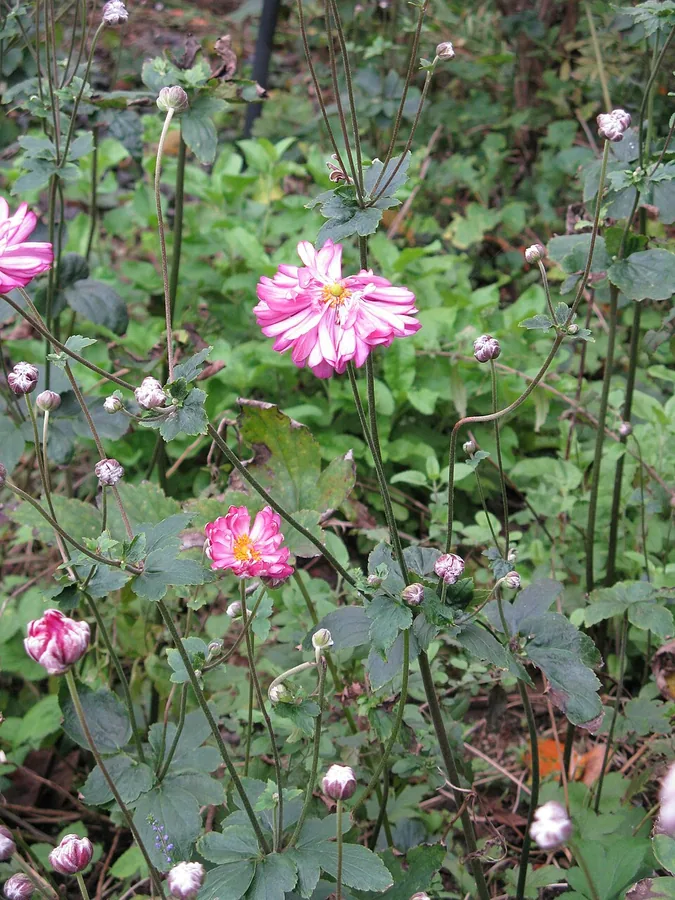
Japanese anemone throws its big party at the tail of the season, popping open soft pink and white flowers on tall, wiry stems just as the rest of the border clocks out. It sits in the buttercup family and, name aside, traces back to the scrub and streamsides of central and southwestern China. The blooms ride high above the leaves and dance on the least breeze, and that lively motion is exactly how it earned the older name windflower.
This perennial pays off big for anyone willing to wait a beat. A new plant spends year one digging in and barely flowering, then kicks into gear and spreads on fibrous suckering roots into wide, weaving colonies. That eager spread turns a large shade bed into a sea of bloom, so hand it a spot with room to run and let it go.
Set it up with part shade and steady moisture and it takes it from there. Plant it in fertile, humus-rich ground that never bakes dry, stake the tallest stems if wind sweeps your site, and cut it back after frost. Do that and it drives the garden clear from late summer into fall.
Care
The short version: part shade, fertile humus-rich soil kept evenly moist, and a little patience through the first year while the roots dig in.
Light
Japanese anemone hits its stride in part shade, catching morning sun and dodging the fiercest midday heat. It will take full sun in cooler regions where the soil stays moist, and it handles part sun too, but deep shade thins out the bloom.
Water
Keep the soil consistently moist and never let it dry out, above all through summer heat. A drink every 3 to 7 days suits most sites, more in a dry spell, and a layer of mulch locks that moisture in around the roots.
Soil
Plant it in fertile, humus-rich, well-drained loam loaded with organic matter. It likes a pH of 6.5 to 7.5, near neutral, and soggy winter ground is one of the few things that can take it down.
Humidity
Everyday garden air is all it wants, so skip chasing a number. Air movement is the real win, since crowded, damp foliage rolls out the welcome mat for the leaf diseases this plant can catch.
Feeding
Feed it through the growing season with a balanced fertilizer, or just top-dress the crown with compost in spring. Rich, well-fed soil keeps the flowers pumping out with barely any effort.
Pruning
Snip off spent flower stems to keep the plant sharp through the season. Once frost knocks it back in late fall, cut the foliage right to the ground to sweep away old growth and the diseases that would ride out winter in it.
Size & spacing
Grown plants shoot up 2 to 4 feet (60 to 122 cm) tall and spread 1 to 3 feet (30 to 91 cm) wide. Give each one room at the wider end of that range, both for airflow and because it keeps marching outward year after year.
When to plant
Japanese anemone saves its fireworks for fall, but it wants a full season to dig in first. Set out container plants or divisions in spring once frost clears, then wait for the flowers to burst out from late summer into autumn, holding on right up to the first hard frost.
Northern hemisphere
Southern hemisphere
Typical months for a temperate climate: start earlier in warm zones, later where spring frosts linger.
- Sow: Not commonly grown from seed; cultivars are propagated by division rather than sowing.
- Plant: Plant container-grown plants or divisions in spring after last frost.
- Harvest: Late summer to fall, roughly August to October until first frost.
Hardiness
USDA hardiness zones: 4–8
Temperature: down to -34°C
Troubleshooting
Japanese anemone throws few real problems your way, and most of what turns up is cosmetic or just the plant taking its time. Spot the early signs on the leaves and stems and you can jump in before anything spreads. Match what you see below, then move while it still counts.
A slow first year with little growth or bloom
Hang in there when a young plant loafs along in year one, because it is hard at work below the surface, driving down a fibrous suckering root system before it powers up above ground. Drought at this stage stalls that push. Keep the soil evenly moist, mulch the crown, let it be, and the plant surges ahead in the second and third seasons.
Fix:
- Keep soil consistently moist during the first growing season
- Mulch to conserve moisture and protect roots
- Be patient and avoid disturbing the developing crown
Leaves marked with pale patches or a dusty white coating
Spotted or dusted leaves usually flag a fungal leaf disease like leaf spot, downy mildew, powdery mildew, or rust, and foliar nematodes can etch similar bands. Crowded, humid plantings feed the problem. Snap off the marked leaves, open the clump so air rushes through, and aim your water at the base rather than over the top.
Fix:
- Remove and discard affected leaves
- Improve air circulation by spacing or thinning plants
- Avoid overhead watering and water at the base
Chunks bitten out of the leaves and petals
Track most of this chewing straight back to slugs, which give themselves away with slime trails, while caterpillars, flea beetles, and other beetles grab their share too. Pick off every one you spot and lay out slug barriers or traps. Sweep away the debris where these pests hunker down by day and their numbers drop fast.
Fix:
- Handpick slugs and caterpillars
- Use slug barriers or traps
- Remove plant debris where pests shelter
Flower stalks keeling over instead of standing tall
The blooms ride high on tall, wiry stems, so wind, rain, or a rich shady spot can pull them right over. Slip a stake beside the taller kinds before they flower and they stand tall through it all. Plant them in part shade with a bit of wind shelter and you head off most of the leaning from the start.
Fix:
- Stake or provide support for taller plants
- Site in part shade with protection from wind
Toxicity
Every part of this plant packs a toxic, irritant punch, so it is not one to grow within reach of grazing animals or curious pets. Chewing the leaves or stems unleashes protoanemonin, a compound that burns the mouth and roils the stomach, and the sap can redden bare skin. Keep pets, livestock, and children from nibbling it, and pull on gloves before you dive in to divide or cut it back.
Toxic to
Cats · Dogs · Horses · Rabbits · Livestock · Birds · People
Cats Mild
A cat that bites the leaves or stems releases protoanemonin, which burns the mouth and touches off drooling, vomiting, and diarrhea. Plenty of cats also turn dull and skip their food, so keep an eye on a curious one.
Dogs Mild
A dog runs into the same mouth and stomach irritation, with drooling, vomiting, and loose stools showing up soon after a bite. Good news travels fast here, since the bitter, burning sap usually stops a dog before it eats much.
Horses Toxic
In a horse the irritant sap blisters the lips and mouth and churns the gut, leaving the animal drooling, off its feed, and open to colic and diarrhea. Keep it well away from grazing horses.
Rabbits Toxic
The same protoanemonin that hits other animals makes this an unsafe nibble, so block rabbits from the foliage entirely. A bite leaves them drooling and pushing their food away.
Livestock Toxic
Cattle, goats, and sheep risk mouth blistering and digestive upset from grazing it, though the sharp taste keeps most of them from eating much on their own. Fence it off to be sure.
Birds Toxic
The irritant compound makes every part unsafe for birds, so keep it well clear of pet and backyard birds alike.
People Caution
No part of this plant is meant to be eaten, and a chew on it stings the mouth and stomach. The sap can redden bare skin too, so pull on gloves before you dig in to divide or cut it back.
Sap can irritate skin and cause contact dermatitis; wear gloves when handling, dividing, or cutting back plants.
Helpline numbers

United States
ASPCA Animal Poison Control: (888) 426-4435 (fee applies)
Poison Control: (800) 222-1222



Canada
Poison Centres: 1-844-764-7669
Varieties
Most Japanese anemones you will meet are named hybrids, sorted mainly by flower color and form. Here are the standouts worth knowing by name.
Honorine Jobert
This old French hybrid has been winning gardeners over since 1858, lifting single white flowers of 6 to 9 overlapping petaloid sepals around a yellow eye on tall, wiry stems.
September Charm
A late-season showstopper, it opens silvery pink flowers shaded a deeper rose around a heart of yellow stamens.
Pamina
A form of Anemone hupehensis var. japonica that gardeners chase down for its deep rose, semi-double flowers.
How to propagate
Japanese anemone comes from division rather than seed, hands down the easiest way to spin up more of a plant you already grow.
DivisionEasy
Divide in spring as new growth emerges. · One to two growing seasons to reestablish vigor.
Grab a spade and split an established clump in spring as the new growth breaks the surface. The plant runs on fibrous suckering roots and rhizomes, so the clumps and root pieces lift and drop back in with ease, and each division just needs one to two seasons to fire back up to full vigor.
Myths
Japan is the original home of the Japanese anemone.
The real story sends you to the scrub, grassy slopes, and streamsides of central and southwestern China. Growers raised and naturalized it in Japan so long ago that the name latched on for good, but its roots run Chinese, not Japanese.
Expect a full flush of flowers and rapid spread the very first season after planting.
That first year stays low-key, the plant tucking in its roots and flowering little as it finds its feet. Give it a season or two and it charges ahead, widening into broad colonies once it settles in.