Ornamental · Ranunculaceae
Hellebore
Helleborus orientalis
A front-runner of the flowering year, hellebore bursts open in shade and snow when almost nothing else will.
Partial shade
USDA 4–9
12–18 in · 30–46 cm
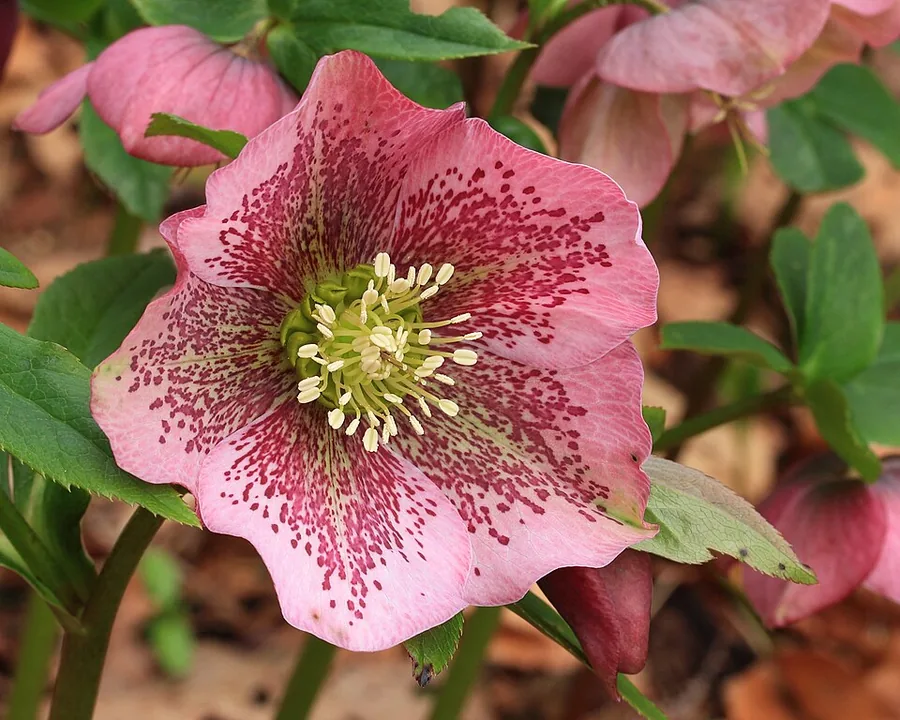
Overview
The hellebore charges into flower while the rest of the garden sleeps, and that alone makes it a joy to grow. It belongs to the buttercup family and blooms deep in winter, often from late winter into spring across an 8 to 10 week run, with flowers that punch up through snow still lying on the ground. The names Lenten rose and Christmas rose mark that early kickoff, even though the plant claims no kinship with a true rose.
Two names carry most of what gardeners plant. The Lenten rose, Helleborus orientalis, dangles nodding cups in white, pink, and rose-purple, while the Christmas rose, Helleborus niger, breaks earliest with broad white blooms. Most plants on offer today are vigorous hybrids bred from these, prized for a wider color range and a cleaner flower form that rewards a close look.
Hellebores build slowly and stay tidy, topping out at just 12 to 18 inches (30 to 46 cm) across in cool shade, which makes them easy to slot into a bed. They resent being moved, so they thrive when planted once and left to their own devices. Keep this front of mind from day one: every part is poisonous, and the sap can sting bare skin.
Care
The short version: part to full shade in rich, humusy, well-drained soil. Keep it evenly moist while it settles in, feed it lightly in late winter, and clip away the tattered old leaves before the flowers open.
Light
Plant hellebores in part to full shade, and that dappled light under deciduous trees hits the mark just about perfectly. A dose of winter sun while they bloom is a bonus, but harsh summer sun scorches the leaves and dries them out, so keep them shaded through the heat.
Water
Keep the soil evenly moist while a plant digs in, and never let it bake dry in that first year or two. Once it settles, it powers through a spell of dry shade with ease, so ease off the hose, and remember good drainage beats constant watering every time.
Soil
Set it into organically rich, humusy, well-drained loam loaded with leaf mold and it takes off. Hellebores shrug at pH too, taking anything from 6.0 to 8.0, so soil that pleases most shade beds pleases them just fine.
Humidity
Ordinary outdoor humidity does the job, so skip chasing a number here. Airflow is the real player, since damp, crowded leaves are exactly where leaf spot and crown rot get rolling.
Feeding
Feed lightly in late winter or early spring with a balanced fertilizer, or just top-dress with compost or leaf mold and let it ride. Rich, organic soil handles most of the work, so there is no reason to push growth hard.
Pruning
Cut back the old, tattered, or winter-damaged leaves in late winter before the flowers open, which sharpens the plant and lets the blooms pop. After it flowers, snip off the spent stems to clear the way for fresh foliage.
Size & spacing
Plants hold tight at 12 to 18 inches (30 to 46 cm) tall and about as wide, so they slip in without a fuss. Give each one that much room so air rips through and disease stays down.
When to plant
Hellebores run to a bold off-season beat all their own. Set out container-grown crowns in spring or fall, and from late winter into spring the flowers burst open and hold for weeks, sometimes before the snow has cleared.
Northern hemisphere
Southern hemisphere
Typical months for a temperate climate: start earlier in warm zones, later where spring frosts linger.
- Sow: Seed is slow and erratic; fresh seed sown outdoors or self-seeding is more reliable than indoor sowing.
- Plant: Plant container-grown crowns in spring or fall into shaded, well-drained soil.
- Harvest: Blooms late winter into spring, often for an 8 to 10 week period; flowers may open while snow is still present.
Hardiness
USDA hardiness zones: 4–9
Temperature: down to -34°C
Troubleshooting
Most hellebore trouble surfaces on the leaves or at the crown, and damp, crowded plantings usually kick it off. Learn the early signs and you can pounce before a problem spreads. Match what you see below, then act while it still turns things around.
Plant flops as the crown browns and softens
A plant that flops and browns at the base has hit crown rot, and soggy soil around the base is what drove it. The crown goes soft and off-color, sometimes with a sour smell, the moment water stops draining away. Jump on it: lift the plant, fix the drainage, and set it back at the right depth, and keep every scrap of mulch off the crown so it stays dry and firm.
Fix:
- Remove affected plants or rot-damaged tissue
- Improve drainage and avoid planting too deeply
- Do not mulch directly over the crown
Black streaks warping growth plant-wide
This is the one to catch early: hellebore black death, a virus that streaks the leaves, stems, and flowers black and warps the fresh growth. Skip the fungicide, because a spray does nothing to a virus, and aphids keep carrying it from plant to plant. Move quickly, dig out and destroy any infected plant, clamp down on the aphids, and never take divisions or seed from a plant showing the streaks.
Fix:
- Remove and destroy infected plants promptly
- Control aphids that spread the virus
- Do not propagate from affected plants
Dark blotches racing over the foliage
Those dark blotches racing across the leaves are fungal leaf spot, and it jumps into action wherever plants sit wet and packed together. Get after it fast: strip off the spotted leaves and clear them out, chop the old foliage back in late winter before the new growth breaks, and open up the planting so the air keeps moving. Give the fungus nowhere damp to settle and it fades right out.
Fix:
- Remove and destroy affected leaves
- Cut back old foliage in late winter before new growth
- Improve air circulation by thinning crowded plantings
Wandering pale tracks or gnawed leaf rims
Pale tunnels winding through the leaves flag leaf miners, ragged edges and slime trails call out slugs and snails, and clean notches around the rim finger weevils. Good news: not one of them threatens the plant's life, so there is nothing to dread. Pluck off the worst leaves, round up the slugs and snails by hand or set traps, and keep scanning the new growth for aphids moving in.
Fix:
- Pick off and destroy affected leaves
- Hand-pick slugs and snails or use traps
- Monitor for aphids and rinse or remove as needed
Toxicity
Give this plant real respect, because every part is poisonous. Hellebore packs cardiac glycosides and an irritant called protoanemonin right through the leaves, stems, and roots, and a large dose can throw off the heart. The bitter sap stings skin and mouths alike, so pull on gloves to handle it and keep pets, livestock, and children well clear.
Toxic to
Cats · Dogs · Horses · Rabbits · Livestock · Birds · People
Cats Toxic
Let a cat chew any part and drooling, vomiting, diarrhea, and a sore belly follow fast, and a cat that keeps eating turns dull and listless. The very bufadienolides that hit the gut can also knock the heartbeat off track, so a big mouthful counts as a straight-up emergency, so ring the vet.
Dogs Toxic
A dog that chomps the leaves or roots ends up drooling, retching, and sporting an upset stomach, usually with diarrhea and flat energy. Let it push past the bitter taste into a real dose and the cardiac glycosides start to unsettle the heart, so step in the moment you spot it.
Horses Toxic
Turn a horse loose on hellebore and it drools, drops off its feed, and slides into colic and loose droppings. Since the heart toxins make a serious meal properly dangerous, keep the plant nowhere near paddocks or hay.
Rabbits Toxic
Keep every part of this plant clear of rabbits, no exceptions. Even a quick nibble stings the mouth and gut and sets off drooling and a refusal to eat, and the cardiac glycosides only crank a bigger helping up the danger scale.
Livestock Toxic
Cattle, goats, and sheep that tuck into hellebore land a sore mouth and stomach, drooling, and diarrhea, and a heavy feed can rattle the heart. The sharp taste usually steers them off, but trimmings pitched into a pasture wreck that safeguard, so clear them out.
Birds Toxic
Keep birds well clear of hellebore, full stop. The bufadienolides and protoanemonin that harm mammals hammer a bird just as hard, so keep poultry and pet birds away from the foliage and any cuttings.
People Caution
No part of the plant is food, and biting into it brings burning in the mouth, drooling, vomiting, and stomach cramps, with a heart risk in quantity. The sap alone stings skin, so pull on gloves before you cut or divide it and keep kids away from the flowers and leaves.
The cell sap can cause skin irritation and contact dermatitis, so wear gloves and protective clothing when cutting or dividing plants. Hellebore contains bufadienolide cardiac glycosides (such as hellebrin) plus protoanemonin, and large ingestions can affect the heart, so keep cut foliage and trimmings away from pets and children.
Helpline numbers

United States
ASPCA Animal Poison Control: (888) 426-4435 (fee applies)
Poison Control: (800) 222-1222



Canada
Poison Centres: 1-844-764-7669
Varieties
Most garden hellebores trace back to a few species and their hybrids, and each one is worth getting to know. Here are the standouts by name.
Helleborus orientalis (Lenten rose)
This clump-forming species swings out nodding, cup-shaped flowers in white, pink, and rose-purple that often carry speckles, it blooms from late winter into spring, and it powers much of the parentage behind the garden hybrids.
Helleborus niger (Christmas rose)
A shorter grower at around 9 to 12 inches, it throws big white bowl-shaped flowers, pushes hardiness down to zone 3, and races out first of all, sometimes right around Christmas where winters run mild.
Helleborus × hybridus (hybrid Lenten rose)
These vigorous garden hybrids spring largely from H. orientalis and deliver a wide color range plus better flower form, and they are usually the very plants sold simply as Lenten rose.
How to propagate
Hellebores multiply slowly and on their own terms, whether you split a clump in spring or turn the plant loose to scatter its own seed.
DivisionModerate
Spring · One to two seasons; divisions are slow to reestablish and may bloom poorly the first year.
Ready to make more? Divide in spring: lift a mature clump, split the crown, and drop each piece back at its original depth in rich, well-drained shade. Play the long game, because a division takes one to two seasons to settle in and usually blooms weakly that first year, so the wait pays off later.
SeedModerate
Sow fresh seed in late spring to summer, or allow self-seeding. · Seedlings take 2 to 3 years to reach blooming size
Sow fresh seed in late spring to summer, or let the plant self-seed, which it does with gusto in a spot it likes. Germination crawls along and comes unevenly, and a seedling needs 2 to 3 years to reach blooming size, so keep the faith. Hybrid seedlings rarely match the parent, so look forward to a batch of surprises.
Myths
A rose name and gorgeous flowers make hellebore totally harmless.
Brush the name aside, because this is no true rose at all. Every part is poisonous, the plant is listed as toxic to cats, dogs, horses, and people, and the sap can raise a rash on bare skin. Treat it as a poisonous plant and pull on gloves, then grow it with confidence.
Hellebores are tough as nails, so split them whenever the mood strikes.
They bounce back slowly and truly hate being disturbed. Divide only in spring if you must, and brace for a lackluster first year even then. Plenty of growers skip the whole job and let self-sown seedlings carry the planting forward instead.