Ornamental · Ranunculaceae
Larkspur
Consolida ajacis
Tall blue spikes that launch a cool spring garden, a joy to grow yet poisonous in every part.
Full sun
Every 3–7 days
30–75°F · -1–24°C
USDA 2–11
Overview
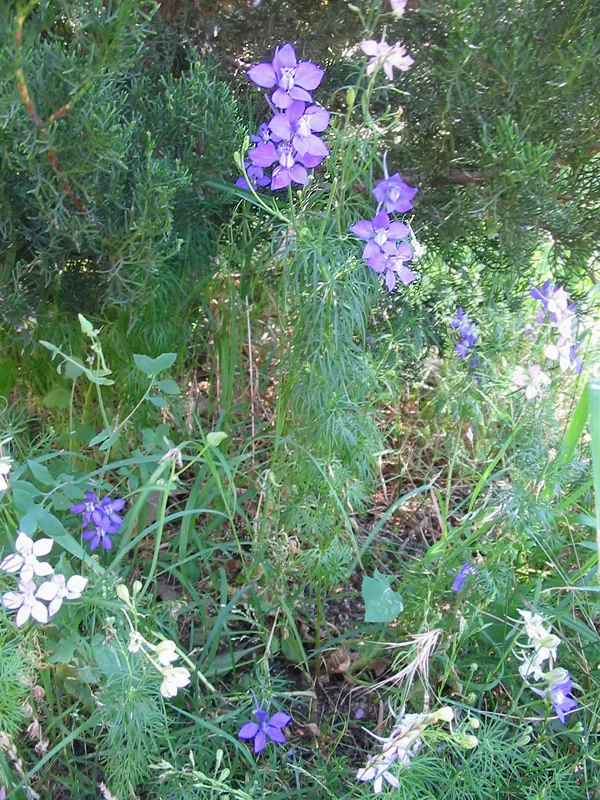
Larkspur fires the cool end of the gardening year with tall, airy spikes of blue. An annual in the buttercup family and a close cousin of the perennial delphiniums it gets mistaken for, it delivers spike-like racemes of spurred flowers that shoot up over ferny foliage from June to August. Blue leads the show, and every so often a plant surprises you with pink or white.
The plant to know here is a cool-season hardy annual that loves the mild window between frost and real heat. Sow it right where it will bloom and it takes off fast, often powering to 2 to 4 feet before summer heat calls time. Cold-zone growers kick it off before the last frost, while gardeners in mild regions sow in fall and let it overwinter for a head start on the show.
Grow it with eyes open, because larkspur is toxic from root to seed. The same diterpenoid alkaloids that make it one of the deadliest plants on western cattle ranges put pets, children, and people at risk too, so plant it where curious mouths simply cannot reach.
Care
The short version: hand larkspur full sun, a loose bed with sharp drainage, and steady water, then get seed down early so the show peaks ahead of the heat and snip finished spikes to keep fresh spires firing.
Light
Give larkspur full sun and it repays you with the strongest, straightest spikes, though it will take a bit of partial shade. Sun keeps the air around the leaves dry too, which shuts powdery mildew out.
Water
Keep the soil evenly moist but never soggy, watering roughly every 3 to 7 days as the weather and soil dictate. The roots rot fast in wet, waterlogged ground, so sharp drainage matters as much as steady moisture.
Soil
Plant it in loose, moderately rich, well-drained soil and it settles right in. Larkspur shrugs off pH worries and thrives on alkaline ground, anywhere from 6.5 to 8.0, as long as water drains freely.
Temperature
This one runs cool, thriving from about 30°F to 75°F (-1°C to 24°C). It laughs off light frost but quits the moment summer heat settles in, which is exactly why early sowing pays off big.
Humidity
Everyday outdoor humidity suits it fine, so skip chasing a number. Air movement is the real prize, since still, damp air around crowded plants is what hands powdery mildew its opening.
Feeding
Work a balanced fertilizer into rich, organic soil at planting and you are set. Larkspur is a light feeder, and good ground at the start powers it through its short, fast life.
Pruning
Deadhead the spent spikes and the plant fires off more bloom over a longer stretch. As the heat builds and it starts to fade, cut it back rather than letting it sit and sulk.
Size & spacing
Plants shoot to 2 to 4 feet (61 to 122 cm) tall while staying trim at 12 to 18 inches (30 to 46 cm) across. Thin or space seedlings about 9 to 12 inches apart so air moves freely and mildew stays down.
When to plant
Larkspur charges through the cool half of the season and wants nothing to do with summer heat, so timing is where the fun starts. Cold-climate growers sow indoors 8 to 10 weeks before the last frost or direct-sow in early spring, while milder regions sow outdoors in fall for a jump on the season. The target every time is bloom from June to August, wrapped up before sustained heat shuts the plant down.
Northern hemisphere
Southern hemisphere
Typical months for a temperate climate: start earlier in warm zones, later where spring frosts linger.
- Sow: Northern climates: sow indoors 8 to 10 weeks before last spring frost
- Plant: Sow outdoors in fall in southern climates, or early spring before last frost in northern climates; space 9 to 12 inches apart
- Harvest: Blooms June to August in spike-like racemes
Hardiness
USDA hardiness zones: 2–11
Temperature: down to -46°C
Troubleshooting
Larkspur is an easy grow with a short list of troubles, and nearly all of them trace to heat or crowding. Learn to read the early leaf signs and nail your sowing dates, and you head off almost everything before it starts. Match what you see below, then jump in while it still helps.
Plants flag and fizzle once summer heat kicks in
Here is the key to a great larkspur run: it is a cool-season hardy annual that races through spring and then bows out the moment steady heat lands, soonest in the deep South. A plant checking out from heat has finished its sprint, and there is no reviving it. Beat the heat with timing instead, sowing in fall or very early spring so the spikes peak before summer bites, and drop in afternoon shade wherever the season runs hot.
Fix:
- Provide afternoon shade in hot-summer climates
- Sow in fall or very early spring so bloom finishes before peak heat
Dusty white patches racing across stems and leaves
That white dust is powdery mildew, a fungus that moves in fast when plants crowd together in still, humid air. Open the planting up so a breeze can sweep through, aim your water at the base to keep the leaves dry, and pull any foliage that has already picked up the coating. Grow larkspur in full sun and you rob the fungus of the foothold it needs.
Fix:
- Improve air circulation by thinning and spacing plants
- Avoid overhead watering
- Remove and discard affected foliage
Chewed, holed, or distorted leaves
A few pests come after larkspur foliage, and the usual crew runs to aphids, slugs, snails, leaf miners, and mites. Flip the leaves to catch clusters underneath, hunt for slime trails after dark, and trace the pale winding tunnels the miners carve. Pick off slugs and snails, blast aphids and mites away with a sharp jet of water, and pull any leaf that is truly overrun so the plant powers on.
Fix:
- Hand-pick slugs and snails
- Wash off aphids or mites with a strong water spray
- Remove heavily infested leaves
Toxicity
Love the flowers, respect the chemistry: treat every part of this plant as poison. The blooms, leaves, stems, and above all the seeds pack diterpenoid alkaloids that block nerves and muscles, the very reason larkspur is a leading killer of range cattle. It hits cats, dogs, horses, rabbits, birds, and people just as hard, so keep it well away from anyone, animal or human, who might take a bite. Nothing on this plant is safe to eat.
Toxic to
Cats · Dogs · Horses · Rabbits · Livestock · Birds · People
Cats Severe
As much as larkspur rewards a grower, it earns none of a cat's trust, since every part is dangerous and the seeds and young growth pack the most diterpenoid alkaloids. Those compounds strike the nerves and muscles, so a cat may drool, cramp, tremble, stiffen, and weaken, and in bad cases that races into convulsions, heart failure, and death once breathing stops. Move fast and get a vet.
Dogs Severe
A dog that grabs any part of larkspur runs straight into the same neuromuscular poison. Watch sharply for heavy salivation, constipation, colic, muscle tremors, and a wobbly, weakening gait that can plunge into recumbency, convulsions, and fatal respiratory paralysis. Head for the vet at once rather than waiting for the picture to worsen.
Horses Severe
Horses feel these alkaloids quickly and hard. The opening signs are colic, constipation, rising salivation, and stiffness, and from there it can charge on to recumbency and convulsions, with cardiac failure and death from respiratory paralysis in serious cases. Call the vet the instant a bite is suspected.
Rabbits Severe
The same alkaloids that fell far bigger animals give a rabbit no free pass. There is no part of the plant a rabbit can safely nibble, and even a small amount risks tremors, weakness, paralysis, and death, so keep larkspur well clear of any hutch or run and never within a rabbit's reach.
Livestock Severe
Larkspur stands among the deadliest range plants for cattle, which graze it readily and go down in numbers every year. Poisoned animals turn weak and trembly, lose coordination, balk at walking, and drop, often with bloating, a rapid irregular heartbeat, and labored breathing that ends in collapse and death. Smart grazing management is the real defense.
Birds Severe
Birds get no exemption from the alkaloids that poison mammals, and the seeds pose the sharpest risk to anything that pecks. Treat the whole plant as strictly off limits, since even a little can trigger the tremors, weakness, and paralysis this toxin drives, and a little care keeps garden birds safe.
People Caution
No part of larkspur is food, and people are poisoned by it too, so handle it with real respect. Swallowing any of it can bring vomiting, muscular weakness, a weak pulse, and breathing trouble, so keep seeds and foliage away from children and pull on gloves before you work with the plant.
Seeds and young foliage are most toxic; keep all plant parts away from children, pets, and grazing livestock and wear gloves when handling.
Helpline numbers

United States
ASPCA Animal Poison Control: (888) 426-4435 (fee applies)
Poison Control: (800) 222-1222



Canada
Poison Centres: 1-844-764-7669
Varieties
Most larkspur grown for gardens and bouquets is picked for the color and length of its spikes. Here are a few of the named types you will run into.
Stiletta Indigo Blue
A star for cutting, it shoots up tall, straight spikes crammed with indigo-blue blooms.
Cannes Deep Blue
Bred for the vase, it carries deep blue, spurred flowers on long, sturdy stems that hold up beautifully.
White-flowered forms
The uncommon white variants of a plant that mostly comes up blue and only now and then shifts to pink or white.
How to propagate
Larkspur takes off from seed, and seed is really the only practical route, since it hates having its roots disturbed.
SeedEasy
Sow outdoors in fall (mild climates) or early spring; seeds benefit from cool conditions to germinate · Germination in roughly 2 to 3 weeks under cool soil conditions
Sow larkspur straight into its final home and it rewards you, because it resents transplanting and thrives where it germinates. Scatter the seeds outdoors in fall in mild climates or in early spring elsewhere, hand them the cool spell they crave to break dormancy, and watch for germination in about 2 to 3 weeks. Thin the seedlings to 9 to 12 inches apart so every spike gets the room to shoot up strong.
Myths
After flowering wraps up, larkspur loses its danger to animals.
Toxicity does ease off as the plant matures, but it never clears entirely. The seeds stay highly poisonous, and livestock still die from larkspur late in the season, so a plant past bloom deserves the very same respect as one in full flower.
Larkspur poses a risk to cattle alone, never to household pets or people.
The diterpenoid alkaloids strike cats, dogs, horses, and humans just as hard as they strike cattle. In people, swallowing it can bring vomiting, muscular weakness, a weak pulse, and respiratory paralysis, so this is a hazard for the whole household, not just the herd.