Houseplant · Araceae
Velvet Cardboard Anthurium
Anthurium clarinervium
Those velvety, white-veined leaves are the reward, and this anthurium delivers them once it gets warmth, humidity, and a careful hand on the watering can.
Bright indirect
65–85°F · 18–29°C
USDA 11–12
1–4 ft · 0.3–1.1 m
Overview
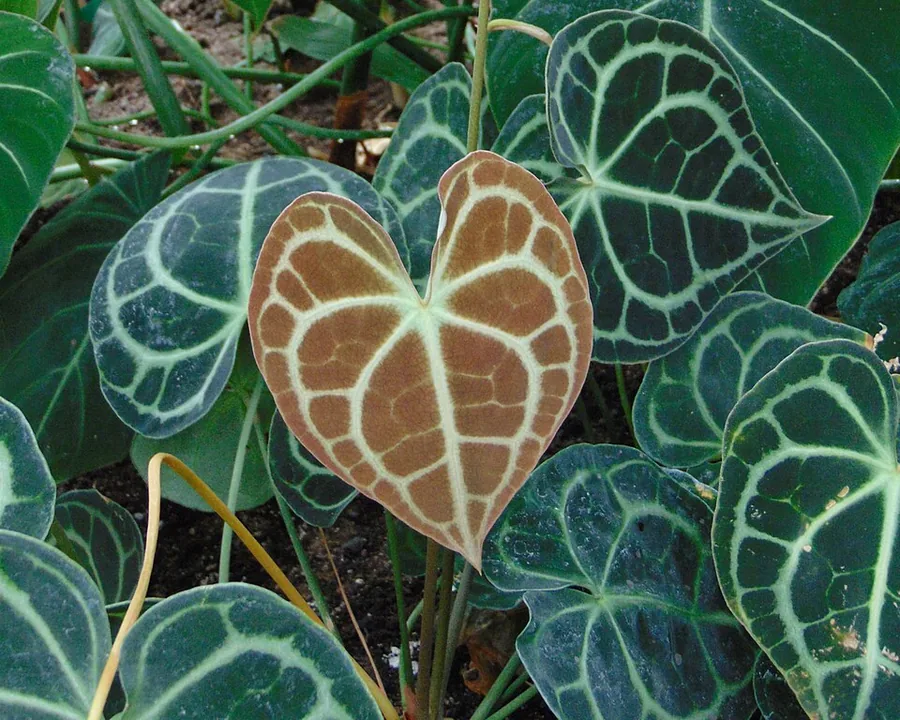
Grow the velvet cardboard anthurium and you grow it for the leaves, not the flowers. Every heart-shaped blade comes in thick and stiff like cardboard, finished in a deep, velvety green and laced with pale, almost white veins that pop across the surface. It springs from the limestone hills of Chiapas in southern Mexico, where it lives as an epiphyte, gripping rock and bark instead of rooting into deep soil.
It grows slowly and keeps you on your toes, but the payoff makes it worth chasing. Mature plants stay compact, hitting 1 to 3.5 feet (30 to 107 cm) tall with a tidy spread, so a bright shelf or table suits it far better than a floor corner. The deal behind those striking leaves is simple: it has zero patience for dry air, soggy roots, or harsh sun, and it flags any slip fast.
Nail the basics and it keeps pushing out one new leaf after another, each one edging past the last. Treat it like an epiphyte that just happens to live in a pot, hand it bright indirect light and humid air, and it digs in as a long-lived houseplant that keeps giving.
Care
The short version: bright indirect light, a coarse and fast-draining mix, humidity above 50%, and steady warmth get it growing. Water thoroughly, then let the top half of the pot dry before you water again.
Light
Hand it bright, indirect light for most of the day and watch it perform. It scrapes by in medium indirect light at a slower clip, but keep it clear of direct sun, which scorches the leaves into pale, bleached patches that never recover.
Water
Water thoroughly, then let the top half of the pot dry before the next round. The roots crave air as much as moisture, so the fastest way to wreck it is to keep the mix soaking. Soggy soil rots the roots and takes the plant down with it.
Soil
Pot it in a coarse, fast-draining mix built for epiphytes, with peat moss, pine bark, and perlite packing in air. It runs acidic, around pH 6.0 or a hair lower, and a heavy, dense potting soil chokes the roots, so skip it.
Temperature
Keep it warm and steady, between 65°F and 85°F (18°C to 29°C). It buckles at frost and cold drafts, so steer it clear of chilly windows and doorways through winter.
Humidity
Here is the lever most growers miss. The plant runs on humidity above 50%, and dry indoor air shows up fast as brown, crispy leaf tips. Set the pot on a tray of moist gravel, bunch it with other plants, or fire up a humidifier nearby.
Feeding
Anthuriums sip rather than gorge. A dilute, balanced houseplant fertilizer through the spring and summer growth covers it, and piling on more backfires.
Pruning
There is barely anything to prune. Just clip off any leaf that yellows, browns, or gets damaged, cutting at the base to keep the plant sharp and the energy driving healthy growth.
Repotting
Repot only once the roots have filled the pot, which for a slow grower like this comes around rarely. When it does, bump up a single pot size into fresh, coarse mix so the roots never wallow in a big, slow-draining pool of wet soil.
Size & spacing
Indoors it climbs to 1 to 3.5 feet (30 to 107 cm) tall with a compact spread of 9 to 12 inches (23 to 30 cm). That tidy footprint makes it a winner on a bright tabletop or shelf rather than the floor.
Troubleshooting
Almost every snag with this anthurium traces back to water, air, or light. It flashes trouble on its leaves first, so scan them often. Spot the match below and adjust fast, before a small slip snowballs into a lost plant.
Drooping hard while the soil stays soaked
When a plant flops in waterlogged soil, root rot from overwatering or a sluggish mix is the culprit, and quick action turns it around. Dial back the watering, pop the plant out of its pot, and cut away every root that has gone brown, soft, or mushy. Repot it into a coarse, fast-draining epiphytic mix and let the medium dry a bit between waterings, and the plant bounces back stronger.
Fix:
- Reduce watering frequency
- Repot into a coarse, very well-drained epiphytic/soilless mix
- Remove rotted roots
Bleached, sun-struck patches on the leaves
Direct sun torches the velvety leaves and leaves bleached, scorched patches in its wake. Shift the plant into bright but indirect light fast, and screen it from the fierce midday sun. The scorched leaves are done for, but here is the upside: fresh growth pushes out clean and healthy the moment the light is right.
Fix:
- Move to bright, indirect light
- Shield from direct midday sun
Sticky honeydew, webbing, or speckled growth
Anthuriums tempt mealybugs, spider mites, scale, whiteflies, aphids, and thrips, all of which dump sticky honeydew, spin fine webbing, or leave stippled, distorted new growth. Pull the plant away from the rest, blast the pests off, and hit it with insecticidal soap or horticultural oil, repeating as the label directs. Scout new plants and foliage often and you shut an infestation down before it ever takes hold.
Fix:
- Isolate the plant
- Wash off pests and treat with insecticidal soap or horticultural oil
- Repeat treatments per product label
Brown, crisp tips creeping in at the edges
Brown, crisp tips almost always point straight to dry air, and this plant thrives on humidity above 50%. Crank up the moisture with a tray of moist gravel, a tight cluster of plants, or a humidifier running nearby. Pull it back from heating and cooling vents too, since they blast the air dry.
Fix:
- Raise humidity (humidity tray of moist gravel, grouping plants, or a humid enclosure)
- Avoid placement near heating/cooling vents
Toxicity
Worth flagging up front: every part of this plant is poisonous if chewed or swallowed. Like the rest of the arum family, it packs insoluble calcium oxalate crystals that sting the mouth and throat on contact. Keep it away from pets and children, and wash your hands after handling it, since the sap can irritate skin.
Toxic to
Cats · Dogs · Horses · Rabbits · Livestock · Birds · People
Cats Moderate
A cat that bites a leaf hits an instant burning in the mouth, then swollen lips, tongue, and throat, heavy drooling, vomiting, and trouble swallowing, so keep it well out of pouncing range.
Dogs Moderate
One chew and the crystals sting a dog's mouth, kicking off drooling, pawing at the face, vomiting, and a sore, swollen tongue and lips, so set it where a dog cannot reach.
Horses Moderate
Horses run into the same painful mouth and throat irritation, with swelling and drooling that makes swallowing hard, though they don't vomit.
Rabbits Toxic
The same calcium oxalate crystals make this plant unsafe for rabbits, so keep it well clear of any rabbit that roams the house.
Livestock Toxic
Grazing animals such as goats and sheep take a hit from the crystals as well, which inflame the mouth and gut, so it has no place anywhere they can reach.
Birds Toxic
Pet birds face the same danger, since one curious nibble delivers the same caustic irritation to a small, sensitive mouth.
People Caution
No part of this plant is for eating, and a chew burns the mouth and throat, while the sap can leave skin red and itchy, so wash your hands after handling it and keep it away from young children.
Sap may cause contact dermatitis; wash hands after handling and keep out of reach of pets and children
Helpline numbers

United States
ASPCA Animal Poison Control: (888) 426-4435 (fee applies)
Poison Control: (800) 222-1222



Canada
Poison Centres: 1-844-764-7669
How to propagate
Want more of this anthurium? Run it from seed or split an established clump. Neither route races along, and approved sources hand over little species-specific detail, so settle in for a rewarding slow project.
SeedModerate
Not specified in approved sources · Unknown
Raising this anthurium from seed is a rewarding slow burn that calls for patience and a steady hand. Approved sources flag seed as a method for the genus but skip species-specific timing, so plan to dial in the schedule as you go.
DivisionModerate
Unknown · Unknown
Division is the go-to move for multiplying foliage anthuriums like this one. Lift a mature plant, split off a section that carries its own roots, and pot it up, treating it as a provisional method since the approved sources spell out no detailed protocol.
Myths
Anthuriums need to be kept constantly wet because they are tropical.
Tropical does not mean swampy. These are epiphytes that climb rock and bark in the wild, so their roots crave air and a coarse, fast-draining mix. Water well, then let the medium dry a bit before the next round, because constant wetness rots the roots faster than anything else.