Tree · Rosaceae
Apricot
Prunus armeniaca
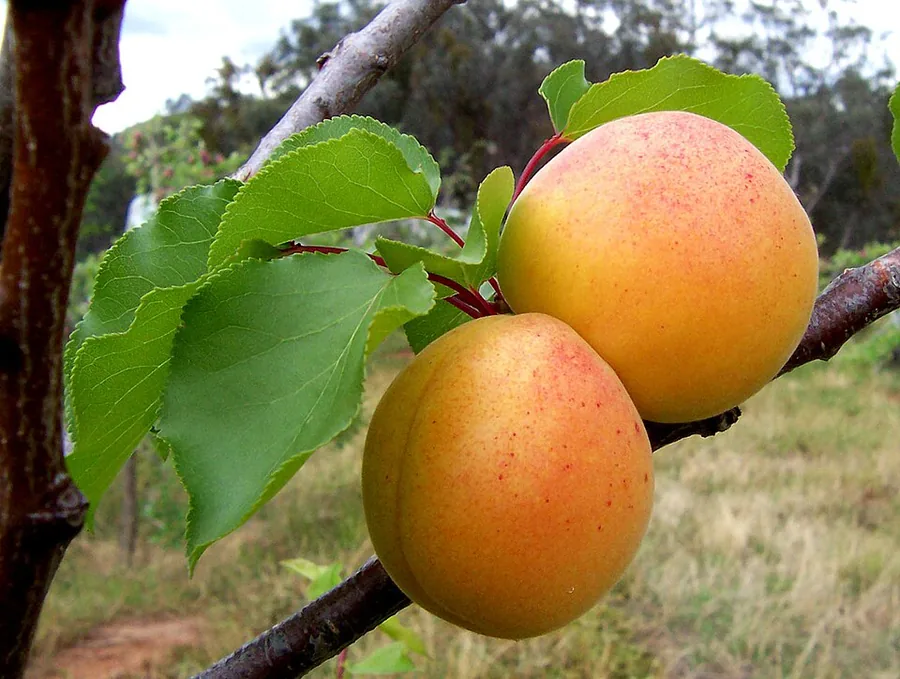
Hand it full sun, sharp drainage, and shelter from late frost, and an apricot tree will hang heavy with sweet golden fruit by early summer.
Full sun
Every 7–14 days
USDA 5–8
15–20 ft · 4.6–6.1 m
Overview
An apricot races to wake before almost any other tree, often flowering while the rest of the garden still sleeps. It sits in the rose family next to plums and cherries, and its roots run back to the cold, dry highlands of central Asia. You can read that ancestry in the tree: it brushes off hard winter cold down to -13°F (-25°C), yet it still craves long, warm, sunny summers to finish its fruit.
That eager bloom is both the tree's prize and its bet. Flowers that pop in late winter grab the pollinators ahead of everyone, but they sit squarely in the line of a late frost that can erase an entire crop in a single cold night. Where you plant the tree, plus the variety you pick, sets how often that gamble goes wrong.
Hand an apricot deep, well-drained soil and elbow room, and it builds into a generous open-headed tree. Fruit arrives early, sweet and plentiful enough to eat fresh, dry, or can. The flesh is yours to enjoy, though the pits and leaves are not for pets or livestock, so think ahead about where the prunings and dropped stones land.
Care
The short version: full sun, deep well-drained loam, and a frost-safe site clear of the low pockets where cold air pools. Soak the tree deeply while it establishes and the fruit swells, feed it in early spring, and prune during dry summer weather to hold disease back.
Light
Apricots crave full sun, the more hours the better, to ripen sweet fruit and stay vigorous. A site open to the sky all day also dries the canopy fast after rain, beating back the fungal diseases that dog this tree.
Water
Soak the tree deeply and regularly as a young plant settles in and again while the fruit swells, drenching the root zone every 7 to 14 days rather than dribbling water often. A mature apricot copes with drought fairly well, yet a solid drink through a parched summer rewards you with better fruit.
Soil
Set it in deep, well-drained loam, because waterlogged roots are this tree's fastest route to ruin. A soil pH between 6.0 and 7.0 keeps it happy, and sharp drainage counts for far more than rich ground.
Temperature
This tree takes a wide swing of weather, riding out roughly -13°F to 95°F (-25°C to 35°C). Winter chill seldom causes grief; the genuine danger is an early bloom colliding with a late spring frost.
Humidity
Average humidity around 40% to 70% suits an apricot just fine. Steer clear of damp, stagnant air, since crowded wet foliage is precisely what brown rot and canker crave.
Feeding
Feed it once in early spring with a balanced nitrogen fertilizer to power the new season's push. A single seasonal feeding does the job, and overdoing the nitrogen only spawns soft, disease-prone wood.
Pruning
Cut in late summer or dry weather, never amid cool damp, to lock bacterial canker and Eutypa out of fresh wounds. Shape the tree to an open center so light and air pour into the heart of the canopy.
Repotting
An apricot grows into a full-size tree and lives in the ground, so it's rarely potted at all. Plant it once in a well-picked spot and let it dig in for the long run.
Size & spacing
A standard apricot climbs 15 to 20 feet (4.6 to 6 m) tall and fans out about 12 to 20 feet (3.7 to 6 m) wide. Grant it that much open ground so the canopy stays airy and the roots can stretch.
When to plant
Apricots keep an early schedule. Tuck bare-root trees into the ground during dormancy in late winter to early spring, expect blossom that breaks almost before winter loosens its grip, and gather the fruit from early to midsummer.
Northern hemisphere
Southern hemisphere
Typical months for a temperate climate: start earlier in warm zones, later where spring frosts linger.
- Plant: Plant bare-root trees during dormancy in late winter to early spring.
- Harvest: Blooms very early, late winter to early spring; fruit ripens early to midsummer.
Hardiness
USDA hardiness zones: 5–8
Temperature: down to -29°C
Troubleshooting
Most apricot grief strikes the blossoms and fruit, and the heaviest hits roll in with cold or wet spring weather. Pair what you spot below with its cause, then move quickly while it still counts.
Blossoms and fruit going brown and rotting under a tan dusting of spores
Blame brown rot, a Monilinia fungus that races in on wet spring weather and rots flowers and fruit together. Strip away every mummified fruit before it passes spores along, open the canopy with pruning so air dries it quickly, and reach for a fungicide at bloom whenever the weather turns soggy.
Fix:
- Remove mummified fruit, prune for airflow, and apply fungicide at bloom
Sunken bark cankers leaking amber gum while limbs fade away
Those oozing wounds spell bacterial canker, where Pseudomonas syringae slips in through injuries during cool, wet spells. Save your cuts for dry summer weather so they seal cleanly, dodge sloppy wounds, and chase the infection out by removing wood well below each canker.
Fix:
- Prune only in dry summer weather, avoid injuries, and remove infected wood
Blossoms turning black with no fruit setting
Apricots flower so far ahead of the season that a late frost routinely nips the open blooms and blackens them, and a frozen flower yields nothing. Site the tree on a north-facing slope so it stirs a bit later, skip the low frost pockets where chilly air pools, and lean on later-blooming cultivars where spring runs risky.
Fix:
- Site on a north-facing slope, avoid frost pockets, and choose later-blooming cultivars
Crescent scars marking the fruit alongside early drop
Crescent scars paired with fruit tumbling off too soon flag the plum curculio, a weevil whose larvae burrow and feed inside the swelling fruit. Sweep up dropped fruit to snap the cycle, scout the tree often, and aim your controls at petal fall, right when the adults lay their eggs.
Fix:
- Practice sanitation and monitor, applying controls at petal fall
Toxicity
Handle this tree thoughtfully around animals. The stems, leaves, and seeds carry cyanogenic glycosides that release cyanide, and a swallowed pit can jam an animal's gut as well. People can eat the ripe flesh safely, but stash prunings, fallen leaves, and tossed stones well away from pets and livestock.
Toxic to
Cats · Dogs · Horses · Rabbits · Livestock · Birds · People
Cats Mild
Should a cat nibble the leaves, stems, or a cracked seed, expect drooling, vomiting, or widened pupils. Cats seldom swallow enough for a serious dose, yet stashing the trimmings out of paw's reach is still smart.
Dogs Mild
Look out for drooling, vomiting, or strained breathing when a dog chews the foliage or a seed. The greater threat is a gulped pit, which can wedge in the gut and block the works.
Horses Moderate
Wilted leaves and stems carry the sharpest risk, releasing the most cyanide of all. A poisoned horse pants hard, goes weak, and flashes bright red gums, so never leave prunings in or anywhere near the paddock.
Rabbits Toxic
The leaves and stems pack cyanogenic compounds that a small rabbit simply can't handle. Bar every part of the tree from the menu and serve only safe greens in its place.
Livestock Toxic
Cattle, sheep, and goats react sharply to the cyanide in wilted apricot leaves, and a hungry animal can gulp a fatal dose in moments. Fence the herd well clear of the tree and gather up fallen branches after any storm or pruning.
Birds Toxic
Seeds and foliage spell danger for birds, since even a trace of cyanide stretches far in such a small body. Hand them only the ripe flesh, never the pit or the leaves.
People Caution
The ripe flesh makes fine eating and stays safe, but the kernel inside the pit holds cyanide and must never be cracked open and swallowed. Spit the stones out and keep them clear of children.
Keep pruned twigs, leaves, and discarded pits away from pets and livestock.
Helpline numbers

United States
ASPCA Animal Poison Control: (888) 426-4435 (fee applies)
Poison Control: (800) 222-1222



Canada
Poison Centres: 1-844-764-7669
Varieties
Apricot varieties run deep, chosen for flavor, hardiness, or how nicely they dry. Here are a few well worth knowing by name.
Moorpark
A heritage English variety that ripens late and pays back the patience with big, deeply flavored fruit.
Blenheim (Royal)
The signature California apricot, valued just as highly for fresh eating as for the drying tray.
Tilton
A trusty pick for canning and drying that shrugs off a light frost better than most.
Goldcot
A cold-hardy variety raised for chillier regions, holding firm golden fruit on the branch.
How to propagate
Apricots almost always come home as grafted trees rather than seed-grown ones, since seedlings stray from their parent. Here is how each route works and what you get from it.
GraftingModerate
Nearly every apricot starts out grafted, typically by T-budding onto a matched rootstock. That trick delivers fruit true to the variety and keeps both the tree's size and its vigor in line.
SeedModerate
Seed sprouts after a stretch of cold stratification, yet the seedlings stray from the parent. So growers sow apricot seed mostly to raise rootstock, not fruiting trees.
Myths
An apricot is poisonous in every part.
The ripe flesh eats well and stays completely safe. The cyanide rides in the seeds, pits, leaves, and stems, never in the fruit you slice off and savor.