Tree · Rosaceae
Medlar
Mespilus germanica
A slow, hardy fruit tree that asks for little and pays off only after the first frosts.
Full sun
Every 7–14 days
USDA 5–8
15–20 ft · 4.6–6.1 m
Overview
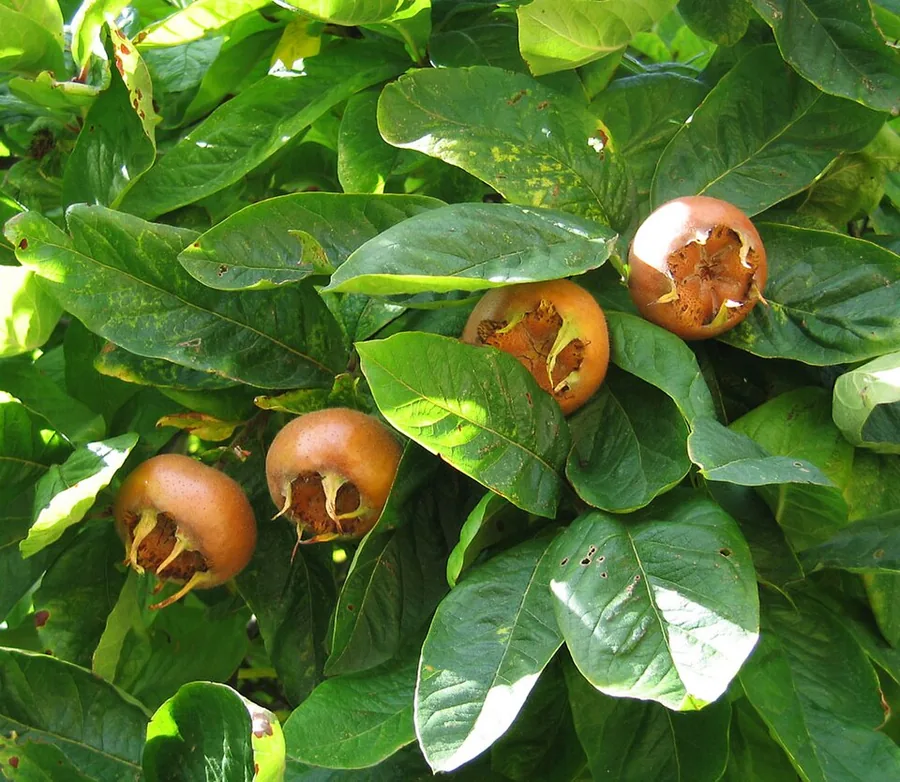
Medlar is a proper old-orchard treasure, grown across Europe for centuries and ripe for a comeback in far more gardens than it lands in today. It runs with the rose family alongside apples and pears, and it grows into a small, spreading tree of 15 to 20 feet (4.5 to 6 m) that bursts into large white-to-pink blossom in late spring. Then come the russet-brown fruits, each one shaped like a little flat-bottomed apple wearing an open crown.
The real hook is how you eat it, and it turns growing this tree into a genuine adventure. Fresh off the branch the fruit is rock hard and mouth-drying, and it only comes good after bletting, a slow softening from frost or storage that leaves the flesh brown, sweet, and rich, landing somewhere between spiced apple butter and dates. Get the timing right and the payoff is worth every week of the wait.
For a keen grower it is a joy to keep. Medlar is hardy down to -20°F (-29°C), self-fertile so one tree crops all on its own, slow and steady, and it barely blinks at pests or disease. Give it sun and decent soil and it will crop faithfully and outlast you.
Care
The short version: plant in full sun in moist, fertile, well-drained loam, water deeply during dry spells and while the fruit fills, and prune only lightly in late winter. Nail those basics and you have got a low-maintenance, cold-hardy tree once it settles in.
Light
Medlar flowers and fruits best in full sun, though it will handle part shade. Skimp on light and a young tree drags its feet on blossom, so hand it the brightest spot you have got and let it perform.
Water
Once established, the tree runs on moderate, even moisture and shrugs off a fair range of soils after its roots dig in. Water deeply through dry spells and while the fruit swells. Between waterings, let the top half of the soil dry out rather than leaving it soggy.
Soil
Plant in moist, fertile, well-drained loam for the strongest growth, though medlar takes less than ideal ground in stride. A soil pH anywhere from 6.0 to 7.5 works, from slightly acidic to slightly alkaline.
Temperature
This is a genuinely cold-hardy tree, riding out winter lows of -20°F (-29°C) and summer heat up to 95°F (35°C). The frost it laughs off is exactly what fires up bletting, so cold snaps play right into your hands.
Humidity
Ordinary outdoor air, around 40% to 70%, is all it wants, with no figure to chase. Damp, still corners matter only because they open the door to leaf spot, so keep air moving and you are set.
Feeding
One balanced feed in spring, applied seasonally, powers most trees along. Keep it light, since heavy nitrogen drives leafy growth and robs you of flowers and fruit.
Pruning
Prune in late winter while the tree is dormant, cutting out dead, damaged, or crossing branches to hold an open framework. Medlar fruits on spurs and needs only light pruning once established, so ease off and let it build.
Repotting
Medlar belongs in the ground and gets rarely repotted. Nursing a young one in a container? Move it on the moment roots circle, water runs straight through, or growth stalls.
Size & spacing
Look for a small, spreading tree of 15 to 20 feet (4.5 to 6 m) tall and about as wide. Give it room to fan out to its full 15 to 20 foot (4.5 to 6 m) canopy without crowding its neighbours.
When to plant
Medlar plays a long, patient game, and following its calendar is half the fun. Get bare-root or container trees planted while they are dormant, from late autumn into early spring. Blossom breaks in late spring, the fruit hangs on well past leaf drop, and you pick in late autumn once the first frosts have set the bletting in motion.
Northern hemisphere
Southern hemisphere
Typical months for a temperate climate: start earlier in warm zones, later where spring frosts linger.
- Plant: Plant bare-root or container trees in late autumn to early spring while dormant.
- Harvest: Blooms in late spring (about May to June); fruit is harvested in late autumn after leaf drop and first frosts, then bletted before eating.
Hardiness
USDA hardiness zones: 5–8
Temperature: down to -29°C
Troubleshooting
Medlar throws up remarkably few problems, and nearly every quirk traces back to the fruit's unusual ripening rather than any disease. Match what you are seeing below and a bit of timing or a small tweak in care usually gets it back on track.
A young tree holding back on flowers and fruit
Most of the time the tree is just still young, and that clears up fast, since medlars are self-fertile and usually kick off cropping by their second year, then bear more heavily as they fill out. Shade is the other thing to rule out. Shift it into full sun, dial back nitrogen feed that drives leaves over flowers, and let it hit its stride.
Fix:
- Be patient and allow the tree to mature
- Site or move the tree to a position with full sun
- Avoid heavy nitrogen feeding that favours leaves over flowers
Rock-hard fruit that puckers the mouth
Grab a medlar too early and it fights back, staying hard and drying out your mouth because the tannins have not broken down yet. Bletting turns that around completely. Pick in late autumn after leaf fall and the first frosts, then park the fruit somewhere cool, dark, and airy for two to three weeks, and watch the flesh soften into brown, sweet richness.
Fix:
- Harvest in late autumn after leaf fall and the first frosts
- Store fruit in a cool, dark, airy place for two to three weeks until the flesh turns soft and brown
- Eat or process only once the flesh is soft and sweet
Brown-spotted leaves dropping ahead of schedule
Medlar brushes off almost every pest and disease, so heavy spotting usually flags a fungal leaf spot that has moved into wet, crowded growth. Jump on it fast. Rake up and bin the fallen leaves so the spores cannot ride into next year, thin the canopy to get air moving, and keep water off the foliage.
Fix:
- Rake up and remove fallen leaves
- Prune to improve air circulation
- Avoid overhead watering
Toxicity
Medlar is a safe tree to plant near the house and enjoy. People tuck into the bletted flesh, it does no harm to pets or grazing animals, and the tree carries no toxic foliage or sap. The one small note, shared with apples, pears, and other rose-family fruit, is that the seeds hold a cyanide compound, so keep them from being crushed and eaten in quantity.
Safe for
People · Cats · Dogs · Horses · Rabbits · Livestock · Birds
Cats Safe
Cats rarely bother with the fruit, and a taste of the soft flesh does them no harm at all. Just keep an eye out for a cat crunching through a pile of the hard seeds.
Dogs Safe
Hand a dog a bit of bletted flesh and it makes a harmless treat. Steer it clear of mouthfuls of crushed seeds, though, since those pack the same cyanide compound running through the rose family.
Horses Safe
The tree and its ripe fruit pose no real danger to horses. Watch only for large amounts of chewed seeds.
Rabbits Safe
Rabbits can nibble the leaves and a little soft flesh without any trouble. As with any treat, fruit should stay a small part of their diet.
Livestock Safe
Cattle, goats, and sheep graze around medlar without poisoning. The one caution is the seeds inside windfall fruit if a great many get crushed and swallowed.
Birds Safe
Garden birds dive on the ripe fruit, and the flesh does them no harm. They leave the hard seeds alone.
People Safe
Bletted medlar is a sweet, wholesome treat, soft and brown like spiced apple butter. As with apple and other rose-family fruit, skip the seeds rather than crushing and eating them.
The soft, bletted flesh is edible; avoid letting pets or children chew or swallow large numbers of crushed seeds.
Helpline numbers

United States
ASPCA Animal Poison Control: (888) 426-4435 (fee applies)

United Kingdom
Animal PoisonLine: 01202 509000 (fee applies)

Australia
Animal Poisons Helpline: 1300 869 738
Varieties
Only a handful of medlar cultivars are still grown, but they span a great range, from small and intensely aromatic to giant-fruited. Chase down these names.
Nottingham
An old favourite that keeps a fairly upright, compact shape and delivers smaller, richly aromatic fruit.
Royal
A dependable heavy cropper that piles on medium-sized fruit of good flavour.
Breda Giant
A Dutch selection from the giant-fruited camp, grown for its large fruit and its striking autumn leaf colour.
Large Russian
A vigorous grower that pumps out some of the biggest fruit of any medlar.
How to propagate
Medlar is not a tree you multiply on a whim, but the challenge is part of the appeal. Named varieties get grafted so they come true, while seed is a slow, unpredictable route that rewards real patience.
GraftingDemanding
Late winter to early spring for bench grafting, or summer for budding · 1 to 2 years to a young, sellable tree
Named cultivars almost always go onto quince, pear, or hawthorn rootstocks by grafting or budding, so they come true and the grower keeps the tree's vigour in check. Bench graft in late winter to early spring, or bud in summer, and count on 1 to 2 years before a young tree stands ready to plant out.
SeedDemanding
Autumn, after prolonged cold stratification · Several years to first fruiting
Growing from seed is a real test of patience. The seed demands a long spell of cold stratification sown in autumn, comes up slowly and unevenly, and the seedlings will not come true to the parent. Expect several years before one of them flowers and fruits.
Myths
Medlars are rotten or spoiled once they are soft enough to eat.
That softening is bletting, a normal ripening stage where tannins fade and starch turns to sugar. Properly bletted fruit is soft, sweet, and perfectly safe, not spoiled, even though it looks like it has gone over.
You need two medlar trees for pollination to set fruit.
One tree crops just fine on its own. Medlar is self-fertile and often kicks off bearing by its second year, so there is no need to squeeze in a pollination partner.
Medlar fruit can be eaten straight off the tree like an apple.
Freshly picked fruit is hard and so astringent it dries out your mouth. It has to blett first, softened by frost or a few weeks in storage, before the flesh turns brown and worth eating.