Tree · Rosaceae
Loquat
Eriobotrya japonica
Plant it in full sun and out of the frost, and the loquat rewards you with sweet fruit when barely anything else is ripe.
Full sun
Every 7–14 days
USDA 8–11
15–30 ft · 4.6–9.1 m
Overview
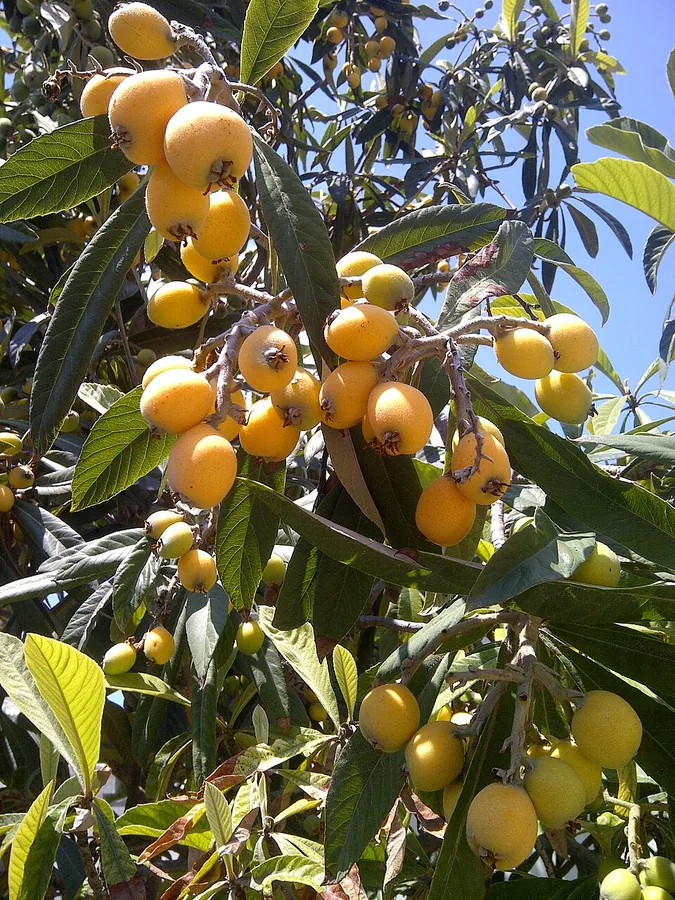
The loquat brings real excitement to a warm-climate garden. It is an evergreen fruit tree in the rose family, born in China and grown for centuries across Japan and the warm reaches of the world, and it works two jobs at once, holding broad, leathery leaves that stay sharp all year while pushing clusters of small, sweet fruit that ripen in late winter and spring. Almost no other tree fruits that early, and that head start is a huge part of the thrill.
This tree runs on its own bold clock. It flowers in fall and early winter, then carries its fruit right through the cold months to ripen while most orchards still stand empty. That daring timing is also its one weak point, because a hard freeze can knock out a whole season of blooms, though the tree itself takes the cold on the chin and bounces back.
Set a loquat up with full sun, well-drained soil, and cover from late frost, and it charges ahead with barely a demand. Once it settles in it laughs off drought and even poor, high-pH ground. Two jobs keep it cropping: guarding those early flowers from cold and staying on the lookout for fire blight.
Care
The short version: full sun and well-drained soil, with steady water while it is young and right through flowering and fruiting. Older trees laugh off drought, so the real job is guarding those early blooms from frost.
Light
Loquats crop hardest in full sun, which packs sugar into the fruit and keeps the canopy dense and thriving. They will take partial shade, but a shaded tree pours its energy into leaf and skimps on the crop.
Water
Water young trees regularly and keep them moist right through flowering and fruiting, when the crop is powering up. Once a tree is established it flips to drought tolerant and cruises on far less. Let the top half of the soil dry between waterings, and never let the roots sit waterlogged.
Soil
This tree rolls with almost any soil. It thrives in well-drained loam but shrugs off sandy or clay ground, and it handles a wide pH of 6.0 to 8.0, chalky high-pH sites and all, the kind that stop fussier fruit trees cold. Good drainage is the one thing it flat out demands.
Temperature
The tree itself is hardy from about 10°F to 95°F (-12°C to 35°C), so the wood is way tougher than the fruit. A freeze below roughly 28°F (-2°C) knocks out open blooms and young fruit, which is exactly why a warm, sheltered site pays off in cooler zones.
Humidity
Loquats stay easy across a broad 40% to 70% humidity range and barely blink at it outdoors. What really counts is good airflow ripping through the canopy, since it helps keep fire blight at bay.
Feeding
Feed with a balanced complete fertilizer through spring and summer while the tree is racing ahead. Just don't overload the nitrogen, because the soft, lush growth it forces is exactly what fire blight moves into.
Pruning
Loquats barely need pruning. After harvest, snip out any dead, crossing, or fire blight damaged wood and shape the tree lightly, cutting well below any diseased tissue and cleaning your blades as you go.
Repotting
These blow up into large landscape trees and hardly ever live in pots, so repotting basically never comes up. Plant a loquat in its permanent spot and leave it locked into the ground for good.
Size & spacing
A loquat rockets into a substantial tree, reaching 15 to 30 feet (4.5 to 9 m) tall with a spread of 15 to 25 feet (4.5 to 7.5 m). Give it plenty of open room so the wide canopy has space and air can rip through it.
When to plant
The loquat charges along on its own bold schedule. Plant young trees in spring, then get ready for flowers in fall and early winter and fruit that ripens from late winter into spring. It powers through zones 8 to 11, but since a freeze below about 28°F (-2°C) can wipe out the blooms, a sheltered spot is what unlocks the harvest.
Northern hemisphere
Southern hemisphere
Typical months for a temperate climate: start earlier in warm zones, later where spring frosts linger.
- Plant: spring
- Harvest: Blooms fall to early winter and ripens fruit late winter to spring; late freezes below about 28°F kill blooms and young fruit, limiting fruiting in colder zones even though the tree survives to about 10°F.
Hardiness
USDA hardiness zones: 8–11
Temperature: down to -12°C
Troubleshooting
Loquats are tough, hard-charging trees, and nearly all their trouble comes from just two directions: a bacterial disease and a frost that hits at the wrong moment. Learn the look of each and you can jump in early, before either one steals the crop.
Shoots blacken and curl over like they caught fire
Those scorched, hooked shoots spell fire blight, a bacterial infection that tears through warm, wet spring weather and homes in on soft new growth. Move fast: cut well below the dead black wood into clean tissue, and swipe your blades with disinfectant between every cut so you stop it dead instead of dragging it down the branch. Dial back the nitrogen too, because the soft flush it drives is the very tissue the bacteria pounce on.
Fix:
- Prune out blackened, dead shoots and branches well below symptoms, disinfect tools between cuts, and avoid excessive nitrogen.
Blooms and baby fruit blackened after a cold blast
Here is the quirk that makes loquat so daring: it flings out flowers in fall and early winter and hauls its fruit clear into spring, which drops the whole crop right where a late freeze can strike. Once the mercury slips below about 28°F (-2°C) those blooms and tiny fruit are toast, even though the tree itself powers through cold down to roughly 10°F (-12°C). Tuck it into a sheltered spot or a warm pocket of the yard, and in colder zones lean into its good looks and count any fruit as a thrill.
Fix:
- Plant in a protected site or warmer microclimate; in colder zones grow primarily as an ornamental and expect little to no fruit.
Toxicity
The ripe flesh is a sweet reward and completely safe for people to eat, but the seeds and leaves pack cyanogenic glycosides that turn into cyanide when chewed. That makes the tree a genuine caution around cats, dogs, horses, and grazing animals. Keep fallen seeds, prunings, and wilted leaves where pets and livestock can't get to them.
Toxic to
Cats · Dogs · Horses · Rabbits · Livestock · Birds
Safe for
People
Cats Mild
A cat that gnaws a leaf or grabs a fallen seed may drool, throw up, and start breathing hard. The bright side is that the soft fruit stays totally harmless, so the seeds and leaves are all that need watching.
Dogs Mild
Dogs will happily mouth a stray seed or gnaw a leaf, and that can kick off drooling and a queasy stomach. Stay alert for heavy or labored breathing, the clear signal that more cyanide has broken loose.
Horses Moderate
Horses take a harder hit from the cyanide in chewed seeds and wilted leaves, showing weakness, gasping breaths, even collapse. Sweep every pruning and clipping well clear of the paddock without fail.
Rabbits Moderate
A rabbit chomping the foliage loads up on the very same cyanogenic compounds, so the leaves are strictly off limits. Hand over a small taste of ripe flesh at most, and stop there.
Livestock Toxic
Cattle, goats, and sheep face a real threat from wilted leaves and prunings, where the cyanide concentrates and can drop an animal fast. Fence the tree off and never fling trimmings into a pasture.
Birds Caution
Birds can dive into the soft, ripe flesh, but the seeds and leaves pack the same toxin and belong out of reach. Lock in one rule: anything but the pulp is off limits.
People Fruit flesh safe
For people the ripe flesh is a sweet, crowd-pleasing fruit and completely safe to enjoy. Just spit out the big seeds instead of swallowing them, and skip the leaves, since both pack cyanogenic glycosides.
Keep fallen seeds, prunings, and wilted leaves away from pets and grazing animals.
Helpline numbers

United States
ASPCA Animal Poison Control: (888) 426-4435 (fee applies)
Poison Control: (800) 222-1222



Canada
Poison Centres: 1-844-764-7669
Varieties
Loquat cultivars come in a wide lineup, bred for size, color, and flavor. These few show up most often in home gardens.
Gold Nugget
A late-season standout that delivers big, round, orange fruit ripening sweet.
Champagne
A yellow-fleshed crowd favorite prized for a juicy bite that snaps between sweet and tart.
Big Jim
A vigorous, heavy cropper that pumps out large, rounded fruit with great flavor.
Mrs. Cooke
A rock-solid yellow-fleshed cultivar that keeps home gardens loaded with steady crops.
How to propagate
You can raise a loquat from a seed pulled right out of the fruit, but a seedling won't match its parent. To copy a known cultivar exactly, growers grab their grafting or air-layering tools instead.
SeedEasy
Seed is the fun, beginner-friendly way in, and a fresh loquat pip straight from the fruit springs to life with barely any effort. The twist is that seedlings sprout all kinds of different and rarely copy the parent, so they shine as rootstock or a playful experiment more than a route to a known fruit.
GraftingModerate
Chasing a named cultivar that stays true to type? Growers graft or bud it onto a seedling rootstock. It takes a steadier hand than sowing seed, and it pays off as the one dependable way to copy a tree's exact fruit.
Air layeringModerate
Air-layering hands you another way to clone a tree you already love, coaxing a branch to root while it stays plugged into the parent. It rewards a little patience and leaps right past the guesswork of seed.
Myths
The whole loquat plant is poisonous.
Not a bit of it, since the ripe flesh gets eaten across the globe with zero trouble. Only the seeds and leaves carry cyanogenic glycosides, and those really only bite when chewed in quantity, so spit out the big seeds and dig right in.
You have to plant two loquats to get any fruit at all.
Plant just one and it still delivers, because most loquats set fruit solo. Pop a second cultivar nearby and cross-pollination can crank the harvest higher, but a single tree still fruits all on its own.