Tree · Rosaceae
Bradford Pear
Pyrus calleryana
Fast off the mark and tough as they come, the Bradford pear also splits in storms and spreads as an aggressive invasive, so skip planting a new one.
Full sun
Every 7–14 days
USDA 5–9
30–50 ft · 9.1–15.2 m
Overview
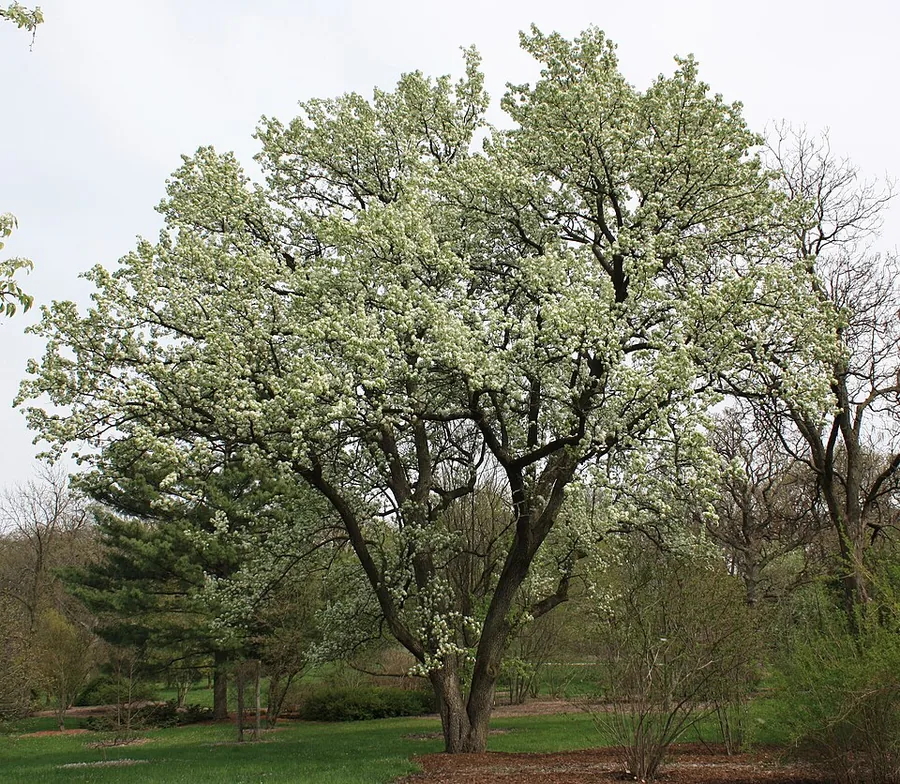
The Bradford pear is a Callery pear, a fast-charging ornamental that growers once planted everywhere for its tidy shape and the cloud of creamy white flowers it fires out in early spring. It powers through poor soil, drought, and city pollution, which is why it filled so many yards and parking lots. The bloom comes with a sour, off-putting smell that catches people by surprise the first time they breathe it in.
Behind that easy energy sit two serious flaws. The branches climb at tight, weak angles that tear apart in wind, snow, or ice, so mature trees often split within 15 to 25 years. Worse, the cultivars cross-pollinate and set fertile seed that birds fling into the wild, where it builds dense thorny thickets that shove out native plants.
That second problem has finally caught the tree. Several states have banned its sale, and most experts now push gardeners toward a native flowering tree instead. The care notes below show how to manage a Bradford pear you already grow, but planting a fresh one is no longer a smart move.
Care
The short version: full sun and almost any soil, a trickle of water once it has settled, and barely any feeding, but count on pruning for structure and tackling limbs that split as the tree ages.
Light
Drop it in full sun for the best shape and the heaviest flowering, though it will get by in partial shade. Pour on the sun and the canopy fills in denser and more even.
Water
Young trees want steady water while they dig in, but a mature Bradford pear is drought-tolerant and cruises on dry to medium moisture. Water it through a real dry spell and otherwise back off, letting the top half of the root zone dry between drinks.
Soil
Few trees care less about soil. It powers through clay, loam, or sand across a wide pH of 5.5 to 8.0, likes good drainage but laughs off heavy clay, the odd wet spell, drought, and city pollution.
Temperature
Hardy from about -20°F to 100°F (-29°C to 38°C), it takes zone 5 cold and southern heat in stride. That toughness is a big reason it spread so far.
Humidity
Plain outdoor humidity is all it asks, so there is no level to chase. Airflow beats moisture in the air every time, since damp, crowded foliage is what invites leaf spot and fire blight.
Feeding
An established tree in decent soil hardly ever wants feeding. If growth stalls, a balanced slow-release tree fertilizer in early spring does the job, and pouring on nitrogen only fuels the soft growth fire blight loves.
Pruning
Prune in winter while the tree is dormant, ripping out crossing, weak, and narrow-angled branches to build a tougher frame. Solid pruning shifts the odds but cannot beat the splitting weakness baked into the cultivar, so plant the tree well clear of strong winds.
Repotting
none
Size & spacing
This is a big tree, rocketing to 30 to 50 feet (9 to 15 m) tall and spreading 20 to 35 feet (6 to 11 m) wide. Hand it plenty of open room well clear of buildings, wires, and walkways, since aging limbs love to break.
When to plant
The Bradford pear charges through a clear yearly cycle in zones 5 through 9. Drop balled-and-burlapped or container trees in the ground in early spring or fall, catch the smelly white bloom in April, and watch the small brown pomes ripen in fall, after which birds carry the seed everywhere.
Northern hemisphere
Southern hemisphere
Typical months for a temperate climate: start earlier in warm zones, later where spring frosts linger.
- Plant: Plant balled-and-burlapped or container trees in early spring or fall.
- Harvest: Creamy white flowers in early spring (April), before or with the leaves; small round brownish pomes mature in fall.
Hardiness
USDA hardiness zones: 5–9
Temperature: down to -29°C
Troubleshooting
Almost every problem this tree throws lands in two camps: the structural failure that defines it and the diseases it shares with other pears. Nail the early signs of each and you can jump in before a problem turns dangerous or rips through the canopy.
The tree splits or loses big limbs in a storm
This is the headline flaw every grower runs into, so meet it head on. Weak, narrow branch crotches with bark pinched inside buckle under wind, snow, or ice, and a mature tree can rip itself in two, often within 15 to 25 years. Get out there and scout the canopy for tight V-shaped forks and a cluster of upright stems all the same size, and when a tree is already in trouble, bring in an arborist to reduce or take it out.
Fix:
- Remove damaged or hazardous limbs promptly with proper cuts
- Have a certified arborist assess and reduce or remove the tree if structurally compromised
- Replace failing trees with a structurally sound, non-invasive species
Blossoms and shoot tips blacken and hook over
Spot shoots scorching black and bowing over like a shepherd's crook and you have caught fire blight, a bacterial infection that races through warm, wet spring weather. Track it down by checking the branches for oozing cankers and dieback pushing back toward the trunk. Jump on it during dry weather, cutting the infected wood out 8 to 12 inches below any visible damage and wiping your tools between every cut so you never carry it along.
Fix:
- Prune out infected wood at least 8-12 inches below visible symptoms during dry weather
- Disinfect pruning tools between cuts
- Remove and destroy pruned material; do not compost
Reddish-purple leaf spots, then early leaf drop
Catch small reddish to purple spots running together across the leaves and you are looking at Entomosporium leaf spot, a fungus that pounces in wet weather. A rough year strips the leaves early, but it almost never threatens the tree, so keep your cool. Sweep up and destroy the fallen leaves, throw the canopy open for airflow, and steer water away from the foliage.
Fix:
- Rake up and destroy fallen infected leaves
- Improve air circulation and avoid overhead wetting of foliage
- Apply a labeled fungicide in spring if the problem is recurring and severe
Toxicity
Great news here: the Bradford pear is not a poisonous tree. It never lands on the ASPCA toxic-plant lists, and the small hard pomes will not poison a pet or grazing animal. The one honest caveat is that, just like apple and pear seeds, the pips carry trace cyanogenic compounds, so sweep up a heavy fruit fall instead of letting an animal go to town on it.
Safe for
People · Cats · Dogs · Horses · Rabbits · Livestock · Birds
Cats None
Let a cat sniff and nibble a leaf or a fallen pome and nothing bad happens, because this tree skips the toxic lists. The seeds inside the fruit do pack trace cyanogenic compounds like most rose-family relatives, so make a quick habit of sweeping up the dropped fruit.
Dogs None
Dogs run no real poisoning risk from the leaves or those small hard pomes. A dog that wolfs down a whole pile of windfall might score a passing upset stomach, and since the seeds carry the same trace cyanogenic compounds as other pears, head that off by not letting one gorge.
Horses None
Horses browse the leaves and fruit just fine in normal amounts. Like any pear, the seeds tuck away a little cyanogenic material, so the one scene to watch is a horse busting into a heavy fall of dropped fruit.
Rabbits None
The leaves and twigs are not toxic to rabbits and make fine occasional browse. Just stash the seeds out of reach, since those trace cyanogenic compounds are best skipped in a small animal.
Livestock None
Cattle, goats, and sheep graze the foliage and windfall fruit without harm. The lone catch is the usual rose-family one, where the seeds hold trace cyanogenic compounds, so rake up a heavy fruit drop before the stock pile in.
Birds None
Birds gobble the small pomes with zero trouble, and that is exactly how the tree fires its seed so far and wide. Nothing here gives them pause.
People Safe
The tree poses no toxic threat to people. The hard little pomes are no food crop and are not worth eating, and like apple and pear seeds the pips carry trace cyanogenic compounds, so skip chewing them.
No special handling needed for toxicity. Wear gloves and eye protection when pruning, as escaped seedlings and rootstock sprouts can bear sharp thorns.
Varieties
Growers have chased a handful of named Callery pear selections over the years, mostly hunting a sturdier shape or punchier fall color. Every one of them still crosses with the others, though, so they all feed the invasive seedling problem.
'Bradford'
The original and most notorious cultivar throws a dense pyramidal-to-oval shape on famously narrow crotches that split in storms, and even though it cannot pollinate itself it still drives the invasive seedling problem by crossing with its neighbors.
'Cleveland Select' / 'Chanticleer'
This one shoots up a more upright, narrowly pyramidal form around 35 feet tall and 16 feet wide, packing somewhat sturdier branching and better fire-blight resistance, but it stays a Callery pear that crosses with others to spread.
'Aristocrat'
It flexes stronger, more open branching than 'Bradford', yet it falls to fire blight more easily and still pitches into the invasive seedling spread.
'Autumn Blaze'
Growers grabbed it for its dependable red-purple fall color and good cold hardiness, but it crosses with the other cultivars to throw fertile, bird-carried seedlings right along with the rest.
How to propagate
Two routes multiply this tree, and neither one belongs in a home garden. Nurseries graft the named cultivars, while the species fires itself out through bird-spread seed, the exact path that turned it invasive.
GraftingDemanding
Late winter to spring (bench grafting) or summer (budding) · 1-2 growing seasons to establish the graft union
Named cultivars like 'Bradford' refuse to come true from seed, so nurseries graft or bud them onto Pyrus calleryana rootstock, firing off a bench graft in late winter to spring or budding in summer. The graft union takes one to two growing seasons to knit tight. It is demanding, exacting work, and with the tree's invasive and structural troubles stacked against it, there is no real reason to chase it at home.
SeedEasy
Fall, after fruit ripens · 1-2 growing seasons to a seedling
The species sows itself with no nudge at all, as birds drop seed from the fall fruit and a seedling grabs hold over one to two growing seasons. The kicker is that cross-pollination among the cultivars turns those seedlings invasive, so raising them on purpose is discouraged and, more and more, against the law.
Myths
Bradford pear is sterile and cannot spread, so it is safe to plant.
Yes, 'Bradford' cannot fertilize its own flowers, but it crosses freely with other Callery pear cultivars and with rootstock sprouts, firing off viable seed that birds carry far and wide into dense thorny thickets. Several US states have now banned its sale outright.