Tree · Rosaceae
Asian Pear
Pyrus pyrifolia
Hand it full sun, a pollinator partner, and an open frame, and the Asian pear keeps delivering crisp, juicy fruit for decades.
Full sun
Every 7–14 days
USDA 5–8
20–40 ft · 6.1–12.2 m
Overview
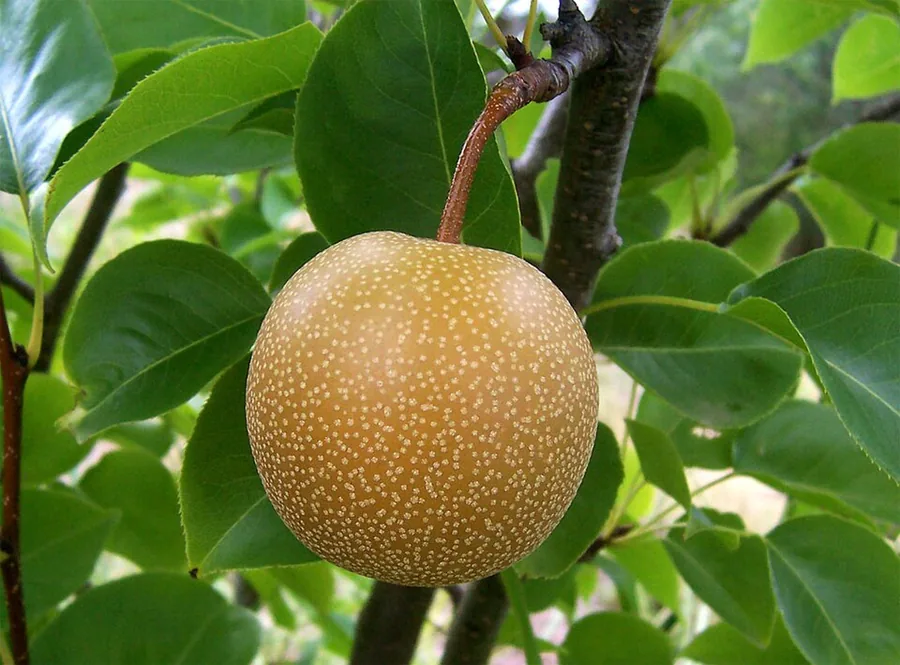
The Asian pear is a tough fruit tree from the rose family, cultivated across East Asia long before it landed in Western orchards. Gardeners call it by a string of names, from nashi to apple pear, and that second one earns its keep. The fruit grows round and stays crisp and juicy instead of softening like a European pear, so you bite into it firm, picked straight off the tree.
Think of this as a long-haul tree, not a quick harvest. Set a young one in the ground and it digs in fast, then fruits for decades once it settles. It powers through real cold, down to about -20°F (-29°C), and laughs off summer heat, which lands it comfortably across much of the temperate world.
The single thing it demands is company. Almost every variety needs a second compatible cultivar in flower at the same moment to set a real crop, so pencil in two trees right from day one. Hand them sun, elbow room, and an open shape, and they pretty much run themselves.
Care
The short version: full sun, deep well-drained soil, and a second compatible variety close by to handle pollination. Soak the tree deeply while it establishes and while the fruit swells, prune to an open multi-trunk frame in late winter, and thin the young fruit so the branches hold without snapping.
Light
Asian pears crave full sun for the finest fruit and the fewest disease headaches. They'll cope with a touch of afternoon shade, but a tree parked in deep shade grows feeble and barely fruits.
Water
Soak the tree deeply and regularly while it establishes and right through the spell when the fruit is swelling, as long as the soil drains freely. Pull back as the pears mature, then again once the tree slides into winter dormancy. Deep, spaced-out soakings beat a daily splash every time.
Soil
Plant into deep, well-drained ground, whether that's loam, sand, or even clay, so long as water keeps moving through it. A slightly acidic pH of 5.9 to 6.5 suits the tree nicely, and free drainage counts for far more than nailing the exact figure.
Temperature
This is a hardy, cold-proof tree that rides out winters down to about -20°F (-29°C) and shoulders summer heat up to roughly 95°F (35°C). The genuine danger isn't deep cold but a late spring frost that catches the open blossom.
Humidity
Plain outdoor air in the 40% to 70% band works fine, so there's no figure to fuss over. Warm, wet weather at bloom is what to keep an eye on, since that's exactly when fire blight rips through fastest.
Feeding
Feed in spring with a balanced 10-10-10 fertilizer, split across a couple of doses. Match the amount to the tree's age, roughly a third to a half cup per year up to about 8 cups, and keep a light hand, since heavy nitrogen feeds fire blight.
Pruning
Prune in late winter while the tree sleeps, lopping off about 10 percent of the terminal spurs each year to keep the fruit sizing up. Shape it to several trunks in an open form instead of one central leader, so a lone fire blight strike can't claim the whole tree. Hand-thin the young fruit 14 to 40 days after the petals drop, down to one fruitlet per spur or about 6 inches apart, or the load will crack the limbs.
Repotting
not applicable - grown outdoors in the ground
Size & spacing
This tree gets big, climbing 20 to 40 feet (6 to 12 m) tall and nearly as broad. Hand it plenty of open ground so air flows through the canopy and the roots have room to spread.
When to plant
Asian pears march to the seasons, so work with them. Plant dormant trees in late winter to early spring, tucking them into the most frost-free spot you've got so a late freeze never nips the bloom. Flowers pop in April, and the fruit ripens right on the tree from about mid July through fall, depending on the variety.
Northern hemisphere
Southern hemisphere
Typical months for a temperate climate: start earlier in warm zones, later where spring frosts linger.
- Plant: Plant dormant bare-root or container trees in late winter to early spring in a site as frost-free as possible to avoid late spring frosts at bloom.
- Harvest: Blooms April to early May; fruit ripens on the tree from about mid July through fall depending on cultivar.
Hardiness
USDA hardiness zones: 5–8
Temperature: down to -29°C
Troubleshooting
Most Asian pear headaches trace back to one disease and a short roster of pests. Fire blight tops the watch list, since it can take down a whole tree, while the insects mainly nibble away at your fruit or the tree's vigor. Match what you spot below, then move before it spreads.
Shoots turn black and hook over like a shepherd's crook
That blackened, curling growth points to fire blight, a bacterial disease that tears through the tree during warm, wet weather at bloom and gets pushed along by too much nitrogen. Snip the dead shoots out well below the damaged wood, dial back the feeding, and shape the tree to several trunks so one strike can't finish it off. Planting resistant cultivars gives you the strongest head start.
Fix:
- Choose resistant cultivars, avoid heavy nitrogen, prune out blackened shoots well below the infection, and train to multiple trunks so one strike does not kill the tree
Bored tunnels and brown crumbly trails running through the fruit
The codling moth drops eggs that hatch into hungry larvae, and those grubs chew straight into your swelling pears. Set out traps to learn exactly when the moths take wing, then thin or bag the fruit and apply labeled controls timed to that window. Act early, while the larvae are still near the surface and not buried deep.
Fix:
- Monitor with traps and use fruit thinning, bagging, or labeled controls during the season
Tacky leaves topped with a black, sooty coating
Pear psylla are minute sap-suckers that leave the leaves slick with honeydew, and sooty mold quickly takes hold on that sticky film. A big outbreak drains the tree's energy fast. Welcome natural predators, lay down dormant oil before the buds break, and turn to labeled controls only once the numbers really climb.
Fix:
- Encourage natural predators, apply dormant oil, and use labeled controls when populations build
Orange spotting on the leaves with aphids packed onto fresh shoots
Rust dots the foliage and fruit with orange-brown flecks, while aphids swarm the tender new growth and drain it. Rust spores hop over from nearby junipers, so clear those host plants wherever you can. Beat the aphids down with horticultural oil or insecticidal soap.
Fix:
- Remove nearby juniper hosts for rust where practical and treat aphids with horticultural oil or insecticidal soap
Toxicity
The ripe flesh is a crisp, sweet treat and perfectly safe, but the rest of the tree plays rough. The seeds, bark, and wilting leaves carry cyanogenic compounds that turn loose cyanide when chewed in quantity, the same trap set by other pip fruits. Keep pets and livestock clear of the seeds and of every pruning, above all the bruised or frost-killed leaves.
Toxic to
Cats · Dogs · Horses · Rabbits · Livestock · Birds · People
Cats Mild
A cat that gnaws on seeds or wilted prunings may end up with brick-red gums, blown-wide pupils, and hard, labored panting. A real dose brings genuine distress, though the ripe flesh poses no threat at all.
Dogs Mild
Look for heavy panting, dilated pupils, and bright red gums if a dog chews into bark, prunings, or a mouthful of seeds. A dog that simply nibbles a slice of ripe pear almost always stays just fine.
Horses Toxic
Horses graze big but react sharply to cyanide, and a heap of wilting prunings pitched over the fence is usually what does it. Labored breathing, staggering, and collapse can hit quickly, so never hand them the trimmings.
Rabbits Toxic
Steer rabbits clear of the seeds, bark, and any wilted leaves, because their tiny bodies take only a trace of cyanide to be harmed. A slim shaving of ripe flesh on occasion is the one safe treat.
Livestock Toxic
Cattle, goats, and sheep can poison themselves on dropped branches or wilted leaves that blow into a pasture. The risk jumps when the foliage is bruised or frost-killed, the very moment the cyanide peaks.
Birds Toxic
Pet birds and backyard poultry should never reach the seeds, which pack the same cyanide as the rest of the pip fruits. Serve them only seedless bites of the ripe flesh.
People Caution
The ripe flesh makes a crisp, juicy snack and is good to eat. Just skip chewing or swallowing the seeds, since a big batch of crushed pips turns loose cyanide.
Keep pets from chewing large amounts of seeds, bark, or wilting prunings; the ripe fruit flesh itself is safe.
Helpline numbers

United States
ASPCA Animal Poison Control: (888) 426-4435 (fee applies)
Poison Control: (800) 222-1222



Canada
Poison Centres: 1-844-764-7669
Varieties
Asian pears arrive in dozens of cultivars, sorted mostly by skin color, ripening date, and disease resistance. These are the ones you'll run into most, and choosing two that bloom together knocks out your pollination in the same stroke.
Hosui
A top-tier grower's pick bearing large, juicy, low-acid bronze fruit that ripens in mid to late August and pays back diligent thinning with even bigger pears.
Shinseiki (New Century)
An early round yellow-green pear loaded with sweet, creamy white flesh that fruits somewhat on its own yet sets far heavier with a second cultivar planted close by.
Nijisseiki (Twentieth Century)
The most widely grown variety anywhere, treasured for its yellow-skinned fruit but among the quickest to succumb to fire blight.
Chojuro
One of the earliest Japanese cultivars to harvest, dropping its large, brown, russeted fruit around mid July.
How to propagate
Two routes will start an Asian pear, but only one lands you the fruit you actually want. Grafting copies a named variety dead-on, while seed is a roll of the dice best left to breeders and rootstock growers.
GraftingModerate
Grafting keeps named cultivars running true to type. You join a bud or scion of the variety you want onto a pear or Asian pear rootstock, and the fresh tree grows the exact same fruit as its parent. It demands a steady hand, but it stays the one dependable way to clone a named pear.
SeedModerate
Seeds germinate easily, yet the seedlings stray from the parent and take years to put out their first fruit. Because of that, seed mainly raises rootstock or feeds breeding work, never a tree you can bank on for the fruit you wanted.
Myths
Asian pears have to be picked rock-hard and ripened off the tree like European pears.
European pears do call for that after-ripening, but Asian pears skip it entirely. They hit their peak left to ripen on the tree, turning sweet and juicy right there. You eat them crisp and apple-textured, never soft and buttery.
A lone Asian pear tree will set a full crop all by itself.
Nearly every cultivar is self-incompatible, so one tree on its own delivers little or no fruit. Plant a second compatible cultivar that blooms at the same time and let the bees ferry pollen from one to the other. Only then does a true crop fill out.