Ornamental · Dryopteridaceae
Christmas Fern
Polystichum acrostichoides
Hand it shade and well-drained soil, and the Christmas fern powers green fronds right through winter.
Partial shade
Every 5–10 days
USDA 3–9
12–35 in · 30–90 cm
Overview
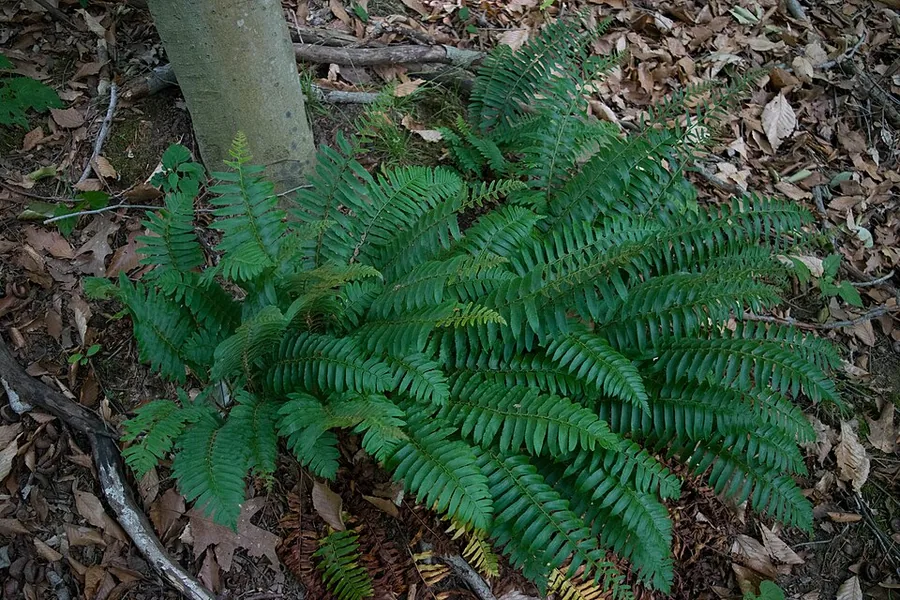
The Christmas fern makes a brilliant starter native, and it ranks among the rare few that stay green clear through winter. It builds a tidy, non-spreading clump of leathery, dark green fronds, and the little leaflets curl into shapes like Christmas stockings, which is exactly how it landed its name. It hails from the wood fern family and grows wild across the eastern woodlands, so it shows up already knowing how to thrive.
Toughness is where it truly shines. It powers through cold all the way down to -40°F (-40°C), takes on deep shade without blinking, and digs into the dry, rocky, root-packed ground under trees where most plants throw in the towel. Fresh fiddleheads unspool in spring while last year's fronds still stand tall, so the plant keeps something green going year-round.
Best of all, it asks for next to nothing once it roots in. Hand it shade, soil that drains, and a little patience while the clump fills out, and it holds a steady, evergreen presence in the garden for years on end. Gardeners love putting it to work anchoring a shady slope or carpeting a woodland bed, and it tackles either job with ease.
Care
The short version: drop it into part to full shade in rich, well-drained soil, keep it evenly moist while it roots in, and then sit back and let it run.
Light
This one lives for the shade. It thrives in partial to full shade and takes deep shade in stride, which makes it a rare winner for the darkest corners of the garden. A splash of morning sun is welcome, but harsh afternoon light will scorch the fronds, so steer clear of it.
Water
Keep the soil evenly moist while the fern roots in, watering every 5 to 10 days whenever rain runs short. Once those roots grab hold it shrugs off brief dry spells, so you can back right off. The one thing it flatly refuses is sitting in standing water.
Soil
Plant it in rich, well-drained loam loaded with organic matter, though it copes happily with sandy or shallow rocky ground too. It leans a touch acidic, around a pH of 5.0 to 6.5. Drainage trumps everything else here, since wet feet roll out the welcome mat for crown rot.
Temperature
Hardly any garden plant matches this hardiness. It charges through anything from -40°F to 86°F (-40°C to 30°C), spanning USDA zones 3 through 9. Winter cold barely registers, and the fronds keep their color right on through it.
Humidity
Plain old outdoor humidity suits it fine, so skip chasing a number. What this fern truly runs on is steady soil moisture, far more than anything floating in the air.
Feeding
This fern barely touches a meal. A light topdressing of compost or a balanced slow-release fertilizer in spring covers it, and plenty of gardeners skip even that. Pile on too much and you set it back rather than push it forward.
Pruning
Pruning is a quick once-a-year job. In late winter or early spring, before the new fiddleheads shoot up, cut away the old, tattered, or winter-beaten fronds so the fresh growth bursts in clean.
Size & spacing
Each clump shoots up 12 to 35 inches (30 to 90 cm) tall with a spread to match. Space plants roughly that far apart so the fronds can arch out, and since the clumps stay put, they keep their shape without crowding the neighbors.
When to plant
No flowering season to chase here, and no harvest to schedule, which a fern frees you from entirely. Just set it out in spring as the soil warms and the fiddleheads start shooting up, and it digs in over the next season or two.
Northern hemisphere
Southern hemisphere
Typical months for a temperate climate: start earlier in warm zones, later where spring frosts linger.
- Plant: spring
Hardiness
USDA hardiness zones: 3–9
Temperature: down to -40°C
Troubleshooting
This fern cruises along in great health with barely any effort, so trouble rarely crops up, and when it does it almost always points back to soggy soil or a hungry pest. Nail down the two signs below and you will catch either one early. Match what you spot, then jump in before it spreads.
Fronds going limp over a soft, dark crown
Fronds going limp while the base turns soft and black? That spells crown rot, and it takes hold when the soil stays waterlogged, especially through a wet winter. Jump on it fast: dial back the watering, sharpen up the drainage, and scoop out every soft, darkened scrap at the base. Then reset the rhizome at a slight tilt so water rolls right off the crown instead of pooling, and the plant gets its chance to bounce back.
Fix:
- Improve drainage and reduce watering
- Plant the rhizome at an angle to shed water from the crown
- Remove and discard affected tissue
Leaflets chewed ragged and stems stripped
Ragged leaflets and stems picked bare? Track that straight to the Florida fern caterpillar, a night feeder that can strip a frond before morning. Grab a flashlight, head out after dark when they are on the move, and pick them off by hand. A bad outbreak might call for a suitable insecticide, but stay on top of the foliage and snag them early, and the problem usually fizzles out on its own.
Fix:
- Hand-pick caterpillars
- Treat with an appropriate insecticide if infestation is heavy
Toxicity
Great news for homes packed with pets and kids: the Christmas fern is safe all around. The ASPCA lists it as non-toxic to cats, dogs, and horses, and there is no poison lurking in the fronds to worry about for other animals or people.
Safe for
People · Cats · Dogs · Horses · Rabbits · Livestock · Birds
Cats None
Cat owners can relax, because the ASPCA puts this fern firmly on the non-toxic list for cats, so a curious nibble counts for nothing. A cat that wolfs down a big mouthful of fronds might feel a bit off for a while, like with any plant, but no poison comes into it.
Dogs None
Dogs can romp right past this fern without a worry, since it packs no toxins at all. A pup that chomps a few fronds stays totally safe, though a giant helping of rough greenery might make for a messy exit.
Horses None
It is confirmed non-toxic to horses, so a horse grazing nearby has nothing to fear. The fronds carry zero poison.
Rabbits Safe
Rabbits can graze the fronds happily and walk away just fine. There is simply no toxin in this fern to trouble a bunny.
Livestock Safe
Cattle, goats, and sheep can munch away near this fern in total safety, since it holds nothing poisonous. None of the grief that certain pasture ferns dish out shows up here.
Birds Safe
Pet and backyard birds are perfectly safe around this fern. Not one thing in the fronds will harm them.
People Safe
People run no poisoning risk either, kids who love to grab the fronds included. Nobody grows it to eat, so there is no reason to snack on it, but a touch or a quick taste does zero harm.
Varieties
Unlike loads of garden plants, this fern shows up almost entirely as the wild species, with named cultivars genuinely hard to track down. So there is just the one to get acquainted with, and what a worthy one it is.
Polystichum acrostichoides (species)
It turns up almost entirely as the straight wild species, flaunting leathery, evergreen, dark green fronds whose stocking-shaped leaflets cling to their color through winter into the Christmas season, and named cultivars are a real rarity.
How to propagate
Cranking out more Christmas ferns is a breeze, whether you split a clump you already own or take the slower haul of raising them from spores.
DivisionEasy
Spring · 1 to 2 growing seasons
The fastest way to grow your patch is to divide an established clump in spring, splitting the crown and tucking the pieces back in, where they fill out over a season or two. Feeling adventurous? Raise it from the spores riding the upper third of the fertile fronds instead, though that route crawls along much slower.
Myths
The Christmas fern is named for blooming or fruiting at Christmas.
Tempting thought, but ferns never flower or set berries, so a winter bloom is out of the question. The name actually springs from the leathery fronds that stay green through winter into the Christmas season, plus leaflets cut like tiny Christmas stockings.