Ornamental · Asteraceae
Chrysanthemum
Chrysanthemum × morifolium
Keep up the pinching all summer, serve up full sun and reliably damp soil, and autumn repays you with sheets of color.
Full sun
Every 2–4 days
USDA 5–9
1–3 ft · 0.3–0.9 m
Overview
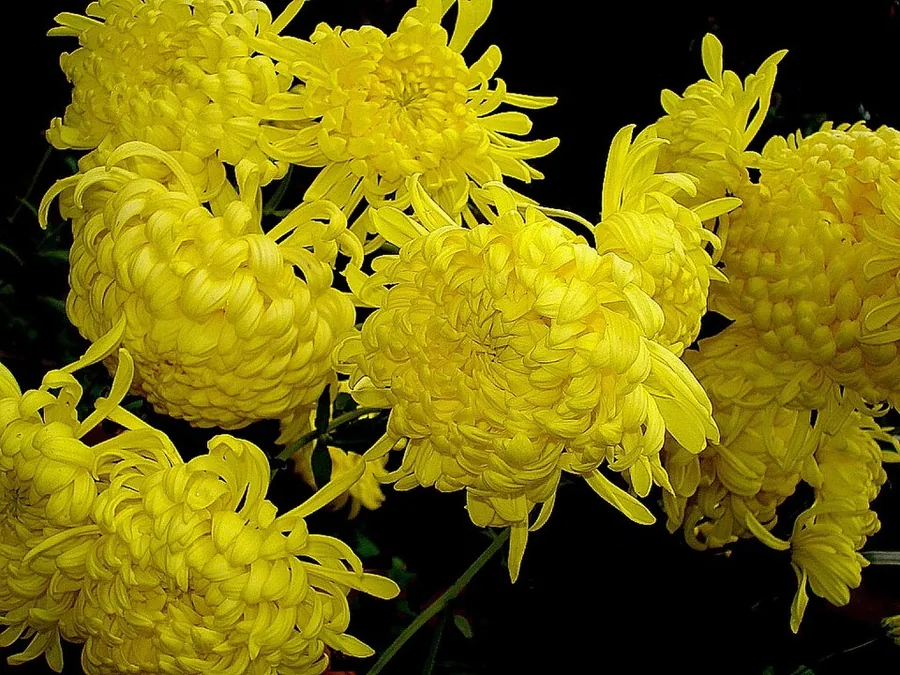
Ask anyone to name the bloom of autumn and odds are they land on a mum. A member of the daisy family, it heaps up flowers across the whole warm spectrum, rust through gold and on into deep red and pink. What fills nursery shelves are mostly garden mums, those squat cushion-shaped plants that vanish under bloom as daylight wanes.
Easy is the word that follows mums around, and it holds true provided two routines stick. Sun all day plus water that never quits keep them content, while pinching across the warm months packs the growth in tight rather than letting it run. Walk away from the pinch and a gangly stem topped by a stray flower or two is the result.
Here is the snag that fools many a gardener. Those fall-bought plants already in flower were rushed for a quick performance rather than staying power, and a fair share collapse before spring. Plant them come spring where drainage runs sharp and they rebound bushier; pick them up in autumn and the smart money treats them as one-season annuals.
Care
The short version: a sunny bed, rich soil that drains yet stays evenly moist, a feed each week across the growing season, and pinching that runs until roughly 100 days before bloom.
Light
Sun is non-negotiable for a mum: aim for 6 or more hours of direct sun daily, with all-day exposure paying the biggest dividend. Stick one in deep shade and it leans, sprawls, and skimps badly on flowers.
Water
Count mums among the thirsty crowd, demanding steady, even moisture that matters most through budding and the bloom that follows. A bed left to go dry stalls growth in its tracks. Aim the hose at the crown, leave the leaves dry, and build in drainage so roots never stew in standing water.
Soil
Give them a fertile, well-drained soil packed with organic matter that holds even moisture. A generous pH window, the full stretch from 6.0 to 8.0, means nearly any bed delivers once you have the drainage handled.
Temperature
Few perennials take a swing this wide as well as a garden mum, riding it out to roughly -20°F (-29°C) rooted in open ground and cruising as high as about 90°F (32°C) in midsummer. Cold rarely does them in; sodden, heaving winter soil is the graver hazard.
Humidity
Whatever the air outside is doing suits them, so chasing a humidity figure is wasted effort. The thing that earns attention is airflow, since motionless, soggy air pressed between jammed-together plants is what cracks the door for mildew.
Feeding
Set mums down as heavy feeders that gulp a weekly serving of soluble balanced fertilizer right across the growing season. The feeding ends the day flower buds appear, because anything later sends out foliage where you wanted bloom.
Pruning
With a mum, pinching is the entire ballgame. Kick off once it stands roughly 6 inches tall, nipping away the top half-inch to inch, then come back every 4 weeks until you reach about 100 days before bloom. Once a hard frost arrives, take the stems down to 3 to 4 inches over the soil.
Size & spacing
Expect a finished plant to stretch 1 to 3 feet (30 to 91 cm) high and balloon out 12 to 24 inches (30 to 61 cm) across. Leaving 18 to 30 inches between them lets a breeze pass through and starves mildew of its chance.
When to plant
Autumn's lengthening nights flip the switch on a mum, and flowering carries through fall until a hard freeze shuts it down. The toughest, most loaded plants start their year as early-spring transplants, though slotting in nursery-ready ones during fall buys instant color. Whichever route you take, every pinch made across spring and summer is busy deciding the shape that finally arrives at bloom.
Northern hemisphere
Southern hemisphere
Typical months for a temperate climate: start earlier in warm zones, later where spring frosts linger.
- Sow: Not typically started from seed; propagated from spring cuttings or division.
- Plant: Fall or early spring; spring planting yields fuller plants for fall display.
- Harvest: Fall until freezing temperatures.
Hardiness
USDA hardiness zones: 5–9
Temperature: down to -29°C
Troubleshooting
Trace a struggling mum back far enough and growing habits, not chance, sit at the root of it. Stretchy stems, plants lost over winter, a dusting of mildew, the occasional pest, and that list just about covers the field. Spot your symptom among the entries here, then aim the fix at whatever is driving it.
Healthy-looking in autumn, then gone by spring
Pin most winter casualties on frost heaving and waterlogged ground, which jacks the crown clear of the dirt or rots it down in place. Plants set out late in fall suffer hardest, their roots never having dug in. Once a hard frost lands, trim stems to 3 to 4 inches, scatter a loose, airy mulch, sort out the drainage, and wherever possible switch to spring planting so roots win a whole season to anchor.
Fix:
- After hard frost, cut stems to 3-4 in and apply a light, airy mulch
- Improve drainage to reduce standing winter moisture
- Plant in early spring to allow full root establishment
Leaves slowly going grey-white under a dusty coat
That ashy bloom on the surface is powdery mildew, a fungus that settles in wherever wet foliage meets dead air around a packed planting. Thin things out so a breeze can pass, and run water at soil level to keep the leaves dry. Tear away the hardest-hit foliage and send it to the bin, never the compost heap.
Fix:
- Improve spacing and air circulation
- Water at the base and keep foliage dry
- Remove and discard affected leaves
Warped, freckled leaves that feel sticky
Curling foliage, pinprick speckling, and a gummy film are the calling card of aphids, thrips, or spider mites working the leaf undersides. Blast the colony away with a sharp jet from the hose, then keep eyeballing fresh growth so the follow-up generation never gains a foothold. Vigorous, low-stress plants paired with a resident squad of predators hold nearly every flare-up to a trickle.
Fix:
- Spray foliage with a strong stream of water
- Inspect undersides regularly and treat infestations early
- Encourage beneficial insects
Gangly, sprawling stems with next to no bloom
A mum that races upward, stays skinny, and flowers grudgingly is broadcasting one message: the pinching got skipped, and thin light only twists the knife. The moment it tops about 6 inches, begin nipping out the highest inch of growth, then circle back every 4 weeks. Relocate it where 6 or more hours of direct sun land, and parcel out 18 to 30 inches around each one.
Fix:
- Pinch off the top 1/2 to 1 in of growth starting at about 6 in tall, repeating roughly every 4 weeks until the regional cutoff
- Relocate to a site with 6 or more hours of direct sun
- Space plants 18 to 30 in apart
Toxicity
There are genuine toxins in a chrysanthemum, so weigh pets and children before choosing where it goes. Tucked into leaf and flower are pyrethrins and sesquiterpene lactones, the pair behind the queasy stomachs, slobber, and tipsy gait that hit cats, dogs, and horses. Those same chemicals nip at human skin too, which is reason enough to wear gloves while planting or cutting back.
Toxic to
Cats · Dogs · Horses · Rabbits · Livestock · Birds · People
Cats Mild
Let a cat graze on the foliage or blooms and drooling plus vomiting tend to follow, with runny stools next in line. A bigger helping can leave it unsteady on its paws, while sap reddens the bare skin at the muzzle.
Dogs Mild
The very same pyrethrins set dogs slobbering, churn the gut, and loosen the bowels. Down a hearty mouthful and a dog may go shaky and generally off for the better part of a day.
Horses Mild
Horses cropping mums commonly end up drooling with a sour stomach. Should one have plowed through a sizable stand, look for a listless, unsteady animal.
Rabbits Caution
Those irritating oils that plague cats and dogs rule mums out for rabbits too, so site the plants nowhere near a hutch or run. Should a rabbit raid them, watch for loose droppings and a subdued animal gone off its food.
Livestock Caution
Bitter leaves usually keep cattle, sheep, and goats at arm's length, yet a famished one that gives in can wind up slobbering and scouring. Wall these plants away from grazing ground and be done with it.
Birds Caution
Birds wear pyrethrins badly, so station pots beyond the reach of caged birds and clear of any patch where backyard fowl scratch about. Any nibble at leaf or petal is your signal to relocate the plant.
People Caution
Nobody should be eating this plant, and for people the genuine danger is dermal. Working the stems and foliage can leave thin-skinned hands flushed and itchy, so glove up and rinse off once the job is done.
Contact with foliage can cause dermatitis in sensitive individuals; wash hands after handling.
Helpline numbers

United States
ASPCA Animal Poison Control: (888) 426-4435 (fee applies)
Poison Control: (800) 222-1222



Canada
Poison Centres: 1-844-764-7669
Varieties
One nursery tag can hide several genuinely different plants, and reading past it reveals whether a mum is built to return or simply to flower once. Here is the short list worth keeping straight.
Florist's chrysanthemum
Forced under glass and pushed toward outsized, eye-grabbing flowers for the cut market, with garden hardiness left entirely off the table.
Hardy garden mum
Squat, cushion-shaped selections bred both to throw a sweep of autumn color and to stand a fair chance of reappearing the following year.
Rubellum Group (old-fashioned mum)
Sturdier heritage stock kept around for one virtue above all: reliably reappearing season after season even where the cold runs deep.
How to propagate
Forget sowing seed for these: more mums come from carving up an established clump or striking the fresh shoots that rise each spring. Neither asks much, and both deliver true-to-type doubles of a plant already proven in the bed.
DivisionEasy
Early spring as new growth appears, about 3-4 weeks after the last killing frost. · One growing season
Once spring shoots break ground, somewhere near 3 to 4 weeks after the last killing frost, dig the entire clump up. Salvage the strong outer growth still carrying roots, and chuck the spent, woody middle that has called it quits. A split every year or two keeps the vigor high, and each fresh division wants a full season before it is truly settled.
Stem cuttingsEasy
Spring, from healthy new shoots. · A few weeks to root
When spring arrives, clip tender young growth off a sound plant and bed the cuttings into damp medium kept out of bright light. Roots form inside a few weeks, and each one matures into a faithful copy of its parent.
Myths
Any garden mum picked up in autumn will return for you season after season, no matter the source.
Grab a mum mid-flower in autumn and winter usually claims it, since the plant spent its reserves on blossom and shortchanged the roots. Shift to a spring start, give it sharp drainage, and survival odds jump. Plenty of gardeners simply run fall mums as throwaways, yanking and swapping them each season.
Left untouched by the shears, a mum will bloom just fine on its own.
Hands off, and a mum runs lanky and skinny with a thin show of flowers. That dense, mounded plant buried in autumn bloom gets built entirely through pinching the tips across spring and into early summer. Quit roughly 100 days ahead of your target date and the buds set on their own.