Ornamental · Primulaceae
Creeping Jenny
Lysimachia nummularia
A low gold carpet that loves moist ground in sun or shade, and runs hard enough to keep you on your toes.
Full sun
Every 2–5 days
USDA 3–9
2–4 in · 5–10 cm
Overview
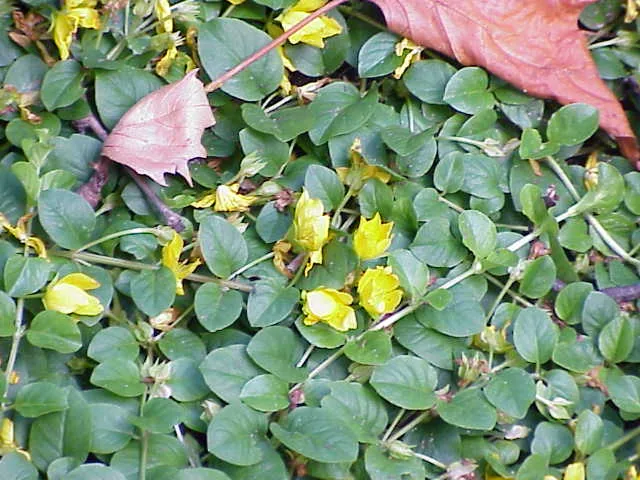
Creeping Jenny throws down a low, fast carpet of round coin-shaped leaves that hug the soil and tumble over the edges of pots and walls. The golden forms set shade alight with chartreuse to gold foliage, while the plain green species holds a deeper, cooler green. It runs in the primrose family and chases damp ground, which is why it shows up so happily in rain gardens and along pond edges.
The thing that makes it easy is the same thing that makes it a thrill to manage. The stems root at every node they touch, so one small plug weaves into a dense mat in a single season, and that mat keeps charging outward. It is hardy from USDA zone 3 to 9 and laughs off cold down to -40°F (-40°C), so once it digs in, it is here for good.
The flip side is its hunger to spread. The green species bolts out of gardens and storms into wetlands, stream banks, and moist woodlands, and it is listed as invasive or regulated in parts of the US. Give it a sharp edge or a container and it pays you back as a knockout, dependable carpet. Turn it loose near water and it becomes a real handful.
Care
The short version: keep it steadily moist, then push it into sun for the brightest gold or tuck it in shade for greener, scorch-free leaves. Plant it in rich, damp soil, feed it next to never, and trim the runners so it does not bolt where you don't want it.
Light
It thrives across the whole range from full sun to full shade. Full sun cranks the gold to its brightest, but it scorches the leaves where the soil dries out, so a shadier spot keeps the foliage greener, tougher, and far less fussy.
Water
Keep the soil moist to wet at all times, since the roots ride shallow and the plant crashes fast the moment it dries out. Water it every 2 to 5 days, more when the heat climbs, and turn it loose at a pond edge, where it is downright happy in shallow standing water.
Soil
Plant it in rich, damp, humus-rich soil that locks in moisture. Past that it shrugs at conditions, taking clay, loam, sand, or shallow rocky ground across a wide pH of 5.5 to 8.0, and even riding out the odd flood.
Temperature
This is one cold-tough customer, cruising from about -40°F to 100°F (-40°C to 38°C). That grit across USDA zones 3 to 9 is a big reason it spreads so freely once it gets going.
Humidity
Plain outdoor humidity does the trick, and there is no number to chase. What it actually wants is wet feet, not damp air, so zero in on the soil and forget the atmosphere.
Feeding
It barely touches fertilizer. One hit of balanced general-purpose fertilizer in spring is more than enough for this low-maintenance groundcover, and plenty of growers skip feeding altogether.
Pruning
Trim or shear the creeping stems any time you please to keep the patch reined in. Yank out the stems that have rooted past your line, and that is honestly the only real chore this plant throws at you.
Repotting
In a container, refresh or divide it the moment it gets crowded. Keep an eye out for a mat spilling over the edges, a thinning center, or roots packing the pot, then split it to fire it back up.
Size & spacing
Each plant hugs the ground at just 2 to 4 inches (5 to 10 cm) tall but stretches 12 to 24 inches (30 to 60 cm) wide, and it keeps right on rolling. Space your plants for that fast spread, and give it open room or a sharp edge to run against.
When to plant
Creeping Jenny is tough and totally easygoing about timing, so dive in whenever works. Plant it in spring once the frost clears, or in fall, and watch for its bright little yellow cup-shaped flowers in early summer around June.
Northern hemisphere
Southern hemisphere
Typical months for a temperate climate: start earlier in warm zones, later where spring frosts linger.
- Plant: Spring after frost, or fall
- Harvest: Yellow cup-shaped flowers in early summer (around June)
Hardiness
USDA hardiness zones: 3–9
Temperature: down to -40°C
Troubleshooting
With creeping Jenny the game is about where it grows, not whether it pulls through, because this plant is a survivor. The real action is keeping it reined in and stopping the gold leaves from scorching. Match what you spot below, then pounce before a runner or a dry spell grabs a head start.
The runners take off and the patch keeps gaining ground
This plant's signature trait is its runaway spread, and it really rips in the plain green species. The stems grab and root at every node they touch, and any snapped piece bounces right back, so a patch swallows its neighbors and pushes out into wetlands and stream banks. Get ahead of it: dig out the runners and rooted bits completely, shear it back to hold your edge, and drop in a root barrier or a pot anywhere near natural water. Want it purely for the color? Plant the gentler golden 'Aurea' instead.
Fix:
- Pull or dig out runners and rooted stem fragments, removing all pieces since fragments resprout
- Shear or mow back regularly to confine the patch
- Install root barriers or grow in containers to limit spread
- Choose the less-aggressive golden 'Aurea' form for ornamental use
Leaves picking up spots, rust, or ragged slug damage
Damp conditions invite two troublemakers: rust and leaf spot diseases, and slugs that can chew a mat down to nubs where they swarm. Open the planting up so air moves through, strip off the worst leaves, and go after the slugs with traps, baits, or a quick hand-pick. Best part: the plant powers right through the slug damage and bounces back full.
Fix:
- Improve air circulation and avoid prolonged leaf wetness for disease
- Remove and discard badly affected foliage
- Control slugs with traps, baits, or hand removal
Gold leaves bleaching and crisping at the edges in heat
Those browning tips are sun scorch, plain and simple, on a shallow-rooted plant that flat-out hates drying out. The gold blazes brightest in full sun, but hot dry sun torches the leaf edges wherever the soil runs low on water. Keep the ground steadily moist and slide it into a bit of afternoon shade in hot southern climates, and the color stays gorgeous.
Fix:
- Keep soil consistently moist
- Provide afternoon shade in hot southern climates
- Water more often during heat
Toxicity
Great news for pet households: creeping Jenny is not toxic. It is nowhere on the ASPCA poison lists and stays safe around cats, dogs, and the rest, with maybe a mild stomach upset if one really pigs out on the leaves. The thing to chase here is its spreading, not poison, so the job is keeping it boxed in rather than out of reach of curious mouths.
Safe for
People · Cats · Dogs · Horses · Rabbits · Livestock · Birds
Cats None
Cats can roam right through it, since it is not toxic and never lands on the ASPCA list. Chew down a pile of foliage and a cat might drool or get sick, but that is just a grumbly stomach, not poisoning.
Dogs None
Dogs get the all-clear too. Wolf down a big mouthful of leaves and the worst a dog gets is a quick passing stomach upset, nothing more.
Horses Safe
No toxicity turns up in horses, so a patch near the grazing line is zero worry.
Rabbits Safe
Rabbits can munch the foliage with no harm done. Like any new green, ease it in slowly so their gut keeps up.
Livestock Safe
Cattle, goats, and sheep run no known toxic risk from this groundcover at all.
Birds Safe
Backyard and wild birds can peck and poke around the leaves and stems without any toxic threat.
People Safe
Dig in bare-handed all you like, since contact is safe and gloves stay optional. This one earns its keep on looks, not flavor, so leave it off the plate.
No special handling needed for toxicity; gloves optional. The practical caution is containing its aggressive spread, not poisoning.
Varieties
Most growers go straight for one of the golden picks over the plain green species. These two are the ones you will keep running into.
'Aurea' (Golden Creeping Jenny)
Its coin-shaped leaves blaze chartreuse to gold in full sun and cool to lime green in shade, and it charges across the ground nearly as fast as the green species while pulling back just a touch on the aggression.
'Goldilocks'
A super-low golden-yellow groundcover that races 1 to 3 feet across, though its rounded leaves can slide back to green over time.
How to propagate
Creeping Jenny practically multiplies itself, which is both the fun and the warning. Any of three dead-easy methods hands you new plants in a few weeks.
DivisionEasy
Spring or fall · A few weeks
Division in spring or fall is the fastest, most fool-proof way to multiply it. Lift a clump from the edge of a patch, tear apart the chunks that already carry roots, drop them back in, and they roar off and settle within a few weeks.
Stem cuttingsEasy
Spring through summer · A few weeks
Cuttings strike like clockwork from spring through summer. Lay a healthy stem flat on moist soil, let it grab roots at the nodes, and you have got a brand-new rooted plant in a few weeks.
LayeringEasy
Growing season · A few weeks
Layering fires off on its own all season long. The trailing stems hook in and root wherever a node hits damp ground, taking hold in a few weeks while you just watch it go.
Myths
Creeping Jenny is a tidy, well-behaved groundcover you can plant anywhere.
Far from it. The green species is a powerhouse mat-former that roots at every node, breaks free of gardens, and storms into wetlands, stream banks, and moist woodlands, and it is listed as invasive or regulated in parts of the US. So pick its spot with care and keep it boxed in, and grab the gentler golden 'Aurea' for ornamental beds.