Ornamental · Polemoniaceae
Cup-and-saucer Vine
Cobaea scandens
Give it full sun and a tall, sturdy support, and this turbo-charged climber will blanket a wall in bell-shaped flowers by late summer.
Full sun
Every 3–7 days
75–120 days
USDA 9–11
Overview
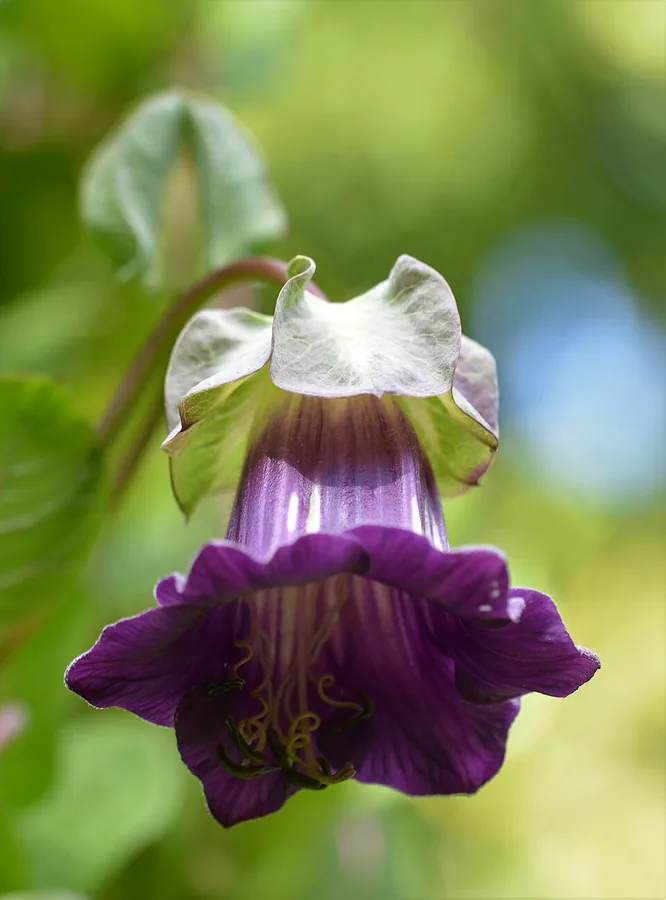
Cup-and-saucer vine grabs its name from the flower, where a deep bell of a cup perches on a wide, leafy green saucer of a calyx. The blooms open a creamy green and ripen to a rich violet-purple, so a single vine puts on a two-tone show all at once. It hails from the highlands of Mexico, which is exactly why growers in cold regions run it as a tender plant instead of a perennial.
Speed is the headline act. Sown from seed in late winter, it tears upward 10 to 20 feet or more in one season, latching onto anything in reach with branched tendrils at the tips of its leaves. Hand it a fence, an arbor, or a tall trellis and it will swallow the whole thing by late summer.
Once it gets rolling, it keeps care delightfully simple. Nail three things and it rewards you big: a strong support, full sun, and a light touch with feeding, because rich soil and heavy nitrogen just pile on leaves and skimp on flowers. Get it dialed in and it pumps out blooms from summer until the first frost.
Care
The short version: load it up with full sun, a tall sturdy support, and steady even moisture in fertile but not over-rich soil, and keep the nitrogen light so it throws its energy into flowers rather than leaves.
Light
Pour on the full sun for the heaviest flowering, though it shrugs off a bit of afternoon shade. Park it against a warm, sunny wall, since that extra heat fuels both the climbing and the blooms.
Water
Keep the soil evenly moist right through the season and water on a steady beat while the vine is climbing hard. Don't let it bake dry in hot weather, but make sure the ground drains fast, because it sulks in soggy soil.
Soil
It thrives in loam, sand, or clay as long as drainage is on point, anywhere across a pH of 5.5 to 7.5. Go for fertile ground over heavily enriched soil, since too much richness piles on leaves and shortchanges the flowers.
Temperature
The vine rolls with a wide range, roughly 25°F to 90°F (-4°C to 32°C), but a hard frost stops it cold. Treat it as tender and turn it loose outdoors only once the cold has truly cleared out.
Humidity
Plain outdoor humidity is all it wants, so there is no number to chase. What really counts is air streaming through the foliage, which keeps the sap-feeding pests it draws on the back foot.
Feeding
Feed it monthly through spring and summer with a balanced or lower-nitrogen liquid feed. Stay light on the nitrogen, because too much grows a leafy plant that barely flowers, the exact opposite of the show you're chasing.
Pruning
Run as an annual, it barely asks for pruning. Pinch the young tips to fire up branching and tie the stems to their support as they shoot upward. Where it carries on as an evergreen, cut it back in late winter to shape it and clear any diseased growth.
Repotting
Pot the seedlings up as they grow, then turn them out once frost has cleared. For a container plant, bump it into a bigger pot when the roots fill the old one or start busting out the drainage holes.
Size & spacing
This is a heavyweight climber, hitting 10 to 20 feet (3 to 6 m) in one season with a spread of 3 to 6 feet (91 to 183 cm). Hand it that much room and a support tall enough to take the charge.
When to plant
This vine runs on warmth, and frost is the one thing that shuts it down. Fire up the seed indoors in late winter, send the young plants out only once the cold has cleared and the soil has warmed, and the flowers keep rolling from summer all the way to the first frost.
Northern hemisphere
Southern hemisphere
Typical months for a temperate climate: start earlier in warm zones, later where spring frosts linger.
- Sow: Start seed indoors about 8-10 weeks before last frost; sow seeds on edge and keep warm (about 68-72 degrees F), germinating in roughly 14 days.
- Plant: Transplant out after all danger of frost has passed and soil is warm.
- Harvest: Blooms summer into fall until frost; flowers open creamy-green and age to deep violet-purple, each cup sitting on a leafy green calyx saucer.
Hardiness
USDA hardiness zones: 9–11
Temperature: down to -7°C
Troubleshooting
Almost everything that trips up this vine is quick to read and quicker to fix, so it rarely slows the fun. The big three are a plant that piles on leaves instead of flowers, sap-feeders lurking under the foliage, and stems left with nothing to climb. Spot the match below and jump on it early.
Loads of leaves but the flowers stall out
A vine racing along on leaves alone usually points straight to too much nitrogen, which throws all the energy into foliage and stalls the buds. Throw in a short, cool season or a shady corner and the flowers lag even further. Dial down the nitrogen, push it into full sun against a warm wall where the heat builds, and start the seed earlier next spring so the season has plenty of runway to flower.
Fix:
- Reduce nitrogen and switch to a balanced or lower-nitrogen fertilizer
- Site in full sun against a warm wall or trellis
- Start seed earlier indoors (8-10 weeks before last frost) to lengthen the growing season
Vine sprawling and tangling instead of climbing
Hand this climber something tall to grab and it takes off, but leave it bare and the fast stems sprawl across the ground or pile onto the neighbors. It hauls itself upward on branched tendrils at the leaf tips, so it craves a strong, tall frame to grip. Stake out a sturdy trellis, fence, arbor, or wall before planting, then steer and loosely tie the young stems until those tendrils lock on and run with it.
Fix:
- Install a tall sturdy trellis, fence, arbor, or wall before or at planting
- Guide and loosely tie young stems onto the support until tendrils take hold
Curled, speckled, or yellowing leaves, sometimes webbed
Leaves that curl, speckle, and yellow are flagging sap-feeders that have crashed the party. Flip the leaves and hunt the undersides for soft aphids, dust-fine spider mites stringing webbing, or whiteflies that erupt into a cloud the moment the plant gets a shake. Blast them off with a hard jet of water, then chase the holdouts with insecticidal soap or horticultural oil worked right into the undersides.
Fix:
- Spray off pests with a strong jet of water
- Apply insecticidal soap or horticultural oil, covering leaf undersides
- Repeat treatment and improve air circulation
Toxicity
Great news for homes packed with pets and kids: cup-and-saucer vine is not toxic. It stays off the ASPCA's poison lists, and no poisoning has ever shown up in animals or people, so you can let it storm a fence or arbor without a worry. It is grown for the show, not for the plate.
Safe for
People · Cats · Dogs · Horses · Rabbits · Livestock · Birds
Cats None
Plant it freely where cats prowl. A nibble of new greenery might bring a brief tummy grumble, as any strange leaf can, but no toxin in this vine poses a real threat.
Dogs None
Dogs get the all-clear here. A chewed stem or leaf does no harm, though a dog that gulps a big mouthful of any plant may end up with a briefly loose stomach.
Horses Safe
Horses are in the clear, with nothing on record to suggest the foliage causes harm if a grazing horse grabs a taste.
Rabbits Safe
Rabbits can roam right up to it, since none of its parts pack a toxin known to trouble them.
Livestock Safe
No poisoning has turned up in cattle, goats, or sheep, so it counts as safe to grow near grazing stock.
Birds Safe
Birds are safe near it, whether pets or backyard regulars, because the leaves and flowers carry nothing flagged as toxic to them.
People Safe
People have nothing to fear, and a curious child who grabs a stray leaf or flower is in no danger, though this vine is all about the show rather than the dinner plate.
No special handling required; wash hands after gardening as a general practice.
Varieties
The straight species rolls from green to purple as the flowers age, but a few named selections pin down a single color. These are the ones to chase.
'Alba'
A standout white form whose cups stay creamy-white all the way through instead of deepening to the usual violet-purple.
'Key Lime'
Bursting with a fresh green to chartreuse lime, this one keeps its zesty color rather than turning purple.
'Royal Plum'
Going for maximum drama, it cranks out the richest, deepest purple flowers the vine can throw.
How to propagate
Crank out plenty of cup-and-saucer vine from seed, or take cuttings whenever you want to lock in one particular color.
SeedEasy
Start indoors 8-10 weeks before last frost; transplant out after frost. · Germinates in about 14 days at 68-72 degrees F; can be slow to start, then grows rapidly.
Seed is where most growers kick things off, and it pays back fast. Tuck each seed in on its edge, keep the tray toasty at 68°F to 72°F (20°C to 22°C), and launch 8 to 10 weeks before the last frost. Sprouting takes its time at about 14 days, but once those seedlings wake up they shoot away, so hold them indoors until frost has cleared, then turn them loose outside.
Stem cuttingsModerate
Spring or summer during active growth · Several weeks to root
Locked onto a favorite color? Snip softwood cuttings in spring or summer while the vine is charging along, because that is how you copy a named selection true to type, and seed can drift off the color. Hand the cuttings several weeks to root, then plant them on and watch them go.
Myths
A tropical-looking vine like this must be a tough, slow grow.
Those flashy bell-shaped blooms might say high-maintenance, but it is easy and lightning-fast from seed, rocketing 10 to 20 feet or more in a single season. In cold climates you just run it as a warm-season annual and fire up a fresh batch every spring.