Shrub · Hydrangeaceae
Slender Deutzia
Deutzia gracilis
An easy, pet-safe shrub that erupts in white spring flowers and rewards you for barely lifting a finger.
Full sun
Every 5–10 days
USDA 5–8
2–5 ft · 0.6–1.5 m
Overview
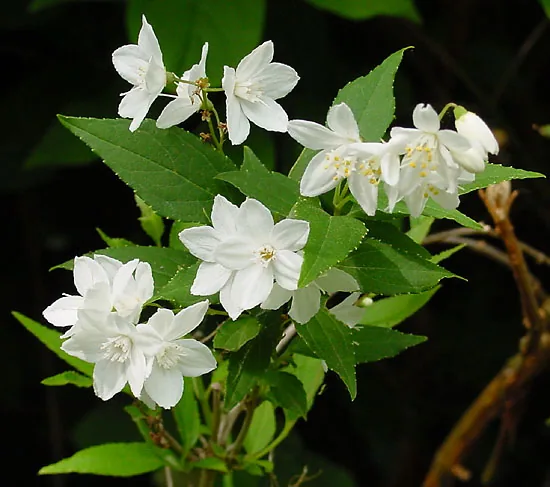
Slender deutzia delivers one of spring's most cheerful payoffs for almost no effort. This low, graceful shrub from Japan smothers its arching stems in small white flowers, and it grows right alongside the hydrangeas as a member of their family. It stays neat at only 2 to 5 feet (61 to 152 cm) tall and roughly as wide, which makes it a winner at the front of a border or running along a path.
The real thrill is how much it gives back for how little it wants. It powers through cold down to -20°F (-29°C), thrives in clay, loam, or sand, and rolls with soil from acidic to alkaline. Hand it sun and good drainage and it practically grows itself, which is exactly how it earned its easy reputation with new gardeners.
Its bloom hits fast and hits hard, blanketing the shrub for about 10 to 14 days in mid to late spring before it relaxes into a fresh green mound for the rest of the year. Grab the right cultivar and you can chase that up with burgundy fall color or bright lime foliage. It pours everything into a few electric weeks, then steps back and lets you enjoy the rest.
Care
The short version: plant it in full sun to part shade in any well-drained soil, keep it watered through dry spells, and prune it only right after it flowers so you never sacrifice next spring's buds.
Light
Deutzia throws its biggest flush of flowers in full sun, though it keeps performing happily in partial sun or partial shade. Where summers crank up the heat, a touch of afternoon shade stops the leaves bleaching, so lean toward some shelter in the hottest regions.
Water
Keep the soil consistently moist but well drained, watering often while a young shrub digs in and through any dry spell. Let the surface dry a little between waterings instead of keeping it soggy. Once it settles, it cruises along on a drink every 5 to 10 days in dry weather.
Soil
This shrub takes whatever you give it, romping along in clay, loam, or sand. What it really wants is moist, well-drained ground, and it adapts across a wide pH of 6.0 to 8.0, from acidic clear through to alkaline.
Temperature
Deutzia is genuinely tough, sailing through USDA zones 5 to 8 and cold to about -20°F (-29°C). It also stands firm against summer heat near 100°F (38°C), though the foliage holds up best with a bit of afternoon shade in hot climates.
Humidity
Plain outdoor air keeps it perfectly happy, so there is no number to chase. What counts far more is strong air movement, since crowded, damp foliage is what opens the door to the odd case of leaf spot.
Feeding
Deutzia eats light and asks for almost nothing. A balanced slow-release shrub fertilizer or a layer of compost in early spring fuels the whole year. Go easy on nitrogen, which pushes the soft growth aphids pounce on.
Pruning
Nail the timing and the rest is easy, because deutzia blooms on old wood. Prune right after flowering and thin up to one-third of the oldest stems to keep the shape open and graceful. Never cut in late summer or fall, or you will toss away next spring's flowers.
Repotting
Deutzia almost never needs repotting and truly thrives in the ground. If you do run one in a pot, bump it up only when roots circle the container or burst through the drainage holes, or when water rushes straight through without soaking in.
Size & spacing
Look for a mounding shrub of 2 to 5 feet (61 to 152 cm) tall and about as wide. Give each plant roughly that much room so the arching stems can stretch out and air can rip right through the branches.
When to plant
Get deutzia in the ground in spring or fall, while mild weather lets the roots dig in before heat or hard frost rolls through. It bursts into flower for a short, exciting window in mid to late spring, roughly March to May, so grab a spot where you can soak up the show. The one date to lock in is pruning, which has to hold until the flowers fade.
Northern hemisphere
Southern hemisphere
Typical months for a temperate climate: start earlier in warm zones, later where spring frosts linger.
- Plant: Spring or fall
- Harvest: Mid-to-late spring (March to May), blooming for about 10 to 14 days
Hardiness
USDA hardiness zones: 5–8
Temperature: down to -29°C
Troubleshooting
Deutzia barely puts a foot wrong, and almost everything that crops up is cosmetic rather than serious. A few pests swing by the new growth in spring, and a heat wave can pale the leaves. Match what you are seeing below and you will know fast whether to jump in or just let the shrub shrug it off.
New growth mobbed by tiny sap-sucking insects
Those soft little bugs swarming the freshest tips are aphids, piling onto the new spring growth where the sap runs sweetest. They dump sticky honeydew and crinkle the young leaves, but they are easy to rout. Blast them off with a hard jet of water, then turn lady beetles and lacewings loose to clean up the rest.
Fix:
- Spray colonies off with a strong jet of water
- Apply insecticidal soap or horticultural oil to affected growth if populations are heavy
- Encourage natural predators such as lady beetles and lacewings
Twisting light trails carved through the foliage
Those squiggly trails come from leaf miner larvae chewing between the upper and lower skin of the leaf, safe from any spray. Snap off the worst-marked leaves and bin them to knock the numbers right back. On a healthy deutzia the damage is skin-deep and almost never worth more than that.
Fix:
- Remove and destroy mined leaves to reduce the population
- Tolerate light damage, which is mostly cosmetic on an otherwise vigorous shrub
Leaves blanched near white by fierce sun
When the most exposed leaves wash out to pale or near-white in a hot, bright stretch, you are watching foliage bleaching as the heat breaks down the chlorophyll. It looks rough but it is harmless, and the shrub bounces right back. In hot-summer regions, hand it a spot with afternoon shade and keep the soil evenly moist to take the heat off.
Fix:
- Provide afternoon shade in hot-summer climates
- Keep soil evenly moist to reduce heat stress
Dark speckles and patches breaking out on foliage
Discrete dark spots that pop up in damp weather point to leaf spot disease, a fungal pest that rarely amounts to much here. Strip off the marked leaves and thin any crowded stems to get air ripping through the canopy. Water at the base instead of over the top, and the problem usually clears off on its own.
Fix:
- Remove and dispose of affected leaves
- Improve air circulation by thinning crowded stems
- Avoid overhead watering
Toxicity
Pet owners and parents, here is the part to cheer about: slender deutzia is non-toxic straight across the board. The ASPCA gives it the green light for dogs, cats, and horses, and NC State Extension turns up no toxicity either. Plant it anywhere a curious nose or hand might wander.
Safe for
People · Cats · Dogs · Horses · Rabbits · Livestock · Birds
Cats None
Feline explorers get the all-clear: the ASPCA rates slender deutzia non-toxic, so a sampled leaf does a cat no harm at all.
Dogs None
It is just as safe for dogs. A mouthful of leaves will not poison them, though wolfing down a lot of any plant can still leave a dog with a mild, passing stomach upset.
Horses None
Horses stay in the clear as well; no toxicity has ever been reported for them, even with a shrub planted right beside the pasture fence.
Rabbits Safe
Even hungry rabbits chomping through the foliage stay perfectly healthy, because no part of this shrub holds anything poisonous.
Livestock Safe
Goats, sheep, and cattle can all graze nearby without trouble, since the shrub poses zero threat to farm animals.
Birds Safe
Songbirds hopping through the stems and pecking at leaves or old blossoms come away without any harm.
People Safe
Slender deutzia is not toxic to people, so it is a great pick for gardens where children play. It is grown for its flowers, not for eating, so there is no reason to put any part of it on a plate.
No special handling precautions are needed; the plant is non-toxic.
Varieties
A handful of named cultivars dial up the plain species with brighter foliage or a tighter, more compact shape. These are the standouts you will run into most.
Nikko
A dwarf, dense mound only 1 to 2 feet tall that doubles as a groundcover, with green leaves that fire up to burgundy in fall.
Chardonnay Pearls
A compact standout prized for its lime-yellow foliage and pearl-like buds that pop open to white flowers.
Pink Minor
This compact grower sends up pink buds that burst open into white blooms carrying a rosy flush.
How to propagate
Multiplying your deutzia is genuinely fun and easy, whether you root a summer cutting or let a low stem dig in and root right where it lands.
Stem cuttingsEasy
Summer · Several weeks to root; transplantable the following season
The easiest way to crank out more deutzia is from softwood cuttings taken in summer, which root with hardly any fuss. Give them several weeks to push out roots, then leave them be until the following season, when they are ready to move to a permanent spot.
LayeringEasy
Spring to summer · One growing season or more
Layering plays right into the shrub's low, arching stems. Anytime from spring through summer, peg a stem down where it touches the soil and it will root right at the contact point. Plan on a full growing season or more before the new plant has rooted enough to cut free and lift.
Myths
Deutzia is a toxic pick that pet owners need to strike from their planting lists.
Forget that worry, because the ASPCA lists slender deutzia as non-toxic to dogs, cats, and horses, and NC State Extension backs it up. You can plant it freely around pets and children and never give a poisonous nibble a second thought.
Deutzia takes a haircut in any month, so tidy it up on your own schedule.
Here is the catch: deutzia sets its flowers on old wood, so cutting in late summer, fall, or just before bloom rips off next spring's buds. Prune only right after the flowers fade, and you keep that spectacular show rolling year after year.