Shrub · Hydrangeaceae
Mock Orange
Philadelphus coronarius
Plant it in full sun and prune on cue, and mock orange packs early summer with orange-blossom scent.
Full sun
Every 7–14 days
USDA 4–8
10–12 ft · 3–3.7 m
Overview
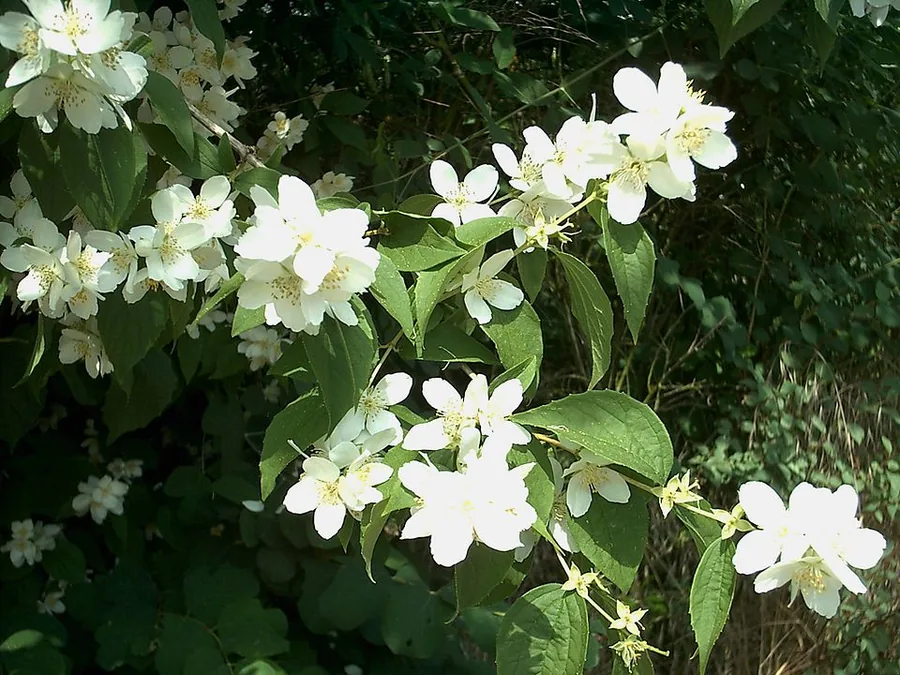
One feature makes mock orange a keeper above all others: the white, four-petaled flowers that pop open in late spring and pump out an orange-blossom scent you can catch clear across the garden. It is a deciduous shrub in the hydrangea family, native to southeastern Europe and Asia Minor, and it builds into a big, multi-stemmed mound of arching canes.
Better yet, it forgives plenty. It powers through cold down to zone 4, takes drought and wind once it settles in, and adapts to sandy, loamy, or clay soil, even where the pH runs alkaline. The one thing it demands is sun, since shade thins the bloom and opens the door to mildew.
Age is the one catch to watch. Leave it be and the shrub runs leggy and twiggy, with the flowers stranded up top on long bare canes. A yearly cut of the oldest stems keeps it full and flowering, and that quick job covers most of the work this plant ever asks.
Care
The short version: full sun for the biggest bloom, moist well-drained soil while it establishes, and one prune right after flowering to keep an aging shrub full and fragrant.
Light
Drop it into full sun and it rewards you with the heaviest, most fragrant bloom going. Partial shade keeps it alive and growing, sure, but shade trades flowers for leaf and lets powdery mildew creep onto the crowded inner branches.
Water
Keep the soil moist while the shrub establishes, then back right off, because a settled plant powers through drought and wind on its own and wants little extra water. A drink every 7 to 14 days covers it in dry spells. The one thing it flat out rejects is wet, poorly drained ground.
Soil
Mock orange rolls with almost any soil, thriving in sand, loam, or clay as long as it drains. A pH anywhere from 4.0 to 7.0 suits it, and it even powers through the alkaline end that stops many shrubs cold.
Temperature
This shrub is genuinely tough and cold-hardy, cruising from about -29°F to 100°F (-34°C to 38°C). It rides out hard winters in zone 4 and takes summer heat without breaking stride.
Humidity
Ordinary outdoor humidity works fine, so there is no level to chase. Air movement counts for more than moisture in the air, since still, crowded conditions are what kick off powdery mildew.
Feeding
A shrub this vigorous barely needs a meal. A balanced fertilizer or a light layer of compost in spring covers it, and piling on more just pushes soft growth that aphids swarm.
Pruning
Nail the timing and everything follows, because mock orange blooms on old wood, so cut right after the flowers fade in early summer and never in fall or winter. As it ages and runs leggy, take about a third of the oldest stems to the ground each year and it bounces right back.
Repotting
This is a landscape shrub, not a pot dweller, so repotting almost never enters the picture. If a move is on the cards, dig and transplant young suckers in early spring or fall while the plant is dormant or barely waking.
Size & spacing
Hand it real space, because a mature plant shoots to 10 to 12 feet (3 to 3.7 m) tall and spreads 8 to 10 feet (2.4 to 3 m) wide. Park it where that arching mound can fill out without crowding a wall or path.
When to plant
Get it in the ground in spring or fall, while the soil runs cool and damp and roots dig in fast. Then comes the payoff: the fragrant white flowers burst open in late spring to early summer, roughly May into June. The show is short, but it lands with real impact.
Northern hemisphere
Southern hemisphere
Typical months for a temperate climate: start earlier in warm zones, later where spring frosts linger.
- Plant: Spring or fall
- Harvest: White fragrant flowers in late spring to early summer (May to June)
Hardiness
USDA hardiness zones: 4–8
Temperature: down to -34°C
Troubleshooting
Great news for anyone keen to grow it: mock orange rarely throws real trouble your way, and most of what shows up is just cosmetic. The one setback that actually stings is a shrub that skips its flowers, and that almost always traces back to a badly timed cut. Match your symptom below and jump on it early.
Barely any flowers stuck on long, bare canes
This one almost always tracks to timing, because mock orange flowers on old wood, so a fall or winter cut wipes out next spring's buds and thins the bloom. Deep shade and years of neglect pile on. Prune only right after the flowers fade, pull a third of the oldest canes each year, and push it into fuller sun.
Fix:
- Prune only immediately after flowering, not in fall or winter
- Renewal prune by removing about one third of the oldest canes to the ground
- Move or site in fuller sun for best bloom
A white dusty film creeping over the leaves
That is powdery mildew, a fungus that pounces where the air sits still and the shrub gets buried in shade. Open the canopy with a few sharp cuts and strip off the worst leaves. Shift it into full sun, where foliage dries fast, and shut the door on a repeat.
Fix:
- Prune to open up the canopy and improve air circulation
- Remove and dispose of badly affected foliage
- Site in full sun where foliage dries quickly
Dark spots and blotches peppering the leaves
These are fungal leaf spots, and on this shrub they look nastier than they hit. Rake up the fallen leaves where the spores overwinter, thin a few stems to get air moving, and keep water off the foliage. The plant powers past it most years.
Fix:
- Rake and remove fallen, infected leaves
- Thin stems to improve airflow
- Avoid wetting foliage when watering
Curled new shoots swarming with tiny insects
Odds are strong these are aphids, soft insects that mob the tender tips and leave a sticky film behind. Blast them off with a hard jet of water and grab insecticidal soap only if they keep charging back. Spot pale winding trails inside the leaves instead, and that is leaf miners, so pick and destroy those leaves.
Fix:
- Dislodge aphids with a strong spray of water
- Use insecticidal soap if populations are heavy
- Remove and destroy mined leaves
Toxicity
Here is the reassuring part for pet owners and parents: mock orange comes in non-toxic across the board. Nothing in the leaves, stems, or flowers will poison a cat, dog, horse, rabbit, bird, or child. The worst a stray mouthful brings is mild stomach upset, no different from chewing any plant.
Safe for
People · Cats · Dogs · Horses · Rabbits · Livestock · Birds
Cats None
Cats are totally safe around mock orange. A curious nibble of leaf or flower will not poison them, though chewing any plant can bring on a little drool or a brief upset stomach.
Dogs None
Dogs are in the clear with this shrub too. Nothing in the foliage or blooms is toxic, so a stolen mouthful is no cause for alarm beyond the odd bout of mild tummy trouble.
Horses Safe
Horses can graze near mock orange without any risk. It carries no toxins that affect them, making it a great pick for a paddock edge or pasture border.
Rabbits Safe
Rabbits face zero danger from mock orange. The leaves and stems are non-toxic, so a wandering rabbit that samples a low branch comes to no harm.
Livestock Safe
Cattle, goats, and sheep can browse this shrub safely. It holds nothing that troubles ruminants, so it poses no threat where stock roam.
Birds Safe
Birds are perfectly safe around mock orange and often shelter in its dense, twiggy growth. Neither the foliage nor the flowers carry anything that would harm them.
People Safe
Mock orange is harmless to people, kids included. It is not grown to be eaten, but a stray taste of leaf or petal will not cause any real trouble.
No special handling required; as with any plant, discourage pets and children from chewing foliage to avoid mild stomach upset.
Varieties
Most mock oranges on the shelf are the plain species, but a handful of named selections are absolutely worth tracking down for extra color or tougher, cold-hardy bloom.
'Aureus'
'Aureus' bursts out in bright golden-yellow new growth that mellows toward green once summer heat rolls in.
'Variegatus'
'Variegatus' rims every green leaf with a clean, creamy-white border that lights up a shady corner.
'Nanus'
'Nanus' is a compact dwarf that holds well below the towering size of the species.
'Minnesota Snowflake'
'Minnesota Snowflake' is a cold-hardy standout that loads itself with heavily fragrant double white blooms.
How to propagate
Here is where the fun starts, because mock orange ranks among the easiest shrubs to multiply, and three simple routes open up depending on the season and how hands-on you want to get.
Stem cuttingsEasy
Softwood cuttings in late spring to early summer; hardwood cuttings from dormant stems in late fall to winter · 4 to 8 weeks for softwood cuttings to root
Cuttings are the fastest track to more of this shrub, no contest. Take softwood cuttings in late spring to early summer or hardwood cuttings from dormant stems through late fall and winter, and the softwood pieces strike roots in 4 to 8 weeks.
DivisionEasy
Early spring or fall · One growing season
Mock orange pushes up suckers from its base, so dig and split off the rooted ones in early spring or fall for instant new plants. Each division digs in over a single growing season.
LayeringEasy
Spring to summer · One growing season or more
Layering barely counts as work. Pin a low branch down against the soil any time from spring through summer, and it roots right where it touches the ground over a season or more.
Myths
Every shrub called mock orange is the same plant.
Plenty of unrelated plants grab the same name, which throws people off. The true mock orange, Philadelphus coronarius, is a deciduous shrub in the hydrangea family with four-petaled white flowers, while Pittosporum tobira is an evergreen carrying five-petaled blooms in clusters and Murraya paniculata is a tropical evergreen that sets red fruit. They land in entirely different genera and share only that orange-blossom scent.