Shrub · Hydrangeaceae
Hydrangea
Hydrangea macrophylla
Give it rich, moist soil and afternoon shade, and the hydrangea piles on armfuls of bloom all summer.
Partial shade
Every 3–7 days
USDA 3–9
3–10 ft · 0.9–3 m
Overview
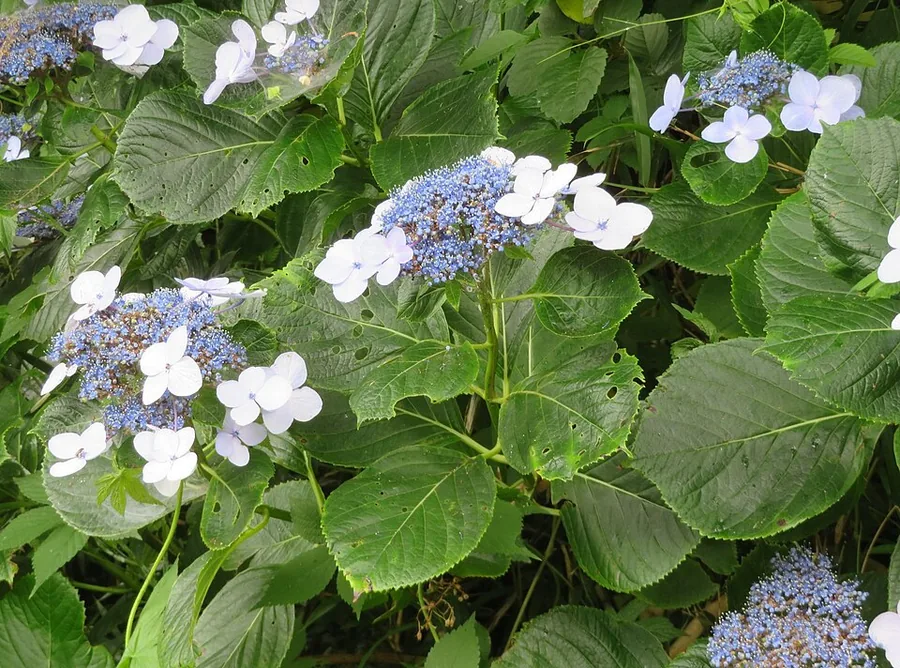
Hydrangeas bring the big, romantic energy to a summer garden, loading up on rounded mophead heads, flat lacecaps, or tall cones depending on the type. The headliner, the bigleaf hydrangea, is the one that flips blue in acidic soil and pink in alkaline, a color trick that has hooked gardeners for generations. They grow fast and bloom hard, shooting up anywhere from 3 to 10 feet (90 cm to 3 m) across the different species.
Here is where it gets interesting: hydrangeas don't all play by one rulebook. Some bloom on old wood, stacking their buds the summer before, while others bloom on new wood pushed out that same season. That one difference drives when you prune, whether a brutal winter costs you flowers, and which types power through a spot where late frosts strike. Match the species to your zone and half the work is already handled.
Past the color and the pruning, hydrangeas keep the demands low. They want steady moisture, a break from the fiercest afternoon sun, and soil packed with organic matter. Nail those and the payoff rolls in year after year, since this is a long-lived perennial shrub that only fills out and gets better with age.
Care
The short version: drop it into rich, moist, well-drained soil with morning sun and afternoon shade, water deeply about once a week, and prune to match whether your type blooms on old or new wood.
Light
Hydrangeas thrive in partial shade, so line them up for morning sun with cover through the hot afternoon. Bigleaf types scorch and wilt in full afternoon sun, while panicle types soak up far more of it. Steer clear of deep shade, though, since it slashes the flower count.
Water
Keep the soil evenly moist, watering deeply about once a week and cranking it up in heat or in a pot. The name flat-out tells you how thirsty they get, and bigleaf types flop first the second they dry out. Lay on a layer of mulch to trap that moisture and keep the roots cool.
Soil
Plant them in rich, moist, well-drained soil loaded with organic matter. A pH of 5.0 to 6.5 hits the sweet spot, on the acidic side, and for bigleaf and mountain types that acidity also drives the flowers toward blue.
Temperature
These are tough shrubs, holding strong from about -20°F to 95°F (-29°C to 35°C) across the hardier species. Watch for a late spring frost, the real threat, since it can wipe out the formed buds on old-wood types and swipe a whole season of bloom.
Humidity
Everyday outdoor humidity works fine for hydrangeas, so skip chasing a number. Air movement counts way more than the humidity, because crowded, still, muggy air is what kicks off leaf spot and powdery mildew.
Feeding
A balanced 10-10-10 fertilizer a few times from spring through mid summer covers it. Go light, since too much nitrogen pumps out lush leaves and chokes back the flowers you actually want.
Pruning
Time every cut to the bloom wood and you cannot miss. Prune old-wood bloomers like bigleaf, oakleaf, and mountain right after they flower and no later than August 1, and prune new-wood bloomers like panicle and smooth in late winter or early spring before growth kicks off.
Repotting
Hydrangeas rarely need repotting, since most spend their lives planted in the ground. Growing one in a container? Bump it up a size when roots circle the pot, poke from the drainage holes, or water blows straight through without soaking in.
Size & spacing
Depending on the species, hydrangeas shoot up 3 to 10 feet (90 cm to 3 m) tall and spread 3 to 6 feet (90 to 180 cm) wide. Give each shrub room to stretch out so air moves freely through the branches and disease stays away.
When to plant
Hydrangeas power through zones 3 to 9, so the timing really comes down to two calls: when to plant and when to prune. Get new shrubs in the ground during the mild stretch of spring or fall, look for bloom from late spring through summer, and let the bloom-wood type call when to grab the pruners.
Northern hemisphere
Southern hemisphere
Typical months for a temperate climate: start earlier in warm zones, later where spring frosts linger.
- Plant: Spring or fall
- Harvest: Late spring through summer; some reblooming types again in late summer
Hardiness
USDA hardiness zones: 3–9
Temperature: down to -40°C
Troubleshooting
Most hydrangea hiccups land in a short lineup: a plant that wilts in the heat, one that pumps out leaves but no flowers, or foliage speckled with spots or going yellow. Match what you see below to its likely cause, then jump on it before it sets the plant back.
Leaves and flower heads flopping once the sun climbs
That afternoon slump comes down to thirst and hot sun ganging up on the plant. Bigleaf types drop first under strong direct light, then snap right back once evening cools and the soil holds water. Shift the shrub to morning sun with afternoon shade, soak it deeply, and pile on some mulch to keep the roots cool and the moisture locked in. Fix the setup and it bounces back fast.
Fix:
- Water deeply to keep soil evenly moist
- Mulch to conserve moisture and cool the roots
- Site bigleaf hydrangeas where they get morning sun and afternoon shade
A healthy plant that refuses to bloom
A lush shrub that skips the flowers almost always got pruned at the wrong moment. Old-wood bloomers build next year's buds right after they finish flowering, so a fall or spring cut snips the whole show off. Cold winters and late frosts can wipe out those buds too, and piling on shade or nitrogen just cranks out leaves. Pin down whether your plant blooms on old or new wood, then aim the shears to match and the flowers come roaring back.
Fix:
- Prune old-wood bloomers only right after flowering
- Protect old-wood types from late frosts
- Reduce shade and avoid heavy nitrogen feeding
Blotchy leaves or a floury white layer spreading over the foliage
Two fungi turn up on the foliage here. Cercospora and other leaf spots stamp purple-edged marks with tan centers, and powdery mildew dusts a white film across plants that sit crowded in dead air. Neither one takes down a healthy shrub, but damp, packed conditions let them run. Rake up the marked and fallen leaves, water at the base so the foliage stays dry, and open the plant up so air rips right through it.
Fix:
- Remove and dispose of affected and fallen leaves
- Use drip or soaker irrigation to keep foliage dry
- Improve air circulation and apply a labeled fungicide if needed
Leaves going yellow while the green veins hold on
Yellow leaves laced with green veins flag iron chlorosis, which fires up when the soil runs too alkaline for the plant to grab iron. It jumps to the newest leaves first. Test the soil and pull the pH toward the slightly acidic zone hydrangeas love, dig in organic matter to sharpen the drainage, and reach for iron only once a test proves the shortage. Sort that out and the green comes back.
Fix:
- Test and adjust soil pH toward slightly acidic
- Improve drainage and add organic matter
- Apply iron if a deficiency is confirmed
Toxicity
Here is the one catch: hydrangeas are toxic, right down to the parts people most want to handle. The leaves, buds, and flowers all carry cyanogenic glycosides, which can poison cats, dogs, horses, and grazing animals, and nothing on the plant is safe to eat. Keep clippings and fallen blooms away from pets and out of paddocks, and wash up after pruning.
Toxic to
Cats · Dogs · Horses · Rabbits · Livestock · Birds · People
Cats Mild
A cat that nibbles a leaf or bloom typically lands vomiting and diarrhea, then slumps into a low, listless stretch. The sharp bitter taste usually chases them off well before they pack in enough to do real damage.
Dogs Mild
Dogs chew shrubs more than anyone, and it earns them an upset stomach, loose stools, and a flat, mopey mood. Track a determined chewer closely, because a big mouthful nudges up the small risk of cyanide trouble.
Horses Mild
A horse that gets into hydrangea can wind up with colic-like belly upset, diarrhea, and a dull, sluggish look. Gather clippings and prunings and stash them well out of reach of paddocks.
Rabbits Toxic
Those cyanogenic glycosides slam the door on every part of the plant for rabbits, and their tiny size leaves barely any margin. Digestive distress and weakness follow, so keep the plant and all its trimmings clean out of their space.
Livestock Toxic
Cattle, goats, and sheep can graze down enough hydrangea foliage to load up on a genuinely harmful dose of the cyanogenic compound. Drooling, diarrhea, and labored breathing are the red flags that call for a vet.
Birds Caution
The leaves and buds pack the same toxin that hits mammals, so pet and backyard birds should steer clear of them. Catch a bird pecking at the plant and step in fast.
People Caution
No part of a hydrangea is for eating, and the leaves, buds, and flowers can churn up stomach upset if swallowed. Keep curious kids away from the blooms and wash your hands after pruning.
Keep clippings and fallen flowers away from pets and grazing animals; cyanide poisoning is uncommon but possible with very large ingestions.
Helpline numbers

United States
ASPCA Animal Poison Control: (888) 426-4435 (fee applies)
Poison Control: (800) 222-1222



Canada
Poison Centres: 1-844-764-7669
Varieties
Several hydrangea species share the name but split hard on flower shape, hardiness, and bloom time. These are the main ones worth sorting out.
Bigleaf (Hydrangea macrophylla)
The crowd-pleasing mophead and lacecap shrub that flips blue in acidic soil and pink in alkaline, blooming mostly on old wood except for the reblooming Endless Summer types that fire off flowers on both old and new growth.
Oakleaf (Hydrangea quercifolia)
A native that shows off bold oak-shaped leaves and white cone-shaped panicles aging to pink, then caps the year in rich bronze fall color, blooming on old wood.
Panicle 'Limelight' (Hydrangea paniculata)
The workhorse of the group, powering through full sun and hard cold while it hoists white-to-pink cone-shaped panicles on new wood, so you prune it in late winter.
Smooth 'Annabelle' (Hydrangea arborescens)
A native that throws up huge white globe-shaped flower heads on new wood, which makes it a breeze to prune and a champ at reblooming.
Mountain (Hydrangea serrata)
The bigleaf's trimmer, tougher cousin, with finer lacecap flowers and leaves and buds that muscle through the coldest winters.
How to propagate
Hydrangeas multiply at home with almost no effort, and two simple, beginner-friendly routes will hand you a brand-new plant.
Stem cuttingsEasy
Late spring to summer · Several weeks to root
The quickest win for more hydrangeas is a softwood stem cutting snipped in late spring or summer. Keep it warm and humid and it roots over several weeks into a fresh plant that copies the parent exactly.
LayeringEasy
Spring to summer · One season to root
Layering is even easier when a low, bendy branch is within reach. Pin it down to the soil in spring or summer, let it root for a full season, then snip it free as a whole new plant.
Myths
Grab the shears in fall, or once winter winds down, and treat every hydrangea identically.
Pruning rides entirely on the bloom-wood type. Old-wood bloomers like bigleaf, oakleaf, and mountain load their buds right after flowering, so a fall-through-spring cut hauls next year's flowers away with the clippings. New-wood bloomers like panicle and smooth get their trim in late winter or early spring. Nail down which kind you have before the shears come out.
Push the soil pH around and any hydrangea will flip from pink flowers to blue.
That color-flipping party trick only lands on a couple of species. Only bigleaf and mountain hydrangeas react to soil pH and aluminum, turning blue in acidic soil and pink in alkaline. White-flowered, panicle, and oakleaf types hold their color flat out, no matter what you feed the soil.