Ornamental · Onagraceae
Fuchsia
Fuchsia × hybrida
Hand it cool shade and steady moisture, and the fuchsia keeps dangling its two-tone flowers all season long.
Partial shade
Every 2–4 days
59–70°F · 15–21°C
USDA 10–11
Overview
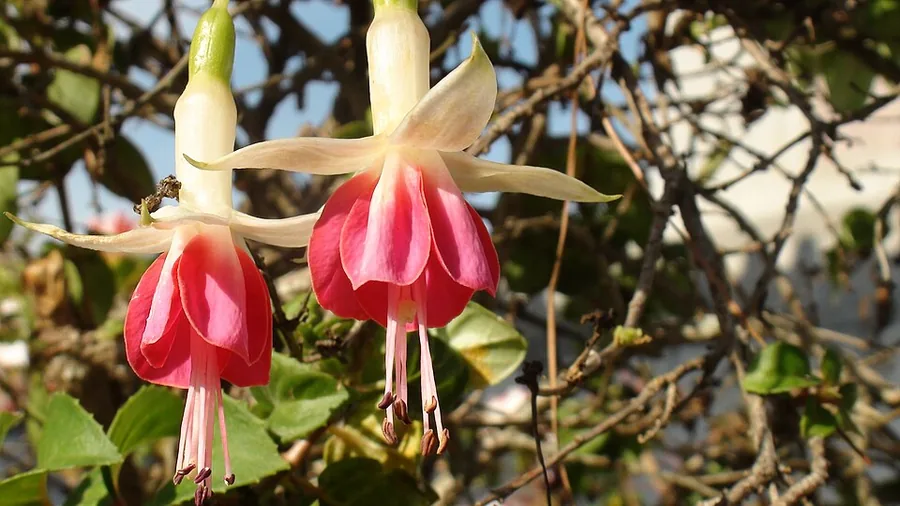
Little else flowers quite like a fuchsia hitting its stride. The dangling blooms, so often in two contrasting colors, swing from the stems like tiny eardrops, which is precisely how the plant picked up its old name of lady's eardrops. Most garden fuchsias are hybrids bred for that display, whether trained upward or left to pour from a hanging basket.
At its core this is a shade lover. Fuchsias hit their peak in cool, part-shaded corners and slump in heat, so they pay off for gardeners who can hand them a sheltered pocket away from the fierce afternoon sun. Look after them and the flowers keep coming from spring straight through fall.
Most gardeners run fuchsia as an annual or move it under cover for the cold months, though the hardy types can stay in the ground where winters run mild. Whichever way you grow it, the plant drinks deeply and feeds hungrily, and it rewards the effort with months of bloom.
Care
The short version: cool part to full shade, soil kept evenly moist and never bone dry, a balanced feed every two weeks through the growing season, and shelter from hot afternoon sun and wind.
Light
Hand a fuchsia part to full shade, and cooler wins every time. It happily takes bright indirect light too, but hot afternoon sun burns the leaves and halts the flowers, so aim for a sheltered, shaded pocket.
Water
Keep the soil consistently moist and never bone dry, since fuchsias flag quickly the moment they run short. Plants in containers and hanging baskets dry out fast and call for frequent watering plus a break from drying wind. Dial back the water come fall to nudge the plant toward dormancy.
Soil
Set them in rich, moisture-retentive loam with plenty of organic matter dug through. A slightly acidic pH of 5.5 to 6.5 fits them well, and soil that grips moisture without going swampy keeps the roots thriving.
Temperature
Fuchsias run cool, ideally 59°F to 70°F (15°C to 21°C). Push the average daily temperature past 76°F (24°C) and the flowers shut off, so summer heat is the one force truly stacked against you.
Humidity
These plants favor damper air, somewhere around 50% to 70% humidity. Dry air wears them down and rolls out the welcome mat for spider mites, so a sheltered, faintly humid corner beats a wide-open, baking one.
Feeding
Fuchsias eat like heavy feeders. Serve a soluble, balanced complete fertilizer every two weeks all through the growing season to keep that steady parade of flowers rolling.
Pruning
Pinch off new shoots once they push two full sets of leaves to drive branching and a bushier shape, then hold off on pinching about a month ahead of the first frost. For hardy types, cut them back in mid-March once the freeze risk lifts.
Repotting
Shift potted fuchsias into fresh mix every spring. Roots winding around the pot, soil that drains almost the instant you water, and growth that stalls all signal the plant has outgrown its home.
Size & spacing
Most plants climb to 1.5 to 3 feet (46 to 91 cm) tall and reach 12 to 24 inches (30 to 61 cm) across. Leave each one enough elbow room for air to sweep freely around the leaves, which holds rust and mildew off.
When to plant
Fuchsias take their cues from cool weather rather than the calendar's version of summer. Root cuttings indoors in early spring, move plants outside after the last frost once nights hold above freezing, and count on flowers from spring through fall, with a quiet spell when midsummer heat arrives.
Northern hemisphere
Southern hemisphere
Typical months for a temperate climate: start earlier in warm zones, later where spring frosts linger.
- Sow: Cuttings rooted indoors in early spring; seed germinates in 21-28 days at 70-75°F
- Plant: After the last spring frost when nights stay above freezing
- Harvest: Spring through fall, slowing in summer heat
Hardiness
USDA hardiness zones: 10–11
Temperature: down to -1°C
Troubleshooting
Nearly every fuchsia hiccup comes down to heat or to a short cast of familiar pests and a fungus or two. Keep an eye on the flowers and the undersides of the leaves, because that is where trouble first shows its hand. Match what you spot below and step in before it spreads.
Warped, swollen shoots with lumpy galls and reddening leaves
Blame the fuchsia gall mite, a pest too tiny for the eye that twists growing tips and flowers into thick, misshapen galls. Snip away and burn every infested part, then hit the plant with horticultural oil or insecticidal soap every 2 to 3 weeks. Set it apart from the others and scrub your tools, hands, and clothing, since this mite hops from plant to plant with ease.
Fix:
- Remove and destroy all infested plant parts
- Apply horticultural oil or insecticidal soap at 2-3 week intervals
- Isolate infested plants and clean tools, hands, and clothing
Blooms pause and buds tumble once the heat rolls in
Fuchsias put on their best show in cool weather, and flowering switches off once the average daily temperature pushes past 76°F (24°C). Nothing is dying here; the plant is simply riding out the hot stretch. Shift containers to a shadier, cooler spot, keep the soil evenly damp, and watch the flowers rush back as fall cools things down.
Fix:
- Move containers to a cooler, shadier location
- Keep soil evenly moist
- Provide protection from hot afternoon sun and wind
Rust-colored powder dotting the undersides of the foliage
Those powdery pustules point to fuchsia rust, a fungus that takes hold on the lower leaf surface while the top can flush with yellow spots. Pluck and burn the affected leaves, thin the plant so air flows freely through it, and steer water away from the foliage when you soak the roots.
Fix:
- Remove and destroy affected leaves
- Improve air circulation
- Avoid wetting foliage when watering
Tacky leaves, black sooty mold, and a puff of tiny white bugs
Whiteflies top the suspect list, lifting off in a cloud when you jostle the foliage and dropping sticky honeydew that darkens into sooty mold. Aphids and spider mites pull the same trick, the former curling the leaves and the latter peppering them with fine webbing. Blast the plant clean with water, follow up with insecticidal soap or horticultural oil, and repeat to snap the breeding cycle.
Fix:
- Rinse foliage with water
- Apply insecticidal soap or horticultural oil
- Repeat applications to break the life cycle
Toxicity
Great news here: fuchsia is safe across the board. The ASPCA marks it non-toxic to cats, dogs, and horses, no part of the plant hides a poison, and the small dark berries are even edible for people. Plant it freely without a second thought for pets, livestock, or inquisitive children.
Safe for
People · Cats · Dogs · Horses · Rabbits · Livestock · Birds
Cats None
Fuchsia sits squarely on the ASPCA's non-toxic list, so a cat that swipes at a leaf or flower faces no poison at all. Wolf down a huge helping of any greenery and a brief tummy grumble can follow, but that is the worst of it.
Dogs None
Dogs are in the clear. The ASPCA gives fuchsia a green light, and the berries slip through without trouble, though a pup that raids a whole basket of leaves might run loose for a day.
Horses None
Horses have nothing to fear. Fuchsia holds no toxins that reach them, so a stolen nibble while a horse ambles past a hanging basket does zero harm.
Rabbits None
Rabbits can graze on fuchsia freely. Leaves and flowers pose no risk, and the little berries make a safe snack as well.
Livestock None
Goats, sheep, and cattle can roam near fuchsia with no worry. Not a single part of the plant hides a toxic compound that would set them back.
Birds None
Birds relish the ripe berries and come to no harm from the plant. Wild flocks often clear the fruit off the stems before a gardener gets a taste.
People None
People can handle and taste every part of the fuchsia without concern, and the dark little berries truly are edible, carrying a mild, faintly peppery sweetness. Let them ripen all the way for the fullest flavor.
Varieties
Garden fuchsias arrive in hundreds of named hybrids, yet they fall into a handful of groups worth sorting out before you shop.
Gartenmeister
A triphylla hybrid that flaunts coral-red tubular blooms above dark bronze-green foliage and shrugs off summer heat better than most fuchsias.
Hardy fuchsia (Fuchsia magellanica types)
Sturdier, more shrub-like plants that hold their ground and sail through milder winters right where they are planted.
Trailing or basket types
Cascading forms whose stems tumble over the edge of a hanging basket, in contrast to the upright shrubs that reach 1 to 2 feet (30 to 60 cm) tall.
How to propagate
Fuchsias multiply with ease, and cuttings stand as the one dependable way to keep a hybrid exactly as it grows.
Stem cuttingsEasy
Spring or late summer using softwood cuttings about 6 inches long · Roots typically form in 2-4 weeks
Snip softwood cuttings about 6 inches (15 cm) long in spring or late summer, and they strike roots in 2 to 4 weeks. Go this route with fuchsias every time, because the hybrid cultivars don't come true from seed and only a cutting keeps the exact flower and form of its parent.
Myths
Fuchsia berries are poisonous to people and pets.
Flip that around. The ASPCA marks fuchsia non-toxic to cats, dogs, and horses, and the dark little berries are safe and edible for people, delivering a mild peppery sweetness once they ripen fully.
Fuchsias grow best in full sun.
Fuchsias crave shade, not blazing sun. They bloom hardest in part to full shade with cool temperatures, and a scorching afternoon spot backfires, because heat above 76°F (24°C) stalls the flowers completely.