Ornamental · Asteraceae
Goldenrod
Solidago canadensis
Give it full sun and lean soil, and goldenrod sets the late-summer garden alight and pulls in every pollinator around.
Full sun
Every 7–14 days
USDA 4–9
2–6 ft · 0.6–1.8 m
Overview
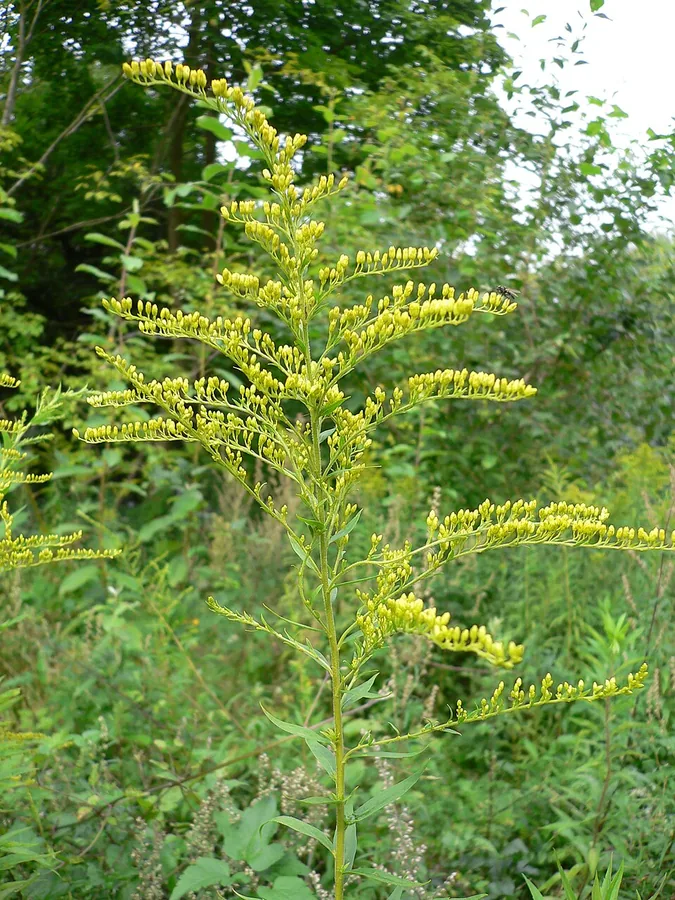
Goldenrod fires up fields and roadsides in late summer, hoisting plumes of tiny gold flowers on tall, leafy stems that catch the low light. It rides in the aster family and grows wild across most of North America as a tough, long-lived perennial, which means it comes back stronger year after year. Plant it and it asks for next to nothing while pouring out weeks of color once the rest of the garden runs out of steam.
Precious few plants pull their weight for pollinators the way this one does. The flowers buzz with bees, butterflies, and beneficial insects right when food gets thin, and the seedheads carry birds clean through the cold months. Building a wildlife garden gets a whole lot easier with goldenrod anchoring it.
The catch worth knowing is its appetite for territory. Tall goldenrod barrels through a bed by rhizome and self-seeds with gusto, so it will muscle out gentler neighbors if you turn your back. Grab a clump-forming species for a tidy border, or divide the vigorous types every few years and keep them charging in the right direction.
Care
The short version: full sun and ordinary to poor, well-drained soil, and it takes off. Water through long dry spells but otherwise let the rain do the heavy lifting, skip the fertilizer, and divide vigorous clumps every few years to hold them in bounds.
Light
Give goldenrod full sun and it flowers hard and stands tall and proud. It will put up with some partial shade, but the stems stretch and flop and the bloom thins the darker its spot gets.
Water
Goldenrod loves soil that stays evenly moist yet never waterlogged, and established plants brush off short dry spells like nothing. In most temperate gardens the rain handles the watering, so break out the hose only during a prolonged drought.
Soil
It digs into clay or loam wherever the drainage holds up, and it powers through poor ground that would flatten fussier plants. Any pH from 5.5 to 7.5 works, and lean soil actually toughens the growth up.
Temperature
Goldenrod is built tough, riding out cold down to -29°F (-34°C) and heat past 95°F (35°C) without flinching. That massive range is exactly why it thrives untended across so much of the continent.
Humidity
Ordinary outdoor humidity is all it wants, so skip fretting over a number. Air movement matters far more, since still, muggy air is what tempts rust and powdery mildew onto the leaves.
Feeding
Ditch the fertilizer in all but the poorest ground. Goldenrod feeds on lean soil, and too much nitrogen just pumps out floppy, weak-stemmed plants, so hand it at most a light spring topdressing of compost.
Pruning
Snip the spent flower stems after bloom, or leave the seedheads up to feed birds all winter. Chop every stem to the ground in late winter before new growth breaks, and a quick pinch in early summer keeps the tall types from toppling.
Size & spacing
Plants rocket from 2 to 6 feet (61 to 183 cm) tall and spread 4 to 6 feet (122 to 183 cm) wide, so hand each clump real room. That big spread is also why the vigorous species need dividing to stay in their lane.
When to plant
Goldenrod keeps a lively pace through the year. Start seed in late winter or sow it outdoors in fall, plant young ones out in spring once frost clears, and then watch the flowers roar in from late summer deep into fall.
Northern hemisphere
Southern hemisphere
Typical months for a temperate climate: start earlier in warm zones, later where spring frosts linger.
- Sow: Late winter, 8 to 10 weeks before last frost; seeds benefit from cold-moist stratification and need light to germinate
- Plant: Spring after the last frost, or in early fall
- Harvest: Late summer through fall (August to October)
Hardiness
USDA hardiness zones: 4–9
Temperature: down to -34°C
Troubleshooting
Goldenrod almost never runs into anything serious, and most of what surfaces is skin-deep. Crowding and damp foliage stir up the worst of it, so good airflow beats any spray on the shelf. Match what you see below and jump in only when it truly bugs you.
Rust-orange pustules speckling the lower leaf surfaces
Flip a leaf and find orange or brown blisters that smear into colored powder, and you have spotted rust, a fungus that looks alarming but rarely lands a real blow. It races through packed, damp clumps, so grab the moment: pull the worst leaves, open the plant up by thinning or dividing, and aim your water at the roots to keep the foliage dry.
Fix:
- Remove and destroy heavily infected leaves
- Improve air circulation by thinning or dividing crowded clumps
- Avoid overhead watering and water at the base
White mildew dusting the foliage and stems
Catch a gray-white dust spreading over the leaves and you are looking at powdery mildew, a late-season regular that pounces when nights turn humid or the plant sulks in shade. It puts on a scary show but rarely dents an established clump. Snip back the coated growth, throw open the plant to more sun and air, and sweep away the debris before winter.
Fix:
- Cut back affected foliage
- Increase spacing and sun exposure to improve air movement
- Remove infected debris at season end
Swarms of little insects crowding the stem tips, sticky underneath
Soft-bodied aphids pile onto the fresh growth and flower buds, dribbling a sticky honeydew that marches ants right up the stems. Here is the upside: goldenrod bankrolls so many good insects that a light crowd is worth leaving to the predators. Knock the big clusters loose with a sharp jet of water, and only reach for insecticidal soap when they dig in and refuse to quit.
Fix:
- Spray off with a strong jet of water
- Tolerate where possible since goldenrod supports many beneficial insects
- Use insecticidal soap only if infestation is heavy
Round, knobby galls studding the stems
Those round or spindle-shaped bumps riding the stems are galls, sculpted when the goldenrod gall fly slips an egg inside and a larva grows within. They barely trouble the plant, and they hand birds and other wildlife a meal straight through winter. Snip the galled stems off if the look nags at you, but leaving them in place costs the plant nothing at all.
Fix:
- Prune out and discard galled stems if appearance is a concern
- Otherwise leave in place as galls rarely harm the plant and feed wildlife
Toxicity
Goldenrod plays it safe all around, with no part of it toxic to people, pets, or livestock. It shoulders the old blame for hay fever, but that rap belongs to ragweed. Plant it freely where kids and animals roam, and even steep the leaves into a herbal tea.
Safe for
People · Cats · Dogs · Horses · Rabbits · Livestock · Birds
Cats None
Cats can roam right up to goldenrod with nothing in the leaves or flowers to harm them. Should one sneak a curious nibble, the worst on offer is a brief, mild stomach upset, the same as any plant a cat was never built to eat.
Dogs None
Dogs can play around goldenrod without a care, since it packs no toxic compounds. A dog that gulps down a big mouthful of foliage might drool or pass it a bit loose, and that clears up all on its own.
Horses Safe
Horses graze safely beside true goldenrod, which turns up in loads of pastures without a hitch. It is not the toxic lookalike it sometimes gets mixed up with, so cropping the grass next to it does them no harm.
Rabbits Safe
Rabbits can tuck into goldenrod safely, just as their wild cousins already do. The leaves and flowers carry no toxins, though any fresh green is best rolled in slowly to keep small stomachs happy.
Livestock Safe
Cattle, goats, and sheep can graze around goldenrod without harm, since it holds no toxicity for them. They usually stroll right past it anyway, chasing softer, more tender forage.
Birds Safe
Birds win big around goldenrod, feasting on its seeds and snapping up the insects its flowers reel in, all with zero risk. Nothing about the plant does them any harm.
People Safe
Goldenrod is safe for people, and its leaves and flowers have long gone into a herbal tea worth trying. It does not spark hay fever, whatever the old story claims, because its heavy pollen never rides the wind to your nose.
Varieties
Goldenrod is not one plant but a whole genus, and the species swing widely in size and manners, so there is a fun match for nearly any spot. These are the ones most worth chasing down before you plant.
Solidago rugosa 'Fireworks'
A compact 3 to 3.5 foot star that launches arching sprays of tiny flowers like a burst of fireworks, and it travels by rhizomes without ever turning invasive.
Solidago canadensis
The vigorous tall species that shoots to 2 to 6 feet with broad pyramidal flower heads, and it charges across a bed by both seed and rhizome.
Solidago speciosa (Showy goldenrod)
An upright clump-former that powers through poor, dry ground and holds its ground far more politely than the tall goldenrod.
Solidago caesia (Bluestem/wreath goldenrod)
A woodland goldenrod with bluish arching stems that hangs its flowers in the leaf axils and shrugs off shade with ease.
How to propagate
Goldenrod multiplies with barely any effort, whether you split an existing clump or kick things off from seed.
DivisionEasy
Spring or early fall; divide established clumps every 2 to 3 years to control spread and maintain vigor · One growing season
Division is the fastest way to churn out more goldenrod and to rein a clump back in at the same time. In spring or early fall, dig the plant up, cleave it into sections that each pack roots and shoots, and drop them straight back in the ground. Repeat every 2 to 3 years to keep the clump charging along, and each piece roots in within a single growing season.
SeedEasy
Sow in fall outdoors or stratify and start indoors in late winter · Blooms typically in the second year from seed
Goldenrod springs from seed with hardly any coaxing, as long as you feed it patience and light. Scatter the seed on the surface outdoors in fall, or chill it and start it indoors in late winter, but never bury it, since it demands light to break into growth. Flowers usually burst out in the second year, and from there the plant self-seeds freely and keeps the show going.
Myths
Goldenrod sparks seasonal allergies and runny noses.
Clear goldenrod of the charges right now: its pollen is large, sticky, and heavy, so insects lug it flower to flower and it almost never lifts onto the wind. The real offender is ragweed, which flowers at the very same moment and blasts out clouds of light, wind-borne pollen, while goldenrod just stands nearby looking guilty. Blame the ragweed and enjoy the goldenrod.