Houseplant · Araceae
Heartleaf Philodendron
Philodendron hederaceum
Fast-growing, forgiving, and thriving in a shady corner, the heartleaf philodendron asks for little more than the odd drink.
Bright indirect
50–84°F · 10–29°C
USDA 11–12
3–13 ft · 1–4 m
Overview
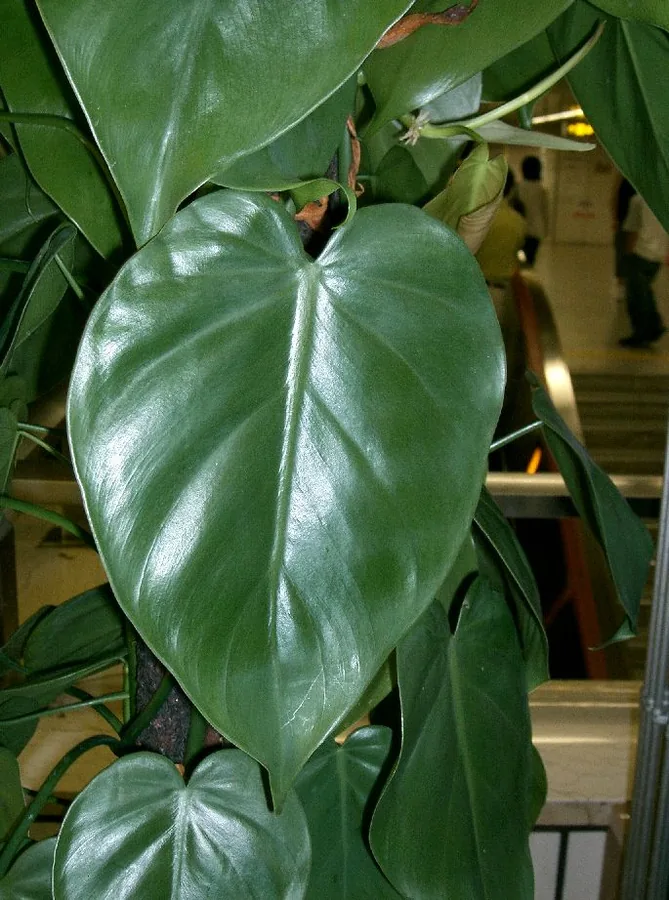
The heartleaf philodendron is the plant that makes growing feel easy and rewarding from day one. Its glossy, heart-shaped leaves cascade off a shelf or scale a pole, and it grows fast enough to fill a bare corner in a single season. It hails from the forests of Mexico and tropical America, where it scrambles up tree trunks toward the light, so climbing and trailing come naturally to it.
What makes it such a joy is how little it demands. It powers through low light, dry air, and the odd missed watering, which is exactly why it thrives in offices and dim hallways where fussier plants throw in the towel. Give it medium to bright indirect light and it rewards you with closer leaves and faster growth, but it never sulks when it gets less.
One thing to lock down before it moves in: every part carries insoluble calcium oxalate crystals, so it counts as an irritant to pets, livestock, and people. Hang it up high or perch it where curious mouths cannot reach, and you have an easy, generous plant that keeps on giving for years.
Care
The short version: give it bright indirect light but expect it to cope with less, water only once the top inch of soil dries, and feed it lightly through the growing season. Keep it warm and out of reach of pets and children.
Light
It thrives in bright indirect light, right by a window but shielded from the direct sun that scorches the leaves. It hangs on in medium light or a dim corner, though the growth slows and the stems stretch, so aim brighter whenever you can.
Water
Wait for the top inch of soil to dry before you water again, then soak it until water runs from the drainage holes. Back right off in winter, when it drinks far less. Steer clear of soggy soil, since that is the quickest way to lose it.
Soil
Pot it up in a rich, well-drained potting mix. The roots crave air as much as moisture, so a loose mix that drains freely keeps them healthy and keeps rot from creeping in.
Temperature
Normal room warmth suits it perfectly, anywhere from 50°F to 84°F (10°C to 29°C). Keep it above 50°F and clear of cold drafts and heating vents, since a sudden chill sets it back.
Humidity
Everyday household humidity works fine, so there is no number to chase. It loves a more humid spot and grows a touch faster there, but it never sulks in dry winter air.
Feeding
Feed it monthly through spring and summer with a dilute water-soluble houseplant fertilizer. Ease off in autumn and winter while growth slows, and go light rather than heavy, since too much salt browns the leaf tips.
Pruning
Pinch the stems back to keep it full and lush instead of thin and leggy. Snip just above a leaf node, and here is the bonus: the cutting you take roots straight into a brand-new plant.
Repotting
Bump it up a pot size every 1 to 2 years in spring, or sooner once roots poke through the drainage holes and the soil dries fast. A pot only a touch bigger than the last keeps the roots out of wet, unused soil.
Size & spacing
As a trailing or climbing vine it can rocket to 3 to 13 feet (1 to 4 m) with support, spreading 3 to 6 feet (90 to 180 cm) across. Give it room to spill off a shelf or a pole to train it upward.
Troubleshooting
Nearly every hiccup here traces back to watering or light, and the plant tips you off early. Yellowing leaves, stretched stems, and the odd pest are the signs to catch. Match what you spot below and jump on it before a small problem digs in.
Mushy brown roots and a wilting plant
Soil that never dries out opens the door to root rot, the one real threat this plant runs into. Pop it out of the pot, cut away every brown, mushy root, and get it into fresh, fast-draining mix. Then water far less, and the plant powers back to health.
Fix:
- Unpot and trim rotted roots
- Repot in fresh well-drained mix
- Reduce watering
Lower leaves turning yellow
Yellow leaves down at the base almost always shout overwatering, with too little light close behind. Check the soil, and if it is sitting wet, dial back the watering and make sure that pot drains. Slide the plant somewhere brighter but out of direct sun, and it bounces right back.
Fix:
- Reduce watering
- Ensure drainage
- Move to brighter indirect light
White cottony tufts tucked into leaf joints
Those fuzzy white clumps parked in the leaf joints are mealybugs, and they are beatable. Zap each one with an alcohol-dipped swab, then sweep over the plant with insecticidal soap to catch the rest. Pull it away from your other plants until it is squeaky clean.
Fix:
- Dab with alcohol-dipped swab
- Apply insecticidal soap
- Isolate plant
Fine webbing and speckled, dull leaves
Spider mites pounce when the air turns dry, spinning fine webbing and dotting the leaves with a dull, speckled haze. Blast the foliage with a good rinse, hit it with insecticidal soap or a miticide, and hunt them down on the undersides where they lurk. Crank the humidity up and the plant turns downright uninviting to them.
Fix:
- Rinse foliage
- Apply insecticidal soap or miticide
- Raise humidity
Hard brown bumps and a sticky residue
Those stubborn brown bumps clamped to the stems are scale insects, and the sticky honeydew gives them away. Scrape them off, then treat with horticultural oil or insecticidal soap to nail any you missed. Keep the plant off to the side while you work through them.
Fix:
- Scrape off scales
- Apply horticultural oil or insecticidal soap
- Isolate plant
Long bare stems with leaves far apart
Stems that shoot out long with leaves spaced way apart mean the plant is chasing light. Move it into medium or bright indirect light and watch the new growth snap back tight and full. Pinch those leggy stems and it fires out fresh, bushier shoots from lower down.
Fix:
- Move to medium or bright indirect light
- Pinch stems to encourage branching
Brown, curling tips on the leaves
Crispy, curling tips flag fertilizer salts stacking up in the soil from overfeeding. Pour plain water through the pot until it gushes out the bottom, and that flushes the salts clean away. From there, feed less often and go easier on the strength.
Fix:
- Flush soil with water
- Reduce fertilizer rate
Clusters of small insects on new growth
Aphids swarm the soft new growth and leave a sticky film behind. One firm rinse under the tap sends most of them packing. If a few cling on, a shot of insecticidal soap wraps it up.
Fix:
- Rinse off with water
- Apply insecticidal soap
Toxicity
This is one to keep well out of reach of anyone who might take a bite. Every part carries insoluble calcium oxalate crystals that sting the mouth and throat, sparking burning pain, heavy drooling, and swelling. It irritates cats, dogs, horses, rabbits, livestock, birds, and people, with no part safe to eat, so perch it high and out of the way and wash your hands after cutting it.
Toxic to
Cats · Dogs · Horses · Rabbits · Livestock · Birds · People
Cats Moderate
A cat that bites a leaf gets a mouthful of sharp calcium oxalate crystals. Look for drooling, pawing at the mouth, vomiting, and swollen lips and tongue.
Dogs Moderate
Chewing sparks intense burning in the mouth, heavy drooling, and vomiting. As the tissue swells, some dogs gag or battle to swallow.
Horses Moderate
The same crystals sting a horse's mouth and throat, driving drooling and trouble swallowing. Keep the plant well clear of paddocks and feed.
Rabbits Toxic
Every part packs the irritant crystals, so one nibble leaves a rabbit drooling and off its food. Keep it out of any space a rabbit roams.
Livestock Toxic
Goats, sheep, and cattle hit the oxalates and end up with mouth pain and no appetite. This plant has no business near grazing animals.
Birds Toxic
A curious bird that chews the foliage suffers the same burning and swelling. Hang or set the plant where birds cannot get to it.
People Caution
No part is edible. A bite burns the mouth and can swell the lips and tongue, and the sap may leave skin itchy, so wash up after pruning and keep it from small children.
Sap may irritate skin; wash hands after cutting stems
Helpline numbers

United States
ASPCA Animal Poison Control: (888) 426-4435 (fee applies)
Poison Control: (800) 222-1222



Canada
Poison Centres: 1-844-764-7669
Varieties
Beyond the plain green species, growers have hunted down a handful of cultivars worth chasing for their color and leaf texture.
'Brasil'
A bright lime-yellow stripe blazes straight down the center of each green leaf.
'Micans'
Velvety leaves shimmer bronze-green up top and flash reddish underneath.
'Lemon Lime'
The whole plant lights up in bright chartreuse that pushes toward neon yellow-green.
'Rio'
Cream and silver variegation streaks boldly down the middle of every leaf.
How to propagate
Few plants are this fun and this fast to multiply. Drop a single cutting in a glass of water and a new plant roots up within a few weeks, and a longer vine can be air layered for an even bigger head start.
Stem cuttingsEasy
Spring or growing season · Roots in 2-4 weeks
This is the easy win, and almost every grower jumps on it. In spring or right through the growing season, snip a stem just below a node carrying a leaf or two, then drop it in water or press it into moist potting mix. Roots break out in about 2 to 4 weeks, and just like that a whole new plant is yours.
Air layeringModerate
Growing season · Several weeks
Air layering is the slower, more hands-on play, and it pays off on a longer vine during the growing season. You wound a stem and wrap the spot to coax roots out before you cut, and over several weeks a rooted section builds up that you can pot on its own.
Myths
Philodendrons clean the air in your home.
This one springs from a sealed-chamber lab test, nothing like a real room. A peer-reviewed analysis showed a potted plant pulls out VOCs in amounts so tiny that opening a window blows it away. Grow it for the sheer fun of it, not to scrub the air.
Heartleaf philodendron and pothos are the same plant.
They may look like twins, but they hail from different genera. Check the petioles, since philodendron ones run smooth while pothos ones are grooved, and fresh philodendron leaves burst out of a papery sheath that pothos never grows.
This plant is a deadly poison to children.
The insoluble calcium oxalate crystals do fire off real, painful mouth irritation, but they rate low-severity, and serious outcomes are rare. Keep it out of a small child's reach, and treat a chewed leaf as something to rinse and watch, not an emergency.
It thrives in a dark corner.
It will hang on in low light, but it truly takes off in medium to bright indirect light. Bury it in deep shade and the stems stretch thin while the leaves come in sparse.
It needs high humidity to survive.
Extra humidity gives it a boost, but it cruises along fine in ordinary household air. Skip the mister and the pebble tray, since neither is needed to keep one thriving.
Sources
- ASPCA Animal Poison Control
- North Carolina Extension Gardener Plant Toolbox (NC State)
- Missouri Botanical Garden Plant Finder
- Pet Poison Helpline
- University of Florida IFAS Gardening Solutions
- Clemson Cooperative Extension HGIC
- Plants of the World Online, Royal Botanic Gardens Kew
- Cummings & Waring 2020, J Exposure Science & Environmental Epidemiology (PubMed/NLM)
- Atlas of Florida Plants, Institute for Systematic Botany, University of South Florida