Ornamental · Equisetaceae
Horsetail
Equisetum hyemale
Bold, jointed evergreen stems that punch up a wet corner, as long as you grow it inside a container so it can't run riot.
Full sun
Every 1–3 days
USDA 3–11
2–4 ft · 0.6–1.2 m
Overview
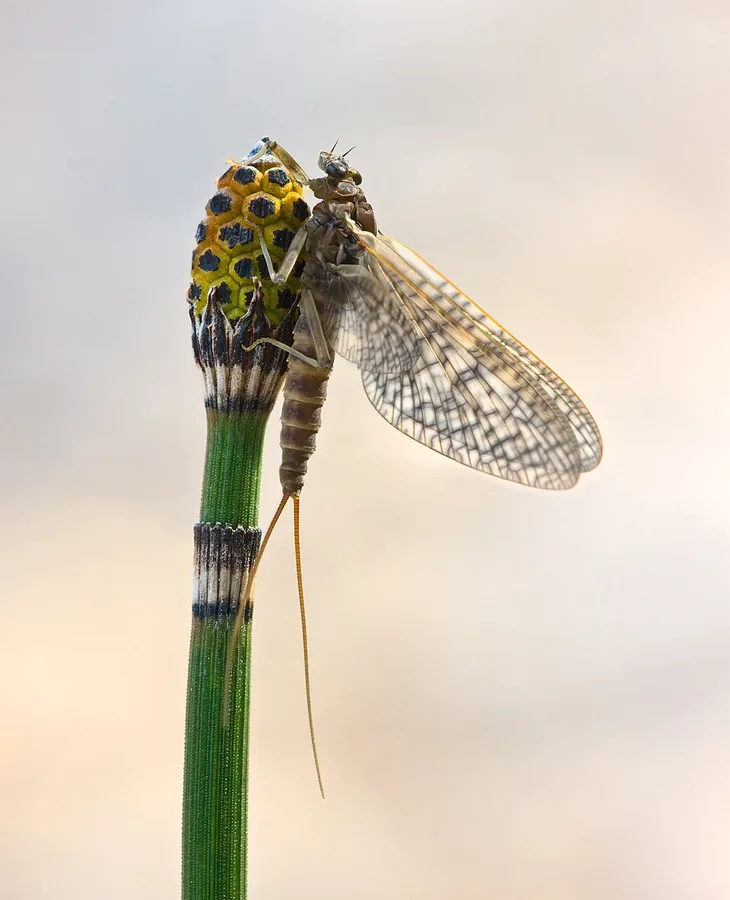
Horsetail, better known to many as scouring rush, springs from one of the oldest plant lineages still going strong, a survivor from long before flowers appeared. It launches stiff, jointed, bamboo-like green stems that hold upright all year and never bother with a true leaf or bloom. It spreads by spores from a cone at each stem tip and, with real gusto, by rhizomes that run underground.
Gardeners grab it as a bold vertical accent at a pond edge or in a bog bed, where the slim evergreen stems read like living architecture. Those gritty, silica-rich stems earned the name scouring rush back when people scrubbed their pots with them. Best part: it asks for next to nothing beyond a steady supply of water.
Two big warnings come with all that vigor, though. Its rhizomes drive deep and fast, which makes it one of the hardest plants to remove once it breaks free, so plant it in a sealed container, never loose ground. It also carries thiaminase, a compound that poisons grazing horses and livestock, so keep it well away from any pasture.
Care
The short version: give it full sun to part shade and soil that never dries out, stand the pot in water, and grow it inside a solid container or barrier so its rhizomes can't run.
Light
Horsetail thrives in full sun, yet it takes partial sun and even partial shade in stride. Feed it plenty of light and the stems stand stiff and dense, while deep shade leaves them thin and floppy.
Water
This bog plant wants its roots constantly wet, so water every 1 to 3 days and never let the soil dry out. Set it right at a pond edge, or stand the pot in shallow water up to about 4 inches (10 cm) deep.
Soil
Plant it in wet to constantly moist, boggy soil. Texture barely matters, since it grows in clay, loam, or sand and even shrugs off standing water, a fit for a plant that thrives at the margins of ponds and streams.
Temperature
Toughness is its calling card. Horsetail brushes off cold down to -40°F (-40°C) and takes heat to around 100°F (38°C), which is why it powers through such a wide range of climates.
Humidity
It loves high humidity, a natural fit for the damp, waterside spots where it grows. Keep the soil saturated and let the moist air around a pond or bog carry the rest.
Feeding
This undemanding plant runs on little to no fertilizer. In a pot, a light balanced feed in spring is plenty; in the ground, it powers along on nothing at all.
Pruning
Cut old or damaged stems back to the base in late winter or early spring to freshen the clump. Snip off the spore cones before they ripen to hold back any spread, and never compost the trimmings or stray rhizome bits.
Repotting
Repot every 1 to 2 years to refresh the soil and, just as vital, keep those charging rhizomes penned in. Spot a dense mat of roots filling the pot or stems vaulting the rim, and it is time.
Size & spacing
Stems drive 2 to 4 feet (61 to 122 cm) tall, and a stand will race 1 to 6 feet (30 to 183 cm) wide if you let it. That galloping habit is exactly why it belongs in a contained pot or barrier rather than open ground.
When to plant
Horsetail powers through as a tough perennial hardy from zone 3 to 11, so it lives outdoors year-round across most of the country. Plant it in spring once the soil has warmed, and set it only into a fully contained pot or a bottomless barrier. It skips flowers and crops and instead pushes up spore cones from spring into summer.
Northern hemisphere
Southern hemisphere
Typical months for a temperate climate: start earlier in warm zones, later where spring frosts linger.
- Plant: Spring, once the soil has warmed; site only in a fully contained pot or bottomless barrier
- Harvest: Non-flowering; produces spores in a cone-like tip (strobilus) in spring to summer
Hardiness
USDA hardiness zones: 3–11
Temperature: down to -40°C
Troubleshooting
Horsetail practically grows itself. The real game is keeping it where you put it, so the warnings below lean hard toward containing its spread rather than nursing a sick plant.
Stems shooting up far from where they started
Here is the one thing to master, and once you do, you win: an aggressive, deep-running rhizome network that drives several feet down and outward, throws up colonies, and breaks out of a pond into the wet ground around it. Every stray fragment relaunches into a new plant, so digging and herbicides mostly miss the mark. Grow it in a solid pot or a bottomless barrier, chop back escaping stems the second they surface, and toss every rhizome scrap you unearth.
Fix:
- Never plant loose in open ground; grow only in a solid pot with no drainage to the soil, or in a bottomless barrier sunk into the bed
- Repeatedly cut or pull emerging stems to starve the rhizomes over time
- Remove and destroy (do not compost) every rhizome fragment when digging out an established stand
Stems flopping, yellowing, or thinning out
Catch this early and the plant bounces right back. Weak, floppy, pale stems nearly always shout dry soil, since horsetail craves constant moisture and sulks the instant its roots dry out. Deep shade thins it too. Soak the soil or stand the pot in water, then shift it toward the light, anywhere from full sun to part shade, and watch it fill back in.
Fix:
- Keep soil constantly wet or stand the pot in water
- Move to a site with more sun (full sun to part shade)
Toxicity
Give this plant its due respect. It runs genuinely poisonous to horses and livestock, because the thiaminase it carries wipes out vitamin B1 and brings on weakness, staggering, and worse, and it stays toxic even after drying in hay. It poses no big threat to cats and dogs, but it feeds no one, so keep it clear of pastures, grazing animals, and curious mouths.
Toxic to
Cats · Dogs · Horses · Rabbits · Livestock · Birds · People
Cats Caution
Cats dodge the danger here, since horsetail poses no known poisoning risk and stays off the ASPCA toxic list for them. It still is not food, though, so steer a curious cat away from gnawing the stiff stems.
Dogs Caution
Dogs escape any real hazard too, and the plant carries no toxic listing for them. A keen chewer might pick up a mild stomach upset from the gritty, silica-rich stems, so keep it out of paw's reach.
Horses Toxic
Horses face the sharpest risk. The thiaminase in horsetail drains their vitamin B1, and a horse that puts away enough, fresh or dried in hay, sheds weight and weakens, then starts staggering and trembling, with convulsions and death in the worst cases.
Rabbits Caution
The very thiaminase that hits bigger grazers is reason enough to bar horsetail from a rabbit's diet. Never offer it, and yank out anything that creeps into a grazing run.
Livestock Toxic
Cattle, sheep, and other grazing stock take on the same vitamin B1 deficiency, called equisetosis. Track weakness, staggering, and poor coordination, with death possible in severe cases, and remember that contaminated hay keeps its bite long after it dries.
Birds Caution
Clear evidence for birds runs thin either way, so play it safe and treat horsetail as off-limits rather than fine. Keep poultry and pet birds clear of the foliage.
People Caution
Skip this one at the table, because it is no edible plant and its thiaminase works against vitamin B1 in people too. Drop the casual nibbling and home remedies, and keep children from chewing the stems.
Safe to handle and not a significant pet toxin, but keep this plant well away from pastures, grazing horses, and livestock, and never let it contaminate hay; even dried plants in hay retain the thiaminase toxin.
Helpline numbers

United States
ASPCA Animal Poison Control: (888) 426-4435 (fee applies)
Poison Control: (800) 222-1222



Canada
Poison Centres: 1-844-764-7669
Varieties
The genus runs to dozens of species, but a handful keep turning up in gardens and in every good chat about horsetail.
Equisetum giganteum (giant horsetail)
This South American powerhouse of the genus shoots up far past the temperate scouring rushes most growers know.
Equisetum arvense (field horsetail)
A smaller, branching weed of disturbed ground, it packs the same thiaminase that makes it toxic to horses and livestock.
Equisetum scirpoides (dwarf scouring rush)
The pint-sized member of the crew, it builds low clumps of slender, wiry, often curly stems that top out around a foot tall.
How to propagate
Horsetail multiplies all too easily, which cuts both ways. That same drive to root from a scrap of rhizome is what sends it charging out of bounds, so propagate it only with containment locked in first.
DivisionEasy
Spring · A few weeks to a season
Split the rhizome clumps in spring and the pieces charge into growth within a few weeks to a season, with even tiny fragments rooting on their own. That eager rooting is precisely what powers the plant's invasive streak. Always replant into a fully contained pot or barrier and destroy any fragments you do not want.
Myths
Horsetail is an easy, harmless little ornamental for the garden.
Far from it, since it ranks among the toughest plants to ever clear, racing along deep rhizomes that break out of ponds and brush off herbicides, and the thiaminase it packs poisons grazing horses and livestock. Keep it locked in a container and far from pastures.