Ornamental · Gentianaceae
Lisianthus
Eustoma grandiflorum
Slow off the line but a total payoff, lisianthus rewards a cool, patient start with rose-like blooms all summer long.
Full sun
Every 3–7 days
50–75°F · 10–24°C
60–75 days
Overview
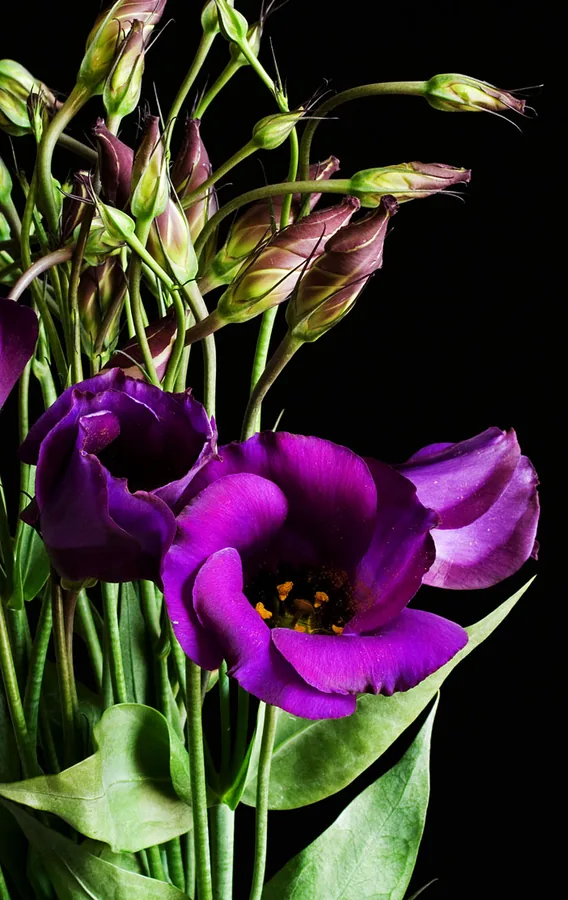
Lisianthus, which also answers to prairie gentian or Texas bluebell, is a prairie native that runs wild across the southern plains. The blooms mimic roses so closely that florists grab them by the armful, yet they perch on tall, slim stems that give them a swing all their own. Out in the garden it plays as a tender perennial grown as an annual, throwing its display from summer straight into fall.
It wears the demanding plant badge for good reason, and that reason is all in the launch. The seed is fine as dust, growth crawls, and one stubborn streak runs the show: overheat it young and it clamps into a flat rosette that never flowers. Push it through that cool, careful start, though, and it flips into an easygoing performer that blooms for months on end.
Hand it full sun, soil that stays moist but never soggy, and a feed through the growing season. Pinch the young plants to fire off more branches, clip the spent flowers to keep fresh ones firing, and you walk away with cut blooms that hold for two weeks in the vase.
Care
The short version: full sun and a cool start, soil kept evenly moist but well drained, a light feed every couple of weeks, and patience through those slow first months.
Light
Hand lisianthus full sun and it flowers at full throttle, though it will take a touch of afternoon shade where summers really cook. Bury it in too much shade and you end up with weak stems and a fraction of the blooms.
Water
Keep the soil evenly moist but never waterlogged, watering roughly every 3 to 7 days as the top layer dries. Soggy ground fast-tracks the stem and root rots this plant is prone to, so drainage pulls just as much weight as the water.
Soil
Set it in fertile, well-drained loam with a pH between 6.0 and 7.0. Free-draining ground is your frontline defense against the rots that go after the roots and stems.
Temperature
Lisianthus hums along between 50°F and 75°F (10°C to 24°C), and a cool early stretch is what primes it to flower. Let young seedlings blow past about 72°F (22°C) and they may rosette instead of bolting, so hold them cooler until they are well grown.
Humidity
Everyday garden humidity suits it fine, so skip chasing a number. Air movement pulls far more weight, since still, damp air around crowded plants throws the door wide open to stem disease.
Feeding
Feed a balanced water-soluble fertilizer at low to moderate strength about every two weeks through the growing season. Steady, gentle feeding beats heavy doses hands down, since those just pump out soft growth over flowers.
Pruning
Pinch the young plants back and they fire off more branches and more flowering stems. Then all season, clip away the spent blooms and the plant keeps launching fresh ones.
Size & spacing
Plants shoot up 1 to 3 feet (30 to 91 cm) tall on a slim spread of 9 to 12 inches (23 to 30 cm). Hand each one some elbow room so air moves freely and disease stays pinned down.
When to plant
Lisianthus runs on a long, slow clock and truly hates heat off the start. Sow it indoors in late winter and hold the seedlings cool, launch the plants outside once frost has cleared, and cash in on flowers from midsummer right up until the cold rolls back.
Northern hemisphere
Southern hemisphere
Typical months for a temperate climate: start earlier in warm zones, later where spring frosts linger.
- Sow: Start indoors 10 to 12 weeks before last frost; surface sow tiny seed and do not bury.
- Plant: Transplant after danger of frost has passed in spring.
- Harvest: Blooms summer to frost; allow 60 to 75 days from transplant to flowering.
Hardiness
USDA hardiness zones: 8–10
Temperature: down to -12°C
Troubleshooting
Lisianthus tosses out few problems once it hits its stride, and the trouble it does bring almost always kicks off at the seedling stage or in wet, crowded soil. Nail the early signs below and you can jump in before a plant slips away. Match what you spot, then move while it still turns the tide.
The plant hunkers down and skips the flower stems
That flat, stubborn cluster of leaves is rosetting, and it comes straight from early heat rather than anything you slipped up on later. Push young seedlings past about 72°F (22°C) and they dig in low and flat out refuse to bolt. Run those first weeks cool, around 50°F to 65°F (10°C to 18°C), carry the plants well past their fifth pair of leaves, and watch the stems shoot up right on cue.
Fix:
- Grow seedlings at 50 to 65°F until well past the fifth leaf pair
- Avoid heat stress on young plants
Stems buckle or rot right at the soil line
Sunken sores down at the base flag stem canker and the soilborne fungi that ride along with it, and they pounce on wet, crowded beds. Once rot laps all the way around a stem the plant is finished, so yank it and toss it fast. Then open the spacing wide, aim your water at the base instead of the leaves, and keep that soil draining like a sieve.
Fix:
- Remove and discard affected plants
- Improve air circulation and avoid overhead watering
Leaves turn mottled or twisted and growth quits
A mottle or twist in the leaves that just hangs on spells a viral infection, and no feeding or watering routine is going to turn it around. The virus never clears, so pull and destroy anything that shows it and move on. Aphids and thrips ferry these viruses straight in, so grab clean transplants and stay on top of those sap-feeders from day one.
Fix:
- Remove and destroy infected plants
- Control insect vectors such as aphids and thrips
Toxicity
Great news for pet owners: lisianthus is safe. The ASPCA marks it non-toxic to cats and dogs, and it packs no compound known to harm other animals or people. As with any non-food plant, a really big mouthful might spark a brief stomach upset, but there is nothing here to poison a curious pet or child.
Safe for
People · Cats · Dogs · Horses · Rabbits · Livestock · Birds
Cats None
Cats get a full green light here, since lisianthus lands right on the ASPCA's safe list for cats. A big mouthful of any non-food plant might bring on a little drool or a quick upset stomach, but that is the whole story.
Dogs None
Dogs can roam the same room as lisianthus with zero worry. Should one really chow down on the leaves, expect nothing worse than mild, passing stomach upset, the same deal as most non-food greenery.
Horses Safe
Horses have nothing to dodge with lisianthus. It packs no known toxin, so a graze in the pasture just does not register.
Rabbits Safe
Rabbits get the all-clear too, because the plant holds no toxic compounds. Ease in any diet change slowly all the same.
Livestock Safe
Cattle, goats, and sheep run no toxic risk from this one. It never turns up on the lists of plants that poison grazing animals.
Birds Safe
Pet birds sit safely alongside it, no catch. Not one part of the plant carries a compound known to harm them.
People Safe
Handle it and grow it around kids with total confidence. It is not a food crop, so nothing here is for eating, yet a stray taste still will not poison a soul.
Varieties
Most lisianthus you will meet were bred for the vase, sorting out mainly by whether the flowers land single or double. Here are the names worth chasing down.
Echo series
A cut-flower powerhouse that pumps out big, fully double blooms on tall, sturdy stems.
Arena
A double-flowered star with greenhouse growers, chosen for cutting because those straight stems stand tall and go the distance in the vase.
Cadence Yellow
A single-flowered pick for cutting that opens clean, bright blooms in a soft yellow.
How to propagate
Lisianthus grows almost entirely from seed, and it demands more patience than just about any other annual you will ever start.
SeedDemanding
Surface sow indoors 10 to 12 weeks before last frost; germinate at 70 to 75°F. · About 5 months from sowing to first bloom
Seed is the go-to launch for lisianthus, and it really will stretch your patience. Scatter that dust-fine seed right across the surface, leave it uncovered, then hold it toasty at 70°F to 75°F (21°C to 24°C) to sprout, kicking off 10 to 12 weeks before your last frost. Count on roughly five months from sowing to the first flower, which is exactly why plenty of growers grab pelleted seed or just snap up plugs.
Myths
Lisianthus is easy to grow from seed at home like most annuals.
The seed comes dust-fine and drags its feet to sprout, and the plant runs about five months from sowing to its first bloom. That long, finicky launch is exactly why most growers breeze past seed and jump straight to plugs or transplants.
Lisianthus is dangerous and toxic to pets.
The ASPCA flags lisianthus as pet-safe and non-toxic to cats and dogs. Like any plant that is not for eating, a big mouthful could spark a brief stomach upset, but there is zero real poison lurking here.