Ornamental · Nelumbonaceae
Sacred Lotus
Nelumbo nucifera
Set it up with warm, still water and all-day sun, then watch the lotus send its flowers soaring high over the water.
Full sun
USDA 4–10
3–6 ft · 0.9–1.8 m
Overview
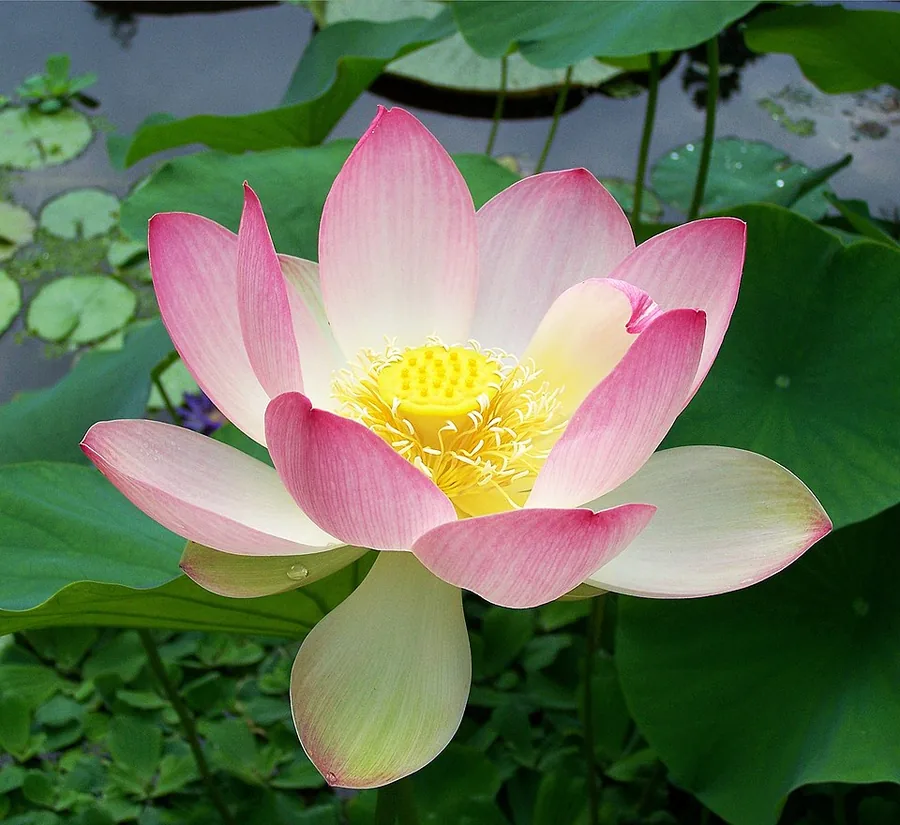
Sacred lotus throws its leaves and blooms high above the water instead of floating them flat like everything else on the pond, and that alone makes it a thrill to grow. It launches from a creeping rhizome anchored in soft pond-bottom mud, driving up round, water-shedding leaves and fragrant flowers on tall stalks. Every bloom runs just about three days before shedding its petals to reveal the woody, showerhead-shaped seed pod that instantly gives the plant away.
This is an aquatic perennial with real grit, hardy across USDA zones 4 to 10 as long as the rhizome winters below the freeze line. It carries a long history as food and ornament across Asia, where the rhizomes, seeds, and young leaves all head for the kitchen. Growers sink a wide, sturdy container into a pond or a half-barrel, which reins in those eager roots while the show goes on above.
Lotus pays off patience more than fuss, and that payoff is worth chasing. A fresh division might spend its whole first season building roots and hold the flowers until year two, so stay the course. Feed it heat, full sun, and still water, and it takes off to become one of the boldest plants you can grow on the water.
Care
The short version: hand it full sun and still, warm water over a wide container of heavy clay loam, keep the rhizome below the freeze line through winter, and divide it every year or two so it never outgrows its pot.
Light
Lotus craves full sun, at least 6 hours a day and more when it can get it. Shortchange the light and you get plenty of leaves but few or no flowers, so hand it the brightest, most wide-open spot you've got.
Water
Grow it in still, calm water over a wide container of heavy clay loam. Set the crown about 6 inches deep to start, then let the water climb to 18 to 24 inches over the rhizome as the plant takes off. Keep the rhizome below the freeze line, and shift shallow containers to deeper water or indoors before a hard freeze rolls in.
Soil
Plant it in heavy, organically rich clay loam, the mucky pond-bottom kind of substrate. Light, fluffy potting mixes just float off and won't grip the rhizome, so cram the container with dense, weighty soil and cap it with sand or gravel.
Temperature
This heat-lover really rips in summer warmth, taking temperatures up to about 100°F (38°C) in stride. The dormant rhizome is way tougher than the top growth, powering through cold down to roughly -29°F (-34°C) as long as it stays below the freeze line.
Humidity
Growing right in open water, lotus already lives in high humidity, so there's nothing here to chase. The pond handles it, and the leaves never run short on moisture.
Feeding
Feed it all through the summer growing season with aquatic fertilizer tablets driven down into the container substrate, about once a month. Then cut the feeding as growth slows toward fall and the plant heads into dormancy.
Pruning
There's no structural pruning to mess with. Just clip off yellowing or dead leaves and spent flower stalks to keep the water clean, and thin or divide crowded rhizomes the moment the plant starts pushing at its edges.
Repotting
Line up a divide and repot every 1 to 2 years in spring, because the rhizome fills its container fast and can crack the walls. Rhizomes circling the pot, a warped container, or smaller, crowded leaves all shout that it's time.
Size & spacing
A grown lotus rockets up to 3 to 6 feet (91 to 183 cm) tall and spreads 3 to 4 feet (91 to 122 cm) across. Give each one its own wide container so the running rhizome has room to stretch and the leaves aren't scrapping for light.
When to plant
Lotus runs on warmth and refuses to budge until the water heats up. Drop rhizome divisions in during spring to early summer once the cold has cleared out, then get ready for flowers standing tall above the water from June into July.
Northern hemisphere
Southern hemisphere
Typical months for a temperate climate: start earlier in warm zones, later where spring frosts linger.
- Sow: Not typically started indoors; usually grown from rhizome divisions planted in spring
- Plant: Spring to early summer once water has warmed
- Harvest: Summer (June to July); flowers held high above the water, each bloom lasting about three days
Hardiness
USDA hardiness zones: 4–10
Temperature: down to -34°C
Troubleshooting
Nearly every lotus snag boils down to one of three things: too little sun, a rhizome busting out of its container, or old leaves doing their usual yellow fade. Catch the early signs below and you can knock out a small problem before it takes hold. Match what you see, then move on it while it still counts.
Plenty of leaves but few or no flowers
Loads of leaves and no flowers just means the plant is waiting on the two things it lives for: full sun and real warmth. Park it in shade or push it through a short, cool season and it stays leafy but bare, and a fresh division will happily coast through its first year while it digs in. Set it in the sun, plant it in a wide tub of heavy loam, hand it a full warm season, and those flowers come charging up above the water.
Fix:
- Site the container in full sun with 6 or more hours of direct light
- Allow a full warm season; do not expect bloom from a freshly divided or first-year plant
- Move to a larger, wider container of heavy loam so the rhizome can run
- Handle rhizomes gently when dividing or planting to avoid breakage
Runaway rhizomes bursting past the pot or spreading beyond it
This plant grows with real drive, and its creeping rhizomes surge through soft substrate fast enough that an unconfined lotus can claim a shallow pond in a season or two. Cram all that push into a pot that has gone too small and it strains the walls until they crack. Keep the momentum working for you: grow it in a wide, sturdy submerged container, divide it every year or two, and yank any runner that breaks free before it grabs the pond bottom.
Fix:
- Confine plants to wide, sturdy submerged containers rather than open pond mud
- Divide and thin rhizomes every 1-2 years
- Remove escaped rhizomes promptly to keep them from rooting into the pond bottom
Warped, sticky young shoots crawling with clusters of small insects
Sticky, twisted new leaves usually mean aphids have moved onto the tender stems and leaves, and a hot, dry run can bring spider mites along too, tipping their hand with fine webbing and pale stippling. Knock them straight off with a firm blast of water, and lean on a fish-stocked pond to keep chipping away at the numbers for you. Skip the chemical sprays, which take out the fish and the good bugs right alongside the pests.
Fix:
- Spray pests off with a strong jet of water
- Encourage fish and natural predators in the pond to control populations
- Avoid chemical pesticides that harm pond life and beneficial insects
Senior leaves losing their green while the newest keep coming in strong
When only the oldest leaves turn yellow, relax, because the plant is just aging on schedule, and it ramps up as the season winds down toward dormancy. Fish the dead leaves out so they don't foul the water, and back off the feeding as growth eases. Keep the rhizome below the freeze line and it powers through winter to surge right back in spring.
Fix:
- Remove yellow or dead leaves to keep the water clean
- Allow normal seasonal dieback; reduce feeding as growth slows
Toxicity
Great news on the safety front: sacred lotus is safe straight through. It never shows up on the ASPCA toxic-plant list, and far from being any kind of hazard, its rhizomes, seeds, and young leaves get eaten as food across Asia. Despite the name it is not a true lily, so it carries none of the danger that group poses to cats.
Safe for
People · Cats · Dogs · Horses · Rabbits · Livestock · Birds
Cats None
Zero worry with cats. Lotus stays off the ASPCA toxic list, so a nibbled leaf leaves your cat completely fine.
Dogs None
Dogs are in the clear. Should one chomp the foliage or a dropped seed pod, the worst on offer is a soft stool from all that fiber.
Horses Safe
Horses can graze the leaves along the water's edge and stay perfectly fine, since the plant packs no toxin anywhere.
Rabbits Safe
Rabbits do great with it. The tender young leaves make a fun occasional green, just not the mainstay of their diet.
Livestock Safe
Cattle, goats, and sheep can browse lotus along a pond margin without a hitch.
Birds Safe
Waterfowl and other birds tuck right into the nourishing seeds in the wild, and the plant does them no harm at all.
People Safe
For people, lotus is straight-up food. Cooks across Asia dig into the rhizomes, seeds, and young leaves, and every bit is safe for the kitchen.
Edible and food-safe; the rhizomes, seeds, and leaves are used in cooking. No special handling precautions for pet households.
Varieties
A handful of named lotus are worth chasing down, from color-shifting hybrids to dwarfs that pack into a half-barrel. Here are the ones to know.
Mrs. Perry D. Slocum
A standout cross of sacred and American lotus with flowers that pull off a color shift, opening pink and warming to yellow as they age.
Momo Botan
A pint-sized dwarf at just 1 to 2 feet tall, loaded with double, richly fragrant rose-pink flowers around 5 inches across that make it a dream for half-barrels and small water gardens.
Chawan Basu
A dwarf cultivar built for small containers and tub gardens, so tight spaces are no obstacle.
American lotus (Nelumbo lutea)
The North American native, flaunting pale-yellow flowers and toughing out winters right down to USDA zone 4.
How to propagate
Lotus multiplies two ways, by splitting an established rhizome or by firing up the hard seeds, and the route you pick decides how fast the flowers show.
DivisionModerate
Spring, as growth resumes · One full growing season; bloom often does not occur until the second year
Division is the go-to move for multiplying lotus, and you jump on it in spring the moment growth kicks back in. Slice a piece off the creeping rhizome, lay it flat near the edge of a wide tub of heavy loam, blanket it with sand or gravel, and sink it under the water. Baby the growing tips while you work, then give the plant a full season to dig in, since those first flowers often hold off until the second year.
SeedModerate
Spring to summer in warm water · Slower to flowering than division; may take more than one season
Starting from seed is a fun project if you've got the patience for it. Nick that tough seed coat first so the seed can sprout in warm water, and know that flowering can take more than one season to land. Named cultivars won't come true from seed, so divide those instead when you want a match for the parent.
Myths
Lotus is merely the fancy word for water lily.
Nope, they sit in totally different families, and once you spot the tells you'll never mix them up. Lotus throws its big round leaves and flowers way up on tall stalks and caps the season with a woody, showerhead-shaped seed pod, while a water lily floats its leaves and blooms flat on the surface and never grows that pod. On top of that, the lotus leaves and seeds are edible, and the water lily's are not.