Ornamental · Mazaceae
Creeping Mazus
Mazus reptans
A low, moisture-loving carpet that races across the gaps between pavers and erupts into purple-blue bloom each summer.
Full sun
Every 3–7 days
USDA 5–8
1–3 in · 3–8 cm
Overview
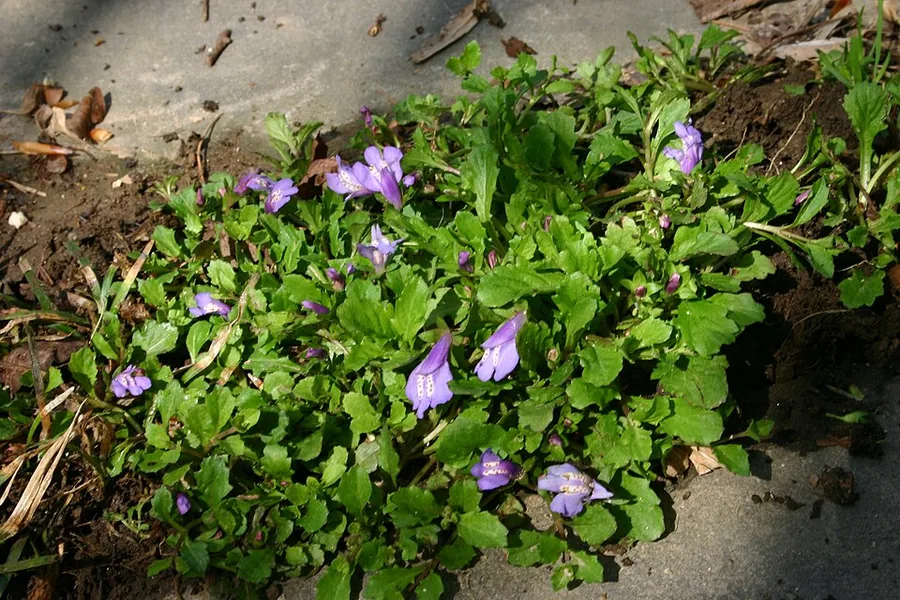
Creeping mazus tears into a low, dense green mat that holds to just 1 to 3 inches (3 to 8 cm) tall, and it fills ground fast. It sits in the family Mazaceae, and its rooting stems shoot outward and grab hold at every node, so even a few plants close a gap in a hurry. Reach for it as a lawn alternative or as a soft cushion between stepping stones, where it shrugs off light foot traffic and keeps on going.
The real thrill lands in early summer, when the mat launches small, two-lipped flowers cut like tiny snapdragons. Most plants blaze purplish-blue with white and yellow throats, while the 'Albus' form pops in clean white. Skip the groundcovers that bake in dry sun, because mazus runs on steady moisture and rich ground, and it pays you back with thicker cover and a bigger flush of bloom.
It rewards you for almost no work, though that same drive will send it charging into the lawn if you let it loose. Some northern states brand it an invasive weed, so hand it an edge or a contained bed. Plant it where you want a green carpet to spread and run, not where you need a crisp, tidy line.
Care
The short version: full sun to part shade, soil kept steadily moist and never bone dry, and an edge or a contained spot so it does not go charging into the lawn.
Light
Mazus powers along in full sun to partial shade, and it flowers hardest with several hours of sun. Where summers turn hot and dry, hand it some afternoon shade to knock down the heat stress that browns the mat.
Water
Water is the one thing mazus insists on. Keep the soil consistently moist and never let it dry out, especially in hot weather, because it drinks more than most groundcovers. Water every 3 to 7 days, and crank it up during a heat wave.
Soil
Plant it into moist, humus-rich, well-drained soil and watch it take off. It is not picky about texture and grabs onto clay, loam, or sandy ground, plus medium to wet sites, and it powers through a wide pH from 5.5 to 7.5.
Temperature
Hardy across USDA zones 5 to 8, mazus laughs off cold down to about -20°F (-29°C) and drives through summer heat up to roughly 86°F (30°C). In the coldest reach of that range, count on a little winter dieback.
Humidity
Everyday outdoor humidity is all it wants, so skip chasing a number. Keep your eye on soil moisture and airflow instead, since a soggy, stagnant corner is exactly what rolls out the welcome mat for slugs.
Feeding
Mazus barely asks to be fed. When growth flags, a light spring topdressing of compost or balanced fertilizer fires it back up, and most plantings roar along on nothing at all.
Pruning
Upkeep is a breeze. An occasional mow or trim sharpens up the mat and it shrugs off light foot traffic, but the real job is edging it back before it charges into lawns and beds.
Repotting
not applicable as an in-ground groundcover
Size & spacing
Each plant hugs the ground at just 1 to 3 inches (3 to 8 cm) tall and fans out 6 to 12 inches (15 to 30 cm) wide. Space the plants so the runners can race together into one unbroken mat over a season.
When to plant
Mazus is a tough perennial that thrives in zones 5 to 8. Get plants into the ground in spring once the last frost clears out, and they will knit together over the season and burst into bloom from roughly June into July.
Northern hemisphere
Southern hemisphere
Typical months for a temperate climate: start earlier in warm zones, later where spring frosts linger.
- Plant: spring after the last frost
- Harvest: late spring to early summer (roughly June to July)
Hardiness
USDA hardiness zones: 5–8
Temperature: down to -29°C
Troubleshooting
Mazus makes it easy, and nearly every hitch traces to too little water or too much wanderlust. Learn to read the mat early and you can jump on a thin patch before it spreads into bare ground. Spot your match below, then move on it.
Summer heat scorches the mat and thins it out
That browning, thinning look screams drought stress, and mazus flags it faster than the tough groundcovers because it thrives on steady moisture. It races downhill in full afternoon sun the moment the soil dries. Turn it right around: soak it deeply, tuck a light mulch around it to trap the moisture, and slide it into part shade if your summers really crank up the heat.
Fix:
- Water deeply and consistently to keep the soil evenly moist
- Site in part shade in hot climates to reduce heat stress
- Mulch lightly around the planting to conserve soil moisture
Runners charging out into the lawn and beds
Mazus powers along on rooting stems that grip at every node, and rich, moist ground sends it flying. Turn your back and it barrels into the turf and the neighboring beds, and a handful of northern states flag it as an invasive weed. Steer that energy where you want it: drop in some edging, yank or mow the runners that break loose, or hand it a wide-open spot between pavers and let it go to town.
Fix:
- Install edging to contain the planting
- Pull or mow back stems that escape the bounds
- Site it where vigorous spread is desirable, such as between pavers
Winter chews bare patches into the cold-edge mat
Push mazus to the cold edge of its range and it holds on as only a semi-evergreen to deciduous plant, so a rough winter can thin it or knock it back. It bites hardest in the coldest stretch of zones 5 to 8 and in exposed corners. Beat it easily: throw a light winter mulch over the crowns, plant it somewhere sheltered and well-drained, and patch the thin spots the moment spring kicks off.
Fix:
- Apply a light winter mulch in marginal zones for protection
- Replant thinned areas in spring
- Grow in a sheltered, well-drained spot
Slugs punch holes and leave shiny trails behind
Damp, shady ground is a magnet for slugs, and they chew ragged holes and drag glossy trails across the leaves. Good thing it is only skin deep, and it spikes after a wet stretch. Snatch them up by hand at dusk, dial back the moisture where you can, and toss out iron-phosphate bait if they swarm. Knock out the slugs and mazus barely faces another pest worth naming.
Fix:
- Hand-pick slugs in the evening
- Reduce excess moisture and improve air movement
- Use iron-phosphate slug bait if pressure is heavy
Toxicity
Great news for a home full of animals and kids: creeping mazus is not listed as toxic and grows safely alongside pets, livestock, and children. Let a pet grab a mouthful of foliage and the worst you will see is a quick, mild stomach upset. Plant it freely, with no special handling to fuss over.
Safe for
People · Cats · Dogs · Horses · Rabbits · Livestock · Birds
Cats Safe
Mazus never made the ASPCA toxic list, so let a curious cat dig in and nibble away. Even a big mouthful buys nothing worse than a quick bout of tummy upset.
Dogs Safe
Dogs can bound across it or grab a taste without a care. Go all-in on the leaves and the worst you get is a short, self-clearing spell of stomach trouble.
Horses Safe
Nothing here rattles a horse, so one can crop the mat or tromp right over it and come away perfectly fine.
Rabbits Safe
Rabbits can chomp the leaves to their heart's content. Nothing in the plant is poisonous to them.
Livestock Safe
Cattle, goats, and sheep can graze it freely, since the foliage packs no known toxic compounds.
Birds Safe
Backyard hens and other birds can peck at it all they like, with zero toxic parts to dodge.
People Safe
Dig in, weed it, and handle it with no risk at all, and it will not bother your skin. It just is not grown for eating, so leave it off the plate.
Not poisonous; pets that nibble foliage may at most have mild, temporary stomach upset.
Varieties
Mazus keeps things simple with just a couple of forms, sorted mainly by flower color. Both grow and spread with the same eager pace.
Species form (purple/blue)
The go-to form fires off small, two-lipped, snapdragon-like flowers in purplish-blue, each throat splashed with white and yellow.
'Albus'
'Albus' runs the exact same playbook as the species but swaps the purple-blue for crisp white blooms.
How to propagate
Multiplying mazus is almost too easy, since the plant is already spreading and rooting on its own. Give it a push by lifting and splitting the mat.
DivisionEasy
Spring · A few weeks to a season
Craving more of it? Dig up the rooted mat in spring and rip it into chunks. Every chunk already hauls its own roots, so it grabs hold again within a few weeks and packs the space over the season.
LayeringEasy
Spring to summer · A few weeks
Here mazus does the heavy lifting for you. All through spring and summer its creeping stems root themselves wherever a node hits the ground, so just lift those rooted pieces after a few weeks and drop them anywhere you want more.
Myths
Mazus is just creeping thyme wearing a different name.
Not a chance, since mazus lands in the family Mazaceae and has nothing to do with the thymes. Their wish lists clash too: thyme craves dry ground and blazing sun, while mazus needs steady moisture and rich soil. Mazus also throws small snapdragon-like flowers in purple-blue or white with spotted throats, a trick thyme never pulls off.