Ornamental · Tropaeolaceae
Nasturtium
Tropaeolum majus
Give it poor soil and full sun, and the nasturtium comes back with peppery leaves and bright, edible flowers all summer.
Full sun
50–86°F · 10–30°C
35–50 days
USDA 2–11
Overview
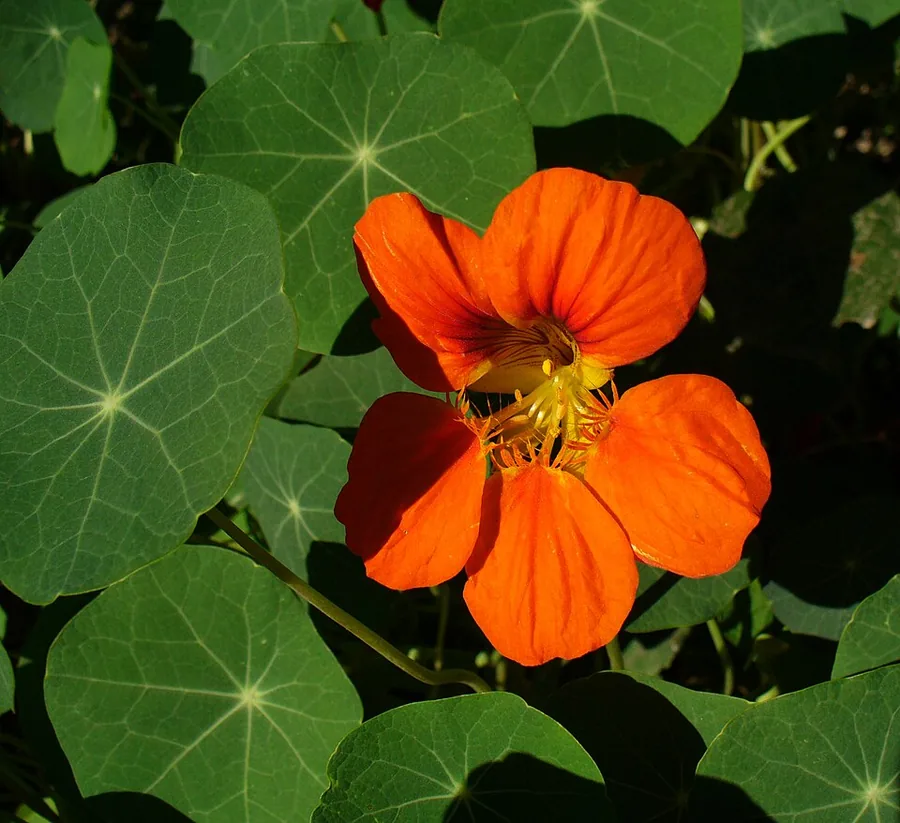
Nasturtium is a fast, cheerful annual that delivers on two fronts at once: its edible flowers and peppery leaves. It climbs, trails, or mounds depending on the type you grab, and those round leaves and warm-toned blooms have kept gardeners hooked for generations. Bite into any part and you get a fresh, watercress-like kick that jumps straight into salads and onto the plate as a garnish.
The best part is how little it demands. Most plants beg for feeding and rich ground, but a nasturtium hits its stride in lean, poor soil with nothing added at all. Pamper it and you get a jungle of leaves and barely a flower, so the winning move is to plant it and back off.
It pulls double duty, too. Aphids and cabbage caterpillars swarm to it, and sharp gardeners flip that into an advantage by growing it as a trap crop that yanks those pests off nearby vegetables.
Care
The short version: hand it full sun and lean, well-drained soil with no fertilizer. Water enough to keep young plants charging along, then let established ones dry a little between drinks, and sow the seeds right where they will grow instead of transplanting.
Light
Give nasturtiums full sun and they will flower their heads off. They will still grow in part shade, but you trade blooms for leaves, so hand them the sunniest spot you can find.
Water
Keep the soil lightly and evenly moist while young plants dig in and get going. Once they are established in lean, well-drained ground, they brush off short dry spells, so let the top inch dry before the next drink. Just steer clear of waterlogged soil.
Soil
This is a plant that thrives on neglect. Drop it into lean, well-drained loam or sandy soil of poor to average fertility and skip the rich compost. Fertile ground is the fastest route to leaves instead of flowers.
Temperature
Nasturtiums cruise along between 50°F and 86°F (10°C to 30°C). They are tender annuals with zero frost tolerance, so wait out the cold before sowing and expect them to bow out at the first hard frost.
Humidity
Ordinary outdoor humidity keeps them happy, with no number to chase. Good airflow counts for way more than moisture in the air, since crowded plants roll out the welcome mat for the aphids this one already draws.
Feeding
Don't feed them, and that is the whole trick. Nasturtiums flower best in hungry soil, and any nitrogen-rich fertilizer leaves you with a leafy plant and next to no blooms.
Pruning
There is barely anything to do beyond deadheading. Pinch off spent flowers to keep fresh ones firing, and clear out any damaged or diseased growth the moment you spot it.
Size & spacing
Plants run from 12 inches (30 cm) on the bushy dwarfs to 10 feet (3 m) on the climbers, so nail down the type before you plant. Give trailing forms room to sprawl and hand the tall ones something to grab and climb.
When to plant
Nasturtiums take off fast and won't survive frost, so let the weather set the pace. Sow the seeds straight into warm soil once the spring frost has passed, and they will bloom from early summer clear through to the first fall frost.
Northern hemisphere
Southern hemisphere
Typical months for a temperate climate: start earlier in warm zones, later where spring frosts linger.
- Sow: Optional, 2 to 4 weeks before the last spring frost in biodegradable pots; resents root disturbance.
- Plant: Direct sow after the last spring frost once soil has warmed; dislikes transplanting.
- Harvest: Blooms early summer until the first fall frost.
Hardiness
USDA hardiness zones: 2–11
Temperature: down to -46°C
Troubleshooting
Nasturtium hiccups usually land as pests on the leaves or a plant that piles on growth but skips the flowers. Almost all of it reads fast and fixes fast. Match what you see below, then jump on it before it spreads.
Sticky leaves and crowds of tiny insects on the shoot tips
When aphids pile onto the shoot tips, the plant is winning, not failing, because nothing gathers them like a nasturtium and that magnetism is what makes it such a brilliant trap crop. Fire a strong jet of water at the colonies to scatter them, and let a few ride along while the plant keeps luring pests off your vegetables. If one plant gets buried under them, yank it and hit the worst leaves with insecticidal soap.
Fix:
- Hose off colonies with a strong jet of water
- Tolerate moderate numbers when used intentionally as an aphid trap crop and remove the worst-infested plants
- Apply insecticidal soap to heavily infested foliage if needed
Ragged holes chewed through the leaves
Chewed, holey leaves give away cabbageworms and cabbage loopers, the green caterpillars that hatch from the cabbage white butterfly. They camouflage themselves against the foliage, so scan the leaves often and pluck them off the moment you spot one. Grow a nasturtium next to brassicas and it hauls these pests onto itself, while a shot of Bt shuts down any heavy feeding fast.
Fix:
- Handpick caterpillars
- Use as a companion trap to draw cabbage pests away from nearby brassicas
- Apply Bacillus thuringiensis (Bt) to heavily fed foliage if needed
Plenty of leaves but hardly any flowers
All leaves and no color is the tell-tale sign of soil that is too rich. Nasturtiums flower hardest when they run a little hungry, so feeding them or dropping them into fertile ground buys a big green mound and almost no blooms. Cut the fertilizer, move them into lean, well-drained soil in full sun, and the flowers come roaring back.
Fix:
- Stop fertilizing
- Grow in lean, well-drained soil in full sun
Toxicity
Great news for homes with pets: nasturtium is safe all round. The ASPCA lists it as non-toxic to cats, dogs, and horses, and the leaves and flowers are edible for people, with a bright peppery flavor. Nothing here needs keeping away from curious animals or children.
Safe for
People · Cats · Dogs · Horses · Rabbits · Livestock · Birds
Cats None
Cats get a clean pass here, since the ASPCA rates garden nasturtium non-toxic to them, so let a curious taster explore without a second thought.
Dogs None
Dogs come through fine too. A chewed leaf or flower does no harm, though a big mouthful of any plant can loosen the stomach for a bit.
Horses None
Horses can graze nasturtium freely, since the ASPCA lists it as safe for them.
Rabbits Safe
The peppery leaves and flowers suit rabbits just fine, and plenty of them will dive in for a fresh treat.
Livestock Safe
Grazing animals can tuck into the foliage without harm, so a plant near the paddock is no threat at all.
Birds Safe
Backyard birds and chickens can peck the leaves and seeds safely, with zero toxic parts to avoid.
People Safe
Go ahead and eat the leaves and flowers, since both pack a bright, peppery bite that lights up a salad. The young seed pods pickle up like capers, too.
Varieties
Nasturtiums show up as trailing climbers and tidy bushy dwarfs, throwing flowers from soft cream to deep scarlet. Here are the standouts worth knowing by name.
Alaska
A compact, bushy pick that earns its spot as much for its cream-marbled variegated leaves as for its flowers.
Empress of India
A compact plant that fires off deep crimson-scarlet flowers over striking dark blue-green leaves.
Jewel
A mounding dwarf that packs semi-double to double flowers onto tidy, bushy plants.
Climbing/Tall single
A vigorous trailing or climbing form that races to about 10 feet (3 m), built to scramble up fences and trellises.
Companions
Nasturtiums earn their place beside vegetables by drawing pests onto themselves and away from the crop, which makes them a useful neighbor for brassicas and squash alike.
Plant near
Cabbage and other brassicas: Used as a companion and trap crop; nasturtium helped reduce imported cabbageworm and cabbage looper damage in broccoli and cabbage.
Squash and other cucurbits: Interplanting nasturtium helped reduce squash bug and cucumber beetle damage in squash and pumpkin.
How to propagate
Nasturtiums rank among the easiest plants to launch from seed, and those big seeds and quick germination make them a rewarding win for a first-time grower.
SeedEasy
Direct sow after the last spring frost once soil is warm. · Germinates in about 7 to 14 days; blooms within roughly 5 to 7 weeks.
Starting these from seed is a real thrill, because the big, pea-sized seeds practically leap into growth. Soak them overnight to soften the coat, then push them straight into their final spot once the spring frost has passed and the soil has warmed, since the plant hates root disturbance and rarely transplants well. Seedlings burst through in 7 to 14 days, and the first flowers open within about 5 to 7 weeks. Chasing an early start? Sow into biodegradable pots that drop straight into the ground.
Myths
Nasturtium is poisonous to cats and dogs.
Not a chance. The ASPCA lists garden nasturtium as non-toxic to cats, dogs, and horses, and the leaves and flowers are edible for people on top of that. The scare traces straight back to watercress, a completely separate plant that carries the botanical name Nasturtium officinale. Tropaeolum majus is safe to grow around pets.
Nasturtiums repel aphids and keep them out of the garden.
It flips the script entirely. A nasturtium attracts aphids rather than repelling them, and that pulling power is the whole reason it shines as a trap crop. Drop it in near your vegetables and it collects aphids and some caterpillars onto itself, steering them clear of the plants you are set on protecting.