Tree · Rosaceae
Nectarine
Prunus persica var. nucipersica
A nectarine is a peach that ditched the fuzz, and it hands back full sun and one yearly prune as sweet, smooth-skinned fruit.
Full sun
Every 7–14 days
USDA 5–9
10–20 ft · 3–6 m
Overview
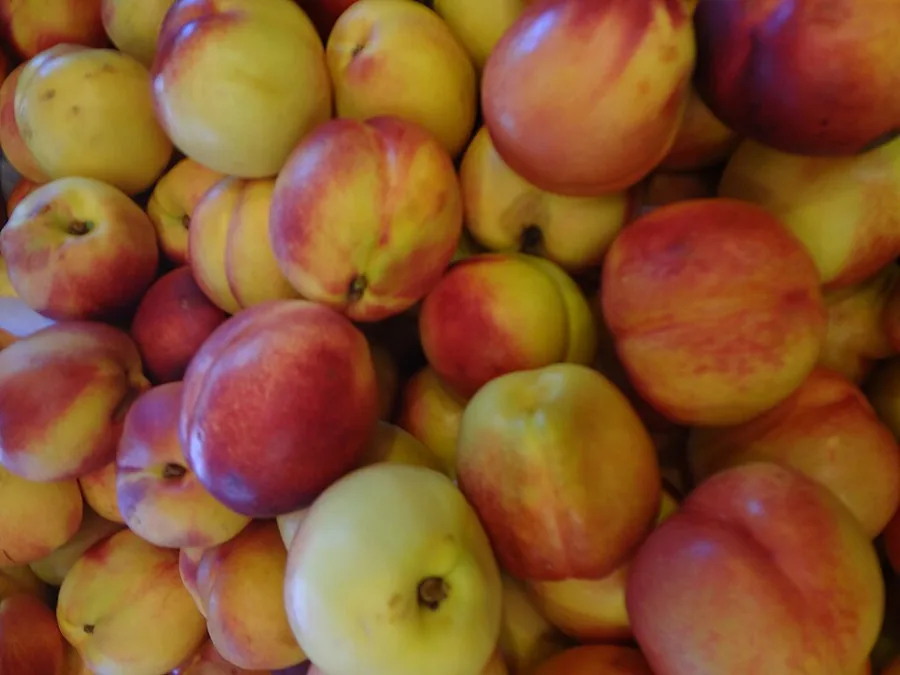
A nectarine is the very same tree as a peach, just one gene away from the fuzz, and that alone makes it a delight to grow. It lands squarely in the rose family next to cherries, plums, and apricots, and the smooth skin is the one tell that separates it from its fuzzy twin. Grow it right and it pumps out firm, sweet fruit from a tree that fits a backyard, no orchard required.
Make no mistake, this tree keeps you busy, and that is exactly the appeal. It craves full sun, deep well-drained soil, and a sharp prune every winter, and its smooth skin scars and rots a touch quicker than a peach's. Put in the work and you cash in on fruit you rarely catch at its peak in a store, snapped dead ripe straight off your own branch.
Most trees show up grafted onto a rootstock, so you plant a young whip and start shaping it from day one. It powers through zones 5 through 9, blooms early enough that a late frost can nip the flowers, and ripens its haul across the blazing heart of summer.
Care
The short version: load it up with full sun, plant it in deep well-drained soil kept on the dry side once it establishes, hit it with an open-center prune every late winter, and lay down a dormant spray to shut down leaf curl and brown rot.
Light
Blast a nectarine with full sun, the absolute most you can serve up, because fruit quality and sugar both ride straight on it. Park it in shade and the tree stretches leggy, sets barely any fruit, and clings to damp leaves that roll out the welcome mat for disease.
Water
Soak the tree deep while it is growing and fattening its fruit, then let the top half of the soil dry before the next big drink. An established tree brushes off a short dry spell, and keeping water off the leaves knocks back a load of fungal trouble.
Soil
Sink it into deep, well-drained sandy loam, because nothing takes down a nectarine faster than soggy roots. Dial the pH slightly acidic, between 6.0 and 6.5, and if your ground holds water, fix the drainage before the tree ever goes in.
Temperature
This tree toughs out a huge swing, from around -9°F to 95°F (-23°C to 35°C). The early bloom is the soft spot, since a late frost can torch a whole year's flowers before a single fruit sets.
Humidity
Average humidity in the 40% to 70% range keeps it happy. Damp, still air is the true villain, since it fires up brown rot and leaf curl, so throw the canopy open and let the breeze rip through.
Feeding
Fuel it from early spring into midsummer with a balanced complete fertilizer such as 10-10-10, then chase it with calcium nitrate. Cut the feeding by late summer so the fresh growth hardens up before winter slams in.
Pruning
Shape the young tree into an open-center, vase form and prune it hard every late winter. Each year you rip out water sprouts and thin the canopy so light and air pour onto the fruit, and this is hands down the biggest job the tree throws at you.
Repotting
This one is a field tree, not a pot dweller, so there is no repotting in the usual sense. Nail the planting spot up front, because a nectarine bristles at being moved once its roots dig in.
Size & spacing
Turn it loose and a nectarine shoots to 10 to 20 feet (3 to 6 m) tall and just about as wide. A yearly prune reins it in lower and easier to pick, but hand it the full 10 to 20 feet (3 to 6 m) of room so air blasts right through the canopy.
When to plant
Get a bare-root nectarine into the ground while it is dormant, in late winter or early spring, so the roots dig in before growth takes off. It flowers early, which leaves the blossoms hanging out for a late cold snap, and the fruit ripens from mid-June clear into September depending on the cultivar.
Northern hemisphere
Southern hemisphere
Typical months for a temperate climate: start earlier in warm zones, later where spring frosts linger.
- Plant: late winter to early spring while dormant (bare-root)
- Harvest: blooms early spring; fruit ripens mid-June to mid-September by cultivar
Hardiness
USDA hardiness zones: 5–9
Temperature: down to -29°C
Troubleshooting
A nectarine's smooth skin puts every problem on full display where a fuzzy peach would hide it, so trouble tends to strike the fruit and the new leaves first. Nail the early signs and you jump on a fungus or a borer before it drags the tree down. Match what you spot below, then move in while it still counts.
Fruit rotting on the branch under fuzzy gray-brown patches
Meet brown rot, the Monilinia fungi that tear through warm, humid weather, and yes, a nectarine grabs it faster than most stone fruit. Get after it right away: strip off every mummified fruit, snip out infected twigs, and prune the canopy wide open so air rushes in and dries the wood. Follow up with a fungicide at bloom and again before harvest, and the tree stays firmly on track.
Fix:
- Remove mummified fruit and infected twigs, prune for airflow, and apply fungicide at bloom and before harvest
Gum bleeding from the lower trunk beside sawdust-like frass
Gum and frass piling up at the trunk base call out peachtree borers, clearwing moth larvae that bore through the lower wood and can girdle a young tree fast. Fight back by driving strong, vigorous growth so the tree walls off the damage. Dig out every larva you turn up, and land your trunk sprays right when the moths take to the wing.
Fix:
- Keep trees vigorous, remove larvae, and time trunk sprays to moth flight
New leaves warping, plumping, and flushing red in spring
That warped new growth is peach leaf curl, driven by the fungus Taphrina deformans that dives into the buds while spring stays cool and wet. Curled leaves are done for the season, so skip chasing them. Instead, aim a dormant fungicide at the tree in late winter, right before the buds swell, and next spring's flush comes in clean.
Fix:
- Apply a dormant fungicide spray in late winter before bud swell
Silvery scarring and rough patches streaking the skin
Those silvery scuffs trace back to western flower thrips working the young fruit, and a nectarine's bare, smooth skin shows off every mark a fuzzy peach would bury. Great news though: the damage stops at the surface, so the fruit still eats like a dream. Scout hard around bloom and petal fall, and reach for a treatment only when the numbers push past the threshold.
Fix:
- Monitor at bloom and petal fall and treat if thresholds are exceeded
Toxicity
The ripe flesh is safe and downright delicious, but the rest of the tree is strictly off the menu. The pits, leaves, twigs, and bark carry cyanogenic glycosides that release cyanide, and wilted leaves turn especially dangerous for grazing animals. Keep prunings and fallen pits far from pets and livestock, and never let anyone eat the pit.
Toxic to
Cats · Dogs · Horses · Rabbits · Livestock · Birds
Safe for
People
Cats Toxic
A cat that chews the leaves or stems can drool, vomit, or wave off its food. The real punch comes from the cyanide in the pit and foliage, which can trigger dilated pupils, labored breathing, and a racing heart.
Dogs Toxic
A dog that digs into the leaves or a fallen pit may vomit, break into diarrhea, and pant hard. A swallowed pit can jam the gut, and a big load of plant material pushes it toward cyanide poisoning.
Horses Toxic
Horses run a serious risk, and wilted leaves blowing into the paddock top the list of dangers. Cyanide poisoning storms in with brick-red gums, fast breathing, staggering weakness, and sudden collapse.
Rabbits Toxic
The leaves, twigs, and pits pack cyanogenic compounds that steamroll a rabbit's small body, so none of it belongs anywhere near the hutch. A bite or two of ripe, pitted flesh is the one piece worth handing over.
Livestock Toxic
Cattle, goats, and sheep face the sharpest danger from wilted prunings pitched over a fence, where the cyanide really concentrates. Poisoning charges in fast, with breathing distress, trembling, and collapse.
Birds Caution
Steer birds clear of the pits, leaves, and bark, since the cyanogenic glycosides hit them just as hard. A little ripe flesh is fine to share, but keep that inner seed off the table for good.
People Ripe flesh safe
The ripe flesh is a summer knockout and completely safe to eat, so bite in. Just never crack open or swallow the pit, since the kernel loads up the same cyanide-releasing compounds as the leaves.
Keep pits and pruned leaves and stems away from pets and livestock; ripe flesh in moderation is not a concern.
Helpline numbers

United States
ASPCA Animal Poison Control: (888) 426-4435 (fee applies)
Poison Control: (800) 222-1222



Canada
Poison Centres: 1-844-764-7669
Varieties
Nectarines run to dozens of named types, but a handful of freestone cultivars keep muscling to the front for flavor and flat-out reliability. These are the standouts worth chasing.
Fantasia
A big freestone loaded with firm yellow flesh and knockout color, and it ranks right among the highest quality nectarines going.
Redgold
A big yellow-fleshed freestone that earns its fans for how well it eats and for the way it thrives from one region straight into the next.
Independence
A red-skinned, yellow-fleshed freestone that fruits solo, so one lone tree cranks out a crop with no second pollinator in sight.
How to propagate
Two routes get a nectarine going, and only one delivers the fruit you are after. Grafting clones a known cultivar dead-on, while a pit throws you a wild gamble.
GraftingDemanding
Named nectarines get budded or grafted onto peach or plum rootstock, and that is the move nurseries pull to lock a cultivar true to type. It demands a steady hand and real practice, so most growers grab a grafted tree and let the pros handle the join.
SeedModerate
A pit fires into growth once a good stretch of cold, moist stratification snaps its dormancy. Here is the twist: the seedling won't copy its parent, so you raise a one-of-a-kind tree instead of a duplicate of the fruit you started with, and that surprise is half the fun.
Myths
Nectarines are what you get crossing peaches and plums.
Not a hybrid, not even close. A nectarine is a smooth, fuzzless peach through and through, the very same species Prunus persica, and the whole trick hangs on a single recessive gene that peels the fuzz away.
Nectarines count as a species all their own, not peaches.
One species, plain as day, and a nectarine is just a peach rocking a smooth skin. That fuzzless form keeps bursting out from the same single-gene mutation, which is exactly why both trees crave identical care and draw the very same pests.