Ornamental · Balsaminaceae
New Guinea Impatiens
Impatiens hawkeri
Feed it rich, moisture-holding soil and part shade, and New Guinea impatiens powers out blooms from spring clear to frost.
Partial shade
59–81°F · 15–27°C
85–110 days
USDA 10–12
Overview
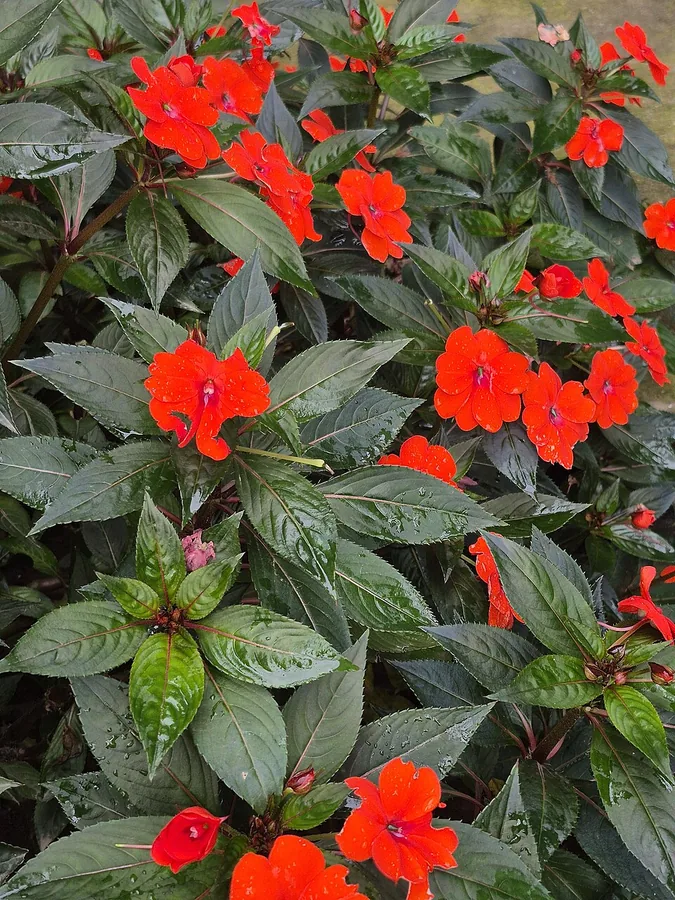
New Guinea impatiens grabs the spotlight with big, bright flowers blazing over deep green or bronze leaves. It sprang from the islands north of Australia as a tender perennial, though most growers run it as a garden annual and replant every spring for a fresh burst. The plants stay neat and mounded, so they slot into beds, borders, or a pot by the door and get to work fast.
This is where it pulls ahead of the old bedding impatiens. It drinks in more sun, pushes out larger flowers and leaves, and shakes off the downy mildew that leveled common impatiens across countless gardens. Want to push even harder? The interspecific SunPatiens hybrids power through full sun and real summer heat.
Best of all, it asks for next to nothing beyond steady moisture. Keep the soil damp but never soggy, feed it through the season, and it pumps out flowers nonstop from spring until the first frost. Let it run dry in the heat and the leaves stipple while the flowers fade fast, so keep that water coming and it keeps rewarding you.
Care
The short version: park it in partial shade with rich, well-drained soil kept evenly moist, feed a balanced fertilizer every couple of weeks, and pinch off spent blooms to keep the flowers firing.
Light
Set it in partial shade, above all where summers crank up the heat. It takes on more sun than common impatiens, but bright afternoon light without enough water leaves the plants stressed and the leaves stippled, so keep them fueled with a drink.
Water
Keep the soil evenly moist the whole way through, never soggy and never bone dry. The more sun it grabs, the harder it drinks, so a spot in full light or a container guzzles water faster and needs topping up more often. Good drainage is what stops all that moisture from tipping into root rot.
Soil
Dig it into rich, well-drained soil loaded with organic matter. The mix should hold moisture without staying wet, since these plants thrive on damp roots but rot fast in standing water.
Temperature
It hits its stride between 59°F and 81°F (15°C to 27°C) and has no patience for frost. One cold snap and the plant is finished, which is exactly why growers run it as an annual outside the warmest zones.
Humidity
Everyday household humidity keeps it happy, so forget chasing a number. Steady moisture at the roots carries far more weight than the air, and dry heat is the thing that invites spider mites in.
Feeding
These are hungry, heavy feeders, above all in pots. Hit it with a balanced liquid fertilizer every couple of weeks through the growing season and it keeps cranking out blooms with full, healthy foliage.
Pruning
No heavy pruning to sweat here. Just deadhead the spent flowers to keep fresh ones firing, and pinch off any damaged or diseased growth the second you catch it.
Size & spacing
Plants shoot up 6 to 20 inches (15 to 50 cm) tall and spread 12 to 24 inches (30 to 60 cm) wide into a tidy mound. Give them elbow room so air rips through and the leaves dry off quick after rain.
When to plant
New Guinea impatiens has no patience for frost, so let the cold call the shots. Get plants out only after the last frost clears and nights hold above 50°F (10°C), and they will bloom hard from spring right through to the first frost in fall.
Northern hemisphere
Southern hemisphere
Typical months for a temperate climate: start earlier in warm zones, later where spring frosts linger.
- Sow: 8 to 10 weeks before last spring frost (seed strains only)
- Plant: After last frost when soil and night temperatures stay above 50°F (10°C)
- Harvest: Spring through fall until frost
Hardiness
USDA hardiness zones: 10–12
Temperature: down to -1°C
Troubleshooting
Almost every hiccup with New Guinea impatiens circles back to water and air, either too much pooling at the roots or too little reaching the leaves in the heat. Learn to read the early signals on the foliage and flowers and you can jump in before trouble takes hold. Spot your match below, then move while it still counts.
Wilting fast and folding over in wet soil
Here is the twist: a plant flopping in soggy soil is fighting root rot, not thirst, so put the watering can down. Pop it out of the ground and study the roots, which go brown and mushy instead of white and firm. Dial back the water, fix the drainage or shift it into a looser mix, and yank any plant that has slid too far so the rest can rally.
Fix:
- Reduce watering frequency
- Improve soil drainage or repot
- Remove severely affected plants
Dotted, yellowing leaves laced with fine webbing
Those pale speckles and wisps of webbing point straight to spider mites, which pounce once a plant gets hot and dry. Flip the leaves and hunt for the tiny specks and webbing, or tap one over white paper and catch the dots crawling. Rinse the foliage, keep the soil moist to knock back the stress, and go after the undersides with insecticidal soap or horticultural oil.
Fix:
- Rinse foliage with water
- Keep soil moist and reduce heat/drought stress
- Apply insecticidal soap or horticultural oil to leaf undersides
Fuzzy gray mold on flowers and leaves
Cool, damp, stuffy air rolls out the welcome mat for gray mold, a fungus that grabs the fading blooms first and marches on from there. Pluck off the affected flowers and leaves right away, open up the planting so air can rush through, and aim the water at the base instead of over the top. Do that and the plant bounces right back.
Fix:
- Remove and discard affected plant parts
- Improve air circulation and spacing
- Water at the base and avoid wetting foliage
Twisting shoots, sticky leaves, and streaky flowers
Aphids and thrips make a beeline for the tender new growth and the flowers, so start your search right there. Scan the shoot tips and blooms for little insects, and clock the silvery streaks and scarring that thrips scratch into the petals. Blast them off with a hard rinse, follow with insecticidal soap, and snip out the worst growth to bring the plant roaring back.
Fix:
- Rinse plants with water
- Apply insecticidal soap
- Remove heavily infested growth
Toxicity
Pets and kids in the house? Great news, because New Guinea impatiens is non-toxic clear across the board. The ASPCA lists impatiens as safe for cats, dogs, and horses, and a stray nibble will not poison the other animals around the place either. Plant it anywhere you like and enjoy the show worry-free.
Safe for
People · Cats · Dogs · Horses · Rabbits · Livestock · Birds
Cats None
Cats get the all clear, since a curious nibble on a leaf or flower will not poison them.
Dogs None
Dogs are good to go too, because the ASPCA lists impatiens as non-toxic, so a chewed leaf is no drama.
Horses Safe
Horses have zero worries here, and a mouthful of the plant will not make them sick.
Rabbits Safe
Rabbits can chomp the leaves and blooms to their heart's content with no harm done.
Livestock Safe
Cattle, goats, and sheep can roam right up to it, since nothing in the plant will trouble them.
Birds Safe
Backyard and pet birds are totally safe, and a pecked leaf or flower does no harm at all.
People Safe
It is a green light around kids as well; nobody plants it for the plate, but a leaf in a small mouth will not poison anyone.
Varieties
New Guinea impatiens rolls out in named series rather than a long list of standalone names, and a few keep showing up for good reason. Get to know these first.
'SunPatiens'
Bred as interspecific hybrids for punishing heat and full-on sun, they surge with vigorous growth that powers through rough weather.
'Divine'
A series you can sow from seed, a standout in a crowd that almost always roots from cuttings.
'Celebration'
A cuttings series bursting with big flowers in a huge span of colors.
'Sonic'
A cuttings series that fires off early, uniform blooms on a tight, compact plant.
How to propagate
The quickest way to build a bigger New Guinea impatiens collection is from cuttings, and a handful of seed strains stand ready for anyone itching to start from scratch.
Stem cuttingsEasy
Spring to summer during active growth · 2 to 4 weeks to root
Cuttings are the fun, fast way to multiply New Guinea impatiens: snip tip cuttings in spring or summer while the plant is charging along, and they strike roots in about 2 to 4 weeks. One heads-up though, since many named cultivars are patented, so propagating them at home may not be legal.
SeedModerate
Indoors 8 to 10 weeks before last frost · 10 to 14 days to germinate
Only a handful of seed strains, such as the Divine series, will run this way, so seed is a fun side project rather than the main event. Sow indoors 8 to 10 weeks before the last frost, scatter the seed right on the surface since it needs light, and keep it toasty around 70°F to 75°F (21°C to 24°C) until it pops up in 10 to 14 days.
Myths
New Guinea impatiens thrives in full sun no matter the spot, exactly like a classic sun annual.
They soak up more sun than common impatiens and love the extra light, but they still crave steady moisture and lap up afternoon shade where summers run hot. The interspecific SunPatiens types are the ones bred for real sun and heat tolerance.
New Guinea impatiens pick up downy mildew and fail just like the classic bedding impatiens.
Not a chance. Impatiens hawkeri and the SunPatiens hybrids brush right past the impatiens downy mildew that flattened the old bedding impatiens. They are the recommended stand-in for the susceptible Impatiens walleriana.