Tree · Rosaceae
Plum
Prunus domestica
Serve up plenty of sun and deep soil, prune once a year, and a plum tree loads its branches with fruit.
Full sun
Every 7–14 days
USDA 4–9
10–20 ft · 3–6 m
Overview
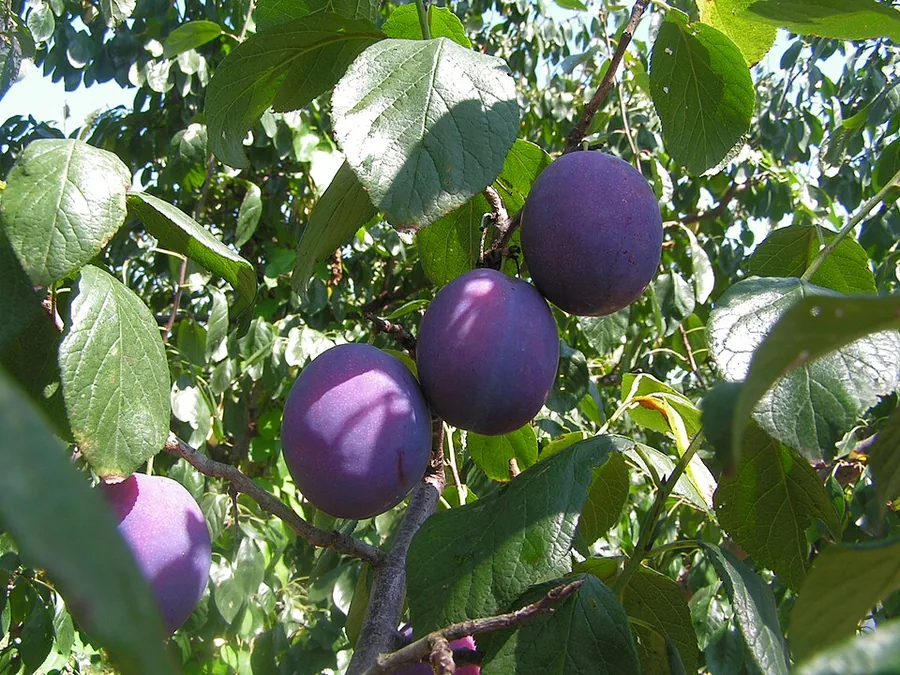
A plum tree quickly becomes the standout of the yard. It runs in the rose family right beside cherries, peaches, and apricots, and it splits into two exciting camps: the tough European plums grown for prunes and cooking, and the juicier Japanese plums that ripen earlier and burst with flavor fresh off the branch. Both chase a sunny spot and deep, well-drained soil, and both throw back a real harvest to anyone who keeps swinging the pruners.
The fun part is that most of the work happens in the choosing. Some European plums fruit all on their own, while most Japanese plums want a second compatible tree blooming at the same time to crop at all. Nail the pollination and a healthy tree charges into bearing in about 3 to 5 years, then keeps loading up with fruit for decades.
The trade for that long run is steady care, and it pays off fast. Plums draw a handful of stubborn problems, from black knot in the wood to brown rot in the fruit, and a clean, open canopy is your sharpest weapon against every one of them. Stay on top of the dropped fruit and dead wood, and the tree keeps roaring along, healthy and heavy with plums.
Care
The short version: full sun, deep and well-drained soil, and steady moisture while the fruit fills out. Prune every winter to keep the canopy open, feed lightly in early spring, and pair the variety with a pollinizer if it needs one.
Light
Plums chase full sun, ideally 6 or more hours a day, to ripen sweet fruit and dry the canopy after rain. They will take a bit of partial sun, but shade trades away both the crop and the open, airy growth that shuts disease down.
Water
Let the top half of the root zone dry between waterings, then soak it deeply. Young trees want regular drinks, and while established ones brush off some drought, they size and set fruit far better with even moisture as the plums fill out. Just dodge soggy ground, which throws open the door to root and crown rot.
Soil
Plant into deep, well-drained loam and work in a good load of organic matter. A pH of 6.0 to 7.0 hits the mark, and the one thing to shut out is heavy, waterlogged soil that rots the roots and crown.
Temperature
Plums come tough and cold-hardy, taking a range from about -29°F to 95°F (-34°C to 35°C). European types shrug off hard winters, though a late frost during bloom can still knock out a whole season's fruit.
Humidity
Everyday outdoor humidity in the 40% to 70% range works fine, so there is no number to chase. What really counts is airflow, because long damp spells in a crowded canopy are exactly what brown rot and black knot are waiting for.
Feeding
Feed just once in early spring before new growth breaks, using a balanced fertilizer or a simple nitrogen source. Keep it light, though, because too much nitrogen pushes soft growth that fruits poorly and catches disease.
Pruning
Prune every year in late winter while the tree sleeps. Open Japanese types into a vase shape and train European types to a modified central leader, cutting out dead, diseased, and crossing wood, clearing any black knot galls, and thinning the canopy so light and air punch through to the fruit.
Repotting
Plums live in the ground, not in pots, so most growers never repot at all. Dwarf trees in big containers are the exception, wanting their soil refreshed or a bump to a bigger pot every 2 to 3 years.
Size & spacing
A standard plum shoots up to about 10 to 20 feet (3 to 6 m) tall and spreads nearly as wide, so hand it plenty of room. Space trees far enough apart that the grown canopies don't crowd, which keeps air moving and disease on the back foot.
When to plant
Plums move right along with the seasons. Drop bare-root, grafted trees in early spring while they are still dormant and the soil can be worked, watch them burst into bloom in early to mid spring, and start picking from late summer into early fall once the fruit softens and colors up.
Northern hemisphere
Southern hemisphere
Typical months for a temperate climate: start earlier in warm zones, later where spring frosts linger.
- Plant: Early spring while dormant as bare-root, grafted trees, after the soil can be worked; container trees can go in from spring to early summer.
- Harvest: Blooms early to mid spring; European plums ripen late summer to early fall (about August to September), while Japanese plums often ripen somewhat earlier.
Hardiness
USDA hardiness zones: 4–9
Temperature: down to -34°C
Troubleshooting
Most plum trouble pops up in the wood, the blossoms, or the ripening fruit. Catch it early and you can usually prune or clean your way clear before it races through the tree. Match what you are seeing below, then jump on it while it still counts.
Knobby black galls bulging along twigs
Spot rough black knots gripping a twig and you have caught black knot in the act, a fungus that jumps into fresh spring shoots and rebuilds its woody galls year after year. Get after it in late winter: cut each knot out, drop the branch a solid 6 to 8 inches below the swelling, and burn or bin what you take. Wipe the saw between cuts, then track down and pull any wild plums or cherries nearby, because they keep feeding the whole thing.
Fix:
- Prune out knots in late winter, cutting at least 6 to 8 inches below each gall, and destroy the prunings.
- Disinfect pruning tools between cuts and remove any infected wild plums or cherries nearby.
Blighting blossoms and fruit softening under tan spores
Browning blossoms and soft fruit under a tan dusting spell brown rot, a fungus that charges in during warm, wet weather at bloom and comes roaring back as the fruit ripens. It flattens the flowers, drives soft rot through the crop, and hangs shriveled mummies on the branches. Chase it down by stripping off and destroying every rotted fruit and mummy, and in a wet year, hit it with a labeled fungicide once at bloom and again as the plums color up.
Fix:
- Remove and destroy rotted fruit and mummies during the season and at cleanup.
- Apply a labeled fungicide at bloom and again as fruit ripens in wet seasons.
Crescent scars on green fruit that tumbles off early
Catch a crescent scar on your young fruit and you have found the plum curculio at work, a little weevil that slips its eggs right inside the growing plum. The grubs tunnel through, the fruit drops early, and a windfall sliced open gives up a curved larva at the center. Break the cycle by gathering and destroying every dropped fruit, then hit petal fall with a labeled insecticide while the adults are out and busy.
Fix:
- Collect and destroy dropped, infested fruit to interrupt the life cycle.
- Apply a labeled insecticide at petal fall and shuck split when adults are active.
Curled, sticky leaves with sooty mold
Leaves curling and yellowing under a sticky coat point straight to aphids piling onto the soft new growth. They pull in ants and drip honeydew that blackens into sooty mold, which looks nastier than it plays out. Blast a light crowd off with a hard jet of water, follow up with insecticidal soap or horticultural oil if you need to, and let the lady beetles and lacewings finish the job before you reach for anything heavier.
Fix:
- Wash light infestations off with a strong jet of water or use insecticidal soap or horticultural oil.
- Preserve natural enemies such as lady beetles and lacewings and treat only when populations are high.
Toxicity
The ripe flesh is a treat, but the rest of the tree stays off the menu. Leaves, stems, bark, and the pits pack cyanogenic compounds that release cyanide when chewed or wilted, and wilted prunings hit grazing animals especially hard. Keep pets and livestock clear of clippings and fallen pits, and never let anyone crack open a stone.
Toxic to
Cats · Dogs · Horses · Rabbits · Livestock · Birds
Safe for
People
Cats Toxic
Let a cat taste a scrap of ripe flesh and it usually shrugs it off with nothing worse than a mildly upset stomach. Chewing leaves, twigs, or a cracked pit is the real trouble, since that releases cyanide, so drooling, bright red gums, or labored breathing mean you jump on it as an emergency.
Dogs Toxic
Dogs go straight for a fallen pit, and that is exactly where the danger hides, because the kernel and wilting leaves give off cyanide while the whole pit can jam the gut. A dog that has been chewing the tree and starts vomiting, panting, or acting weak earns a fast call to the vet.
Horses Toxic
Horses sit right at the top of the watch list, and wilted leaves blown into a paddock are the classic trap. The cyanide inside can trigger brick-red gums, dilated pupils, staggering, and collapse within minutes, so keep prunings and fallen branches well clear of them.
Rabbits Toxic
Plum leaves, bark, and twigs never make safe browse for a rabbit, since those same cyanogenic compounds pile up as the foliage wilts. Skip the prunings flat out and stick to rabbit-safe greens.
Livestock Toxic
Grazers like cattle, goats, and sheep run into trouble most with wilted leaves off a fallen or pruned branch, which pack in cyanide as they dry. Distress, gasping, and collapse can hit within an hour, so fence stock away from every plum pruning.
Birds Caution
Birds tuck into the ripe flesh with ease, and plenty of wild fruit-eaters do just that. The pits and leaves are the catch, since the cyanide inside turns dangerous if a bird cracks the kernel, so hand over only pitted flesh.
People Ripe fruit safe
Dig into ripe plums fresh or cooked with zero worry, because the fruit itself is wholesome and safe. The one catch is the pit, which holds cyanide and should never be cracked open, so spit it out and keep kids from chewing it.
The hazard is the wilting leaves, twigs, and the pits (cyanide), not the ripe flesh. Keep pets and livestock away from prunings, wilted foliage, and fallen pits; pitted ripe plum flesh is a safe occasional treat in moderation.
Helpline numbers

United States
ASPCA Animal Poison Control: (888) 426-4435 (fee applies)
Poison Control: (800) 222-1222



Canada
Poison Centres: 1-844-764-7669
Varieties
Hundreds of plum cultivars are out there, but only a handful keep showing up in home orchards. These are the standouts worth learning by name.
Stanley
A go-to, self-fruitful European prune plum that cranks out dependable blue freestone fruit ready to dry, cook, or eat right off the tree.
Damson
A small, tart, blue-black European plum that truly shines in jams, preserves, and cooking rather than as a fresh-eating snack.
Santa Rosa
A crowd-favorite Japanese plum loaded with juicy reddish-purple fruit, partly self-fruitful but really cropping best with a compatible pollinizer close by.
Methley
An early, heat-tolerant Japanese plum that fruits on its own and comes in sweet, making it a winner for warmer regions.
How to propagate
You don't kick off a plum from seed the way you would an annual. Named trees get joined onto rootstock, while seed goes mostly toward raising those rootstocks or breeding something brand new.
GraftingModerate
T-budding in late summer when bark slips, or whip grafting onto rootstock in late winter while dormant. · Bears fruit in roughly 3 to 5 years depending on rootstock and cultivar.
Named plums won't come true from a pit, so growers bud or graft them onto plum rootstocks that dial in the tree's size, vigor, and grip on the soil. Pick your window: T-bud in late summer while the bark still slips, or whip graft onto dormant rootstock in late winter. Then the young tree kicks into gear and starts bearing in about 3 to 5 years, depending on the rootstock and cultivar.
SeedModerate
Cold-moist stratify the cleaned pits over winter, then sow in spring. · Several years to fruit, and seedlings are not true to type.
Raising a plum from a pit is a fun side project, but it is built for growing rootstock or breeding new types, not cloning a named plum. Clean the pits, run them through a cold, moist winter to break dormancy, and sow in spring, just knowing it is several years to fruit and the seedling won't match its parent.
Myths
Plums refuse to fruit unless a second tree grows close by.
It swings on the type, so drop the blanket assumption. Loads of European plums like Stanley are self-fruitful and crop solo, while most Japanese plums and a few European ones want a compatible cultivar blooming right beside them to fruit well. Check the variety before you plant a single tree and you are set.
Prunes spring from a totally different fruit, never from plums.
Not a chance, since prunes are simply dried plums. They come from certain freestone European cultivars that dry down around the pit without spoiling, which is exactly why not every plum makes a good prune.
Plum pits are harmless to chew.
Far from it, because the pits, leaves, and stems carry cyanogenic compounds that release cyanide when crushed or chewed. A swallowed pit can jam the gut too, so spit it out and keep it well away from pets and children.