Ornamental · Portulacaceae
Moss Rose
Portulaca grandiflora
Hand moss rose a hot, sunbaked, sandy patch and watch it explode into color across the whole summer.
Full sun
Every 7–14 days
59–95°F · 15–35°C
USDA 2–11
Overview
Here is a plant that turns the worst corner of the yard into the best one. Moss rose stays low and spreads fast, throwing out fine needle-like leaves and bright ruffled flowers, and it positively thrives on the heat, drought, and lean soil that flatten most annuals. It hails from South America and takes off in rock gardens, along sunbaked edges, and in pots that roast through the afternoon.
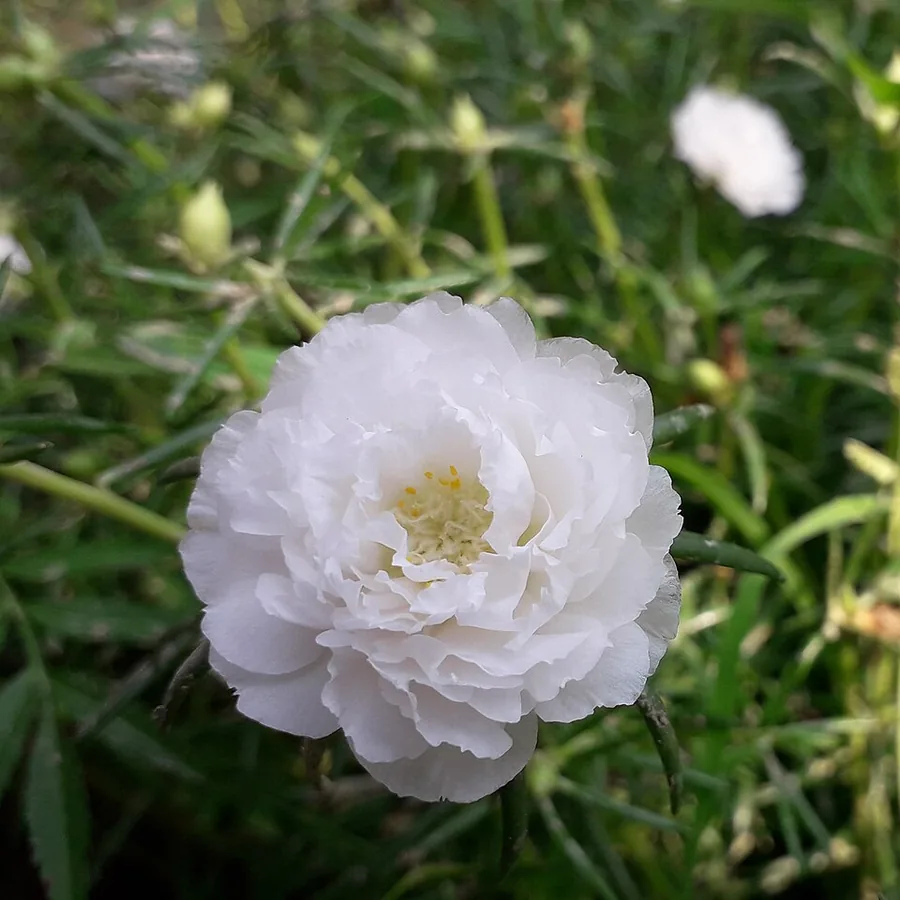
And the flowers, those are the payoff. They blaze in hot pinks, oranges, reds, yellows, and whites, loads of them fully double and shaped like little roses, which is where the common name comes from. Keep one quirk in mind: the blooms fling open in strong sun and snap shut on cloudy days and into the afternoon, the very trick that earned it the name eleven o'clock plant.
Best of all, it barely asks for a thing. Drop it into poor, fast-draining ground, pour on all the sun you can, and water only once the soil bakes dry. Just resist the urge to coddle it, because rich soil, heavy feeding, and constant watering only bring on soft, rotting stems and a poor show of flowers.
Care
The short version: load it up with direct sun and plant it in dry, sandy, quick-draining soil. Water only when the ground bakes dry, keep feeding light, and let the heat drive the show.
Light
Give moss rose everything the sky has, 6 or more hours of direct sun a day. Those flowers throw themselves open in strong light and clamp shut in shade, so the brighter the spot, the bigger the color payoff.
Water
Run it like the succulent it is and let the soil go bone dry between waterings, somewhere around every 7 to 14 days. Overwatering is the quickest way to lose it, hands down, while heat and drought barely make it blink.
Soil
Sink it into sandy, sharp-draining soil, and do not fuss over quality, since even poor, gritty ground suits it fine. Any pH from 5.5 to 7.5 works, and fast drainage counts for far more than richness ever will.
Temperature
Crank up the warmth and it flourishes, cruising anywhere from 59°F to 95°F (15°C to 35°C). Frost is the hard stop, though, wiping it out completely, so it only heads outside once the cold has well and truly gone.
Humidity
Dry air is right up its alley, so forget chasing a humidity number. Low humidity with plenty of airflow shuts down the rot that damp, stagnant corners stir up.
Feeding
Go light on the feeding, or skip it, since moss rose blooms hardest on a lean diet. In poor ground it wants nothing, because too much nitrogen buries the flowers under leaves, and even richer soil needs no more than one gentle feed across the summer.
Pruning
Catch any leggy stems and pinch them right back to spark bushier, fuller growth. Skip deadheading entirely, because this plant clears its own faded flowers and reseeds itself with zero help.
Repotting
Since it lives fast as an annual, repotting barely enters the picture. Mostly you just pot on the nursery starts as you plant them out. Keep an eye out, though, for roots spiraling the container or soil that drains in a heartbeat, both shouting that it wants a bigger home.
Size & spacing
This one stays compact, only 4 to 8 inches (10 to 20 cm) tall, then races outward into a mat 6 to 12 inches (15 to 30 cm) across. Space the plants so those mats link up without jostling, keeping the air moving and rot on the back foot.
When to plant
Moss rose runs on heat and cannot survive a frost, so it pays to time the launch right. Fire up seeds indoors in late winter, move plants out the moment the soil warms and frost clears, and the reward is bloom that keeps rolling from summer into the opening days of fall.
Northern hemisphere
Southern hemisphere
Typical months for a temperate climate: start earlier in warm zones, later where spring frosts linger.
- Sow: 6 to 8 weeks before the last spring frost
- Plant: After all danger of frost has passed and soil has warmed
- Harvest: Summer through early fall
Hardiness
USDA hardiness zones: 2–11
Temperature: down to -46°C
Troubleshooting
Moss rose is refreshingly trouble-free, and when something does go sideways, it nearly always traces to overwatering or a shortage of sun. The plant flags it early in the stems and the flowers, so there is plenty of time to jump in. Spot your symptom below and fix the conditions fast.
Stems turning soft, black, and toppling over
Soft, blackened stems keeling over at the base spell root and stem rot, and overwatering or soil that will not drain is almost always behind it. Check for a mushy, discolored crown sitting in soil that stays soaked for days. Slash the watering, drive coarse sand or grit through the soil to sharpen drainage, and yank out any plant already rotted through, because it is finished.
Fix:
- Reduce watering and allow soil to dry
- Improve drainage with sandy or gritty soil
- Remove and discard severely rotted plants
All leaves, no flowers? Time to move it
A leafy plant that just will not bloom is usually starved of direct sun or overloaded with nitrogen. Moss rose demands a solid 6 hours of hard sun before it flings its flowers open, and a rich feed piles on leaves instead of color. Shift it into full sun, cut the feeding, and the blooms come roaring back.
Fix:
- Move to a full-sun location
- Stop or reduce fertilizing
Toxicity
One thing to stay on top of: moss rose is mildly toxic, so keep pets and grazing animals from tucking into it. Its leaves and stems pack soluble calcium oxalates, which usually just trigger drooling and a queasy gut, though a big mouthful can leave an animal weak and lean on the kidneys. Steer cats, dogs, horses, and the rest clear of it, and go easy on the edible cousin purslane, which carries the same oxalates and belongs in the moderation column.
Toxic to
Cats · Dogs · Horses · Rabbits · Livestock · Birds · People
Cats Mild
A quick nibble usually leaves a cat with a bit of drool and a queasy belly, nothing dramatic. Down a full mouthful, though, and it can drool hard and go wobbly, and a big serving really leans on the kidneys.
Dogs Mild
A dog that chomps a stem or two mostly gets off with some drool and a cranky stomach. Watch closely for weakness or stop-start vomiting once a dog really tucks into a batch of it.
Horses Mild
One or two mouthfuls leave a horse doing little beyond slobbering with a flat appetite. Heavy grazing is the real flag, though, since the oxalates stack up, grab hold of calcium, and drag the horse down into weakness.
Rabbits Caution
Rabbits and moss rose are a hard no, thanks to those same soluble oxalates. Keep it nowhere near a rabbit's hutch or exercise run rather than risk a touchy gut.
Livestock Caution
Cattle, sheep, and goats will almost always walk on by. But drop a hungry animal onto bare ground and it might graze enough to start drooling and turn weak, so fence moss rose off wherever stock roam.
Birds Caution
Birds feel these oxalates too, caged pets and backyard visitors alike, so keep moss rose well clear of their cages and pens.
People Caution
As for people, garden moss rose is one to admire, not eat. Its cousin purslane does land on plates as a leafy green, but it packs the very same oxalates, so even that is a go-slow, not a free-for-all.
Common purslane (Portulaca oleracea) is eaten by people but also contains oxalates and should be consumed in moderation.
Helpline numbers

United States
ASPCA Animal Poison Control: (888) 426-4435 (fee applies)
Poison Control: (800) 222-1222



Canada
Poison Centres: 1-844-764-7669
Varieties
Most of the moss rose worth chasing down comes from a few standout breeding series, each one pushed toward something better: fuller flowers, punchier color, or blooms that stay open when the light dips. These three are the ones to hunt for.
Sundial Series
A compact double that flings its flowers open bright and early and holds them open longer than most as the light fades.
Margarita Series
A powerhouse of a heat-loving double that keeps pumping out flowers in beds and pots through the fiercest heat of summer.
Happy Hour Series
A mounding series loaded with big double blooms in a seriously wide sweep of colors.
How to propagate
Multiplying moss rose is almost too easy, and it rewards the effort every time. Grow it from its near-dust seed or root a handful of cuttings off a plant you already have going, and either way you end up with more.
SeedEasy
Start indoors 6 to 8 weeks before last frost or direct sow after frost; self-sows readily · 2 to 4 weeks to germinate and establish
Moss rose practically grows itself from seed, but the seed needs light to fire up, so scatter it across the surface and leave it sitting on top. Kick things off indoors 6 to 8 weeks before the last frost, or fling seed straight onto warm ground once the cold clears out. Allow it 2 to 4 weeks to sprout and dig in, and after that it self-sows like clockwork every year.
Stem cuttingsEasy
During the active summer growing season · 1 to 2 weeks to root
Cuttings root in a flash during the summer growth surge. Break off a sturdy stem, give the cut end a few hours to dry and harden so rot cannot creep in, then drive it down into gritty soil. It grabs hold in roughly 1 to 2 weeks.
Myths
Portulaca has to be pet-safe, since purslane is a vegetable people eat.
They share a family tree, sure, but that does not turn the garden plant into a safe treat. The ASPCA tags Portulaca species as toxic to cats, dogs, and horses over soluble calcium oxalates, and even the purslane on your plate carries those same oxalates. Keep it well out of any pet's reach.
Moss rose holds its flowers open all day.
Not a chance. The blooms only crack open under bright, direct sun, then close right up in shade, under clouds, and as the afternoon slides by. That single habit is exactly what pinned the name eleven o'clock plant on it.