Houseplant · Araceae
Satin Pothos
Scindapsus pictus
Give it bright, indirect light and steady warmth and stand back, because those silver-marked vines will trail and keep going for years.
Bright indirect
61–84°F · 16–29°C
USDA 11–12
3–10 ft · 0.9–3 m
Overview
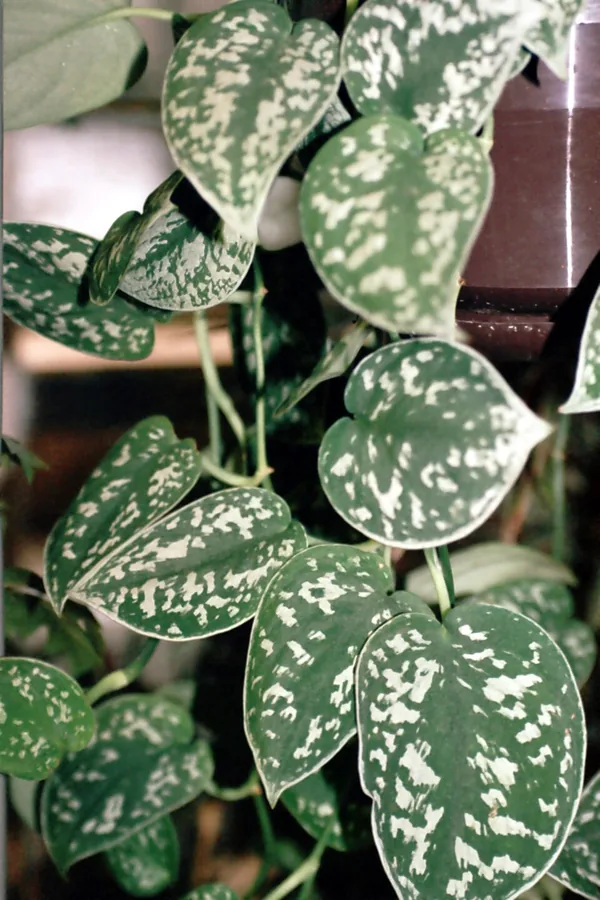
Satin pothos grabs the eye with leaves that look splashed in silver over a deep, glowing green, and the name follows straight from that look. It hails from the arum family and the tropics of Southeast Asia, where it hauls itself up tree trunks toward the canopy. Indoors it throws out long, trailing stems from a shelf or a hanging pot with real gusto.
Here is the catch that trips people up: it is not a true pothos. It is Scindapsus pictus, a close cousin that copies the look and the easy, fast-trailing habit. The mature leaves firm up and take on a slightly puckered surface, and the silver blazes brightest when the plant drinks in plenty of indirect light.
Get the watering dialed in and this plant just runs with it. Keep it warm, keep it out of scorching sun, and let the top of the soil dry between drinks, and it pushes out long, lush vines that keep coming. Overdo the water, though, and the roots are the first casualty.
Care
The short version: bright, indirect light and a warm room above 61°F (16°C). Keep the soil evenly moist but never soggy, pot it in a peaty, well-draining mix, and feed it monthly all through spring and summer.
Light
Give it bright, indirect light and the silver markings stay crisp and sharp. It will hang on in partial shade, sure, but the patterns fade and growth stalls, and direct sun scorches the leaves outright, so keep it out of the blaze.
Water
Keep the soil evenly moist but never soggy, and let the top dry a touch before the next drink. Back right off through winter when growth slows to a crawl. Leave it standing in wet soil and the roots rot fast, so that is the one habit to break.
Soil
Pot it up in a peaty, organic mix that drains freely, leaning slightly acidic at a pH up to 6.0. A loose, airy blend lets water shoot straight through, so the roots never sit stewing in a puddle.
Temperature
Keep it warm, right between 61°F and 84°F (16°C to 29°C). Cold is its weak spot, and the foliage takes damage the moment the air drops below the low end of that range, so steer it well clear of drafts.
Humidity
Plain household humidity does the job, so there is no number to chase down. It perks up in a more humid spot, and dry winter air is usually what rolls the welcome mat out for spider mites.
Feeding
Feed it monthly through spring and summer with a balanced houseplant fertilizer while it is charging out new growth. Knock it off through the dark months, when the plant is not touching the food anyway.
Pruning
Pinch the stems back now and then to keep it tidy and drive fuller, bushier growth. Better still, every bit you trim off a long vine is a ready-made cutting to root.
Repotting
Bump it up a pot size every 1 to 2 years, or sooner the moment roots shove through the drainage holes and water rips straight through. Fresh mix and a bit more room and it takes right off again.
Size & spacing
Turned loose to climb or trail, the vines rocket to 3 to 10 feet (90 cm to 3 m) long and fan out 2 to 4 feet (60 to 120 cm) wide. Give the stems room to spill down, or a support to scale, and let them run.
Troubleshooting
Nearly every hiccup with satin pothos comes down to watering or a pest that rode in on another plant. The leaves flag it early, so a quick scan now and then keeps you ahead of the game. Match the sign below and act while the fix is still simple.
Dark mushy roots with a foul smell
Root rot moves in fast when soil stays waterlogged and the roots cannot pull in any air. Jump on it: slide the plant out, cut away every dark, mushy root, and repot into dry, well-draining mix. Then water less and let the soil dry between drinks, because this one races ahead if you leave it.
Fix:
- Remove rotted roots
- Repot in dry well-draining mix
- Reduce watering
Leaves going soft and yellow
Soft yellow leaves over soggy soil almost always trace back to overwatering, with poor drainage piling on. Let the top of the mix dry right out before the next watering, then get the plant into a container that drains freely. If the roots have taken a hit, repot into fresh mix and dial the watering back, and it bounces back before long.
Fix:
- Reduce watering
- Improve drainage
- Repot in fresh mix
Fine webbing and stippled, bronzed leaves
Spider mites pounce when the air turns hot and dry, spinning fine webbing and stippling the leaf undersides a dull bronze. Blast the foliage with water to knock them loose, then hit them with insecticidal soap or horticultural oil and keep at it weekly until they are gone. Crank up the humidity and the plant stops being such an easy target.
Fix:
- Rinse forcefully with water
- Apply insecticidal soap or horticultural oil
- Repeat weekly
White cottony tufts and sticky residue
Those white, cottony clumps wedged in the leaf joints are mealybugs, and the sticky honeydew gives them away every time. Zap each one with an alcohol-soaked swab, follow through with insecticidal soap, and snip off anything they have really taken over. Give new plants a solid once-over before they join the crew and you head this off early.
Fix:
- Dab with alcohol swab
- Apply insecticidal soap
- Prune infested parts
Waxy bumps clinging to stems and leaves
The waxy little disks stuck fast to the stems and leaves are scale insects, and they hardly budge. Scrape them off by hand, wipe the spot with an alcohol swab, and finish with insecticidal soap or oil to catch the crawlers before they scatter. Scout every new plant first and they never get a foothold.
Fix:
- Scrape off by hand
- Wipe with alcohol swab
- Apply insecticidal soap or oil
Dark spots or gray mold on the leaves
Brown-black spots or a fuzzy gray mold flag fungal leaf spot or botrytis, both of which love wet leaves and dead-still air. Pull off the affected leaves, keep water off the foliage, and get the air moving around the plant. Water down at the soil and give it space to breathe, and it stays gone.
Fix:
- Remove affected leaves
- Avoid wetting foliage
- Improve airflow
Leaves curling and drooping
Curled, limp leaves over dry soil are the plant flat-out telling you it is thirsty. Give it a good, thorough drink until water pours from the base, then lock in a steadier rhythm. Watch the leaves bounce back and unfurl once the roots catch up.
Fix:
- Water thoroughly
- Maintain even moisture
Silvery streaks flecked with black specks
Silvery streaks peppered with tiny black specks are the calling card of thrips. Treat the plant with insecticidal soap, hang blue sticky cards to snag the adults, and rinse the leaves to wash off the rest. Keep new arrivals quarantined for a while and they never spread through the collection.
Fix:
- Apply insecticidal soap
- Use blue sticky cards
- Rinse foliage
Toxicity
One heads-up before the fun part: this plant is not pet-safe. Every scrap of it carries insoluble calcium oxalate crystals that sting and swell the mouth the instant an animal or person bites in. Nothing here is meant for eating, so park it well out of reach of pets and small children.
Toxic to
Cats · Dogs · Horses · Rabbits · Livestock · Birds · People
Cats Moderate
A cat that bites a leaf runs straight into a sharp sting of calcium oxalate crystals. Expect drooling, pawing at the mouth, vomiting, and a swollen muzzle soon after, so keep this one well out of a cat's reach.
Dogs Moderate
A dog that chews a piece feels the mouth burn right away, along with drooling, retching, and clear swelling of the lips and tongue. Keep it up high and out of the way.
Horses Moderate
The same crystals sting a horse's mouth and throat, kicking off heavy drooling and swelling, though horses rarely vomit. Keep the trailing stems where a horse cannot grab them.
Rabbits Toxic
These leaves are off the menu for a rabbit, since the crystals inflame the mouth and gut. Keep every trailing stem well up and out of a curious bunny's reach.
Livestock Toxic
Grazing animals that grab a mouthful hit the same oral burning and digestive upset, so treat the plant as strictly off-limits around any stock.
Birds Toxic
A bird that pecks the leaves can hurt its mouth and crop on the crystals, so keep the plant clear of wherever birds perch and fly.
People Caution
No part of this plant is food, and a bite fires up burning lips, a swollen tongue, and drooling. Wash your hands after pruning and keep it out of reach of small children.
Chewing sap causes oral irritation; wash hands after handling
Helpline numbers

United States
ASPCA Animal Poison Control: (888) 426-4435 (fee applies)
Poison Control: (800) 222-1222



Canada
Poison Centres: 1-844-764-7669
Varieties
Several named picks each bring their own leaf shape and silver pattern to the table, and these are the ones worth hunting down.
'Argyraeus'
Puts out small leaves rimmed in silver-white and speckled with gray blotches.
'Exotica'
Throws out larger heart-shaped leaves splashed with bold silver.
'Silvery Ann'
Runs to narrow, lance-shaped leaves loaded with heavy silver splotches.
Shimmering Falls Silver Splash
Packs dense silver mottling right across every leaf.
How to propagate
This is where satin pothos really pays you back, because a single healthy cutting is all it takes to spin up a whole new plant.
Stem cuttingsEasy
Spring or early summer · Roots in a few weeks
Snip a 4-inch (10 cm) stem cutting in spring or early summer and drop it into water or a pot of moist mix. Roots break within a few weeks, and just like that you have a brand new plant that matches the parent exactly.
Myths
Satin pothos is a true pothos.
Not quite, and the name is to blame. This plant is Scindapsus pictus, in the genus Scindapsus, while the true pothos sits in Epipremnum. They look alike and grow alike, but they are genuinely different plants.
Satin pothos is safe around pets.
It is not. The ASPCA flags it as toxic to cats, dogs, and horses thanks to the insoluble calcium oxalate crystals packed into its tissue, which burn and swell the mouth on contact. Keep it well clear of animals.
It thrives in deep shade or low light.
It scrapes by in low light but never really thrives there. It wants bright, indirect light to keep those silver markings sharp, while direct sun swings too far and scorches the leaves.
It tolerates cold temperatures.
It really does not, this being a tropical plant at heart. The foliage takes damage below about 61°F (16°C), so keep it in a warm room and out of cold drafts.