Ornamental · Plumbaginaceae
Sea Thrift
Armeria maritima
Give it full sun and gritty, fast-draining soil, and sea thrift will pack the rock garden with pink cushions.
Full sun
Every 7–14 days
USDA 4–8
6–12 in · 15–30 cm
Overview
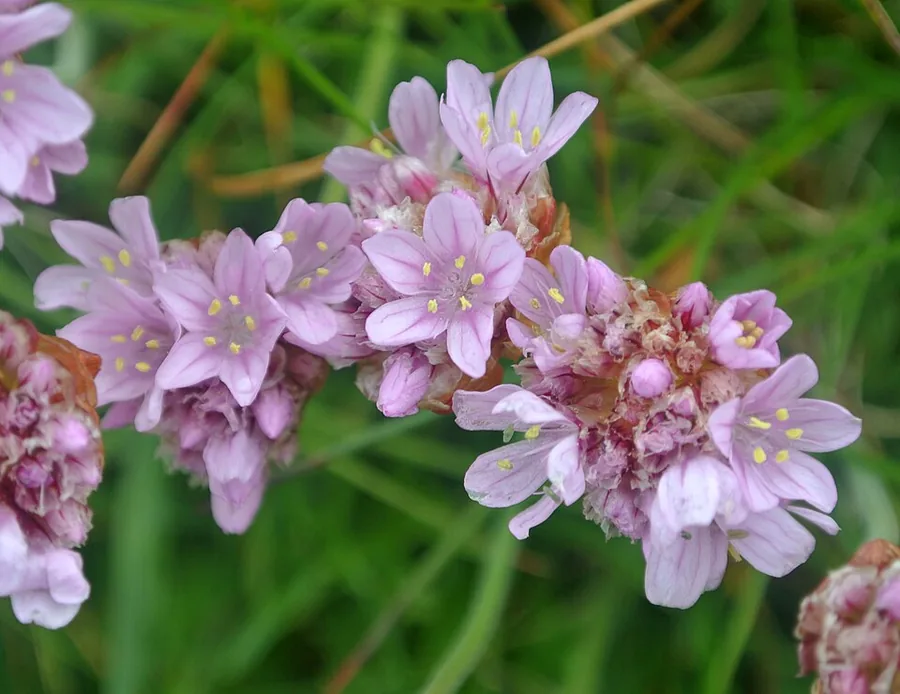
Sea thrift is one of those plants that punches well above its size. It grows wild on coastal cliffs and salt marshes, so it comes hardwired for tough spots and rewards you the moment you stop fussing. It builds a snug grassy cushion of narrow leaves and fires up bare stems of round pink to white flowers every spring. At just 6 to 12 inches, it slots straight into the front of a border, a rock garden, or a crack in a wall.
Best of all, the thing that keeps it happy is doing less. Hand it poor, gritty ground and it takes off, but bury it in the rich, damp soil most plants love and it stalls and rots. So keep it lean. Give it sun and razor-sharp drainage, and it powers along on almost nothing.
And it keeps earning its spot all year. The mounded foliage stays green through winter across much of its range, it laughs off drought, salt, and wind, and a thriving clump anchors its patch for years before it wants dividing.
Care
The short version: full sun, lean sharply drained soil, and a light touch with water and feed. Keep it dry and lean, and it rockets along happily for years.
Light
Sea thrift lives for full sun and flowers hardest there. It will cope with partial sun or a little shade, but starve it of light and the cushion sprawls loose while the blooms fizzle, so hand it your sunniest patch.
Water
This is a drought-buster that hates soggy roots. Once it is established, splash on water only every 7 to 14 days and let the soil bake dry in between. Wet ground is the crown-killer here, so stay on the lean, dry side and you will not go wrong.
Soil
Pack it into lean, gritty, fast-draining soil, and the more sand and rock, the better it romps. It settles into a pH of 6.0 to 7.5 without complaint. Steer clear of rich beds and heavy clay, since both trap water and shut the plant down.
Temperature
Cold barely registers with this one. Sea thrift shrugs through -29°F to 86°F (-34°C to 30°C) and keeps right on going, so frost is a non-issue. Warm, muggy air is its real headache, not the cold end of the scale.
Humidity
Sea thrift thrives on dry, moving air and stalls in muggy, stagnant corners. Forget chasing a humidity number, but do give each clump breathing room, because stale, damp air is what wakes up mildew.
Feeding
Barely feed this one at all. A quick spring boost is more than enough, and piling on richness backfires fast, rotting the clump right through the middle. Lean, hungry ground is what fires it up.
Pruning
Snap off each spent flower stem whole and you can spark a fresh round of blooms later. Just hold back from cutting the foliage down in fall, because shearing it low knocks out your spring show.
Repotting
Skip the pot; sea thrift wants splitting every 2 to 3 years instead. The moment the center turns woody and bald and the flowers ease off, dig in, lift the clump, and divide it to fire up fresh growth.
Size & spacing
Count on a tight little mound around 6 to 12 inches (15 to 30 cm) tall and just as wide. Space new plants about that gap apart so the cushions surge together without jamming up and sealing in damp air.
When to plant
Sea thrift runs on a cool-season beat, and it is easy to ride. Fire the seed off in late winter, plant out the young ones in spring once frost clears, and watch those pink globes burst open through April and May, with bonus blooms popping up into summer and fall.
Northern hemisphere
Southern hemisphere
Typical months for a temperate climate: start earlier in warm zones, later where spring frosts linger.
- Sow: late winter to early spring
- Plant: spring after last frost
- Harvest: mid to late spring (April-May) with sporadic summer/fall rebloom
Hardiness
USDA hardiness zones: 4–8
Temperature: down to -34°C
Troubleshooting
Here is the great thing: almost every hiccup with sea thrift boils down to one issue, water hanging around too long. Nail the drainage and most of the list below never gets a chance to start. If a symptom does pop up, spot it fast, trace the cause, and jump in before rot digs into the crown.
A rotted-out, dead center in the mound
Meet crown rot, the top killer of sea thrift, which strikes when the center stays soaked. Blame heavy clay, over-rich soil, or a drawn-out wet fall, all of which trap moisture right where the crown drowns. Move fast: lift the plant, carve out the dead middle, and drop the healthy outer chunks into gritty, lean soil that drains in a flash.
Fix:
- Lift and divide the clump, discarding the dead center
- Replant healthy outer divisions in lean, gritty, very well-drained soil
- Reduce watering
A wilting plant stuck in soggy ground
If the soil never drains, root rot takes hold, and the plant flops even while the ground sits soaked, which is the tell. Slide a clump out and the roots come up soft and dark. Get it into gritty soil that drains fast, cut the water off, and let it rally.
Fix:
- Improve drainage
- Withhold water
- Move or replant in gritty, fast-draining soil
Sticky, twisted shoots or leaves chewed to lace
Two pests are usually crashing the party. Aphids swarm the stems and leave the tips sticky and warped, while slugs and snails gnaw ragged holes and streak slime over the leaves. Blast the aphids off with a sharp jet of water or hit them with insecticidal soap, then hunt the slugs down and trap them after dark.
Fix:
- Rinse aphids with a strong stream of water or use insecticidal soap
- Hand-pick or trap slugs and snails
A chalky white film spreading on the leaves
That white film is powdery mildew, a fungus that jumps in when the air turns muggy and plants crowd together. Throw the spacing open so air rushes through, rip off the worst leaves, and quit wetting the foliage. Blaze it in full sun with sharp drainage and it stays away.
Fix:
- Improve air circulation
- Remove affected foliage
- Avoid overhead watering
Toxicity
Great news if pets or kids roam the garden: sea thrift is not toxic. Not one reference tags it poisonous to people, pets, or livestock, so a cheeky nibble is nothing to sweat. Rinse your hands after digging, as with anything, and carry on.
Safe for
People · Cats · Dogs · Horses · Rabbits · Livestock · Birds
Cats None
Sea thrift holds zero toxic rating for cats, so a curious nibble is no drama at all. Like any plant, a giant mouthful might spark a quick, mild bout of stomach upset, and that is the ceiling.
Dogs None
Dogs can charge around a bed of sea thrift completely safely, since nothing in it is poisonous. Wolf down a big pile of leaves and a dog might get a brief tummy ache, but that is as bad as it gets.
Horses Safe
Horses run no risk whatsoever from sea thrift, which lands on no toxic list. It is a tiny rock-garden plant anyway, barely a bite for a grazer.
Rabbits Safe
Rabbits can nibble sea thrift freely, since it packs no toxins. Still, keep them from feasting on any single garden plant day after day.
Livestock Safe
Cattle, goats, and sheep face zero poisoning from sea thrift, which carries no toxic rating. Its low grassy cushion hardly tempts a grazer to begin with.
Birds Safe
Birds are totally safe around sea thrift. Nothing in the leaves, stems, or flowers can do them the slightest harm.
People Safe
Sea thrift ranks as non-poisonous to people, so handle it and garden around it with confidence. Give your hands a rinse after digging, same as with any plant.
Generally safe to handle; wash hands after gardening as a routine precaution.
Varieties
Once the wild pink has you hooked, chase down a few named forms for fresh flower colors and even tinted leaves. Nurseries tend to keep these few in stock.
Alba
Alba flips the script to pure white, swapping the classic pink globes for crisp white ones.
Splendens
Splendens cranks the color up, pushing deep rose-pink blooms high over its green mound.
Rubrifolia
Rubrifolia turns its leaves reddish-purple, a backdrop that makes the pink flowers leap out.
Vindictive
Vindictive stays compact and blooms nonstop in rose-red, long ranked among the finest forms you can grow.
How to propagate
Want more sea thrift? Three methods make it happen, and your pick comes down to what you are chasing: fast results, a pile of free plants, or a dead ringer for a favorite.
DivisionEasy
Spring · One growing season
Splitting in spring is the fastest route to bulk up your sea thrift, and it doubles as a rescue for a clump past its best. Toss the woody dead center older plants throw up, then replant the punchy outer pieces. They dig in over one growing season.
SeedEasy
Sow in spring or fall · Generally flowers in the second year
Seed sprouts with almost no effort, whether you sow it in spring or fall. Play the long game, though, since most seedlings sit tight, holding their first flowers back to the second year.
Stem cuttingsModerate
Summer · Several weeks to a few months
Chasing an exact clone of a plant you love? Grab cuttings from the base in summer. They strike slower and take more coaxing than division, needing several weeks to a few months to root.
Myths
Sea thrift burns out fast and always dies within a few years.
Not a chance, not with the right setup. Plant it in lean, sharp-draining soil under full sun and it storms on for many years. That so-called short life is nearly always crown rot muscling in from wet or over-rich ground, not the plant giving up. Dial in the drainage and it keeps charging for years.