Houseplant · Araceae
Split-leaf Philodendron
Philodendron bipinnatifidum
Give it warmth, steady water, and bright indirect light, and this big-leaved philodendron powers a plain corner straight into a small jungle.
Bright indirect
65–85°F · 18–29°C
USDA 9–11
4–15 ft · 1.2–4.6 m
Overview
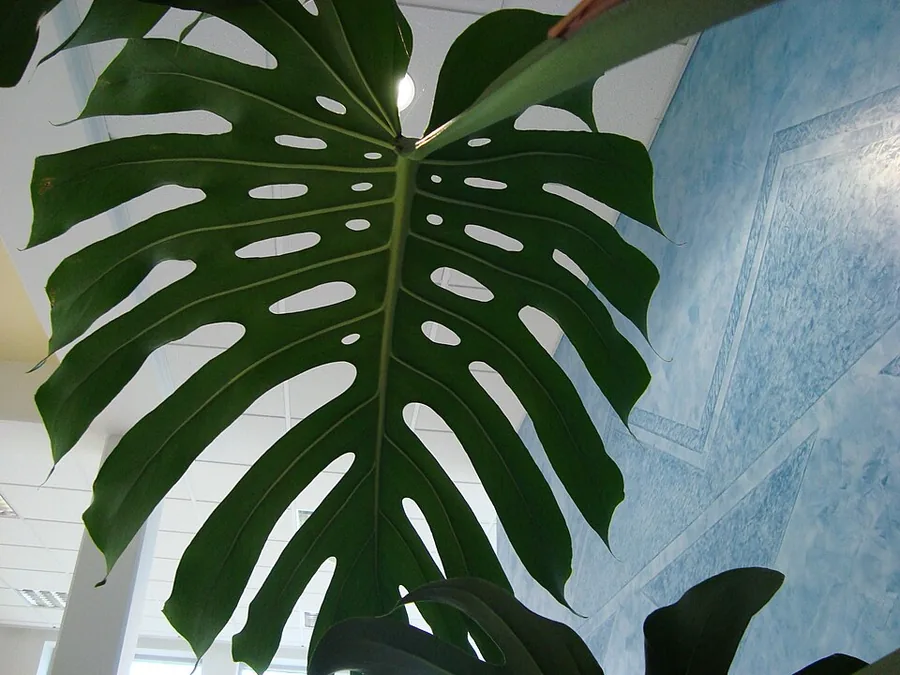
Those giant, deeply cut leaves fanning out from a single stout stem are exactly what put the split in split-leaf philodendron. It runs with the arum family and hails from South America, where it spreads into a wide, semi-woody shrub rather than climbing anywhere. Indoors it dials down to a friendlier size, but it still loves room to stretch out and show off that foliage.
Here is what makes it so much fun to grow: it is genuinely easy. Feed it warmth, bright indirect light, and soil that stays evenly moist, and it bounces back from a missed watering far better than the fussy stuff. Give it a few years and the lower leaves drop while the stem bulks up, so an established plant starts to look like its own little tree.
One thing to square away before it moves in: every part is packed with calcium oxalate crystals that sting the mouth and can irritate skin. That makes it a tough pick for a home where pets or small kids chew on leaves, and a clear cue to pull on gloves before you cut it back.
Care
The short version: hand it bright indirect light, keep it warm above 65°F (18°C), and keep the soil evenly moist but never soggy, with a monthly feed and plenty of humidity all through the growing season.
Light
Hand it bright indirect light and it takes off. It rolls with a big range, from partial sun to a shadier nook, but keep it clear of harsh midday sun that scorches the leaves and out of a dim corner that leaves it thin and sluggish.
Water
Keep that soil evenly moist but never soggy, and never let the pot sit in a tray of water. Drought and salt buildup both drag it down, so water on a steady beat and pull back through winter as growth eases off.
Soil
Load it into a rich, moisture-holding mix that drains fast and runs high in organic matter. Standard indoor potting soil gets the job done, and it shrugs off texture worries, taking clay, sand, or loam from slightly acidic to slightly alkaline.
Temperature
It hits its stride between 65°F and 85°F (18°C to 29°C) and wants that warmth locked in all year. Hold it above about 70°F (21°C) in summer and above 60°F (16°C) in winter, and rush container plants indoors before frost lands.
Humidity
Straight out of the tropics, it eats up high humidity. It gets along fine in regular room air, but crank the moisture around it and the leaves really come alive, especially through a bone-dry winter indoors.
Feeding
Feed it monthly right through spring and summer while growth is charging along. A dilute water-soluble houseplant fertilizer or a slow-release product is all it takes, and go light, because salt buildup browns the leaf tips fast.
Pruning
Pruning barely registers here, which is a bonus. Just clip the yellowed, damaged, or spent lower leaves off at the base and move on. Glove up and keep the sap off your skin, since it can spark a rash.
Repotting
Repot only when it bursts out of its pot, with roots looping the surface and shooting through the drainage holes. Big, mature plants hardly ever need the move. Bump it up into general-purpose potting soil when it does.
Overwintering
When the cold rolls in, this plant heads indoors ahead of frost. It only stands up outdoors year-round in roughly zones 9 to 11, so keep it in a pot you can haul inside and hold it above 70°F (21°C) in summer and above 60°F (16°C) in winter.
Size & spacing
Indoors it stays in check, but turn it loose as a landscape plant in a frost-free climate and it can shoot to 4 to 15 feet (1.2 to 4.5 m) tall and fan out 6 to 15 feet (1.8 to 4.5 m) wide. Hand it a wide, open spot, because a grown plant flings those big leaves way past the trunk.
Troubleshooting
Almost every problem this plant runs into starts at the roots or flashes up on the leaves first. Catch those early signals and you can knock out the cause before it takes hold. Match your symptom below and jump on it while quick action still pays off.
Soft black roots and a plant going down
Wet soil that never drains rockets a plant toward root rot, and it can drop even a big one. Slide it out of the pot and read the roots: firm and pale is healthy, brown, soft, and smelly is finished. Cut the dead roots off, repot into fresh free-draining mix, and dial the watering right back.
Fix:
- Reduce watering
- Repot into fresh well-draining mix and trim away rotted roots
- Ensure the container drains freely
Lower leaves fading to yellow
Yellowing lower leaves nearly always trace straight back to overwatering or a spot that is too dark. Let the soil surface dry off a bit between waterings, make sure the pot drains clean, and push the plant into brighter indirect light. Strip off any leaf that has gone fully yellow.
Fix:
- Let excess water drain and allow the soil surface to dry slightly before rewatering
- Move to a brighter spot with medium to bright indirect light
- Remove badly yellowed leaves
Sticky leaves, webbing, or tiny insects
Dry indoor air rolls out the welcome mat for aphids, mealybugs, scale, thrips, and spider mites, which turn up as sticky honeydew, stippled leaves, or fine webbing. Knock a light outbreak off by hand, then hit it with insecticidal soap or horticultural oil. Pull the plant away from the others until it is clean.
Fix:
- Wash or wipe off light infestations
- Treat with insecticidal soap or horticultural oil
- Isolate affected plants until controlled
Leaf tips curling and browning
Brown, curling tips almost always flag fertilizer salts stacking up in the soil. Halt the feeding, then flush the pot with a good soak of plain water to drive the salts out the bottom. Water the feed down well before you start again.
Fix:
- Stop fertilizing
- Leach the soil by flushing thoroughly with water
- Resume feeding only at a dilute rate
Bleached patches on sun-hit leaves
Pale, scorched patches on the most exposed leaves shout too much harsh direct sun. Shift the plant into dappled light, part shade, or bright indirect light. Chasing a sunnier spot? Step it up slowly so the leaves can toughen and adjust.
Fix:
- Move to dappled sun, part shade, or bright indirect light
- Acclimate gradually before increasing sun exposure
Dark spots peppering the leaves
Leaf spot, fungal or bacterial, digs in on leaves that stay wet in still, stagnant air. Water down at the soil to keep the foliage dry, open up the space around the plant for airflow, and pull off the spotted leaves.
Fix:
- Improve air circulation
- Keep foliage dry when watering
- Remove affected leaves
Toxicity
As rewarding as it is to grow, this plant needs to stay clear of anything that chews. Every part carries insoluble calcium oxalate crystals that fire off an immediate burning of the mouth, heavy drooling, and swelling. No part is safe to eat, and the sap alone can irritate skin, so glove up for pruning and set it well out of reach of pets and children.
Toxic to
Cats · Dogs · Horses · Rabbits · Livestock · Birds · People
Cats Toxic
One bite of a leaf lands a cat with an immediate burning in the mouth from the calcium oxalate crystals. Look for heavy drooling, pawing at the face, vomiting, and trouble swallowing. The mouth and throat can swell, and once in a while that swelling makes breathing hard.
Dogs Toxic
A dog that chews any piece ends up drooling, gagging, and pawing at a sore mouth, with vomiting and a sudden loss of appetite right behind. The signs usually stay mild and clear within a day, but rare airway swelling earns a quick vet call.
Horses Toxic
The crystals sting a horse's mouth and lips just as sharply, kicking off drooling and a flat refusal to eat. The swollen, sore tissue keeps a horse off its feed until the burn dies down.
Rabbits Toxic
Those crystals scald a rabbit's mouth like they do any animal, so keep the plant well out of reach. Count on drooling and a rabbit that quits eating, a serious worry in a grazer that small.
Livestock Toxic
Cattle, goats, and sheep that grab a mouthful hit the same oral burning, drooling, and swelling. Most bail after the first bitter taste, but never let the plant grow where they graze.
Birds Toxic
A pet bird chewing the leaves runs into the same mouth and throat irritation, with drooling and obvious discomfort. Keep the plant well clear of any bird loose to roam and forage.
People Caution
No part of this plant is food, and biting a leaf sets off a sharp burning of the mouth, lips, and tongue with swelling and drooling. Even handling it can irritate the skin, so glove up to prune and keep it away from small children.
Wear gloves when pruning; the sap can cause skin irritation/contact dermatitis. Keep out of reach of pets and children
Helpline numbers

United States
ASPCA Animal Poison Control: (888) 426-4435 (fee applies)
Poison Control: (800) 222-1222



Canada
Poison Centres: 1-844-764-7669
Varieties
Named forms are thin on the ground here, but one compact cultivar shows up enough to be worth chasing down.
'Lundii'
'Lundii' is a more compact selloum that stays smaller and tidier than the species, making it a great grab when floor space is tight.
How to propagate
Multiplying this philodendron is a breeze when you split off the offsets, and only worth the grind of seed when nothing else will do.
DivisionEasy
Spring to summer during active growth · Several weeks to a few months
The fastest way to build up a collection is to break off the offshoots that crop up around the base of a parent. Tackle it in spring or summer while growth is running, and pot each piece on its own. Give the divisions several weeks to a few months to root and settle in.
Stem cuttingsModerate
Any season, best under warm growing conditions · A few weeks to root
Rooting a stem cutting or air-layering a stem is another angle, workable any time of year but strongest in warm conditions, with a cutting needing a few weeks to push out roots. The tree and selloum types root less eagerly than the climbing philodendrons, so this route runs a bit less reliable here.
SeedDemanding
When fresh seed is available · Slow and variable
Growing from seed is on the table but rarely worth the slog at home. Viability drops off fast unless the seed has been properly processed and vacuum-packed, and the seedlings crawl along slow and uneven. Save it for the rare shot at fresh seed when the easier methods are out of play.
Myths
Split-leaf philodendron and Monstera deliciosa are the same plant.
Not so: they land in different genera, even though both run with the arum family. The name split-leaf philodendron gets stuck on Monstera deliciosa all the time, but a close look splits them apart fast. Monstera punches holes into its mature leaves, while this philodendron keeps deeply cut leaves with no holes and builds a stout, trunk-like stem.
The jump to the genus Thaumatophyllum is a done deal.
A 2018 study peeled a group of philodendrons off into the genus Thaumatophyllum, so some databases now tag this one as Thaumatophyllum bipinnatifidum. Kew's Plants of the World Online still treats that as a synonym and holds onto Philodendron bipinnatifidum as the accepted name, so the naming is far from locked in.
Sources
- Plants of the World Online, Royal Botanic Gardens Kew
- Plants of the World Online, Royal Botanic Gardens Kew
- NC State Extension Gardener Plant Toolbox
- Missouri Botanical Garden Plant Finder
- University of Florida IFAS Extension (EDIS FPS473)
- ASPCA Animal Poison Control
- Pet Poison Helpline
- Clemson Cooperative Extension HGIC
- Missouri Botanical Garden Plant Finder