Ornamental · Asteraceae
Strawflower
Xerochrysum bracteatum
Hand it full sun and dry soil, and the strawflower fires back papery blooms that keep going long after the season wraps.
Full sun
75–90 days
USDA 8–10
1–5 ft · 0.3–1.5 m
Overview
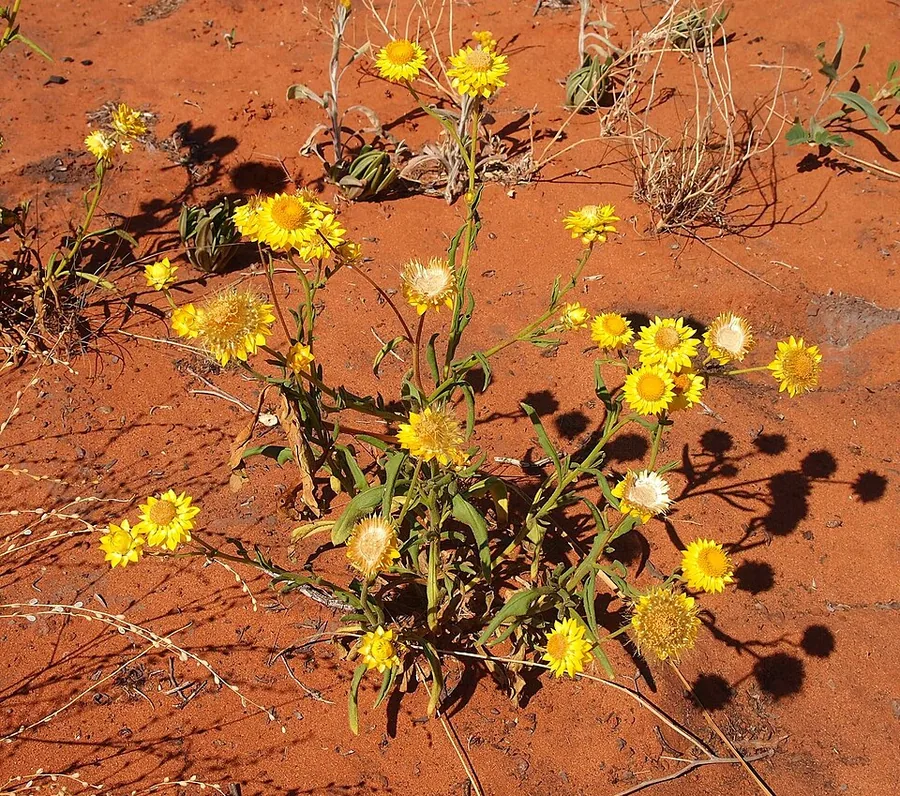
Pinch a strawflower once and the golden everlasting name clicks into place. Those bright blooms skip the soft petals entirely and go for stiff, papery bracts that crackle at a touch and grip their color for months past cutting. This Australian native rides in the daisy family, and it takes off almost anywhere in the yard as a warm-season annual.
Best part: it thrives on next to nothing. Drop it in full sun, hand it soil that drains, and it powers through heat and dry runs the moment its roots dig in. The blooms fire up in gold, bronze, pink, and white, and bees and butterflies swarm them clear through summer.
Cut-flower fans really cash in here. Snip the stems while the bracts still sit half-closed, hang the bunches head-down to dry, and stockpile everlasting blooms that hold their shape and color for winter arrangements long after the plant outside taps out.
Care
The short version: full sun and fast-draining soil that runs dry. Water only once the surface dries, deadhead nonstop to drive more flowers, and stake the tall types before they flop.
Light
Strawflowers crave full sun, ideally six or more hours a day. They handle a splash of afternoon shade, but starve them of light and the stems shoot up leggy, tip over, and crank out far fewer of those papery blooms.
Water
Let the top half of the soil dry before the next drink. These plants power through drought once established, so overwatering is the trap that sparks root rot. Ground that runs average to dry beats soggy every time.
Soil
Plant into well-drained loam of average fertility. They shrug off a huge pH swing from 5.5 to 8.0 and power through dry, lean ground that would flatten pickier plants. Drainage wins over richness, hands down.
Humidity
Regular outdoor air does the job, so forget chasing a number. The real lever is air movement, since still, muggy air around crowded plants is the crack that lets mildew break in.
Feeding
This light feeder flourishes in plain soil, so ease off the buffet. A balanced general-purpose fertilizer once a month across the growing season fuels it fully, and piling on more buys you nothing.
Pruning
Deadhead the spent blooms the moment they fade and the plant keeps pumping out flowers. A quick pinch on young plants forges a bushier, sturdier frame, and the taller ones may lean on a stake to stand tall.
Size & spacing
By variety, plants rocket from a tidy 12 inches to a towering 1 to 5 feet (30 to 152 cm), fanning out 6 to 18 inches (15 to 45 cm) wide. Hand each one enough room so air blasts freely between them.
When to plant
Strawflowers run on warmth and buckle at the first frost. Fire up the seeds indoors in early spring, launch the plants outside once the cold clears and the soil warms, and rake in blooms from early summer straight through to frost.
Northern hemisphere
Southern hemisphere
Typical months for a temperate climate: start earlier in warm zones, later where spring frosts linger.
- Sow: 6 to 8 weeks before the last spring frost; do not cover seed, as light aids germination
- Plant: After the last frost when soil has warmed
- Harvest: Blooms summer to fall (about June until frost); harvest for drying when bracts are partly open
Hardiness
USDA hardiness zones: 8–10
Temperature: down to -12°C
Troubleshooting
Park a strawflower in the right spot and it barely misses a beat, so nearly every hiccup boils down to too much water or too little air. Catch the early signals on the leaves, stems, and roots and pounce before a small snag spreads.
A caving plant, yellowing leaves, and soft rot at the base
When a strawflower caves in while the soil stays drenched, root rot from soggy ground is the culprit. The roots blacken and turn to mush and give up on drawing water. Kill the watering right away, let the ground dry all the way out, then rework the drainage or shift the plant to a spot that never turns to swamp.
Fix:
- Stop overwatering and let soil dry
- Improve drainage or move to a better-drained site
A chalky or fuzzy white bloom creeping over the leaves
That coating is powdery or downy mildew, a fungus that jumps in when leaves stay wet and the air goes flat around crowded plants. Good news: it backs off fast once you act. Strip the worst leaves, open up the spacing so a breeze can rush through, and aim the hose at the soil, not the foliage. Plant them in full sun with room to breathe and the mildew stays away.
Fix:
- Improve spacing and air flow
- Water at the soil line and avoid wetting foliage
- Remove and discard affected leaves
Tall stems pitching over and sprawling
The bigger cultivars shoot up top-heavy, so one good gust or downpour on the open flowers sends them sprawling. Beat it by staking early, well before the stems stretch long and lanky. Pinch the young plants too and they push out a tougher, bushier frame that stands tall on its own.
Fix:
- Stake or provide support for tall plants
- Pinch young plants to promote sturdier branching
Toxicity
Pet and kid households, breathe easy: the strawflower runs non-toxic top to bottom. The ASPCA clears it for cats, dogs, and horses, and rabbits, livestock, birds, and people all make the safe list. A stray nibble poisons nobody.
Safe for
People · Cats · Dogs · Horses · Rabbits · Livestock · Birds
Cats None
Cats can prowl right up to it. The ASPCA marks the strawflower non-toxic, so a bold taste never turns into poisoning.
Dogs None
Dogs get the all-clear too. A chomp of leaf or flower poisons nothing, though gulping a whole heap of any plant can still ruffle a touchy stomach.
Horses None
Horses are cleared as well. The strawflower rates non-toxic, so grazing right beside it brings no danger.
Rabbits Safe
Rabbits can munch away happily, since nothing in the plant poisons them.
Livestock Safe
Cattle, goats, and sheep can graze the same patch worry-free, because it packs no toxins that bother grazing stock.
Birds Safe
Birds thrive around it, whether they raid the seed heads or dart through the bed.
People Safe
People are covered too. The papery blooms dry like a dream, and kids can dig in alongside the plant with zero risk.
Varieties
Strawflowers sprint from knee-high dwarfs up to three-foot showpieces, so there is one for every corner. Hunt down these named standouts.
Bright Bikini
This dwarf strain rockets to about 15 inches in a riot of colors, which makes it a slam-dunk for containers.
Dargan Hill Monarch
Grey leaves throw a spotlight on this cultivar's big golden-yellow flowers.
Kimberly Sunset
Another grey-leaved winner, this one flashing blooms in soft pink.
Kingsize Mixed
Bred to pump out larger blooms on plants that stretch to about 3 feet.
How to propagate
Launch strawflowers from a seed packet or clone a favorite from cuttings, and your goal calls the shot: grab seed for variety, cuttings for a dead-on copy.
SeedEasy
Start indoors 6 to 8 weeks before last frost; surface-sow as light aids germination · Germinates in roughly 1 to 3 weeks; blooms within the first season
Kick most strawflowers off from seed indoors 6 to 8 weeks before the last frost. Lay the seed right on top and leave it bare, since light fires up germination, and watch it pop within 1 to 3 weeks. Rush the seedlings outside once frost clears and they burst into bloom that very season.
Stem cuttingsEasy
During active growth in the growing season · Several weeks to root
Cuttings lock a named cultivar true to type. Grab them while growth is charging along, hand them several weeks to root, and each one springs up as a dead ringer for the parent instead of the mixed crowd seed throws out.
Myths
Strawflowers are true everlasting flowers that never fade or die.
The name talks a bigger game than the plant plays. Dried out, the papery bracts grip their color and shape for a long haul, and that is how the everlasting tag stuck, but the living plant is short-lived and grown as an annual. Simple math: the blooms go the distance, the plant does not.
You can save seed from a favorite cultivar and get identical plants.
Do not count on it, because named cultivars do not come true from seed and hand you a wild grab bag instead of clones of the parent. Chasing one exact form? Take stem cuttings and skip the seed-saving.