Vegetable · Amaranthaceae
Swiss Chard
Beta vulgaris subsp. vulgaris
Sow it once, keep snipping the outer stalks, and Swiss chard rewards you with leaves all season long.
Full sun
Every 3–7 days
41–86°F · 5–30°C
50–60 days
Overview
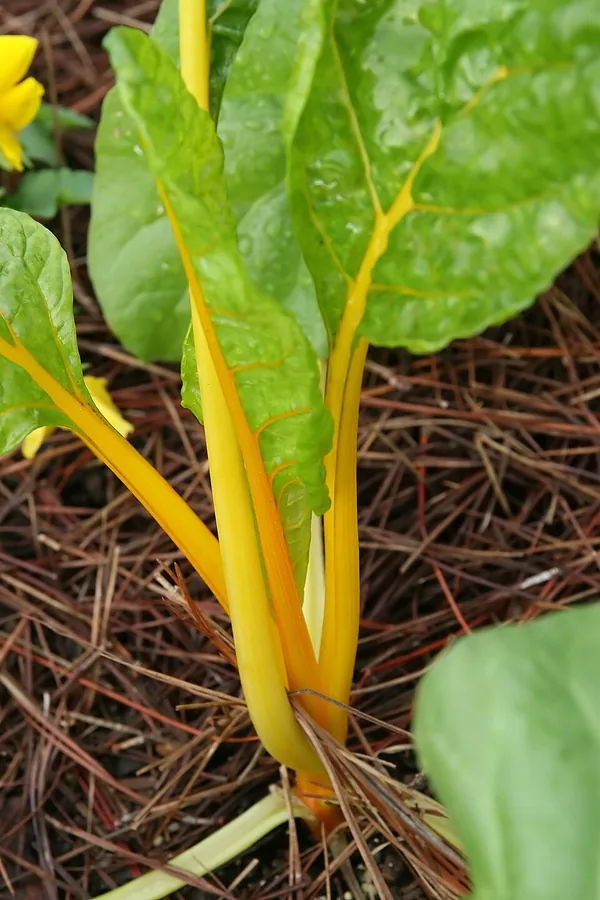
Swiss chard is a leafy green worth getting excited about, grown for its broad, glossy leaves and thick, edible stalks that both land on the plate. It is the very same species as the beet, only bred to pour itself into tops instead of a root, and it stands right beside spinach in the family tree. Count it a biennial grown as an annual, which means it throws everything into leaves that first season and never slows down to flower.
Here is why chard keeps growers coming back: it powers through summer heat and shakes off light frost far better than most greens, so one spring sowing keeps producing clear into fall. Plant the colorful kinds and the whole bed comes alive, with stalks in red, pink, yellow, and white blazing against dark leaves.
New growers can dive in with confidence. Drop the seed, keep the soil moist, and start cutting the outer leaves while the center keeps churning out more. Hand it steady water and decent soil and chard just keeps giving, which makes every harvest feel like a win.
Care
The short version: full sun or a touch of afternoon shade, rich soil kept evenly moist, and steady harvesting of the outer leaves to keep tender new growth pushing up.
Light
Chard really takes off in full sun, yet it handles partial shade with ease, and that shade earns its keep in hot weather by slowing the plant's dash to bolt. Bury it in deep shade, though, and the leaves come in thin while growth drags.
Water
Keep the soil evenly moist, right around 1 to 1.5 inches of water a week. That steady drink keeps the leaves tender and heads off the bolting that heat and dry spells try to trigger.
Soil
Plant chard into rich, well-drained loam loaded with organic matter and it will reward the effort. A pH of 6.0 to 7.0 is its sweet spot, and digging compost in before you sow pays off right through the season.
Temperature
Chard powers along across a wide range, from about 41°F to 86°F (5°C to 30°C). It brushes off a light frost and keeps cranking through summer heat when other greens throw in the towel.
Humidity
Everyday outdoor air is all chard needs, with 40% to 70% humidity sitting right in its comfort zone. Airflow beats any exact number, since crowded, damp leaves roll out the welcome mat for leaf spot.
Feeding
Side-dress a balanced, nitrogen-containing vegetable fertilizer while the plant is busy pumping out leaves, kicking off in spring. Since you keep harvesting all season, a steady shot of nitrogen keeps fresh leaves firing.
Pruning
Here the harvest doubles as the pruning, which is half the fun. Cut the outer leaves at 4 to 12 inches near the base and leave the central crown alone, and the plant keeps launching new growth cut-and-come-again.
Repotting
Chard runs as an annual, so skip the repotting altogether. Reseed containers each season instead of nursing a plant through, and give it a roomy planter so the roots have space to stretch.
Size & spacing
Plants shoot up to 12 to 24 inches (30 to 60 cm) tall and spread 8 to 18 inch (20 to 45 cm) across. Thin the seedlings to 4 to 6 inches apart so each one has room to bulk up and air can rush between them.
When to plant
Chard is a cool-season powerhouse that charges through spring chill and summer heat alike, so there is plenty of room to get planting. Kick things off with seed indoors in late winter, or sow straight into the ground a couple of weeks before the last frost. Sow again in late summer and the harvest keeps rolling right through fall.
Northern hemisphere
Southern hemisphere
Typical months for a temperate climate: start earlier in warm zones, later where spring frosts linger.
- Sow: 4 to 6 weeks before the last spring frost
- Plant: 2 to 3 weeks before the last spring frost, and again in late summer for a fall crop
- Harvest: Harvest leaves from early summer through fall (and over winter in mild climates)
Hardiness
USDA hardiness zones: 3–10
Temperature: down to -40°C
Troubleshooting
Chard hardly ever stumbles, and when it does the action stays on the leaves where you can jump on it fast. Keep an eye out, spot the early signs, and strip off the trouble before it gains any ground. Match your symptom below and move while a quick fix still does the job.
Round tan spots ringed in purple on the leaves
Meet Cercospora leaf spot, a fungus that pops up as round spots edged in purple that run together as it spreads. Snip off the spotted leaves and destroy them, then keep pulling the clean outer ones. Thin the planting to get air moving and you knock the disease back hard.
Fix:
- Remove and destroy infected leaves
- Harvest healthy outer leaves
- Improve air circulation by thinning
A tall stalk rocketing up as the flavor turns bitter
That sudden stalk means bolting, the plant flipping from leaves to seed after a long hot stretch or an early cold snap. Once the central stalk shoots up, leaf growth stalls and the taste sharpens. Grab the good leaves fast, pull the bolted plant, and fire off a fresh sowing to keep things moving.
Fix:
- Harvest remaining leaves before they turn bitter
- Pull bolted plants and resow for a fresh crop
Pale, winding trails snaking through the leaves
Those snaking trails are leafminer grubs tunneling between the top and bottom of the leaf. Hold a leaf up to the light and the little grub or its dark frass jumps right out inside the mine. Pluck off and destroy the marked leaves the second you spot them, and a vigorous plant powers past the loss without slowing down.
Fix:
- Pick off and destroy mined leaves promptly
- Remove larvae by hand
- Keep plants vigorous so outer leaves can be sacrificed
Toxicity
For people, Swiss chard is a nutritious green to dig into, cooked or raw, with nothing poisonous in the mix. It does run high in soluble oxalates, which is a mild caution for cats, dogs, horses, and grazing animals that tuck into a lot of it over time. A taste does no harm, but keep it off the menu as a regular part of any animal's diet.
Toxic to
Cats · Dogs · Horses · Rabbits · Livestock · Birds
Safe for
People
Cats Caution
Chard will not poison a cat, but its leaves come loaded with soluble oxalates. A quick nibble is nothing, while a big helping eaten again and again can irritate the gut and, over time, strain the kidneys.
Dogs Caution
A few leaves do a dog no harm at all. Still, keep the servings small, because that heavy oxalate load can upset the stomach and, in large amounts, work against the kidneys.
Horses Caution
A small taste sits fine with a horse, but chard carries more oxalate than is ideal. Steady, heavy grazing can throw off how the body handles calcium and tax the kidneys.
Rabbits Caution
A rabbit can dig into chard as one part of a mixed leafy diet, just not as a daily staple. The oxalates stack up, so rotate it with lower-oxalate greens instead of serving it solo.
Livestock Caution
Goats, sheep, and cattle handle a little chard with no trouble. Pile on large helpings of these oxalate-rich leaves over time, though, and they can interfere with calcium and press on the kidneys.
Birds Caution
Backyard hens and pet birds can peck at chard now and then. The oxalates keep it an occasional treat rather than a regular ration.
People Edible
For people, Swiss chard is a nutritious green to enjoy cooked or raw, and it is safe to eat. The one thing to flag is its high oxalate content, which mainly matters for anyone prone to kidney stones.
No special handling precautions are required; rinse leaves before eating.
Helpline numbers

United States
ASPCA Animal Poison Control: (888) 426-4435 (fee applies)

United Kingdom
Animal PoisonLine: 01202 509000 (fee applies)

Australia
Animal Poisons Helpline: 1300 869 738
Varieties
Chard varieties mostly set themselves apart through stalk color and leaf texture, and each one brings its own spark to the bed. These are the ones you will run into most.
Bright Lights
An All-America Selections winner that sets its stalks and midribs ablaze in red, pink, yellow, orange, and white.
Northern Lights
It brings that same electric coloring to its stalks and midribs, running through red, pink, yellow, and white.
Ruby (Rhubarb) Chard
It fires deep red stalks and veins against dark green, heavily savoyed leaves for a bold hit of color in the bed.
Fordhook Giant
A vigorous heirloom that charges ahead with broad white stalks and large, dark green, crumpled leaves.
Companions
Chard does well alongside other cool-season leafy crops and a few common garden neighbors, and poorly next to beans, which don't share well with it or its beet relatives.
Plant near
Cabbage family (brassicas): Listed as compatible neighbors that share cool-season conditions in extension companion guidance.
Lettuce: Compatible low-competition leafy crop grown in the same cool-season beds.
Tomatoes: Listed as a beneficial companion for chard in extension companion planting guidance.
Keep apart
Beans: Beans are listed as an incompatible companion for chard and beets in extension companion planting guidance.
How to propagate
Chard fires up straight from seed, and that is the whole story. There is one fun quirk about the seed to get straight before you sow.
SeedEasy
Spring and again in late summer for a fall crop · 50 to 60 days from sowing to first full harvest
Chard sprouts fast and easy from seed sown in spring and again in late summer for a fall crop. Here is the quirk: each 'seed' is really a multigerm ball, a dried fruit cluster that launches several seedlings at once, so thin them to 4 to 6 inches apart as soon as they are up. From sowing to that first full harvest takes about 50 to 60 days.
Myths
Swiss chard bolts unless you resow it every few weeks, the way spinach demands.
Not a chance. Chard powers through heat and cold far better than spinach and drags its feet on bolting. A single sowing keeps the leaves coming cut-and-come-again across a long season, so ditch the endless replantings spinach forces on you.