Ornamental · Melanthiaceae
Large-flowered Trillium
Trillium grandiflorum
Tuck it into rich, shady woodland soil, and this slow native pays back the wait with a standout spring bloom.
Partial shade
Every 3–7 days
USDA 4–8
8–18 in · 20–46 cm
Overview
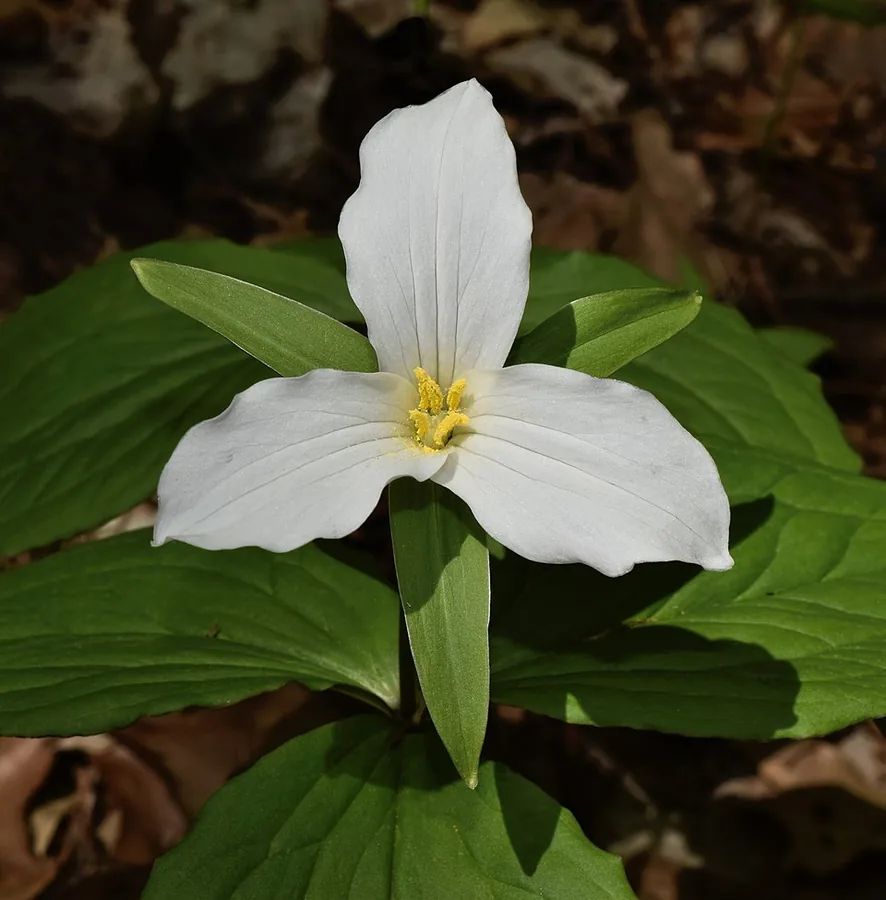
Few spring wildflowers turn heads like large-flowered trillium: one crisp white bloom riding high above a whorl of three broad leaves. This lily relative grows wild through the rich, shaded forests of eastern North America, and it earns its spot. Watch closely and the flower even shifts from white to a soft pink as it matures.
Growing it is a long game, and that is half the fun. It springs from a rhizome, spreads at its own slow pace, and a single seed can take nearly a decade to reach a flowering plant. Plant it in a settled spot and it keeps going for years, gradually building a colony that gets better every season.
Nail three things and it takes off: deep shade, dependable moisture, and rich, leafy soil. Once it settles in, it wants nothing more than to be left alone to grow. And keep one rule front and center: never dig a plant from the wild.
Care
The short version: get it into dappled or full shade with deep, rich, humusy soil, keep the ground nicely moist all spring, then step back and let that settled clump power on.
Light
Trillium is a woodland natural, and it loves partial to full shade. Set it under deciduous trees and it thrives on that dappled light, flowering before the branches leaf out, then rolling right into deeper shade without missing a beat.
Water
Keep the soil evenly moist but well-drained, and water through any dry spell while the plant is charging through spring growth. Once the foliage dies back by late summer, the resting rhizome coasts on far less.
Soil
Load it up with deep, rich, humusy soil brimming with organic matter and draining fast. It handles any pH from 5.0 to 7.0, which lines up perfectly with classic leaf-mold woodland ground.
Temperature
This native is genuinely tough, cruising through -29°F to 84°F (-34°C to 29°C) without complaint. It does bank on a solid winter chill to break dormancy and bloom, so skip it where the climate stays hot and frost-free.
Humidity
No humidity gauge required here, since regular outdoor air has it covered. Give it a cool, shaded, moist spot under leafy mulch and it will outperform anything you could dial in on a meter.
Feeding
That rich woodland soil does most of the feeding all by itself. Come fall, top the bed with a little leaf mulch or leaf mold, no more than 2 inches worth, to recreate the forest floor and keep building richness into the ground.
Pruning
Zero pruning here, which is a nice bonus. After the blooms fade, leave the foliage to wind down naturally, because those leaves are pumping energy back into the rhizome for next year, and clipping them early just shortchanges the plant.
Repotting
Trillium is happiest staying right where it is, since disturbance really sets it back. Only lift a clump when overcrowding starts stealing its vigor or cutting its flower count, and even then, give it time to bounce back.
Size & spacing
Grown out, each plant hits 8 to 18 inches (20 to 46 cm) tall and 9 to 12 inches (23 to 30 cm) wide. Give every one a bit of space to build its slow clump without elbowing the neighbors.
When to plant
Trillium runs on the woodland clock, and the payoff is worth the wait. Get those dormant rhizomes into the ground in fall, then watch for the flowers come spring, popping open any time from April to June, right ahead of the canopy leafing out overhead.
Northern hemisphere
Southern hemisphere
Typical months for a temperate climate: start earlier in warm zones, later where spring frosts linger.
- Plant: Plant dormant rhizomes in fall; sow fresh seed outdoors in fall
- Harvest: Blooms April to June
Hardiness
USDA hardiness zones: 4–8
Temperature: down to -34°C
Troubleshooting
Here is the good part: a settled trillium is tough and mostly trouble-free, and when something does crop up, it shows on the leaves where you can jump on it. Scan the list, match the symptom, and move fast while the fix is easy. Just steer clear of the one true pitfall, which is moving the plant.
A plant that stalls or slides after a move
Dig or divide this one and transplant shock tends to hit hard, because it truly resents root disturbance. The winning play is simple: leave it put. If you have to divide, wait for the foliage to die back, then drop the rhizome straight back in at the same depth and keep it damp while it re-establishes. Start with nursery-grown plants and dodge the gamble of uprooting a clump from the wild that rarely pulls through.
Fix:
- Leave established plants undisturbed where possible
- If dividing, do so after foliage dies back and replant rhizomes promptly at the same depth
- Keep newly set plants evenly moist while they re-establish
Ragged, chewed holes punched through leaves and petals, with slime trails
Point the finger at slugs and snails, which cruise out after dark in the damp shade and leave glinting silvery trails behind. Grab a flashlight and pick them off at night or first light, clear out the damp litter and any boards they shelter beneath, and dial back the watering. If they keep pushing, a scatter of iron-phosphate bait shuts them down.
Fix:
- Hand-pick slugs and snails in the evening
- Reduce excess moisture and remove debris that shelters them
- Apply iron-phosphate slug bait if pressure is heavy
Spots, blotches, or a powdery haze creeping over the leaves
That look points to a fungal leaf spot, rust, or smut, which move in when leaves stay wet and the air goes stagnant. Snap off the marked leaves and toss them, open the clump up for a good breeze, and aim water at the soil, not the foliage. Then sweep up old debris every fall to shut down spores before they carry into next year.
Fix:
- Remove and destroy affected leaves
- Improve air circulation and avoid wetting foliage
- Clean up fallen plant debris at season end
Toxicity
Good news for growers: trillium sits at the mild end of the scale, more nuisance than real poison. The saponins in its berries and rhizome can stir up a stomach, whether a pet's, a grazer's, or a person's, if any gets swallowed, yet it packs no systemic toxin and the ASPCA keeps it off its list. Play it smart, keep the fruit and roots out of reach, and always source this protected wildflower instead of digging it up wild.
Toxic to
Cats · Dogs · Horses · Rabbits · Livestock · Birds · People
Cats Mild
Swallow a scrap of berry or rhizome and a cat can get a saponin-driven upset stomach, with some drooling or vomiting to show for it. Most cats breeze right past the plant, though, so a quick nibble rarely turns into anything.
Dogs Mild
A dog that gnaws the fruit or roots out the rhizome might drool, throw up, or land a loose stool. It stays mild and clears up on its own, but keep an eager digger clear of those roots all the same.
Horses Mild
For a grazing horse, the saponins turn the rhizome and berries into a mild gut irritant, nothing more. The odds of trouble stay low, since trillium sticks to shaded woodland and hardly ever crops up in open pasture.
Rabbits Mild
A rabbit that tucks into much of the fruit or roots can wind up with a queasy gut from the saponins. The leaves are the safer bet, so keep the berries and rhizome well out of reach.
Livestock Mild
Let cattle, goats, or sheep browse the rhizome or fruit and the saponins may bring on a mild digestive upset, nothing worse. Real poisoning just is not on the table with this plant.
Birds Caution
Ripe berries are a magnet for birds, which cart the seed off and spread it around, but the saponins still keep that fruit a bit of an irritant. For a pet bird, file it under caution rather than a safe treat.
People Caution
No part of this plant belongs on a plate, and the saponin-loaded berries and rhizome can hand you a stomach upset if swallowed. Keep kids from tasting the fruit, and never gather it as food.
Keep fruits and rhizomes away from pets and children. This is a slow-growing native protected or restricted in some areas; source only nursery-propagated plants rather than digging from the wild.
Helpline numbers

United States
ASPCA Animal Poison Control: (888) 426-4435 (fee applies)
Poison Control: (800) 222-1222



Canada
Poison Centres: 1-844-764-7669
Varieties
Most trillium in gardens is the straight wild species, but keep an eye out, because one fun color form shows up now and then.
f. roseum
A wild pink form that throws soft pink blooms instead of the classic white.
How to propagate
Want more trillium? Two routes get you there, splitting the rhizome or raising it from seed, and both hand the patient grower a real reward.
DivisionModerate
After foliage dies back in late summer to fall · 1 to 2 years
Split it only when it is dormant. Once the leaves die back in late summer to fall, lift the clump and pry the rhizomes apart, then get every piece replanted right away. Now comes the patience, because trillium hates disturbance and needs a good 1 to 2 years to hit its stride again.
SeedDemanding
Sow fresh seed in fall outdoors · Several years to flowering
Growing it from seed is a project, and a rewarding one. Sow fresh seed out in the fall and plan for double dormancy, which drags germination out over two or more years, with several more still needed before the plant flowers. Best part: each seed comes fitted with a fatty appendage that ants can't resist, so they whisk it away and sow it on your behalf.
Myths
Grabbing a wild trillium, or digging one out to plant at home, does no real harm.
Here is the catch: snap off that bloom and the plant's only leaves go with it, which can starve the rhizome and leave the plant reeling for years, or finish it off entirely. It also moves badly and carries legal protection across plenty of regions. Buy nursery-propagated plants and let the wild ones stay put.