Ornamental · Nymphaeaceae
Water Lily
Nymphaea
Hand it full sun and calm water, and the water lily throws out flowers from late spring clear through fall.
Full sun
USDA 3–11
3–10 in · 8–25 cm
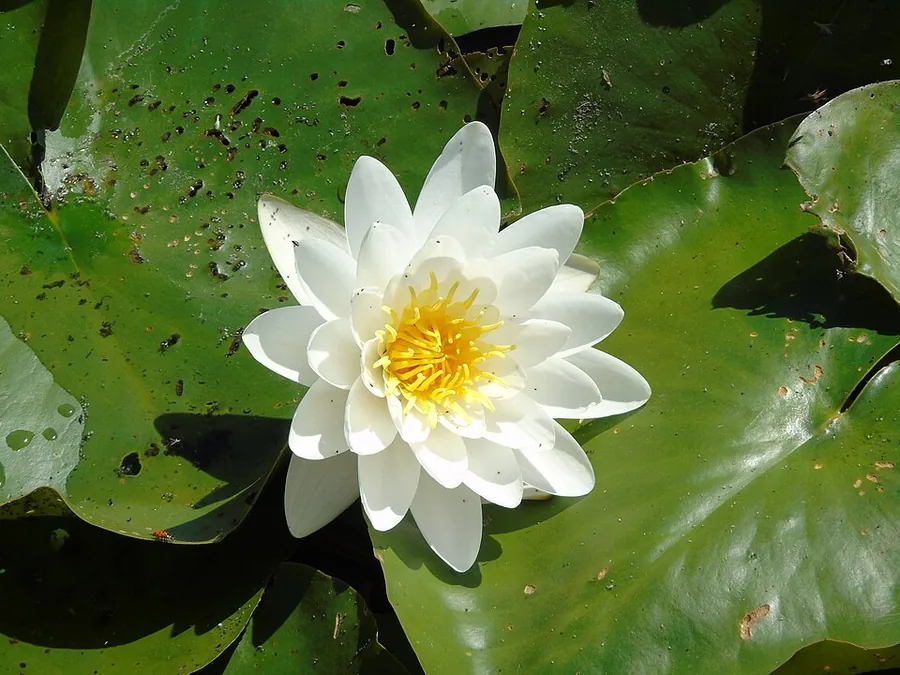
Overview
Drop a water lily into a pond and the whole thing comes alive. It is a true aquatic, rooting in a submerged pot of heavy soil while its round pads and cupped flowers ride right on the surface. Better still, it is no true lily despite the name, which is great news for anyone growing near a cat.
Two groups are up for grabs, and both deliver. The hardy types power back every year across zones 3 to 11, shaking off cold winters as long as the crown sits below the ice. The tropical types crank the color with bolder blues and purples and even night-opening flowers, though they are tender, so most growers run them as annuals where the water freezes.
The ask is short and easy to hit: lots of sun and water that holds still. Give it a bright spot and a calm pond clear of any fountain and it spreads its pads wide and blooms for months on end. Cut the sun or stir the water, though, and you trade flowers for a raft of leaves.
Care
The short version: aim for full sun and still water, and sink the crown into a pot of heavy soil under about 6 to 18 inches of water. Feed it monthly right through the growing season and split the clump every few years, and it keeps pumping out flowers.
Light
Water lilies chase the sun, so hand them at least 6 hours of direct light a day, and full sun pushes out the most flowers. They will scrape by in partial shade, sure, but count on plenty of leaf and far fewer blooms.
Water
This one is a true aquatic that thrives in standing water, crown down in a submerged pot and pads sailing on the surface. Shoot for around 6 to 18 inches (15 to 46 cm) of water over the crown to match the cultivar, and keep it dead calm. Fountains and pumps churn things up, and a water lily flat-out hates moving water.
Soil
Pack the crown into heavy clay loam or aquatic media in a submerged container and crown it with gravel to pin the soil down. A pH from 6.0 to 8.0 works great, so pour your effort into a good heavy mix and let the acidity ride.
Temperature
Hardy water lilies are seriously tough, taking on anything from about -40°F to 100°F (-40°C to 38°C) as long as the crown holds below the winter ice. Sink the pot deep enough that the crown never freezes solid and it storms right back in spring.
Humidity
Perched on open water, a water lily already sits in high humidity, so there is zero to manage here. The pond nails it for you.
Feeding
These plants eat like champs. Jam an aquatic fertilizer tablet into the soil below the gravel about once a month through spring and summer, and that feeding is exactly what turns a trickle of flowers into a steady stream.
Pruning
Stay on top of the spent stuff. Pinch off spent flowers and yellowing pads the moment they show to drive repeat bloom and keep rotting leaves out of the water.
Repotting
Skip the usual repotting, a water lily just wants dividing every few years. Once blooms taper, the pads start rising up out of the water, or rhizomes cram the container, grab it, lift it, and split the clump.
Size & spacing
The plant hugs the water low, just 3 to 10 inches (8 to 25 cm) up, but the pads reach out wide, anywhere from 2 to 12 feet (61 cm to 3.7 m) across by cultivar. Match that spread to your pond and it fills the space without swallowing the whole surface.
When to plant
Forget the calendar, a water lily fires up when the water warms. Sink the rhizomes into their submerged pots in spring the moment the cold breaks and the water starts to warm, and flowers pop across the surface from late spring straight through fall.
Northern hemisphere
Southern hemisphere
Typical months for a temperate climate: start earlier in warm zones, later where spring frosts linger.
- Plant: Set rhizomes or tubers in submerged containers in spring once water has warmed and frost danger has passed.
- Harvest: Late spring through fall (flowers rest on or just above the water).
Hardiness
USDA hardiness zones: 3–11
Temperature: down to -40°C
Troubleshooting
Almost every water lily snag boils down to a few fixable things, too little sun, the wrong depth, or a clump that has packed itself tight, plus a handful of pests that camp on the pads. Catch the early signs below and you jump on the cause before the flowers ever stall. Spot the match, then move.
Pads everywhere, flowers nowhere
When leaves pile up but flowers stall, blame too much shade first, less than the 6 hours of direct sun it takes to set buds. A crown buried too deep, a clump that has outgrown its pot, or a fountain stirring the water can choke the blooms too. Shift it into full sun and still water, lift it to the right depth, split a crowded rhizome, and feed it through the season, and the flowers come roaring back.
Fix:
- Move the container so the plant gets at least 6 hours of direct sun
- Raise the container so the crown sits at the recommended depth for the cultivar
- Lift and divide the rhizome every few years
- Relocate away from fountains or pump outflow so the plant sits in still water
- Fertilize with aquatic plant tablets during the growing season
Soft green clusters piling onto pads and buds
Those clusters are waterlily aphids, small soft-bodied bugs that swarm the tops of the pads and the buds. Knock them out fast: hose or brush them into the water, where they cannot climb back and the fish gladly snap them up. Any pad that is truly buried, just yank it.
Fix:
- Hose or brush the aphids off the pads into the water, where they cannot climb back and fish may eat them
- Remove and discard heavily infested pads
Pads going yellow or chewed full of holes
A few evenly yellow old pads are just age, so shrug those off. Ragged holes and chewed edges usually flag waterlily beetle, leaf-mining midges, or china-mark moth feeding, while spots or soft brown patches can mean leaf spot or crown rot. Trim the marked pads, pick off any beetles and larvae or flick them into the water, and drop in a fertilizer tablet if the plant looks starved.
Fix:
- Remove and discard yellow, spotted, or chewed pads
- Pick off beetles and larvae or knock them into the water
- Fertilize with aquatic plant tablets if a deficiency is suspected
Toxicity
Here is a win for pet owners: this water plant is one to relax about. The water lily is no true lily, so it packs none of the kidney danger that real lilies and daylilies aim at cats. It stays clear off the ASPCA toxic list, and cats, dogs, and the whole household are fine right beside it.
Safe for
People · Cats · Dogs · Horses · Rabbits · Livestock · Birds
Cats None
Great around cats. It is no true lily, so it carries none of the kidney risk that makes Lilium and daylilies so dangerous to them.
Dogs None
No worries for dogs. Let one wade in and mouth a floating pad, since nothing in it can hurt.
Horses Safe
Not flagged as a hazard to horses, and a pond plant almost never lands within a horse's reach anyway.
Rabbits Safe
Safe for rabbits too, packing no toxic compounds that would give them trouble.
Livestock Safe
Cattle, goats, and sheep can graze right by the pond, since the leaves and flowers pose no risk.
Birds Safe
Harmless to birds and waterfowl, which happily pick at the pads and seeds out in the wild.
People Safe
No danger to people, kids included, even when eager hands reach into the water to touch the floating flowers.
Grown in an outdoor pond, so casual contact by pets or children is uncommon; no special handling required.
Varieties
Hundreds of water lilies are out there to chase, split between the hardy kinds that overwinter in the pond and the tender tropicals grown for punchier color. These are the ones worth locking into memory.
'Attraction'
A hardy crowd-favorite for zones 3 to 8, it fires off fragrant red flowers and still ranks among the most widely planted cultivars going.
'Marliacea Chromatella'
This hardy stunner runs zones 4 to 10, lifting canary-yellow cupped flowers over copper-mottled pads and blooming from May right up to frost.
'Director George T. Moore'
A tropical day-bloomer, it shoots violet-blue flowers up above the water and gets grown as an annual wherever winters turn cold.
Tropical day- and night-blooming water lilies
These tender Nymphaea suit zones 9 to 11, or run as annuals, and they deliver blue and purple shades plus night-opening flowers no hardy lily can touch.
Lotus (Nelumbo)
Don't get fooled, this is no water lily but a whole separate genus in its own family, hoisting round leaves and flowers high above the water instead of floating them.
How to propagate
Multiplying a water lily is genuinely fun and dead simple, and nearly everyone jumps on the same trick, splitting a plant they already grow instead of fiddling with seed.
DivisionEasy
Spring · One growing season
Splitting in spring is the go-to move to multiply a water lily, and it is the easiest by far. Lift the rhizome, chop it into sections that each keep a growing point, and replant them flat with the bud end up in a submerged pot of heavy soil. Every piece digs in over one growing season, so divide every few years the moment the clump crowds up and flowering starts to slide.
SeedModerate
Spring to summer · One or more seasons
Seed does work for the wild species, taking a season or more to get rolling when sown in spring or summer. For the garden it rarely earns the wait, since most named cultivars are sterile hybrids that won't come true and take off far better by division.
Myths
Water lilies are true lilies, so they must be just as deadly to cats as the lilies that trigger kidney failure.
Not so, the water lily (Nymphaea) is no true lily and stands well outside that dangerous crowd. The plants that spark sudden, often fatal kidney failure in cats are the true lilies (Lilium) and daylilies (Hemerocallis), which are unrelated. A water lily in your pond throws off no such risk, and it never lands on the ASPCA toxic list. Keep the real lilies and daylilies clear of cats, but don't tangle them up with this aquatic plant.