Ornamental · Asteraceae
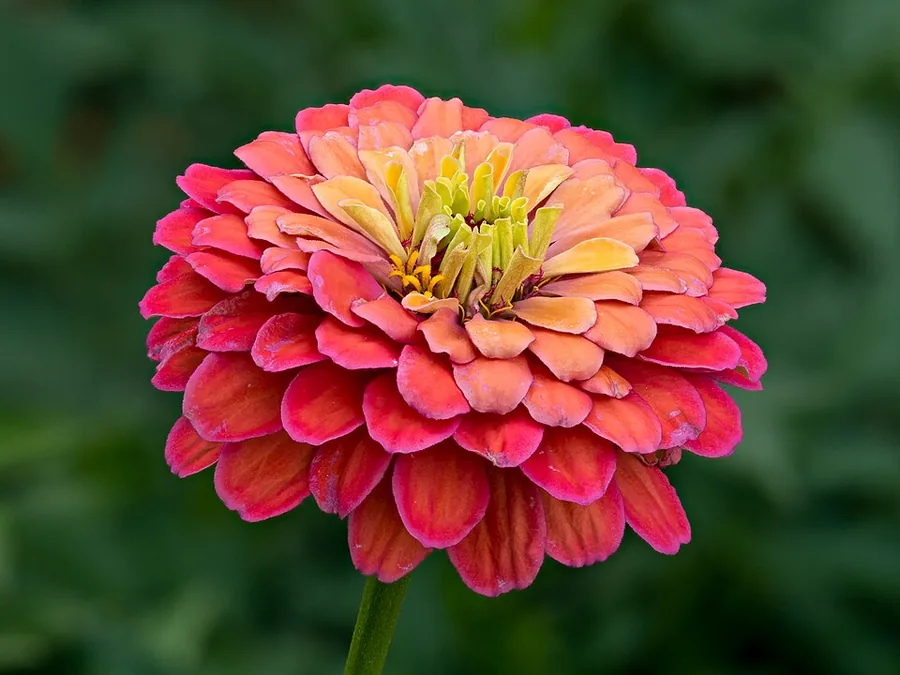
Zinnia
Zinnia elegans
Sun-loving and quick to flower, the zinnia blooms nonstop from summer to frost.
Full sun
Every 5–7 days
68–86°F · 20–30°C
60–70 days
Overview
Zinnias reward a beginner faster than almost any flower going. They spring from the daisy family and hail from Mexico, where they flowered wild long before gardens caught on. As a warm-season annual, one small packet of seed powers a whole run from spring to the first hard frost.
The range keeps things exciting. Compact kinds top out near 6 inches and pack the front of a bed, while the tall cutting types rocket to 4 feet and load a vase for weeks. Bees and butterflies swarm the open flowers all day, and the more stems you cut, the harder the plant fires off new blooms.
Zinnias ask for just two things, and both are easy to deliver. Give them full sun and dry leaves, since the mildew and leaf spots that would slow them down move in on crowded, wet foliage. Space the plants, water at the roots, and they charge ahead trouble-free.
Care
The short version: full sun, well-drained soil, and base watering at about an inch a week. Give plants room for airflow, deadhead often, and they bloom flat out from summer to frost.
Light
Zinnias crave full sun, at least 6 hours of direct light a day and gladly more. That sun packs the plants tight, drives the blooms, and dries the leaves fast, your top weapon against mildew.
Water
Water at the base in the morning and keep the leaves dry, since wet foliage hands disease an opening. Pour on about an inch a week, let the top half of the soil dry between drinks, and back off once the plants dig in, because zinnias power through heat and drought.
Soil
Set them in well-drained loam and they take right off. Zinnias roll with a pH from 5.5 to 7.5, but they hate soggy roots, so drainage beats rich ground every time.
Temperature
Zinnias thrive on heat, hitting their stride between 68°F and 86°F (20°C to 30°C). Cold soil stalls them and frost drops them, so hold off sowing until real warmth lands.
Humidity
These are low-humidity plants, cruising best around 40% to 60%. Muggy, damp air fuels mildew and leaf spot, so moving air does far more for them than any moisture ever could.
Feeding
Feed monthly through spring and summer with a balanced fertilizer, and that is plenty. Zinnias eat light and bloom hard in average soil, so skip the overfeeding.
Pruning
Deadhead spent blooms and cut flowers often to spark fresh branching and pump out color. Pinch the young plants early too, and they bush out with a ton more buds.
Repotting
not_applicable
Size & spacing
Plants shoot up 1 to 4 feet (30 to 120 cm) tall depending on type. Space them 6 to 12 inches (15 to 30 cm) apart to keep air moving and leaves dry.
When to plant
Zinnias run on warmth and quit at frost, so time the start right. Kick seed off indoors 4 to 6 weeks before the last frost, or sow straight outside once the soil warms, and the flowers pour out from midsummer to the first frost.
Northern hemisphere
Southern hemisphere
Typical months for a temperate climate: start earlier in warm zones, later where spring frosts linger.
- Sow: 4 to 6 weeks before the last frost
- Plant: After the last frost once soil warms to about 70°F (21°C)
- Harvest: Summer to first frost
Troubleshooting
Almost every zinnia hiccup breaks out on the leaves and starts with wet foliage. Jump on the first spots and you halt a small patch before it sweeps the bed. Match the symptom below, then move while it still turns the tide.
Reddish-brown spots with pale gray centers racing across the leaves
This is Alternaria leaf spot, the fiercest disease zinnias tackle, and it can ring a stem and wilt the whole plant once it gets rolling. It hitches in on splashing water and old debris during warm, wet stretches. Yank and destroy sick plants, water at the base, shift the bed so zinnias skip the same ground for two years, and soak the seed in hot water before sowing.
Fix:
- Remove and destroy infected plants and debris
- Water at the base of plants and avoid overhead irrigation
- Rotate planting sites and avoid replanting zinnias in the same spot for 2 years
- Treat seed with hot water (125°F for 30 minutes) before sowing
White powdery dust coating the tops of the leaves
That coating is powdery mildew, a fungus that pounces when plants sit crammed in still, humid air. It rubs off early, then yellows and shreds the leaves as late summer drags on. Bust the crowding open for airflow, water only at the base, and grab resistant series like Profusion or Zahara next round.
Fix:
- Improve spacing and air circulation
- Water at the base in the morning and avoid wetting foliage
- Remove and discard heavily infected leaves and end-of-season debris
- Choose resistant types such as the Profusion or Zahara series
Angular purple spots fenced in by the leaf veins
Those sharp-cornered marks are bacterial leaf spot, boxed into straight sides by the veins penning the bacteria in. It rides splashing water and clings to dirty seed and old debris, so it erupts after rain or overhead watering. Keep the leaves dry, strip the spotted ones, space plants to dry fast, and launch with clean seed and resistant types.
Fix:
- Avoid overhead watering and handling wet plants
- Remove infected leaves and plant debris
- Improve spacing so foliage dries quickly
- Start with disease-free seed and resistant cultivars
Toxicity
Here is more good news for a pet-filled garden: zinnias carry zero toxicity. The ASPCA clears them for cats, dogs, and horses, and people can even eat the petals. A pet that grabs a leaf might get a quick upset stomach, but nothing here does real damage.
Safe for
People · Cats · Dogs · Horses · Rabbits · Livestock · Birds
Cats None
Safe for cats through and through. A curious cat that chomps a leaf might get a quick upset stomach, and that is it.
Dogs None
No worries for dogs. One that grabs the foliage may go a little loose in the gut, then bounce right back on its own.
Horses Safe
Cleared as non-toxic, so a horse grazing near zinnias is totally fine.
Rabbits Safe
Rabbits can chomp the leaves and flowers without harm, though a big load of any new green can loosen the stool.
Livestock Safe
Cattle, goats, and sheep take no poison from zinnias, and the plants pose no grazing hazard.
Birds Safe
Birds are perfectly safe around the plant, and they dive on the ripe seed heads once fall rolls in.
People Safe
The petals are edible and jazz up salads and cakes as a garnish. Nothing on the plant is toxic to people.
No special handling required; ingestion of plant material may still cause mild stomach upset in some pets.
Varieties
Zinnias sweep from 6-inch dwarfs up to towering cut-flower giants, so there is a standout for every spot. These are the ones worth knowing by name.
Benary's Giant
A tall cutting star hitting 36 to 42 inches, loaded with big, fully double, dahlia-like blooms that power through a week in the vase.
State Fair
A vigorous tetraploid that shoots to 3 to 4 feet and hauls very large flowers.
Profusion
An interspecific Zinnia x hybrida series that throws off both leaf spot and powdery mildew.
Zahara
A Zinnia marylandica series built for strong resistance to leaf spot and mildew.
Thumbelina
A compact dwarf around 6 inches tall that packs edging and containers with color.
Queen Lime
A 30 to 40 inch series that turns heads with its odd lime-green and muted antique color blends.
How to propagate
Zinnias are a blast to grow from scratch, and seed wins hands down as the way in.
SeedEasy
Spring
Zinnias burst up fast and easy from seed, a real thrill to start. Direct sow after the last frost once the soil warms to about 70°F (21°C), or grab a head start indoors 4 to 6 weeks ahead. Drop the seed about a quarter inch deep, hold it at 65°F to 70°F (18°C to 21°C), and it pops up in roughly 5 to 7 days. Thin or space the seedlings so air rips through, then pinch the young plants to fire off branching and a fuller wave of bloom.
Myths
Watering zinnias from overhead keeps them cool and healthy.
A blast from above soaks the leaves, and wet leaves are the one thing powdery mildew, Alternaria, and bacterial leaf spot are itching for. Aim the water at the base instead, and keep the foliage dry.
Every zinnia mildews the same, so variety choice changes nothing.
Variety choice changes everything. Resistant series like Profusion and Zahara throw off leaf spot and mildew far better than the old large-flowered types, which usually look ragged by late summer.