Houseplant · Araceae
ZZ Plant
Zamioculcas zamiifolia
Glossy, tough as nails, and content in a forgotten corner, the ZZ plant asks for almost nothing and pays you back for years.
Bright indirect
Every 14–30 days
59–84°F · 15–29°C
USDA 9–11
Overview
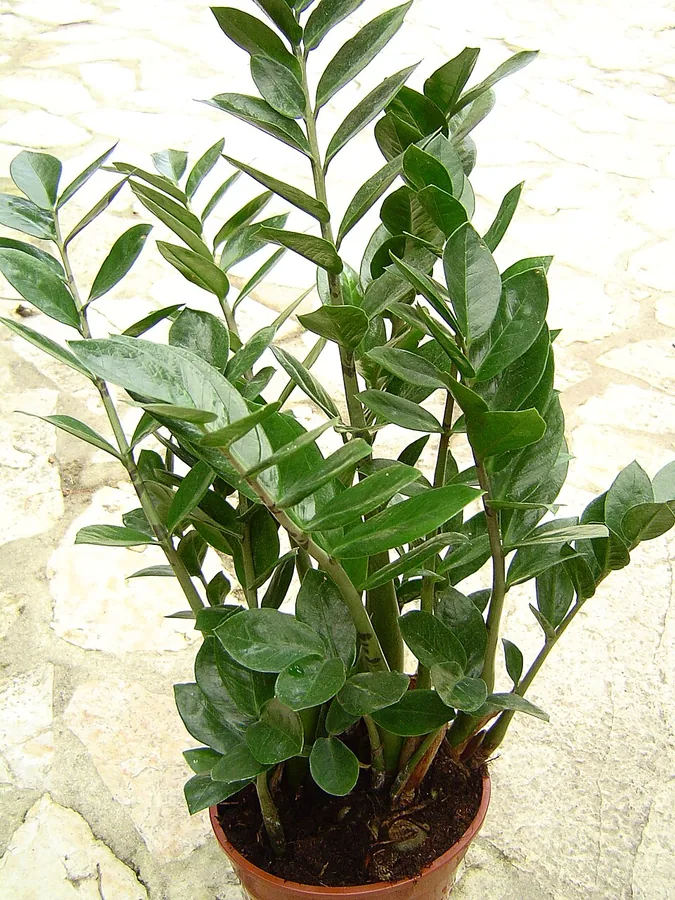
Few houseplants live up to the unkillable label like the ZZ plant does. Hailing from eastern Africa, it banks water inside chunky underground rhizomes, and that reserve is what lets it brush past a skipped watering or a shadowy perch nowhere near a window. Glossy, deep-green leaflets climb in tidy ranks along arching stems and bounce back the light as if someone buffed them.
Its real charm is how little it ever demands. Growth comes on slowly and surely, the form stays put without fussing, and it seldom overstays its welcome at 2 to 4 feet (61 to 122 cm) tall. Walk away for weeks and it keeps looking sharp, which is why it lands in offices and dim hallways the world over.
The single snag: every scrap of the plant packs calcium oxalate crystals, so it makes a poor pick anywhere curious pets or small children might nibble. Find it a perch out of reach, give it the odd bit of handling, and it answers with years of quiet, gleaming growth.
Care
The short version: park it in bright indirect light, hold off watering until the soil goes bone-dry, pot it in a fast-draining mix, and keep it cozy and clear of harsh sun.
Light
Set a ZZ plant where it catches bright indirect light, even though it shrugs off low and medium light better than nearly any houseplant going. Steer it clear of direct sun, which scorches the foliage. Pick a dim corner and you trade away pace and tidiness, landing slower growth and a leggier silhouette.
Water
Hold off until the mix turns dried out completely, which lands you at roughly once every 2 to 4 weeks. Each rhizome packs its own reserve, so a forgotten watering bothers the plant far less than a sodden pot ever would. Drowning it is the quickest path to losing it.
Soil
Pot it up in a well-drained potting mix built on peat or bark, then fold in a generous helping of perlite or sand. Aim for a blend that sheds water fast and never sits soggy, since lingering moisture is what rots the rhizomes out.
Temperature
Hold it in the easy band of 59°F to 84°F (15°C to 29°C), the kind of warmth you already keep indoors. Cold gets no slack here, and a dip below 60°F (15°C) yellows the leaves or knocks them off.
Humidity
Everyday indoor humidity treats it just fine, so skip chasing any target. It rolls with the dry air in most homes and never asks for misting or coddling.
Feeding
Slip it a light meal across the spring and summer growing run using a balanced, diluted fertilizer, just once or twice a year. Slow growth means slim appetite, and piling on food backfires.
Pruning
Keep the scissors mostly idle. Just trim away yellowing or damaged leaflets as they crop up and the plant stays crisp.
Repotting
Bump it to a fresh pot every 2 to 3 years, or earlier if it outgrows the one it is in. The tells are clear: thick rhizomes pressing on the walls, roots poking from the drainage holes, or growth grinding down. Step it up a single pot size into fresh, fast-draining mix.
Size & spacing
Grown indoors, a ZZ plant climbs to about 2 to 4 feet (61 to 122 cm) tall and fans out to nearly the same width. Leave the arching stems space to spread so they never jostle the plants beside them.
Troubleshooting
Gripes are rare from a ZZ plant, so the few it raises usually trace to something easy. Watering or light sits behind nearly every issue, and the plant flags it in the leaves and stems. Pair what you spot with the entries below and you can catch it early.
Yellowing foliage above soft, mushy rhizomes
Yellow leaves over squishy underground rhizomes point straight to root and rhizome rot, and the culprit is nearly always a heavy hand with the watering can rather than neglect. Those plump rhizomes already hold a private water supply, so a waterlogged pot suffocates them until they turn to foul-smelling mush. Cut off the watering, slide the plant free, trim every soft piece away, and settle it into a dry, sharp-draining blend.
Fix:
- Stop watering
- Unpot and cut away rotted rhizomes
- Repot in dry well-draining mix
Leaflets puckering up and falling away
Leave the soil parched far too long and a ZZ plant starts dropping leaflets to protect itself. You will spot shriveling petioles and a foliage canopy that thins right out. Soak it well, then circle back to the usual rhythm of waiting until the mix turns dry before the next watering.
Fix:
- Water thoroughly
- Resume regular watering once soil dries
Tiny brown bumps clinging to the stems
Spot waxy brown bumps riding the stems and petioles and you have met armored scale, the lone pest that ever bothers a ZZ plant. A tacky film tends to tag along with them. Scrape them loose, follow up with horticultural oil or insecticidal soap, and always give any newcomer a once-over before it mingles with the rest.
Fix:
- Wipe off scale
- Treat with horticultural oil or insecticidal soap
Yellowing or slumping after a chill
Cold is the one thing a ZZ plant truly hates, and a dip below 60°F (15°C) yellows its leaves or sends them slumping. Whisk it to a warmer corner without delay. Through winter, steer it clear of drafty panes, and haul any plant summering outdoors back in before the nights bite.
Fix:
- Move to a warmer spot above 60°F (15°C)
Pale or brown blotches facing the window
Watch for leaf scorch, which surfaces as washed-out or brown blotches on the exact side that gets the window glare. Harsh direct sun simply overwhelms this plant. Pull it back from the pane into bright indirect light and the fresh growth arrives unmarked.
Fix:
- Move to bright indirect light
Stretched stems with hardly any fresh shoots
A ZZ plant will hang on in a gloomy nook, yet the bill comes due as stretched petioles and almost no fresh push of growth. Trace it back to too little light every time. Carry it toward a brighter spot, kept clear of harsh sun, and watch it find its stride again.
Fix:
- Move to brighter indirect light
Toxicity
Skip this plant anywhere a pet can reach. Every scrap of it holds biting calcium oxalate crystals that scald the mouth and throat, firing off drooling and vomiting once chewed. The sap can also redden your own skin and eyes, and no part is fit to eat, so perch it well out of reach and scrub your hands once you have handled it.
Toxic to
Cats · Dogs · Horses · Rabbits · Livestock · Birds · People
Cats Toxic
Bite into a leaf and a cat takes on a mouthful of needle-sharp crystals, which sets off drooling, pawing at the muzzle, and vomiting. Luckily that sting usually halts most cats before they swallow much.
Dogs Toxic
A chewing dog runs into a flood of drool, a sore mouth, and a queasy belly. Down a larger bite and it may gag or turn its nose up at dinner for a while.
Horses Toxic
Those crystals sting a horse's mouth and gut just the same, leaving it drooling and skipping its feed. Park the plant far from stalls and paddocks.
Rabbits Toxic
Keep this one off the menu for any rabbit. The oxalate crystals scald the mouth and stomach, triggering drool and a vanished appetite.
Livestock Toxic
Goats, sheep, and cattle meet the crystals with a sore mouth, drooling, and a churning gut, so wall the plant off well away from anything that grazes.
Birds Toxic
A bird that pecks at it lands the same biting crystals across its mouth and throat. Keep pet birds clear of the foliage altogether.
People Caution
Treat it as look-don't-eat, and know the sap can flush skin or eyes red and stinging. Scrub your hands once you have handled it and stop small children from gnawing the leaves.
Wash hands after handling; crystals can irritate skin
Helpline numbers

United States
ASPCA Animal Poison Control: (888) 426-4435 (fee applies)
Poison Control: (800) 222-1222



Canada
Poison Centres: 1-844-764-7669
Varieties
Past the everyday glossy green plant, growers have rolled out a handful of standout ZZ cultivars that reward a closer look.
'Raven' (Dowon)
Fresh leaves emerge a bright lime-green, then deepen with age into a glossy purple so dark it reads almost black.
'Zenzi'
A neat dwarf that crests around 10 to 12 inches, bundling short stems and dark leaves close together.
'Dark Zamicro'
A second compact dwarf that holds under 2 feet and carries leaflets daintier than the standard form.
Variegated
Cream and white streaks splash across the leaves in place of the usual solid green.
'Chameleon'
Young shoots break golden-yellow, then ease into dark green once they mature.
'Lucky'
Broader green leaves finish each leaflet with a gently rounded tip.
How to propagate
Two routes open up for multiplying a ZZ plant, one fast and easygoing, the other a drawn-out exercise in patience.
DivisionEasy
Spring, at repotting · Weeks to months
Splitting one plant into several is the fastest route to more. Come spring, with the plant already lifted for its repot, tease the rhizome clumps apart so every chunk keeps a shoot or two and its own roots. Pot up each division and it digs in across the following weeks to months.
Leaf cuttingsDemanding
Anytime; very slow · Several months to form a rhizome
Rooting lone leaflets works as well, though this route really stretches your patience. Tuck a healthy leaflet into damp mix at any point in the year and settle in to wait, because building even a tiny rhizome can run several months, with a shoot arriving later still.
Myths
A ZZ plant thrives in no light at all.
Few houseplants ride out a shadowy nook as gracefully as this one, and that knack is exactly where the tale got started. Even so, light still fuels its growth, and a pitch-dark corner brings it to a standstill. Bright indirect light is where it actually does well.
You only need to water a ZZ plant once a season.
Those water-storing rhizomes do make it a real drought champion, but stretching to a single drink per season pushes things way too far. Water it when the mix has fully dried, roughly once or twice a month. Starve it of moisture for too long and the leaflets start to drop.
A ZZ plant meaningfully cleans the air in your home.
The claim leans on dated sealed-chamber experiments that look nothing like an actual living room. One peer-reviewed analysis concluded that potted plants don't measurably improve indoor air, and plain ventilation outperforms any houseplant by a wide margin.
Touching a ZZ plant causes cancer or dangerous poisoning.
Calcium oxalate in the foliage and sap acts as an irritant, not a lethal toxin, and it has nothing to do with cancer. Contact can leave skin or eyes stinging, so wash your hands afterward, and although eating the plant is a bad idea, the result is irritation rather than real danger.
The ZZ plant is safe around pets.
Not so. The ASPCA lists it as toxic to cats and dogs, thanks to the insoluble calcium oxalate crystals it packs, which sting the mouth and set off drooling and vomiting once chewed.
Sources
- ASPCA Animal Poison Control
- NC State Extension Gardener Plant Toolbox
- Missouri Botanical Garden Plant Finder
- Missouri Botanical Garden Plant Finder
- Clemson Cooperative Extension HGIC
- UF/IFAS Extension Santa Rosa County
- UF/IFAS Extension (ENH1375/EP639)
- Journal of Exposure Science & Environmental Epidemiology (Cummings & Waring 2020)