Houseplant · Begoniaceae
Angel Wing Begonia
Begonia coccinea
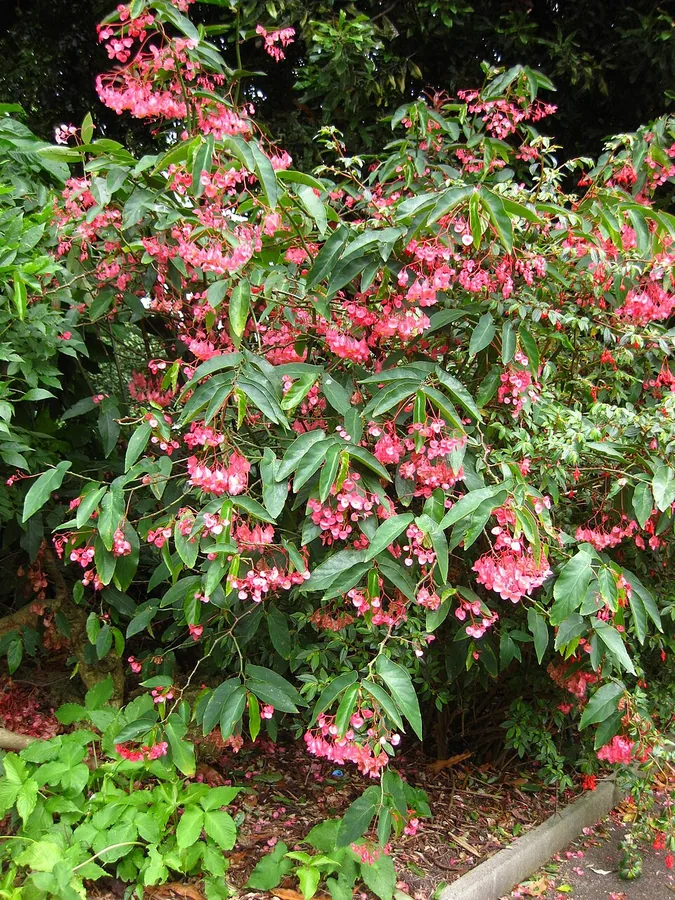
Hand it bright light and a routine pinch, and the angel wing begonia bursts into silver-dotted foliage and red blossoms swinging from the stems.
Bright indirect
50–86°F · 10–30°C
USDA 10–11
1–3 ft · 0.3–0.9 m
Overview
Named for those crooked, wing-shaped leaves that shoot up the length of its tall canes, many splashed with silver, the angel wing begonia belongs to the cane-type crowd. These are bamboo-stemmed uprights out of the Brazilian forests, and this one has kept indoor gardeners hooked for over a hundred years now.
Grow it well and you get two payoffs together. Its leaves keep things lively right through the year, and when the heat rolls in it dangles clusters of red or pink bloom from every leaf joint. It races upward to 1 to 3 feet indoors, so a bare, sunny corner fills out fast.
This is a forgiving plant that truly rewards a little effort. Feed it bright light, moisture that stays steady without turning to muck, and a routine pinch, and it powers out leaves and flowers nonstop. Neglect the pinching and it shoots up bare along the bottom, a crown of leaves on a naked stalk, though a few snips set it right again.
Care
The short version: loads of bright indirect light with a dash of morning sun, soil held evenly damp yet never soggy, temperatures over 50°F (10°C), humidity on the high side, and a steady pinching habit to pack on bushy growth.
Light
Park it at an east-facing window for bright indirect light plus a hit of gentle morning sun. It shrugs off a bit of partial shade, yet blazing afternoon rays will sear the leaves, and a dim spot leaves it stretched thin and gappy.
Water
Keep that soil evenly moist, letting only the top layer dry before the next drink, and pour just enough to keep the leaves crisp and firm. Dial it back over winter, and never leave the pot standing in water, or soggy soil will rot the roots and stems in no time.
Soil
Set it in a loose, humus-rich mix that drains in a flash. Anything from pH 5.5 to 7.5 suits it, acidic through neutral, and sharp drainage beats chasing an exact number every time.
Temperature
It powers along between 50°F and 86°F (10°C to 30°C) and won't stand a lick of frost. Let a draft slip under 50°F and the leaves yellow and drop, so shield it from cold winter glass.
Humidity
This one craves high humidity, well past what a dry winter room delivers. Cluster it with other plants or perch it on a pebble tray, and keep a breeze going so still, muggy air never lets mildew take hold.
Feeding
All through the spring-to-summer growth surge, hit it with a balanced liquid fertilizer at half strength at every other watering, landing near once a fortnight. Once the dim, sluggish season rolls in, cut the feeding out.
Pruning
Nip those branch tips early and often to spark fresh side shoots and pack the plant bushy instead of gangly. As soon as it hits the fullness you are after, quit pinching and let the flowers roll.
Repotting
Shift it to a new pot every 1 to 2 years, or jump in sooner the moment roots poke from the drainage holes, growth stalls, or water blasts straight through. Nudge it up one pot size into fresh, quick-draining mix.
Size & spacing
Indoors it rockets to around 1 to 3 feet (30 to 91 cm) tall and fans out 1 to 2 feet (30 to 61 cm) across. Hand it some elbow room and a bit of airflow so the foliage dries fast and mildew never gets a foothold.
Troubleshooting
Just about every begonia setback comes down to one of three things: water, light, or air, and each bounces back fast. Soak the roots too often and the base rots, starve it of light and the canes stretch thin, let the air go stale and mildew moves in. Spot your symptom below, then hit the cause before it spreads.
Blackening bases and a plant keeling over
You are looking at root and stem rot, nearly always the payback for soil kept too soggy, with botrytis sometimes crashing in when the air turns cool and damp. The instant the base goes mushy and the roots run dark and slimy, cut the water off and let it all dry right out. Slice off the rotted parts, snag a few healthy tip cuttings to carry the plant forward, and pot it back up in fresh, fast-draining mix.
Fix:
- Withhold water and allow the soil to dry
- Cut away rotted tissue and take healthy tip cuttings to start a fresh plant if rot is advanced
- Repot into fresh, well-drained mix with adequate drainage
Powdery white bloom coating the leaves
See a chalky white bloom on the leaves and you have caught powdery mildew, a fungus that thrives in stale, muggy air. Get the air flowing around the plant, yank off the worst-hit leaves, and stop splashing the foliage. Knock the humidity back a notch and you halt it before it runs.
Fix:
- Improve air circulation around the plant
- Remove and discard affected foliage
- Avoid wetting the foliage and reduce ambient humidity around the plant
Yellowing foliage that sags and falls off
Drenched soil is the usual troublemaker here, and overwatering is behind the bulk of these cases, though a cold snap under 50°F (10°C) can spark the very same slump. Dry the top off between waterings, keep the pot clear of any tray of water, and haul it back from drafty corners. Park it inside the 50°F to 86°F (10°C to 30°C) window and go lighter on water once winter sets in.
Fix:
- Let the soil surface dry between waterings and never let the pot sit in standing water
- Move the plant away from cold drafts and keep it above 50°F (10°C)
- Ensure the pot has drainage and a loose, well-drained mix
Sticky foliage, cottony clumps, and darting insects
A few usual suspects come after begonias, and all of them are beatable. Mealybugs stuff cottony white wads into the leaf joints, spider mites fleck the foliage and string up fine webs, whiteflies burst up in a cloud the moment the plant is jostled, and thrips carve pale silvery scars. Quarantine the plant right away, swab the mealybugs off, and blast the foliage with a rinse to drive back mites and whiteflies. Then reach for horticultural oil or insecticidal soap and keep at it until every last pest is cleared.
Fix:
- Isolate the affected plant
- Wipe off mealybugs and rinse foliage to dislodge mites and whiteflies
- Treat with an appropriate insecticidal soap or horticultural oil, repeating as needed
Skyward canes shedding their lower leaves
Starve a cane begonia of light and skip the pinching, and it shoots up leggy in a hurry. Whisk it to a brighter perch that grabs some morning sun, then pinch the tips hard to blast out side shoots. Chop the tallest canes right down and root the offcuts as cuttings to bulk the plant back up.
Fix:
- Move to a brighter spot with bright indirect light and some direct morning sun (e.g. an east window)
- Pinch the tips of branches to promote lateral growth and a fuller habit
- Cut back overly tall canes and use the removed shoots as cuttings
Toxicity
Keep this one well clear of animals. Every part packs soluble calcium oxalates, with the roots most toxic of all, and the same compound that upsets a dog or cat can hit a grazing horse or goat where it counts, the kidneys. Handling the sap may leave skin red and itchy too, so rinse your hands once the pruning is done and carry on with confidence.
Toxic to
Cats · Dogs · Horses · Rabbits · Livestock · Birds · People
Cats Moderate
Let a cat chomp the foliage or stems and it will usually drool and throw up soon after. Those soluble calcium oxalates are the trigger, and with the roots loaded heaviest, the pot needs a perch a cat simply cannot get to.
Dogs Moderate
A dog that grabs a mouthful will drool hard and vomit before long. The very same oxalates fuel it, and any dog that unearths and gnaws the roots takes on the fiercest dose of all.
Horses Toxic
Begonia is genuinely risky grazing for a horse, since those soluble oxalates can wreck the kidneys. The buried parts pack the heaviest toxin, so never let a horse tug at a planting.
Rabbits Toxic
Rabbits should get nowhere near a scrap of this plant. The oxalate crystals torch the mouth and gut, and the roots hit hardest of the lot.
Livestock Toxic
Cattle, goats, and sheep court the identical kidney threat as horses the moment they browse the leaves or roots. Wall the plant off from anything inclined to graze.
Birds Caution
Pet birds can respond to the oxalates with a raw mouth and a churning gut. Keep those inquisitive beaks a good distance from the leaves and stems.
People Caution
Nobody eats it, but the sap can flare the skin red and itchy on contact. Scrub your hands once the pruning wraps up and steer small children away from chewing the leaves.
Sap can cause skin irritation (contact dermatitis); the underground parts (roots) are the most toxic part. Keep the plant out of reach of pets and children, and avoid letting animals graze on it
Helpline numbers

United States
ASPCA Animal Poison Control: (888) 426-4435 (fee applies)
Poison Control: (800) 222-1222



Canada
Poison Centres: 1-844-764-7669
Varieties
The angel wing label really covers a big clan of cane begonias, and a few named picks come around again and again. Here are the standouts worth tracking down.
'Argenteo-guttata'
Meet the one that started it all, a lively 1888 pairing of B. aconitifolia and B. coccinea whose silver-dotted, winged leaves handed the name down to the entire group.
'Canary Wings'
This cane type earns its keep on glowing chartreuse-yellow leaves, with weighty clusters of red bloom swinging down against them.
'Corallina de Lucerna'
A tough old classic that grows with gusto, it shows off hefty silver-spotted leaves and trailing red flower sprays along its tall canes.
'Gryphon'
This one breaks from the pack, prized for bold palmate foliage brushed silver up top and a rich orange-red below, with flowers barely part of the deal.
How to propagate
When it comes to making more plants, angel wing begonias are about as obliging as houseplants get, and one parent throws off all the starts you could want.
Stem cuttingsEasy
Spring to summer · Roots in a few weeks
This is the first thing growers reach for with cane begonias, and propagation hardly comes easier. Snip a tip or stem piece in spring or summer, plunk it into water or a pot of moist mix, and in a few short weeks it roots into a dead ringer for its parent.
Leaf cuttingsModerate
Spring to summer · Several weeks
Leaf cuttings run a slower backup play, taken across spring or summer just like the stem kind. It needs several weeks to root and asks for more fuss, so most growers jump on stem cuttings first.
DivisionEasy
At repotting · Several weeks
Come the next repot of an old, packed clump, break it into a few standalone plants. Each split takes several weeks to find its feet, then charges ahead as a begonia all its own.
Myths
A begonia's foliage and canes carry the biggest risk to pets.
Everyone bets on the leaves being the villain, but the ASPCA flips that idea. Down in the soil, the roots pack the heaviest toxin load, all the more reason to block pets from burrowing in the pot.
Begonia oxalates are simply the insoluble crystals aroids are known for.
Not so. Begonias run on soluble calcium oxalates, which behave nothing like the insoluble crystals stuffed into many aroids and can travel to the kidneys of any animal that grazes its fill.