Houseplant · Begoniaceae
Polka Dot Begonia
Begonia maculata
Dial in bright indirect light, a careful watering rhythm, and plenty of humidity, and this cane begonia races to repay the effort with leaves flecked in silver spots.
Bright indirect
USDA 10–11
2–3 ft · 0.6–0.9 m
Overview
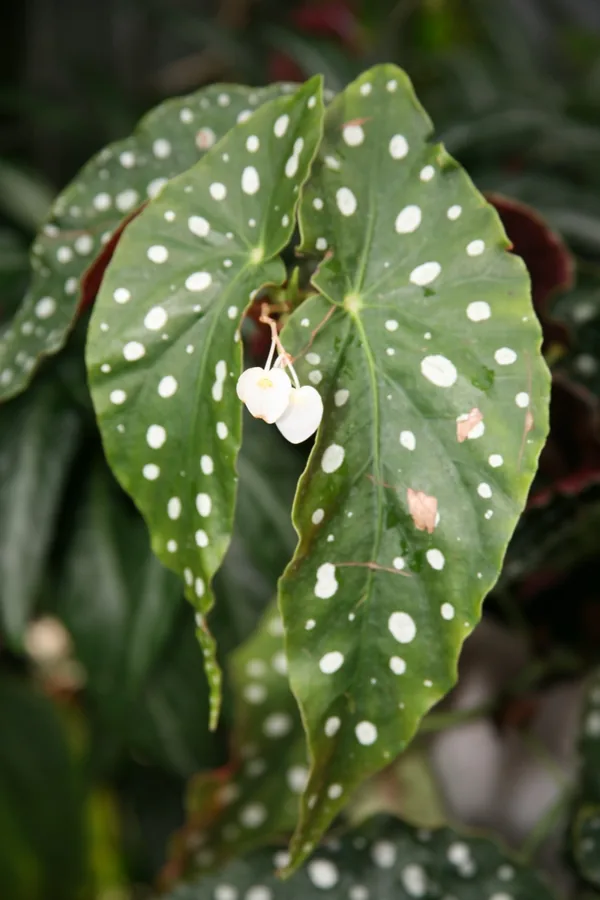
The polka dot begonia grabs your eye and earns its name on sight. Long, angel-wing leaves come scattered with silvery-white spots and flip to a deep crimson-red underside, all riding on upright, bamboo-like canes. It runs with the cane-stemmed begonias and traces back to the forests of southeast Brazil.
Bring it indoors and it stays a manageable grower, climbing to around 2 to 3 feet (61 to 91 cm) tall across a few seasons. Warm months push out drooping clusters of pale pink to white flowers, a fun little bonus riding on top of the foliage that hooks most people first. It rates as moderate: not fussy, though it does dig in on a couple of firm preferences.
Those preferences boil down to water and air. It refuses to sit in soggy soil and rots quick if it does, yet it still hungers for the high humidity of its native understory. Nail that balance, keep moisture steady and air moving around the leaves, and it powers into fuller, brighter growth year after year.
Care
The short version: bright indirect light, water only once the top of the soil dries, and keep the air humid but moving. Feed lightly through the growing season and pinch the tips to drive bushy growth.
Light
Park it in bright, indirect light by a window that never fires direct sun onto the leaves. It scrapes by in medium light or partial shade, but the spots fade and the canes stretch. Harsh midday sun scorches the foliage fast.
Water
Water moderately while it is growing, then let the top of the soil dry before the next round. This begonia rots easily, so the one rule to burn in is never to leave it sitting in soggy soil or standing water. Dial it back in winter as growth slows.
Soil
Plant it in a light, well-drained mix loaded with organic matter, the kind that grips a little moisture but drains fast. A slightly acidic pH of 5.5 to 6.5 keeps it thriving. Above all else, give it sharp drainage.
Temperature
Keep it warm and never let the room slide below 55°F (13°C). Cold drafts and chilly windowsills trigger leaf drop, so shift it away from doors and vents once winter bites.
Humidity
This plant craves high humidity, more than most homes hand out, so a humidifier or a pebble tray earns its spot. The catch is that still, humid air invites powdery mildew, so pair the moisture with steady airflow around the leaves.
Feeding
Feed it through the growing season, spring into summer, with a balanced liquid fertilizer at alternate waterings, roughly every two weeks. Cut feeding once autumn and winter roll in and the plant rests.
Pruning
Pinch the growing tips to drive out side branches and keep the plant full instead of leggy. Steady pinching also reins in its size and stops the lower canes from going bare.
Repotting
Repot every one to two years, or sooner once roots shove through the drainage holes and water rushes straight through. Whenever you do, keep the dug-up roots and tubers away from pets, since they hold the most toxin.
Size & spacing
Indoors it hits about 2 to 3 feet (61 to 91 cm) tall and spreads 1 to 2 feet (30 to 60 cm) wide. Give it room and airflow on all sides to keep mildew from ever gaining a foothold.
Troubleshooting
Nearly every hiccup with a polka dot begonia circles back to water or air. Catch it in the leaves and stems early and you shut most of it down before it spreads. Match what you see below, then move while the plant can still bounce back.
Sudden wilting paired with mushy, blackening cane bases
A stem base gone soft and dark above soggy soil spells root and stem rot, driven by too much water, and it is the most serious thing that can hit this plant. Jump on it: pop the plant out of its pot, cut away every rotted root and stem down to firm tissue, and settle it into fresh, fast-draining mix. Water only once the surface has dried after that, and the plant gets a real shot at bouncing back.
Fix:
- Remove the plant and cut away rotted roots and stems
- Repot into fresh, well-drained mix
- Water only after the top of the soil dries
White powder taking over one leaf after another
That dusty white film creeping over the leaves is powdery mildew, a fungus that pounces when humid air goes still. Get air moving through the space, strip off the worst-hit leaves, and steer water clear of the foliage as you water. The plant still craves high humidity, so it is airflow that turns that humidity from a liability back into a friend.
Fix:
- Improve air circulation around the plant
- Remove and discard affected leaves
- Avoid wetting the foliage when watering
Leaves yellowing and falling off
Leaves yellowing and dropping usually trace straight back to overwatering, especially when the soil never dries out between drinks. Cold delivers the same result, so anything below 55°F (13°C) or a nagging draft will send a begonia shedding. Let the top of the soil dry before the next watering, park it somewhere warm and clear of cold air, and make sure that pot drains freely. It rallies fast once you do.
Fix:
- Let the top of the soil dry before watering again
- Move away from cold drafts and keep above 55°F (13°C)
- Ensure the pot drains freely
Fuzzy white blobs, a glossy sticky residue, or webbing strung between stems
A few sap-sucking pests chase this begonia, and each leaves a giveaway that makes tracking it down half the fun. White cottony puffs flag mealybugs, little clouds of white flies flag whiteflies, webbing over speckled leaves flags spider mites, and silvery scarring flags thrips. Whisk the plant away from its neighbors, wash off everything you spot, then hit it with insecticidal soap or horticultural oil and keep at it until the last one clears.
Fix:
- Isolate the affected plant
- Wipe off or wash off visible pests
- Treat with insecticidal soap or horticultural oil and repeat as needed
Canes racing upward while the lower leaves thin out
A begonia that shoots up tall and leggy, carrying leaves only at the tips, is chasing light that fell short, and skipped pinching let it run. Slide it into a brighter spot and start pinching those tips to wake the side branches. Snip any overlong cane back to a node, and watch the plant break into fuller, bushier growth that looks far more alive.
Fix:
- Move to brighter indirect light
- Pinch the growing tips to force branching
- Prune back leggy canes to a node to encourage bushier regrowth
Toxicity
Keep this one clear of pets and grazing animals. Every part carries calcium oxalate crystals, and the underground tubers and roots carry the most, so a chewed leaf stings the mouth while a dug-up root does real damage. Nothing on it is edible, so keep it away from small children too.
Toxic to
Cats · Dogs · Horses · Rabbits · Livestock · Birds · People
Cats Moderate
A cat that chews any part runs into calcium oxalate crystals, so expect drooling, pawing at the mouth, and vomiting. The tubers pack the biggest punch, so sweep up repotting debris and keep it out of reach.
Dogs Moderate
Dogs land in the same spot, drooling and queasy after a bite of leaf or stem. A dog that digs down and chews the roots pulls in a heftier dose, so guard that soil.
Horses Moderate
Those same oxalates hit horses and other grazers too, sparking mouth irritation and stomach upset. Bigger or repeated mouthfuls can push the kidneys, so keep the plant well clear of them.
Rabbits Caution
The crystals that trouble cats and dogs would sting a rabbit's mouth and gut just as fast, so treat the whole plant as strictly off the menu for them.
Livestock Caution
Grazing stock run the same risk horses do, since the oxalates play out the same from one animal to the next. Keep cattle, goats, and sheep away from the leaves and any dug-up roots.
Birds Caution
No pet bird gains anything by nibbling these leaves, and the irritant crystals make it a bad call anyway. Keep those curious beaks well away from the plant.
People Caution
No part of this begonia belongs anywhere near a plate, and one bite sets the mouth burning and stinging. Keep it up and out of reach of small children who taste everything they grab.
Most toxic part is underground; keep the plant and any repotting debris (tubers/roots) away from pets and grazing animals
Helpline numbers

United States
ASPCA Animal Poison Control: (888) 426-4435 (fee applies)
Poison Control: (800) 222-1222



Canada
Poison Centres: 1-844-764-7669
Varieties
Most plants sold as polka dot begonia trace back to one standout cultivar. This is the one to lock in by name.
Begonia maculata 'Wightii'
A vigorous, free-flowering cane-stem cultivar that shows off long, narrow green leaves splashed with silvery-white spots over deep crimson-red undersides.
How to propagate
Polka dot begonias multiply with almost no effort, and you need zero special gear to pull it off. A cutting taken in the growing season roots on its own with barely a nudge.
Stem cuttingsEasy
Spring to summer · Roots in a few weeks (often in water)
Growing new plants from stem and tip cuttings is where this begonia really rewards you. Snip them in spring or summer while it is powering through active growth, drop them in water or press them into moist mix, and they root within a few weeks.
Leaf cuttingsModerate
Spring to summer · Several weeks
Even a single leaf can spin up into a brand-new begonia, though this one tests your patience. Set a leaf cutting in spring or summer and give it several weeks to fire out roots and a tiny plantlet before you pot it on.
Myths
Begonias rank as barely toxic for pets, with the leaves as the only part worth worrying about.
Not so, and it pays to know why. Begonia is genuinely toxic to cats, dogs, and horses through calcium oxalate crystals, and the leaves are only the mild end. The real danger hides underground in the tubers and roots, which is exactly what a digging pet or a careless repotting drags into the open.