Houseplant · Begoniaceae
Rex Begonia
Begonia Rex Cultorum Group
Grow it for leaves that look painted on, and the rex begonia keeps them coming with bright, indirect light and fresh, moving air.
Bright indirect
66–73°F · 19–23°C
USDA 10–11
12–18 in · 30–46 cm
Overview
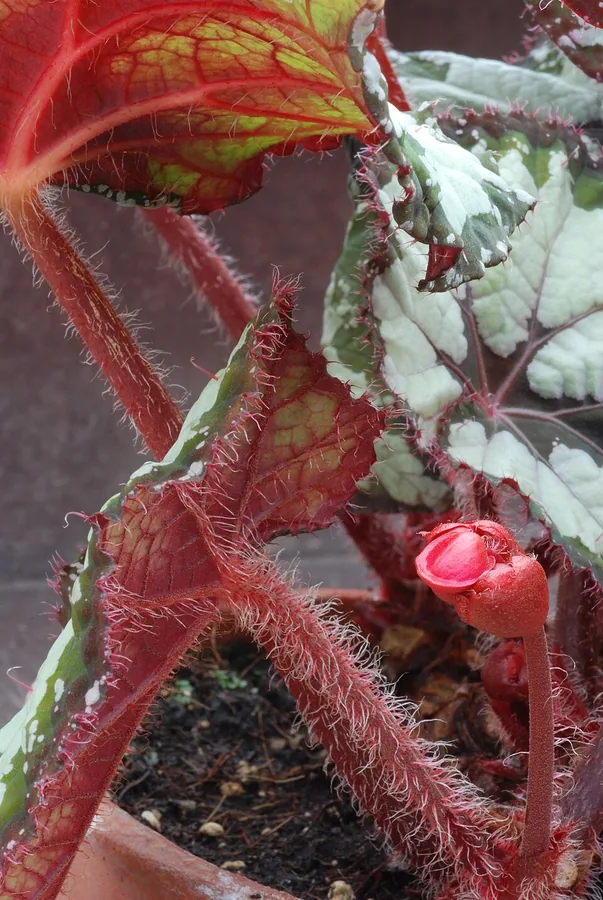
The rex begonia is a leaf-lover's plant through and through. Every leaf mixes silver, plum, rose, and deep green into a spiral, often crinkled or puckered, and the little pink-white flowers are beside the point. It comes from the Rex Cultorum Group, a huge line of hybrids bred from a wild begonia that grows in the eastern Himalayan foothills.
It runs on a creeping rhizome instead of a tall stem, so it keeps a tidy, spreading shape at 12 to 18 inches (30 to 46 cm) tall and about the same wide. Drop it into a shallow pot on a bright shelf and it takes off sideways, filling the space with color.
Make no mistake, this is a demanding grower that wants steady warmth, humid air, and a bit of a breeze, and it lets you know the moment something's off. Dial those in and the payoff is huge, foliage that outdoes almost anything else on the windowsill, though soggy soil or stale air will drag it down fast.
Care
The short version: bright, indirect light, evenly moist soil in a porous mix that never turns to mud, steady warmth around 66°F to 73°F (19°C to 23°C), and plenty of humidity pushed through the air around it instead of onto the leaves.
Light
Set it up with bright, indirect light and keep it well away from hot, direct sun, which scorches those patterned leaves. It'll soldier on in partial to full shade, but the color dials down there, so add a fluorescent light to keep things bright when a window won't cut it.
Water
Keep that soil evenly moist, let the top dry out a bit between rounds, and never let it sit soggy. Water at the soil or from below, not over the top, since wet leaves practically invite rot. Back right off once the winter rest kicks in.
Soil
Pot it up in a porous, well-drained mix loaded with organic matter, think a light soilless or African-violet blend. Aim for a slightly acidic pH of 5.5 to 6.5, and grab a shallow pot to match that creeping rhizome.
Temperature
Keep it in steady warmth between 66°F and 73°F (19°C to 23°C) and it hums along, but growth stalls once nights drop much cooler. Steer it clear of cold drafts and sudden chills.
Humidity
This one runs on high humidity, around 50% to 75%, way more than most homes deliver in winter. Crank it up with a pebble tray or by spraying the air nearby, never the leaves, because wet foliage is a straight shot to fungal problems.
Feeding
Through the spring-to-fall growth push, feed it a balanced liquid fertilizer at half strength every couple of weeks at alternate waterings. When fall and winter roll in and it rests, hit pause on feeding until spring.
Pruning
Pruning is a breeze here. Snap off dead or diseased leaves the second you see them to keep the plant clean and the air moving against fungus. Pinch the tips and it branches out, filling in fuller and bushier.
Repotting
Repot in spring once the roots have packed the pot, bumping up to a shallow container that fits the creeping rhizome. Roots circling the root ball are your green light to move it up.
Size & spacing
Grown out, a rex begonia stays compact at 12 to 18 inches (30 to 46 cm) tall and about the same across. Give it a little elbow room on every side so air keeps moving and the leaves stay dry.
Troubleshooting
Nearly every hiccup with a rex begonia traces back to water and air, so those are the first things to check. Wet soil and stale, damp air kick off the rots and mildews, and a gloomy corner strips the color right out of the leaves. Spot your symptom below and jump on it fast, before it takes hold.
A caving plant over a black, mushy base
Soggy soil is the culprit, and you're looking at crown and root rot. The moment the rhizome goes soft and dark, stop watering and let the mix dry out. Then repot into fresh, porous media in a shallow pot, cut away everything rotted, and ease back into watering.
Fix:
- Stop watering and allow the mix to dry
- Repot into fresh porous, well-draining mix and a shallow pot, trimming away rotted tissue
- Resume careful watering, avoiding waterlogged soil
White powder that will not brush off the leaves
That's powdery mildew moving in, a fungus that loves still air and high humidity. Snap off the marked leaves and open up the space so air can flow around the plant. Then keep water off the foliage, because damp leaves are its ticket to spread.
Fix:
- Remove and discard affected leaves
- Improve air circulation around the plant
- Avoid wetting foliage; spray the surrounding air rather than the leaves to raise humidity
Fuzzy grey mold on soft, caving-in leaves
This one's botrytis, grey mold that pounces on foliage left wet in stale, still air. Cut off the bad bits and bin them, skip the compost. Switch to watering at the soil, not over the top, and open up the space so the plant dries out quick.
Fix:
- Remove and destroy affected plant parts
- Increase air circulation and lower ambient moisture on foliage
- Stop misting/wetting leaves; water at the soil
Cottony clumps, fine webbing, or speckled new leaves
Sap-suckers, and each one tips its hand. Cottony white clumps in the leaf axils flag mealybugs, webbing laced with yellow speckles calls out spider mites, and a burst of tiny bugs when you jostle the plant means whiteflies. Hit the mealybugs with rubbing alcohol on a swab, pull the plant aside from the rest, and keep after them until they're cleared out.
Fix:
- Dab mealybugs with rubbing alcohol on a cotton swab
- Isolate the plant to prevent spread
- Treat repeatedly until pests are gone, raising humidity to discourage spider mites
Washed-out color and stretched, reaching stems
Fading markings and stems shooting toward the window scream too little light. Shift the plant somewhere brighter with loads of indirect light, and skip the hot, direct sun. No window to spare? A fluorescent fixture picks up the slack.
Fix:
- Move to a brighter spot with plenty of bright, indirect light (avoid direct, hot sun)
- Supplement with fluorescent lighting if natural light is limited
Growth stalls and leaves drop off in winter
When a rex begonia clams up and drops leaves in the cold months, that's just winter dormancy kicking in with the shorter days and cooler air. The rhizome stays firm even as the leaves let go. Dial back the water, park the fertilizer until spring, and pick the routine back up when new growth pops.
Fix:
- Reduce watering and keep the soil barely moist
- Stop fertilizing until new spring growth appears
- Resume normal care when active growth resumes in spring
Toxicity
One serious note before the fun part: the rex begonia is toxic if any part gets eaten. All of it carries soluble calcium oxalate, with the buried rhizome packing the biggest punch. A pet that chews the leaves will drool and get sick, grazing animals can hit real kidney trouble, and the sap can irritate skin, so keep it clear of pets, livestock, and small children.
Toxic to
Cats · Dogs · Horses · Rabbits · Livestock · Birds · People
Cats Moderate
A cat that gnaws the foliage usually winds up drooling and vomiting as the calcium oxalate irritates its mouth and gut. The buried rhizome holds the most, so a cat digging at the base takes a bigger hit.
Dogs Moderate
A dog that mouths the leaves tends to drool, paw at its face, and go off its food for a bit. The rhizome is the bigger worry, since that's where the toxin concentrates.
Horses Severe
Grazing animals take the hardest hit. The soluble oxalates travel through the body and lean on the kidneys, so a horse that browses the plant can wind up far sicker than a small graze lets on.
Rabbits Toxic
Rabbits graze low and steady, which turns those same kidney-stressing oxalates into a genuine hazard. Keep the plant well out of their reach and never let any part end up as a snack.
Livestock Toxic
Goats, sheep, and cattle run the same whole-body oxalate risk as horses, with mouth irritation and possible kidney trouble after grazing. Fence it right off.
Birds Caution
The oxalates that trouble mammals make this a bad call around pet birds too. Treat any pecking at the leaves as a red flag and keep nosy birds clear.
People Caution
No part of this plant is food, and the sap can leave some people with itchy skin or a rash after handling. Wash up after pruning and keep small children from popping leaves in their mouths.
NC State and UConn note the sap contains calcium oxalate and can cause skin irritation/contact dermatitis in some people when handling
Helpline numbers

United States
ASPCA Animal Poison Control: (888) 426-4435 (fee applies)
Poison Control: (800) 222-1222



Canada
Poison Centres: 1-844-764-7669
Varieties
Rex begonia hybrids number in the hundreds, every one bred for knockout foliage. The botanical record flags one by name.
Begonia rex-cultorum 'Super Curl'
A standout name in the heavily hybridized Rex Cultorum Group, grown just like its cousins for bold, patterned leaves rather than flowers.
How to propagate
Here's where the fun really starts: rex begonias multiply like champions, and one leaf can spin off a whole tray of new plants. Go for it in spring and summer, right when the plant is charging ahead in active growth.
Leaf cuttingsModerate
Spring to summer · Plantlets form in 1-3 months
Leaf cuttings are a blast to try in spring or summer while the plant's growing strong. Slice across the big veins on the underside and lay the whole leaf flat on damp media, or cut it into wedges that each grab a main vein. New plantlets shoot up from those cuts over the next one to three months.
DivisionEasy
At repotting in spring · Several weeks
The quickest win is dividing the plant while you repot it in spring. Break the rhizome into chunks, each one packing its own roots and leaves, and pot them up on their own. They root in and take off within a few weeks.
Stem cuttingsModerate
Spring to summer · Several weeks
Stem cuttings deliver too, taken through the spring and summer growing season. Sink a cutting into moist media and it grabs hold within a few weeks.
Myths
Rex begonias are grown mainly for their flowers.
Nope, the leaves run this show. They pack color and pattern into a display most plants can't touch, while the flowers stay small, pinkish-white, and easy to skip right past. A rex begonia is all about the foliage.
A begonia's calcium oxalate is the same harmless mouth-irritant as the stuff in aroids.
Not even close. Aroids pack insoluble oxalate crystals that sting the mouth and move on, but the ASPCA pins the begonia's toxin as soluble calcium oxalate, which the body actually absorbs. For grazing animals, that jump can mean kidney failure instead of a sore mouth.
Misting the leaves is the best way to load a rex begonia up with humidity.
Tempting, but it backfires. Rex begonias crave humid air, sure, yet wet leaves roll out the welcome mat for powdery mildew and botrytis. Push the humidity up in the air around the plant instead, with a pebble tray or a spray of the nearby space. Keep those leaves dry.
Sources
- ASPCA Animal Poison Control
- NC State Extension Gardener Plant Toolbox
- Clemson Cooperative Extension HGIC
- Missouri Botanical Garden Plant Finder
- University of Connecticut Home & Garden Education Center
- Pet Poison Helpline
- University of Illinois Extension
- Plants of the World Online, Royal Botanic Gardens Kew