Houseplant · Marantaceae
Calathea Orbifolia
Goeppertia orbifolia
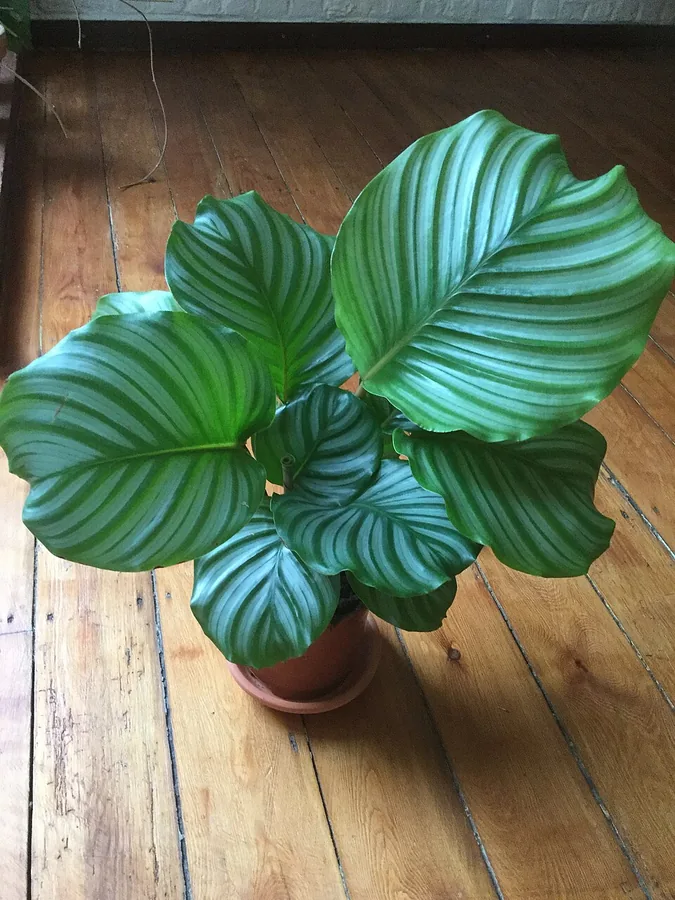
Those big, round, ribbon-striped leaves that fold up at night like praying hands make this a plant worth chasing.
Bright indirect
65–75°F · 18–24°C
USDA 11–12
2–3 ft · 0.6–0.9 m
Overview
The leaves are the whole reason to grow this one, and what leaves they are: broad, nearly round, and washed in silver-green with crisp ribbon striping. Stick around until dusk and the plant puts on a small show, lifting and folding its foliage together, the move that earns the prayer plant name. It hails from the rainforest floor of eastern Brazil, and that backstory points straight to what keeps it thriving.
It runs in the prayer plant family, the Marantaceae, and now answers to the accepted name Goeppertia orbifolia after a 2012 shake-up that swept many Calathea species into the genus Goeppertia. The name moved, the plant stayed put, and growers and shops still happily call it Calathea, so tracking one down is easy.
Make no mistake, this is a demanding plant, and that is half the fun for anyone who likes a challenge. It wants clean water and humid air, and it lets you know fast when either drops off. Nail the light, water, and humidity and it takes off, throwing fast, full growth and some of the most eye-catching leaves you can keep indoors.
Care
The short version: bright indirect light and no direct sun, distilled water or rainwater to keep the soil evenly moist, a warm room at 65°F to 75°F (18°C to 24°C), and humidity of at least 60%.
Light
Park it in bright, indirect light and keep direct sun off it, since strong rays bleach the markings and burn the leaves. It hangs on in partial shade too, though growth drags and the color flattens in a dim corner. The most it should catch is a little early-morning or well-diffused sun.
Water
Keep the soil evenly moist but never soggy, and dial it back through winter when growth idles. The water you pour counts as much as how much, so go with distilled water or rainwater. Tap water packs fluoride and salts, and those are exactly what burn the brown tips and edges onto the leaves.
Soil
Plant it in a moist but well-drained mix, loamy or peaty, that grips water without turning to mud. A slightly acidic to neutral pH of 5.5 to 7.0 hits the mark. Shoot for soil that stays damp between waterings and still drains free and fast.
Temperature
Warm, steady rooms of 65°F to 75°F (18°C to 24°C) keep it firing. It has zero patience for cold drafts and sudden chills, so steer it well clear of doorways, vents, and frosty windows.
Humidity
This is the lever that makes everything work. Push for at least 60% humidity, which beats what most homes deliver, and let a humidifier carry the load. A pebble tray and a cluster of plant neighbors pitch in, and dry air is the fastest way to crisp those tips and curl the leaves.
Feeding
Right through the growing season, spring into summer, feed it monthly with a balanced houseplant fertilizer at the usual strength. Cut it off over winter while the plant rests. It is no heavy feeder, and overdoing it just dumps salt that scorches the leaf edges.
Pruning
Pruning barely registers as a chore here. Just clip away damaged, browned, or yellowing leaves at the base as they crop up, which keeps the plant sharp and pushes its energy into fresh growth.
Repotting
Repot every 1 to 2 years in spring, or jump on it sooner if roots circle the pot, water blasts straight through, or growth stalls. Bump it up just one pot size into fresh mix, since this plant hates drowning in too much soil.
Size & spacing
Indoors it climbs to 2 to 3 feet (61 to 91 cm) tall and fans out 12 to 24 inches (30 to 61 cm) wide. Hand it some elbow room so the big leaves can stretch and air can sweep around them.
Troubleshooting
Here is the upside of growing this plant: almost every hiccup lands on the leaves, and almost all of them trace right back to water quality, humidity, or light. Read the foliage and it points you to the problem. Match what you spot below, then chase down the cause instead of just snipping the damage.
Yellow, drooping leaves and rotten roots
Soil that stays wet smothers the roots and triggers root rot, turning them brown and mushy instead of firm and pale. Pop the plant out, slice off every rotted root, and repot into fresh, well-drained mix. After that, water only enough to keep it evenly moist and never let it stew in soggy soil.
Fix:
- Remove plant and cut away rotted roots
- Repot into fresh well-drained mix
- Water only to keep evenly moist, never soggy
Bleached-out markings and burnt patches
When the bold pattern washes out and pale burns show up on the sunniest leaves, the plant is grabbing too much light, and direct afternoon sun usually leads the charge. Shift it into bright indirect light or partial shade, and the fresh growth roars back richly marked.
Fix:
- Move to bright indirect light or partial shade
- Avoid direct afternoon sun
Fine webs and pinprick dots on foliage
Dry air rolls out the red carpet for spider mites, which lurk on the leaf undersides behind faint webbing and a scatter of tiny moving dots. Blast the foliage with a rinse, then hit them with insecticidal soap or horticultural oil and repeat until they clear out. Keep the humidity cranked high to keep them from staging a comeback.
Fix:
- Rinse foliage
- Treat with insecticidal soap or horticultural oil
- Raise humidity
Dry brown tips along the leaf edges
Point the finger at the tap water, the cause nearly every time. Fluoride, chlorine, and dissolved salts pile up and scorch the leaf margins while the centers stay green. Swap in distilled water or rainwater, drive the humidity up to at least 60%, and trim those crispy edges if they nag at you.
Fix:
- Switch to distilled water or rainwater
- Raise humidity to at least 60% with a humidifier or wet-pebble tray
- Trim damaged edges if desired
Leaves curling or rolling inward
Leaves curl inward when the air turns too dry or the soil runs thirsty, and the edges often brown right along with them. Crank the humidity to at least 60% with a humidifier or pebble tray, and hold the soil consistently moist. The leaves tend to spring back open once the plant feels good again.
Fix:
- Increase humidity to at least 60%
- Keep soil consistently moist
Brown or rusty spots dotting the leaves
Spotting distinct marks after watering? That is water sitting on the foliage. Aim the water at the soil instead of over the top, and ditch the misting that leaves the leaves wet. Get a bit more air moving around the plant and the surface dries off in a hurry.
Fix:
- Water at the soil level and avoid wetting leaves
- Improve air circulation
Toxicity
Pet people, this one is a win, because it ranks among the safest plants to bring home. The ASPCA lists Calathea and the prayer plant family as non-toxic to cats, dogs, and horses, and NC State Extension backs that up for Goeppertia orbifolia by name. A curious cat or dog grabbing a bite is no cause for alarm.
Safe for
People · Cats · Dogs · Horses · Rabbits · Livestock · Birds
Cats None
The ASPCA tags this plant as non-toxic to cats, so a curious nibble is a total non-issue. A cat that goes overboard on any houseplant might bring it back up, but chalk that up to a full stomach, not poison.
Dogs None
It is safe for dogs, with both the ASPCA and NC State Extension dropping it on the non-toxic list. No need to wall it off or bolt for the vet if your dog snags a bite.
Horses None
Horses can graze right beside it with zero risk, since the ASPCA rates the prayer plant family non-toxic to horses.
Rabbits None
There is no toxin here to harm a rabbit. Still, leafy houseplants are not real rabbit food, so let any taste stay a quick nibble rather than a meal.
Livestock None
Goats, sheep, and the rest of the livestock crew face no poisoning from this plant, which packs none of the toxins that make so many ornamentals a field hazard.
Birds None
A pet bird picking at a leaf is in no danger, since the plant holds nothing toxic, though it pays to keep fertilizer or leaf-shine residue off any foliage a bird can reach.
People None
Handling it and the odd accidental taste carry no poisoning risk for kids or adults. It is not grown to eat, but it plants itself firmly on the non-toxic list.
How to propagate
Hungry for more of these? There is one route that works: split the plant you already have. Cuttings go nowhere, so spring division is how the collection grows.
DivisionModerate
Spring · Several weeks to establish after potting up divisions
Division is the one and only way to multiply this plant, since it flat refuses to grow from a leaf or stem cutting. Tackle it in spring, lifting the rootball, teasing it into clumps that each hang onto their own roots and leaves, and potting them up separately. Give those divisions a few weeks of warm, humid, evenly moist conditions and they dig in and take off on their own.
Myths
Calathea orbifolia is still the officially correct botanical name.
Not these days. Kew's Plants of the World Online now hands the accepted name to Goeppertia orbifolia, the upshot of a 2012 shake-up that swept many Calathea species into the genus Goeppertia. The plant never changed; only the name tag did.
Growing a prayer plant like this puts dogs and cats at risk of poisoning.
They are not, full stop. The ASPCA lists Calathea and the wider prayer plant family as non-toxic to dogs and cats, and NC State Extension says the same for Goeppertia orbifolia by name. Bring it home to a pet household with total confidence.