Houseplant · Marantaceae
Prayer Plant
Maranta leuconeura
Feed it soft water, damp soil, and humid air, and the prayer plant pays you back by folding its leaves shut every single night.
Bright indirect
USDA 11–12
6–18 in · 15–46 cm
Overview
Watch a prayer plant for one full day and it hooks you. The leaves lie open and flat while the sun is up, then swing upward and clasp together at dusk, dead ringers for a pair of praying hands. It hails from the Marantaceae family and the shaded rainforest floor of Brazil, and that wild backstory drives everything it wants on your shelf.
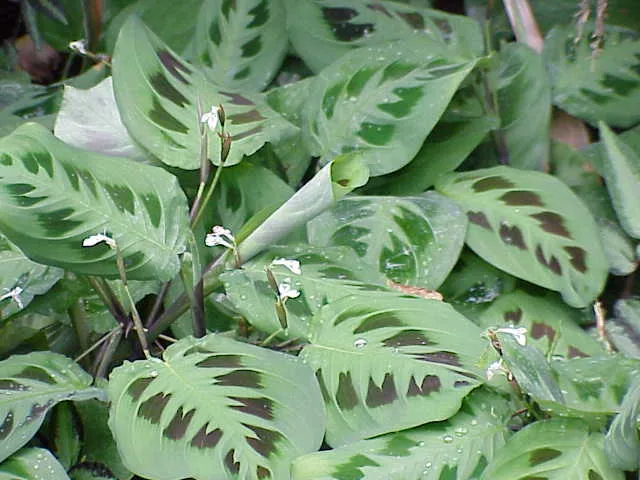
The foliage is where this plant really performs. Every leaf wears bold markings, red veins racing along a herringbone or dark blotches scattered like tracks across the green. It stays refreshingly compact, never topping 18 inches (46 cm), so a shelf, a hanging pot, or a desk corner turns into prime growing space.
Its fussy reputation? Overblown. This plant just knows what it likes: soft water, moisture that never quits, and humid air. Hit it with hard tap water in a dry room and the edges brown, but nail those basics and you grow a genuinely rewarding, pet-safe houseplant that closes up its leaves for you at dusk, night after night.
Care
The short version: bright indirect light with no direct sun, rainwater or filtered water to keep the soil evenly moist, and plenty of humidity in a warm room above 60°F (15.6°C).
Light
Park it in bright, indirect light and steer it clear of direct sun, which drains the markings and scorches the leaves. It will soldier on in medium or even low light, but the color truly pops in a bright spot with the fierce rays filtered.
Water
Keep the soil evenly moist all through spring and summer, then dial the watering back from autumn into late winter and let it dry a shade. What really counts is the water you use, because this plant is touchy about fluoride, chlorine, and salts that scorch the tips. Reach for rainwater, distilled, or filtered water and the leaves stay clean.
Soil
Plant it into a moist, humusy, well-drained mix built on a soil base. It should grip moisture yet drain fast, since a soggy root ball is a fast track to rot.
Temperature
Keep it warm and above 60°F (15.6°C). Cold drafts and icy windowsills knock it back, so once winter bites, shift it well away from doors and vents.
Humidity
This one thrives on high humidity and protests dry air with brown, crispy edges. Perch the pot on a tray of wet pebbles, fire up a humidifier, and huddle it with other plants to trap moisture right where the leaves want it.
Feeding
Feed it monthly with a balanced houseplant fertilizer across spring and summer, then back right off from autumn to late winter. Keep the hand light, because piling on feed scorches the foliage just like hard water does.
Pruning
Pruning barely registers on the to-do list. Just clip off any damaged, faded, or brown-tipped leaves to keep it sharp, and you are done in seconds.
Repotting
Repot in spring the moment roots crowd the pot or shove through the drainage holes. Seize that same chance to divide the plant for more, since the clump splits cleanly while it is out of the pot.
Size & spacing
It keeps a tidy footprint, running 6 to 18 inches (15 to 46 cm) tall and 6 to 24 inches (15 to 61 cm) wide. That low, spreading habit makes it a knockout in a hanging pot or along a shelf edge, where the leaves tumble over the side.
Troubleshooting
Almost every hiccup a prayer plant throws at you turns up in the leaves, and the great news is that most trace to water, light, or humidity, not disease. Spot the signs early and you can chase down the cause fast, before it spreads. Track your symptom below and get straight to work.
Wilting leaves and soft, mushy stems
Soggy soil sets off root rot, and you will spot roots gone brown and soft instead of firm and pale. Pull the plant, trim away the ruined roots, and repot it into fresh, well-drained mix. From there, water only when it genuinely needs it and never let the pot sit in standing water.
Fix:
- Remove from soggy soil and trim rotted roots
- Repot into fresh well-drained mix
- Water only when appropriate and ensure drainage
Fine webbing and yellow speckling on the leaves
Hot, dry air rolls out the red carpet for spider mites, which mass on the leaf undersides and leave fine webbing and pinprick yellow specks. Blast the foliage with a rinse, drive the humidity up, and treat with insecticidal soap or horticultural oil. Quarantine the plant until every mite is gone.
Fix:
- Rinse foliage and raise humidity
- Treat with insecticidal soap or horticultural oil
- Isolate affected plant
Brown, crispy tips racing along the leaf edges
Those crunchy brown edges spell leaf burn, and the culprit is almost always the minerals in tap water, not your care. Fluoride, chlorine, and salt stack up along the margins, and heavy feeding in dry air piles it on. Swap in rainwater, distilled, or filtered water, back off the fertilizer, and crank up the humidity to turn it around.
Fix:
- Use rainwater, distilled or filtered/dechlorinated water
- Reduce fertilizer frequency and strength
- Raise humidity (humidified room or pot on a tray of wet pebbles)
- Trim damaged tips for appearance
Faded color and pale, bleached patches
When the red and green washes out and pale, scorched patches surface, too much direct sun is doing the damage. This forest-floor grower simply cannot handle harsh rays. Shift it into bright indirect light, filter any blazing window, and watch fresh leaves come back in full color.
Fix:
- Move to bright indirect light out of direct sun
- Filter strong window light
Leaves that quit folding after dark
A thriving prayer plant hoists and folds its leaves every night like praying hands, so flat leaves flag weak light or stress, not disease, and the color usually still looks great. Load it up with bright indirect light by day and real darkness at night, then fix any watering, humidity, or temperature slip pulling it off track.
Fix:
- Provide adequate bright indirect light during the day and natural darkness at night
- Correct watering, humidity and temperature to reduce stress
Toxicity
Plant lovers with pets can breathe easy: the prayer plant is completely safe to grow at home. The ASPCA marks it non-toxic to cats, dogs, and horses, with zero poisonous compounds in the leaves. An animal that munches a big helping might feel briefly off, but nothing here poses a real danger.
Safe for
People · Cats · Dogs · Horses · Rabbits · Livestock · Birds
Cats None
Cats are in the clear. The ASPCA logs no toxic principles, so a leaf-chomping cat risks nothing worse than a quick, mild stomach upset.
Dogs None
Dogs are safe as well, with zero poison in the foliage. A big mouthful might leave a dog briefly queasy, and that is the whole story.
Horses Safe
Horses win the ASPCA's clearance too. No toxin means a curious bite does them no harm at all.
Rabbits Safe
With no toxic compounds around, a rabbit is safe beside the plant, though it never replaces their regular forage.
Livestock Safe
Grazing animals face no poisoning risk from the leaves, and as a tropical houseplant it hardly ever crosses their path.
Birds Safe
Pet birds are perfectly safe near it. The toxin-free leaves make perching or pecking totally harmless.
People Safe
It is safe around children too. No part of it is poisonous, though it earns its spot as a looker, not a snack.
Although non-toxic, ingestion of plant material can still cause mild gastrointestinal upset in pets
Varieties
A couple of named forms show up again and again, each announcing itself through its leaf markings. These two are the ones to hunt down.
var. erythroneura (Herringbone / red-veined prayer plant)
The real showpiece, blazing with a bright red midrib and red veins that shoot across dark green leaves in a herringbone pattern.
var. kerchoveana (Rabbit's-foot / rabbit tracks)
A paler green form stamped with two rows of dark blotches down each leaf, the marks that had gardeners calling it rabbit tracks.
How to propagate
Turning one prayer plant into several is a genuine thrill, and spring is prime time, whether you split a full clump or root a fresh cutting.
DivisionEasy
Spring, at repotting · Several weeks
The quickest win is to divide the plant in spring while you repot it. Pull the clump into sections, keep roots and shoots on every piece, and pot them up separately. Each division needs several weeks to dig in before it takes off again.
Stem cuttingsModerate
Spring to summer · Several weeks to root
It also fires up from stem cuttings taken just below a node in spring or summer. Sink the cutting into moist mix and keep it warm and humid to spur rooting. Give it several weeks to strike roots.
Myths
Prayer plants will poison cats and dogs.
Not so. The ASPCA files the prayer plant and the wider Maranta group as non-toxic to cats, dogs, and horses, with no toxic principles logged. Grow it freely in a home full of pets, even if a hearty nibble might leave one briefly queasy.
The leaves fold at night for religious reasons.
Nothing mystical is going on. The folding is nyctinasty, a natural day and night sleep movement, plain and simple. Once darkness lands, the leaves lift and clasp into a praying-hands shape, and that is exactly how the plant earned its name.