Houseplant · Marantaceae
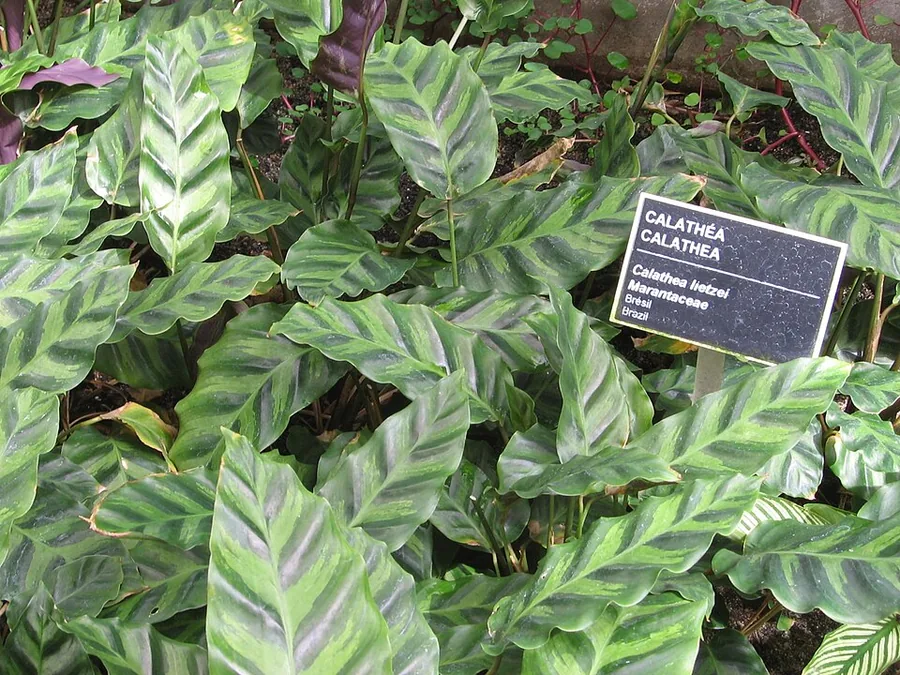
Calathea White Fusion
Goeppertia lietzei 'White Fusion'
Dial in the water and humidity and this living watercolour throws out brushstroked leaves you will love to grow.
Bright indirect
61–75°F · 16–24°C
USDA 11–12
4–20 in · 10–50 cm
Overview
Calathea White Fusion is the knockout of the prayer plant family, with leaves splashed in marbled green and white and a lilac wash glowing on the underside. Botanists now file it as Goeppertia lietzei 'White Fusion' after splitting the genus off from Calathea, though the growing crowd still calls it by the older name. It springs from the shaded, humid floor of the Brazilian rainforest, and that wild home points straight to almost everything it craves.
Yes, it comes with a reputation, and it backs it up. The white parts of the leaf pack barely any chlorophyll, which makes them gorgeous and delicate at once, fast to scorch in sun and fast to brown along the edges in hard water or dry air. Add slow growth and a short fuse for mistakes, and this one rewards a grower who actually enjoys the challenge.
Crack the fussiness, though, and the real thrill kicks in. The leaves lift up at night and unfold again by day, a habit called prayer movement that hands the family its common name and never gets old to watch. Keep the humidity high, the water clean, and the light bright but never direct, and it pays you back with some of the most electric foliage you can grow indoors.
Care
The short version: bright indirect light with no direct sun, clean water rather than straight tap, soil kept evenly moist, and humidity above 60% pushed as high and steady as you can hold it.
Light
Hand it bright indirect light and keep it out of direct sun, which torches the pale white tissue in a hurry. It takes partial shade or medium indirect light too, but go too dim and the new leaves arrive small, weak, and drained of colour. An east or west window, or a few feet back from a bright one, nails the sweet spot.
Water
Hold the compost evenly moist through spring and summer, then dial back to just moist in winter, watering at the soil and keeping the leaves dry. The make-or-break is what you pour, since tap water salts, chlorine, and fluoride brown the edges, so feed it distilled water, rainwater, or tap water left to stand for 24 hours.
Soil
Pot it into a moist but well-drained mix, peaty or loam-based, with perlite stirred through for drainage; peat-free compost works a treat too. It shrugs off pH worries and powers along anywhere from 6.0 to 8.0.
Temperature
Keep it warm and rock-steady, between 61°F and 75°F (16°C to 24°C). Cold draughts and sudden swings throw it off, so park it away from doorways and chilly windowsills, and never let it slide below 16°C.
Humidity
This is where you win or lose it. Drive humidity above 60%, the higher the better, because dry air crisps the edges and rolls out the welcome mat for spider mites. A humidifier holds the steadiest level, with a pebble tray or a cluster of plants pitching in.
Feeding
Feed it monthly through the growing season, April to September, with a balanced liquid fertiliser at the usual strength, then stop over winter as growth idles. It grows slowly, so it never needs a heavy hand at feeding.
Pruning
Pruning stays quick and easy. Clip off any dead, browned, or damaged leaves at the base, and pull leaves with sprawling crispy edges or scorched white patches to keep it sharp. That is the whole job.
Repotting
Repot it every few years in spring or summer, the moment roots circle the pot or shoot out of the drainage holes, the plant dries out faster than usual, or new growth comes up weak. Bump it just one pot size into fresh mix, and seize the repot as your chance to divide it for free plants.
Size & spacing
It stays compact, topping out at just 4 to 20 inches (10 to 50 cm) tall and roughly as wide, and it takes its time getting there across several years. That tidy size slots it onto a shelf, a desk, or into a packed grouping where the humidity rides high.
Troubleshooting
Nearly every snag with this plant lands on the leaves, and most of it tracks straight back to water, light, or humidity. Read the early signals and you can knock out the cause before the damage spreads. Line up what you see below to zero in on the culprit.
Drooping and yellowing while the soil stays soaked
A plant that flops in soggy soil is waving the classic flag of root rot from overwatering, but jump on it and you can often pull it back. The roots go brown and mushy instead of firm and pale, so they quit drinking. Pull back the watering and let the pot drain right out, then repot into fresh, well-drained mix, snip off the rotted roots, and lock in a pot with drainage holes.
Fix:
- Reduce watering frequency and let excess drain fully
- Repot into fresh, well-drained mix, removing rotted roots
- Ensure the pot has drainage holes
Bleached scorch marks blooming across the white tissue
Those pale leaf zones carry hardly any chlorophyll, so direct sun burns them way ahead of any green leaf, and the marks land hardest on whatever foliage grabs the most light. Spot it early and you recover the plant fast. Shift it clear of direct sun into bright indirect light, or hang a sheer curtain to knock the punch out of a strong window.
Fix:
- Move out of direct sun to a bright spot with indirect light or light shade
- Use an east/west-facing position or diffuse strong light with a sheer curtain
Silvery stippling and fine webbing showing under the leaves
Fine webbing beneath the leaves and a dusty silvery speckling up top flag spider mites, and they pounce the moment the air dries out. Hit back fast: rinse the foliage and wipe the undersides clean, crank the humidity to make the plant unwelcoming, then treat with insecticidal soap or horticultural oil, repeating as the label says until they clear.
Fix:
- Rinse foliage and wipe undersides of leaves
- Raise humidity, as mites thrive in dry conditions
- Treat with insecticidal soap or horticultural oil, repeating per label
Crispy brown edges and tips creeping across the leaves
Almost every grower meets this one, and the fix is squarely in your hands, because the usual cause is plain tap water. Its salts, chlorine, and fluoride build up in the leaf and scorch the margins, with dry air and patchy watering piling on. Swap in distilled water, rainwater, or tap water rested for a full day, drive humidity past 60%, and trim the roughest edges to sharpen the plant right up.
Fix:
- Switch to distilled water, rainwater, or tap water left to stand 24 hours so chlorine evaporates
- Raise humidity above 60% with a pebble tray, grouping, or humidifier
- Keep compost evenly moist, never letting it fully dry out
- Trim severely browned edges for appearance
New leaves pushing out green, small, and weak
When fresh leaves unfurl greener and smaller than the older ones, the plant is calling out for more light, and too little light leaves it thin and stretched as well. Slide it into a brighter spot with bright indirect light, steer it away from dim corners, and watch the next flush come back charged with colour.
Fix:
- Move to a brighter spot with bright indirect light
- Avoid deep shade or low-light corners
Toxicity
Pet owners, here is the win: this is a safe plant to grow at home. The ASPCA lists Calathea and prayer plants as non-toxic to cats and dogs, with no poisonous compounds, so a curious nibble does no harm. The only small footnote is that the sap can nettle sensitive skin, so rinse your hands after pruning and carry on.
Safe for
People · Cats · Dogs · Horses · Rabbits · Livestock · Birds
Cats Safe
Cat lovers can breathe easy, since the ASPCA marks this plant non-toxic to cats. A cat that polishes off a big helping of any houseplant might get a quick upset stomach, but no poison is in play here.
Dogs Safe
Dogs share the room just as safely. A pup that chomps a leaf may drool or pass a loose stool for a day, same as with any plant, yet the foliage packs nothing harmful.
Horses Safe
Prayer plants in this family rate non-toxic to horses, with zero toxic principles. A horse barely ever crosses paths with a houseplant, and a stray mouthful would still do no harm.
Rabbits Safe
A rabbit can grab a taste with no trouble at all. No toxins lurk in the leaves, though a big serving of any new greenery can stir up a rabbit's gut for a little while.
Livestock Safe
Grazing animals run into no toxic compounds here. As a tropical houseplant it stays nowhere near where they graze, and even a mouthful would bring on no poisoning.
Birds Safe
Pet birds are completely fine around it. Nothing toxic sits in the leaves, so a bird that perches on the plant or pecks a leaf walks away unharmed.
People Safe
It earns a spot in a home with kids. The lone caveat is that the sap can leave a faint skin irritation on sensitive people, so rinse your hands once you wrap up pruning.
Although classified non-toxic, NC State notes the sap may cause minor skin irritation/contact dermatitis in sensitive individuals; ingestion of any plant material can still cause mild gastrointestinal upset
How to propagate
There is one way to multiply this plant, and it doubles as the perfect excuse to refresh a packed pot.
DivisionModerate
Late spring, typically at repotting · Several weeks to a few months
Here is the fun part: division is your one route to more plants, since stem and leaf cuttings flat-out won't take. Aim for late spring, usually right when a repot is already on the table. Tease the rhizomatous clump into sections, each loaded with its own roots and shoots, and pot them up on their own. Hand the new divisions warmth and humidity and they take hold over the next few weeks to a few months.
Myths
Calatheas, including this prayer plant, are poisonous to cats and dogs.
Flip that right around. The ASPCA marks both Calathea and Prayer Plant, members of the Marantaceae family, as non-toxic to cats and dogs alike. Grow one in a pet-packed home and skip the worry entirely.
The correct botanical name for this plant is Calathea lietzei.
That name has fallen behind. Kew's Plants of the World Online now crowns Goeppertia lietzei as the accepted name, parking Calathea lietzei as a synonym. A whole wave of former Calatheas has shifted over to Goeppertia, Ctenanthe, and Stromanthe.
You can water a Calathea with ordinary tap water.
More often than not, tap water is exactly what sparks those brown leaf edges. Its salts, chlorine, and fluoride stack up in the tissue and burn the margins. Grab distilled water or rainwater instead, or let tap water rest for 24 hours so the chlorine escapes.