Houseplant · Marantaceae
Never-never Plant
Ctenanthe burle-marxii
Get the light, humidity, and water right and this prayer plant rewards you with bold, patterned leaves that fold up each night.
Bright indirect
50–84°F · 10–29°C
USDA 10–12
2–3 ft · 0.5–1 m
Overview
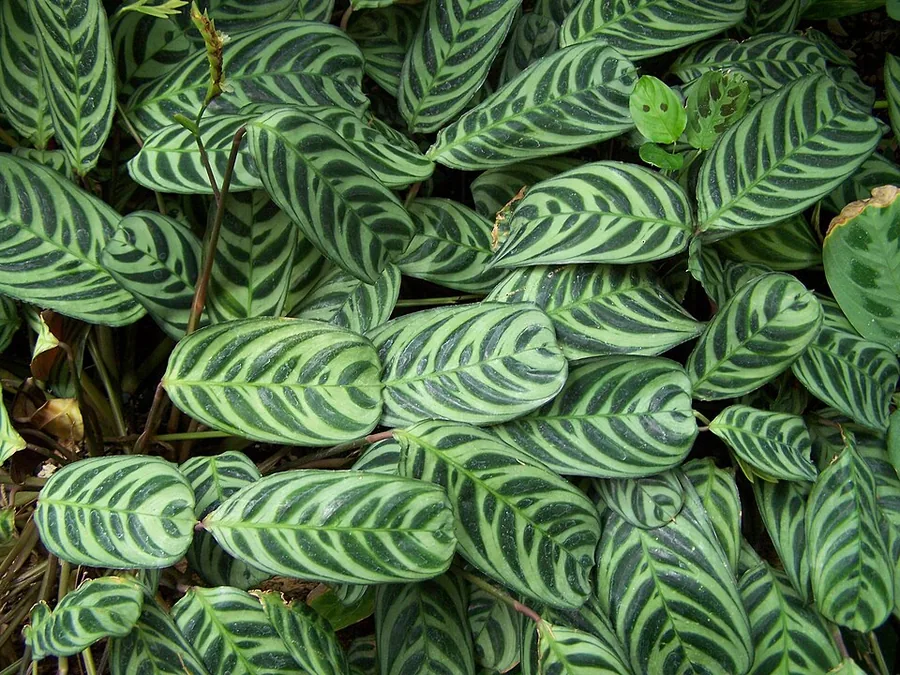
Ctenanthe puts on its whole show through the leaves, and the flowers never get a look in. The patterns leap from creamy-white splashes to dark green fishbone bars, plenty of them lit by a flush of purple or wine-red beneath. A prayer-plant cousin out of the seasonally dry forests of southeast Brazil, it drops a lush, tropical punch into any bright corner you hand it.
Here is the part that keeps growers hooked: ctenanthe is a prayer plant, just like calathea and maranta. The leaves spread flat to drink in the light all day, then swing upward at night, so the plant seems to stir and reset as the evening rolls in. It grows as a clumping perennial, packing out its pot rather than climbing or trailing, so it gets fuller and better with time.
It does ask you to bring your A game, and that is half the fun. Ctenanthe is a demanding plant that wants steady warmth, high humidity, and water with the minerals stripped out. Nail those and it stays dense and richly marked, but let the air go dry or reach for the tap and it flags it fast with browning edges, so you always know exactly where you stand.
Care
The short version: bright indirect light, never direct sun, with steady warmth and high humidity. Keep the compost evenly moist using distilled or filtered water, plant it in a rich, well-drained mix, and feed monthly through spring and summer.
Light
Hand ctenanthe bright, indirect light and keep it clear of direct sun, which bleaches the markings and scorches the leaves. It rolls happily with partial shade and medium light, so an east- or west-facing spot back from the glass fits it like a glove.
Water
Keep the compost evenly moist through spring and summer and dial back in winter, never letting it bake dry or sit waterlogged. The water itself is the make-or-break here: go with distilled, filtered, or rainwater, because ctenanthe cannot handle the minerals and salts in tap water and calls it out with brown leaf tips.
Soil
Plant it in a rich, well-drained potting mix built on loam and humus, loosened with orchid bark and perlite so it grips moisture without turning to sludge. Any pH from 6.0 to 8.0 works, so the mix itself matters way more than fussing over acidity.
Temperature
Ctenanthe runs warm, around 50°F to 84°F (10°C to 29°C), and recoils from cold drafts. Hold it toward the warmer end for the strongest push of growth, and keep it well clear of chilly windows and doorways in winter.
Humidity
This plant chases high humidity, more than most homes serve up on their own. Stand the pot on a tray of moist gravel, gang it up with other plants, or fire up a humidifier nearby, since dry air sparks brown tips and waves in spider mites.
Feeding
Feed it monthly through spring and summer, the active growth cycle, with a general liquid houseplant fertilizer to keep it charging. Back off in autumn and winter, when growth slows and it needs far less.
Pruning
Pruning stays minimal, so this part is a breeze. Just snip off damaged, browned, or yellowing leaves at the base to keep the clump sharp and funnel the plant's energy into healthy growth.
Repotting
Repot it once a year, ideally in late spring or early summer, bumping up a pot size when roots start crowding or circling and growth stalls. Fresh mix each year also rinses out the salt buildup that nags this plant, so it does double duty.
Size & spacing
Ctenanthe climbs to about 1.5 to 3 feet (50 to 100 cm) tall and fans out 4 to 20 inches (10 to 50 cm) wide as a clump. It grows at a moderate clip, so hand it a pot and a spot with a little room to stretch into.
Troubleshooting
Almost every ctenanthe hiccup shows up right on the leaves, and most of them trace straight back to water, light, or humidity. Spot the early signs and you can knock out the cause before the damage runs wild. Match what you see below, then jump in while it still pays off.
Yellowing leaves sitting over soft, mushy roots
Older leaves yellowing while the soil stays sodden spells root rot from overwatering, so move quickly. Healthy roots feel firm and pale; rotting ones turn dark, soft, and reek. Cut off the watering and let the mix drain, then pop the plant out, slice away the blackened roots, and replant it into fresh well-drained mix in a pot that drains, and it can roar back.
Fix:
- Stop watering and let the mix drain
- Unpot and trim soft, blackened roots
- Repot into fresh well-drained mix in a pot with drainage
Faint webbing and a dull, speckled cast creeping in
Dry air rolls out the red carpet for spider mites, which sling fine webbing under the leaves and stipple the tops dull and bronzed. Jump on it: rinse the foliage, wipe the leaves down, and drive the humidity up, since these mites hate damp air. If stragglers cling on, hit them with insecticidal soap or horticultural oil per the label and you reclaim the plant.
Fix:
- Rinse foliage and wipe leaves
- Raise humidity to discourage mites
- Treat with insecticidal soap or horticultural oil per label
Fuzzy gray mold breaking out on the leaves
Fuzzy gray growth on the foliage is Botrytis gray mold, and it moves in when high humidity meets dead, stagnant air. Act fast and strip the affected leaves right off. Then get a breeze moving around the plant and keep the leaves dry, because ctenanthe craves humid air, not wet surfaces the mold can feast on.
Fix:
- Remove affected foliage
- Improve air circulation
- Avoid wetting foliage and reduce standing moisture
Crispy brown tips marching in along the edges
Catch this one early and you win it back fast. The culprit is almost always mineral and salt buildup from tap water, which ctenanthe simply cannot stomach, and dry air drives it harder. Swap to distilled, filtered, or rainwater, snip the crispy edges clean, and crank up the humidity around the plant, and fresh leaves come back looking sharp.
Fix:
- Switch to distilled, filtered, or rainwater
- Trim off dead brown edges
- Raise humidity (tray of moist gravel, group plants, or humidifier)
Bold pattern fading out with scorched, bleached patches
When that knockout pattern washes pale and scorched patches burn in, blame too much direct sun, because ctenanthe takes zero direct rays. Good news: it bounces right back once you fix the spot. Slide it into bright indirect light or partial shade, pluck off the worst-scorched leaves, and let it pour its energy into fresh, vivid growth.
Fix:
- Move to bright indirect light or partial shade
- Remove the worst-scorched leaves
Leaves curling, wilting, and flopping over
Curled, wilting leaves over dry soil just shout thirsty, and the edges may brown as the plant runs low on water. Easy save here. Soak it through with distilled or filtered water, then lock back into keeping the compost evenly moist so it never lurches from bone-dry to drenched again.
Fix:
- Water thoroughly with distilled/filtered water
- Resume keeping the compost evenly moist
Toxicity
Pet owners, breathe easy: ctenanthe is a prayer plant in the non-toxic Marantaceae family, right alongside calathea and maranta, and it carries no known toxin. Keep it among cats, dogs, and kids without a second thought. A pet that wolfs down a big helping of any houseplant might earn a mild stomach upset, but nothing here is poisonous.
Safe for
People · Cats · Dogs · Horses · Rabbits · Livestock · Birds
Cats Safe
A cat can swat at it or grab a nibble and walk away just fine, since the plant packs no toxin. Should a bold cat gulp down a big mouthful, the worst it earns is a quick upset stomach, the same as with any houseplant.
Dogs Safe
Dogs run clear of any danger with ctenanthe, because the leaves hold nothing poisonous. A chewed-up plant just hands you a messy pot to sweep up, not a vet visit.
Horses Safe
Nothing in this plant lands a hit on a horse. It is a tender houseplant a horse barely ever meets, but even a stolen bite does no harm.
Rabbits Safe
Rabbits hang around ctenanthe with zero risk, since the foliage is harmless. A stray nibble? Shrug it off.
Livestock Safe
Grazers like goats and sheep face no poisoning from this plant, which carries no toxic compound. It sticks to indoor life and rarely crosses their path anyway.
Birds Safe
Pet birds breeze past the leaves without harm, since nothing in ctenanthe is toxic to them. A bird that perches on it or gives it a peck comes away fine.
People Safe
Grown for those patterned leaves rather than the plate, the plant still packs no toxin and poses no danger to adults or kids who touch or taste it.
Safe to keep around pets and children; the foliage contains nothing harmful if nibbled
Varieties
Ctenanthe rounds up several species and cultivars, and they mostly split on leaf pattern and size. Here are the ones you will run into most.
Ctenanthe oppenheimiana 'Tricolor' (never-never plant)
Pick this one out by its lance-shaped, leathery leaves, splashed with uneven creamy-white over pale and dark green and lit wine-red underneath.
Ctenanthe burle-marxii (fishbone prayer plant)
Dark green herringbone bars race across its pale green leaves in a fishbone pattern, and the purple undersides flash into view as the leaves fold up at night.
Ctenanthe lubbersiana (bamburanta)
A real go-getter that shoots up to 2 to 3 feet tall and 3 to 4 feet wide, flaunting yellow-and-green variegated foliage that crowns it the boldest of the group.
Ctenanthe amabilis
A smaller, very frost-tender species topping out around 4 to 20 inches tall and wide, made for thriving indoors.
How to propagate
Want a second ctenanthe in the lineup? Just split the one you have, ideally when you repot in spring.
DivisionModerate
Spring (or late spring to early summer at repotting) · Several weeks
Itching for more ctenanthe? The quickest route is division in spring, and it slots right in while you repot in late spring or early summer. Lift the plant and tease the clump into sections, leaving each piece its own roots and a handful of leaves. Park the new divisions somewhere warm, humid, evenly moist, and draft-free, and they dig in over several weeks. Feeling adventurous? Sow seed warm at 66°F to 75°F (19°C to 24°C) in spring.
Myths
Ctenanthe is just a calathea by another name.
They look like dead ringers, but ctenanthe stands as its own genus, not a calathea, even while both ride in the prayer-plant family. The mix-up costs nothing on safety, since calathea, maranta, and ctenanthe all belong to the non-toxic, pet-safe Marantaceae family. The names split, yet a curious pet stays just fine around any of them.
Ordinary tap water is fine for prayer plants.
Ctenanthe flatly cannot handle the minerals and salts that pile up from tap water, and the first flag it throws is brown, crispy leaf tips. Distilled, filtered, or rainwater keeps the foliage crisp and clean. Even if brown edges already showed up, swapping your water is what swings it back around.
Sources
- Plants of the World Online, Royal Botanic Gardens Kew
- Plants of the World Online, Royal Botanic Gardens Kew
- NC State Extension Gardener Plant Toolbox
- NC State Extension Gardener Plant Toolbox
- Royal Horticultural Society (RHS)
- ASPCA Animal Poison Control
- ASPCA Animal Poison Control
- Royal Horticultural Society (RHS)