Houseplant · Marantaceae
Stromanthe Triostar
Stromanthe thalia 'Triostar'
Serve up soft water, warm humid air, and bright indirect light, and watch those pink-striped leaves put on a show.
Bright indirect
USDA 10–12
2–5 ft · 0.6–1.5 m
Overview
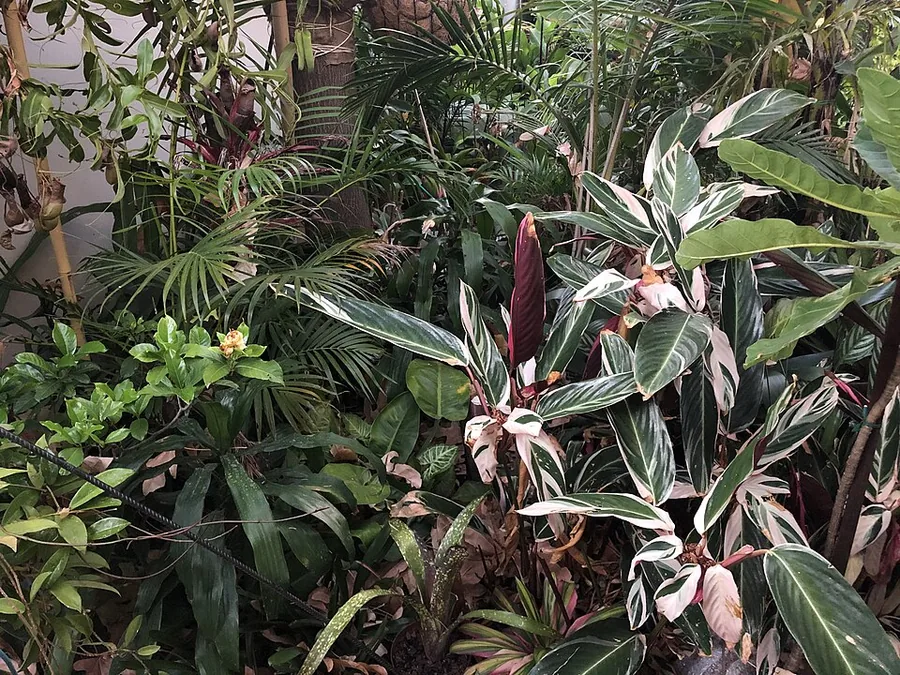
Few houseplants grab the eye like a Stromanthe Triostar, its leaves streaked in green, cream, white, and pink and flushed deep burgundy underneath. It sits squarely in the prayer plant family, so each evening the foliage lifts skyward and folds back down by morning, real movement you can watch happen. Color is the whole reward here, and the plant delivers for anyone keen to meet a handful of firm demands.
Make no mistake, this one asks real attention from its grower. It hails from the warm, humid floor of Brazilian forests, and it chases that same steady warmth and moisture indoors. Details count here: hard tap water browns the leaf edges, dry air makes it sulk, and strong direct sun scorches the variegation. Catch those signals early and the foliage stays full and glossy.
Kept happy, it grows into a dense clump of upright stems that you can divide once every year or two to make even more plants. Nail the water, light, and humidity and every fresh leaf rolls open in the same bold tricolor that won you over at the shop.
Care
The short version: park it in bright indirect light well away from direct sun, pour on soft filtered water, and keep the soil evenly moist. Drive the humidity above 60%, hold it warm, and feed it lightly right through the growing season.
Light
Aim for bright indirect light, the sort you find near an east or north window. Direct sun bleaches and scorches the pale variegation while deep shade flattens the color, so dappled light or a sheer curtain lands right in the sweet spot.
Water
Hold the soil evenly moist but never soggy, pouring freely while it is growing hard and pulling back through winter. The water itself is the sticking point: fluoride, chlorine, and salts in tap water burn the leaf edges, so grab filtered, distilled, or rainwater every time.
Soil
Set it in a fertile, organic-rich mix that grips moisture yet still drains, because it loathes both dry roots and a waterlogged pot. pH barely fazes it, and it thrives anywhere from 6.0 to 8.0.
Temperature
Run it warm and steady, never dipping below roughly 59°F (15°C). This tropical grower has no patience for cold drafts, so steer it clear of frosty windows and open doorways once winter sets in.
Humidity
This is where growers usually slip up. The plant craves humidity of 60% or more, and parched indoor air is the main reason those leaf edges brown out. Run a humidifier, set a pebble tray beneath it, or cluster a few plants together to keep the air damp.
Feeding
Feed it lightly across the spring and summer growing stretch, about every 2 to 3 weeks. Reach for a low-nitrogen liquid fertilizer and cut feeding out completely once the cold months slow its growth.
Pruning
Pruning barely enters the picture. Simply snip off spent or damaged leaves at the base as they crop up, and the clump keeps its crisp, tidy look.
Repotting
Bump it up every 1 to 2 years in spring, once roots spiral the pot, water shoots straight through, or the clump turns crowded. Seize that same moment to divide it, since the plant is already free of its pot and ready to split.
Size & spacing
Indoors it climbs into an upright clump of 2 to 5 feet (60 to 150 cm) tall and fans out 2 to 3 feet (60 to 90 cm) wide. Grant it elbow room on the shelf so air flows around the leaves and the foliage never gets mashed against a wall.
Troubleshooting
Nearly every problem this plant throws at you lands on the leaves, and the cause is almost always water, air, or light. Scan the edges, the variegation, and the soil, and you will spot trouble while it is still skin deep. Find your match below, then chase down the cause instead of the symptom.
A drooping plant, soft stem bases, and sour-smelling soil
Waterlogged, airless soil breeds root and stem rot, and that sour reek from the pot gives it away. Tip the plant out and slice off every soft, brown root and stem, then settle it into fresh, well-draining mix. From then on, water just enough to hold the soil evenly moist and confirm the pot drains freely.
Fix:
- Unpot and remove all soft, rotten roots and stems
- Repot into fresh, well-draining mix
- Water only to keep evenly moist, never soggy, and ensure drainage
Fine webbing and a dusty yellow speckle on the foliage
Hot, dry air rolls out the welcome mat for spider mites, which colonize the leaf undersides and joints and leave a stippled, dusty film. Rinse the foliage, wipe the undersides clean, then crank the humidity up to drive them back. Hit them with insecticidal soap or horticultural oil and repeat exactly as the label directs.
Fix:
- Rinse foliage and wipe undersides
- Raise humidity, which discourages mites
- Treat with insecticidal soap or horticultural oil and repeat per label
Cottony white tufts wedged into the leaf joints and stems
Those puffy white specks are mealybugs, and they usually leave a sticky film in their wake. Touch each one with a cotton swab soaked in isopropyl alcohol, then chase it with insecticidal soap or horticultural oil. Pull the plant aside on its own and treat again, since a few survivors will rebuild the colony fast.
Fix:
- Dab insects with isopropyl-alcohol-moistened swab
- Treat with insecticidal soap or horticultural oil
- Isolate the plant and repeat treatments
Brown, crispy tips and edges taking over the leaves
This plant is fussy about what it drinks, and that is usually the culprit. Fluoride, chlorine, and salts from plain tap water pile up in the leaf and burn the margins and tips while the centers hold their green. Swap to filtered, distilled, or rainwater, drive the humidity past 60%, and keep the soil from ever going dry, since parched air and bone-dry roots only speed the damage.
Fix:
- Switch to filtered, distilled, or rainwater
- Raise humidity to 60%+ with a humidifier or pebble tray
- Keep soil consistently moist, never bone-dry
- Trim badly browned edges for appearance only
Scorched, washed-out blotches on the cream and pink zones
Those brilliant cream and pink patches hold barely any chlorophyll, which is why direct sun burns them first. Hunt for pale, crispy marks on the leaves sitting in the midday glare. Shift the plant into bright indirect light or an east or north window, and knock back any harsh sun with a sheer curtain.
Fix:
- Move to bright indirect light or an east/north-facing aspect
- Filter harsh direct sun with a sheer curtain
Toxicity
Great news if pets share the house: this is a non-toxic prayer plant, with no poison recorded in its leaves or stems. NC State Extension flags the species as pet friendly, so a stray nibble from a cat, dog, or rabbit calls for zero panic. Nobody grows it to eat, and a large mouthful of leaf fibre might spark a passing bout of tummy trouble, but there is nothing genuinely harmful in it.
Safe for
People · Cats · Dogs · Horses · Rabbits · Livestock · Birds
Cats None
Cats are in the clear. NC State flags this prayer plant as pet friendly and no toxin has turned up in it, so a curious nibble ranks as a non-event.
Dogs None
Dogs do great beside it. Nothing poisonous lurks in the foliage, though a dog that gobbles any houseplant might land a quick upset stomach from the plain fibre.
Horses Safe
Horses carry no toxicity record against it. It lives indoors rather than out in a paddock, yet a stray leaf poses no threat.
Rabbits Safe
Rabbits share space with it risk-free. The leaves pack no toxin, so a pilfered bite leaves them fine.
Livestock Safe
Grazing animals face nothing toxic in this plant, and as an indoor grower it seldom crosses their path.
Birds Safe
Pet birds perch near the foliage safely. No harmful compound has been logged in its leaves or stems.
People Safe
It suits any room in the house. Nobody grows it as food, but it carries no toxin, so children stay well out of harm around it.
As with any houseplant, discourage pets from chewing foliage; ingestion of plant fibre can still cause mild, transient GI upset
Varieties
Triostar grabs the attention, yet it is not the only painted-leaf Stromanthe you might meet. These two are the ones to keep straight.
'Triostar' (syn. 'Tricolor')
Bold streaks of white, cream, and pink race across its green leaves, while the undersides glow an even pink to burgundy.
'Magic Star'
Magic Star drops the pink for creamy white speckles dashed over green leaves, played against deep maroon undersides.
How to propagate
One method really shines for multiplying this plant, and it lands right when you would repot a crowded clump anyway.
DivisionModerate
Spring, before new growth starts · Several weeks to a few months
Bulk up your collection by splitting the rhizome clump in spring, right before new growth kicks off. Pot each piece on its own and hold it warm, humid, and evenly moist while it takes hold. Grant it patience, since a fresh division can need several weeks to a few months to root down and power ahead on its own.
Myths
Stromanthe Triostar is nothing more than a Calathea.
Sellers push it, and even label it, as 'Calathea Triostar', yet it stands in a genus all its own, Stromanthe. Botanists settle on Stromanthe thalia as the accepted name, with Stromanthe sanguinea as a synonym, which is why the RHS files it as Stromanthe sanguinea 'Triostar'.