Ornamental · Asphodelaceae
Daylily
Hemerocallis fulva
Tough, quick off the mark, and endlessly giving, the daylily turns sun into a fresh bloom every morning all summer.
Full sun
Every 7–14 days
USDA 3–9
2–6 ft · 0.8–1.8 m
Overview
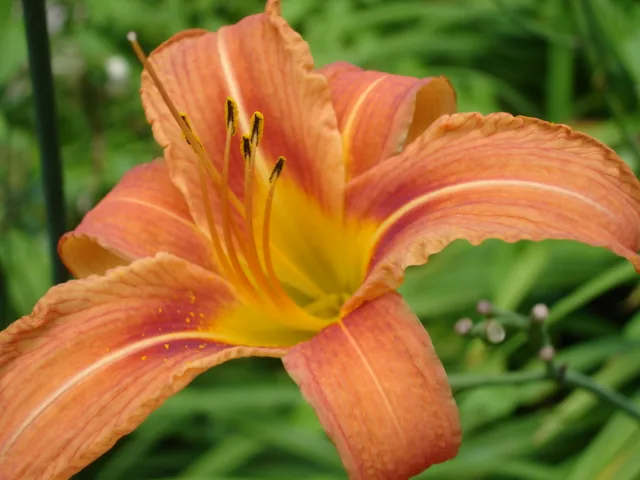
The daylily delivers on its name in the best way: a flower throws open at dawn, calls it a day by dark, and a new one rolls out on the same scape the very next morning. This clumping perennial traveled out of Asia and now thrives across the temperate world, looking sharp in a trim border and just as happy charging down a roadside ditch. Almost nothing in the garden gives back this much for so little.
Powered by thick, fleshy roots, it launches arching, grass-like foliage and tall stalks that keep the flowers coming straight through summer. The classic orange fulva races outward by rhizome and can claim real ground, while named hybrids hold their spot and roll in nearly every color but true blue. Even better, the flowers and buds are edible, carrying a sweet, mild taste straight to the table.
One thing has to come first, though. Daylilies are deadly to cats, and even a small taste of leaf, flower, or pollen can shut down a cat's kidneys. If a cat shares your home, think it through hard before you plant, and keep cut daylilies out of the house for good.
Care
The short version: full sun and average well-drained soil, a moderate drink through the season, and a clump split every few years to keep the flowers rolling.
Light
Daylilies fire off their best bloom in full sun, so chase 6 or more hours a day. They get by in partial shade, but skimp on light and the plants stretch while the flower count slides.
Water
Keep a moderate, even drink flowing through the growing season, every 7 to 14 days once the plant settles in. Daylilies brush off dry spells better than most perennials, yet steady moisture is what powers the heaviest flush of flowers.
Soil
Almost any well-drained loam works great, and a shot of organic matter pushes it further. They hit their stride at a pH of 6.0 to 7.0 but still charge ahead in poor and heavy clay ground that stalls fussier plants.
Humidity
No humidity target to chase here, since ordinary outdoor air handles it. Good airflow around the crown does the real work, because the rots that bother daylilies dig in under warm, stagnant damp.
Feeding
Daylilies run as light feeders and ask for next to nothing. One dose of balanced general-purpose fertilizer in spring drives most plantings clear through the season.
Pruning
Deadhead the spent flowers daily to keep the clump crisp, and clip the flower scapes once bloom wraps up. Cut the dead foliage back in late fall or early spring before new growth breaks.
Size & spacing
Plants shoot up 2.5 to 6 feet (76 to 183 cm) tall by variety and build clumps 24 to 30 inches (61 to 76 cm) wide. Give each one room so air rips freely around the crown.
When to plant
Daylilies power back every year as hardy perennials across zones 3 through 9, so they earn their keep season after season. Get new plants in the ground in spring or early fall once hard frost clears, then watch the show hit full stride across July and August.
Northern hemisphere
Southern hemisphere
Typical months for a temperate climate: start earlier in warm zones, later where spring frosts linger.
- Sow: Not typically grown from seed by home gardeners; hybrids do not come true from seed.
- Plant: Spring or early fall, after the danger of hard frost has passed.
- Harvest: Summer, roughly July to August in the temperate northern hemisphere.
Hardiness
USDA hardiness zones: 3–9
Temperature: down to -40°C
Troubleshooting
Daylilies make growing easy, ranking among the most trouble-free perennials going, and most hiccups are cosmetic rather than fatal. Spot the symptom below and jump on it before a small snag works through the clump.
The crown rots and collapses in warm, humid weather
Southern blight crashes in during hot, muggy spells, rotting the crown and flinging a white web of threads across the soil dotted with tan, seed-sized sclerotia. An infected plant is a lost cause. Dig it out with the soil around it, then fix the drainage and pull mulch back from the crown to shut the door on a comeback.
Fix:
- Remove and destroy infected plants and surrounding soil
- Improve drainage and air circulation
- Avoid burying the crown too deeply
Older clumps crowd up and bloom less each year
Daylilies tear outward by rhizome, so after a few seasons a clump jams up tight, the center thins, and the flowers fade off. The fix is the fun part: division. Lift the clump in early spring or right after bloom, split it into fans, and replant with the crown at soil level to get it firing again.
Fix:
- Dig and divide the clump in early spring or after bloom
- Replant divisions with the crown at soil level
Pale winding tunnels snaking through the leaves
That snaking pattern is the daylily leafminer, whose larvae burrow inside the leaf and carve squiggly mines as they go. Hold a leaf to the light and the tracks jump right out. Good news, though, since the damage stays cosmetic and never takes down an established clump, so strip the worst-mined leaves and keep the plant charging ahead.
Fix:
- Remove and destroy heavily mined leaves
- Maintain plant vigor with adequate water and division
Toxicity
Cat owners, lock onto this part. Daylilies are deadly to cats, and swallowing any part, even pollen licked off the fur or a sip of vase water, can trigger fatal kidney failure within hours. Dogs and horses shrug it off far more easily, and people can actually eat the flowers, but for a cat there is zero safe amount.
Toxic to
Cats · Dogs · Horses · Rabbits · Livestock · Birds
Safe for
People
Cats Severe
For a cat this is a flat-out emergency. Even a nibble of leaf or flower, a lick of pollen off the fur, or a sip of vase water can trigger acute kidney failure that turns deadly within hours. The first signs are vomiting, a refusal to eat, and growing lethargy, which slide into full renal shutdown. Rush the cat to a vet right away, because treatment only works when it starts early.
Dogs Mild
Dogs come out of this far better than cats. A dog that chews the plant may drool or have a quick bout of vomiting or loose stools, but it dodges the kidney danger that makes daylilies so deadly to cats.
Horses Mild
In horses, grazing the foliage usually amounts to no more than a mild stomach upset, with a bit of drooling or loose manure after a big mouthful.
Rabbits Caution
How daylilies hit rabbits is not well documented, so play it safe, treat the plant as off limits, and keep a rabbit off the foliage and flowers.
Livestock Caution
Firm data on grazing animals runs thin here, so keep cattle, goats, and sheep clear of daylily stands as a smart precaution rather than betting on an untested plant.
Birds Caution
The effect on pet and backyard birds is unstudied, so keep cuttings and pollen out of reach until more is known.
People Flowers edible
For people the flowers and buds are edible, sweet and mild, with a long run in the kitchen, which makes them safe to eat in moderation. That is never a green light to relax around cats, though, for whom any contact can be fatal.
A feline emergency: keep all parts of the plant, fallen pollen, and any cut-flower water completely away from cats.
Helpline numbers

United States
ASPCA Animal Poison Control: (888) 426-4435 (fee applies)

United Kingdom
Animal PoisonLine: 01202 509000 (fee applies)

Australia
Animal Poisons Helpline: 1300 869 738
Varieties
Breeders have churned out tens of thousands of registered hybrids, but a handful of species and old favorites still anchor the whole group. Get to know these first and the rest falls into place.
Hemerocallis fulva (Orange / Tawny daylily, 'Ditch lily')
This species rockets outward by rhizome, throws rusty-orange unscented blooms, and has naturalized so widely along North American roadsides that it earned the nickname ditch lily.
Hemerocallis fulva 'Kwanso'
A double-flowered form loaded with extra petals and no working stamens, it sets no seed and travels strictly by its rhizomes.
Hemerocallis lilioasphodelus (lemon daylily)
An early bloomer firing off fragrant clear-yellow flowers, it makes a sharp break from the unscented orange of the common fulva.
Hemerocallis 'Stella de Oro'
A compact hybrid that reblooms all season, pumping out wave after wave of golden-yellow flowers.
How to propagate
Multiplying daylilies is a thrill, honestly, and division is the only method you need to turn one clump into a whole bed.
DivisionEasy
Early spring as new growth emerges, or in fall after blooming has finished. · Divisions typically reestablish and resume strong growth within one growing season, often blooming the following year.
Division is the go-to move for multiplying daylilies, pulled off in early spring as new growth pushes up or in fall once the flowers fade. Dig the clump, break it into fans that each keep roots and a crown, and drop them back at the original depth. They race outward by rhizome and usually settle in within a single season, often blooming again the next year.
Myths
Daylilies are true lilies, so they hit cats just as hard as any other lily.
Botanically they split off cleanly, since daylilies sit in Hemerocallis, well outside Lilium, the true lily genus. The danger lands in exactly the same place, though. Both cause acute kidney failure in cats and have to be kept well away from them.
Daylily flowers poison people the same way they poison cats.
Not for people at all. The flowers and buds are edible, packing a sweet, mild flavor that has earned a kitchen spot for centuries. That says nothing about cats, though, for whom even a small exposure can turn fatal.