Houseplant · Asphodelaceae
Haworthia
Haworthia
Give it bright indirect light and a long dry spell between drinks, and this little windowed succulent asks for almost nothing.
Bright indirect
Every 14–21 days
59–81°F · 15–27°C
USDA 9–11
Overview
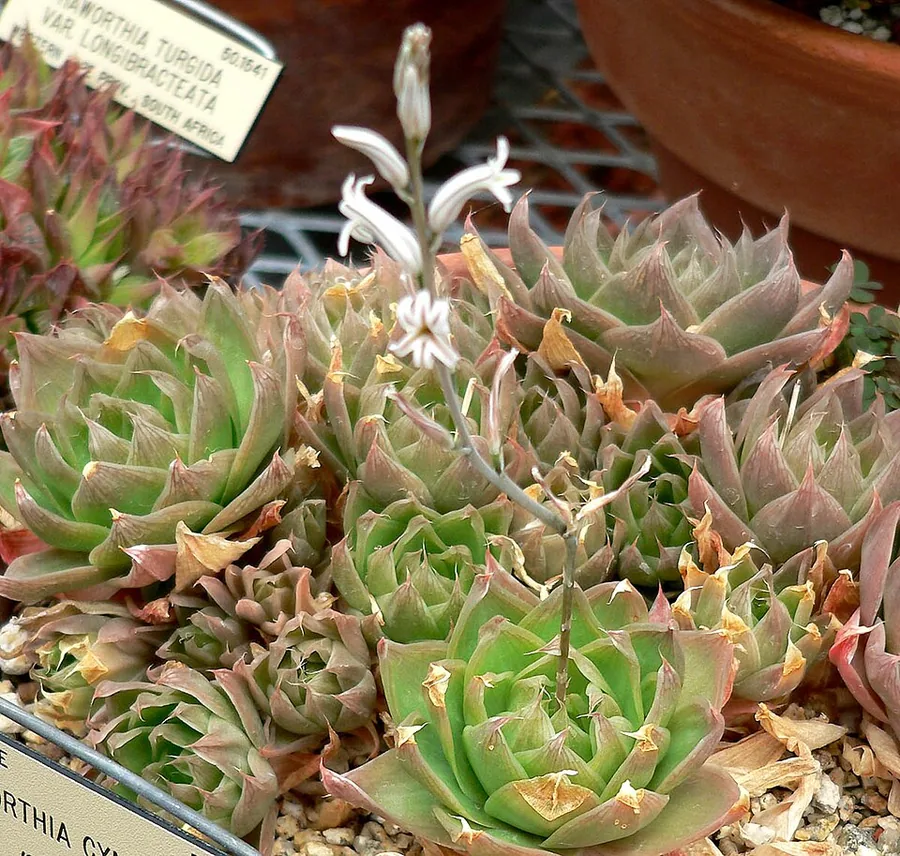
Haworthia is a small rosette succulent out of the dry corners of southern Africa, and it rewards a grower faster than almost any other beginner plant. The fleshy leaves knit into tight little stars, and plenty of them flash translucent leaf windows at the tips that grab and hold the light. Best of all, it stays compact for years, topping out around 3 to 6 inches (8 to 15 cm) across, so it earns a spot on any crowded shelf.
Here is what makes growing it such a kick: it shrugs off shade that would flatten most succulents. It grows wild among rocks and grasses in part shade, so it powers through the medium light of an everyday room where a sun-hungry echeveria would sulk and stretch. That toughness turns a dim corner into a spot where you can actually keep a succulent thriving.
The one line it draws is a soggy pot, and once you honor that, growing it feels almost too easy. Haworthia banks water in its leaves and is wired to coast through dry spells, so it would rather run dry than stay wet. Get the watering dialed in and it repays you with steady growth and a ring of offset pups that turn one plant into a whole tray of them.
Care
The short version: bright indirect light, a gritty fast-draining mix, and a proper soak only after the soil has dried out completely. Back off in winter, feed lightly through the growing season, and never let it sit in water.
Light
Park it in bright indirect light by a window that dodges the harsh midday sun. It powers on through medium or even low light better than most succulents, so a less-than-perfect spot still works, but pour on too much direct sun and the leaves flush red or brown.
Water
Let the soil dry out completely, then soak it hard until water pours from the bottom. In the growing season that runs roughly every 14 to 21 days, and way less through winter. It is highly prone to root rot, so when the call is close, wait it out.
Soil
Pot it in a gritty cactus or succulent mix that drains fast and never turns to mud. Any pH from 6.0 to 7.5 keeps it happy, and grabbing a pot with drainage holes counts for more than fussing over the exact blend.
Temperature
Plain room warmth hits the mark, somewhere between 59°F and 81°F (15°C to 27°C). Keep it clear of cold drafts and frost, because freezing wrecks it outright.
Humidity
Low household humidity is exactly its lane, so ditch the tray and the mister. Dry air suits it perfectly, and it doubles as extra insurance against rot.
Feeding
Feed it lightly through spring and summer while it is charging into growth, using a balanced liquid fertilizer at half strength. One feeding here and there across the season fuels such a slow grower plenty, and it wants nothing in winter.
Pruning
There is almost nothing to do on this front. Just strip off the dead, dried, or damaged outer leaves and clip away spent flower stalks once they finish.
Repotting
Bump it up every 2 to 3 years, or sooner once offsets crowd in and start lifting out of the pot. Roots shooting from the drainage holes or soil that dries out unusually fast are your other green lights that it is time.
Size & spacing
It stays small, hitting only 3 to 6 inches (8 to 15 cm) tall and about as wide. A snug pot suits it, and you can load a little cluster into one shallow dish with just a bit of room between the rosettes.
Troubleshooting
Nearly every haworthia hiccup circles back to water or light, and the plant flags it early so you can jump in fast. Read the leaves and the rosette, match the signs to the list below, and knock the problem out before it grows into a real one.
Soft, blackened leaf bases and a sinking center
Here comes the big one: root and crown rot, which takes down more haworthias than every other problem put together, and it strikes when the roots sit in wet, slow-draining soil. Move fast and you can still turn it around. Pop the plant out, slice off every soft brown root with a clean blade, let the cuts dry, and set it into fresh dry gritty mix to rebuild.
Fix:
- Stop watering immediately
- Unpot and cut away all soft, rotted roots and tissue with a clean blade
- Allow cuts to callus, then repot into fresh dry gritty mix
- Resume watering only sparingly once established
Wrinkling leaves that have gone soft and thin
Good news: this is just a thirsty plant tapping the water it banked in its own leaves. Double-check that the soil has gone bone dry all the way down, then hit it with a full drink until water rushes out the drainage holes. Watch the leaves bounce back and plump up over the next few days.
Fix:
- Water thoroughly until it drains from the bottom
- Allow excess to drain fully
- Return to a regular dry-then-water cycle
Leaves catching a red, orange, or brown flush
That warm color is sun stress, not disease, and it flares up first on the leaves right by the window where the light hits hardest. Slide the plant into bright indirect light and the color stops advancing. Those marked leaves stay put, sure, but fresh growth charges back in the usual green.
Fix:
- Move the plant to bright indirect light
- Shade from intense midday sun
- Damaged leaves will not recover but new growth returns to normal color
A stretched, pale rosette pulling its leaves apart
Starve it of light and the plant reaches hard toward the window, a stretch called etiolation. The rosette pales, tips toward the glass, and those tight leaves loosen and gap open. Shift it to a brighter spot with strong indirect light and spin the pot every so often to steer it back into an even, compact shape.
Fix:
- Move to a brighter spot with bright indirect light
- Rotate the pot regularly for even growth
Toxicity
Here is a great reason to grow it freely: haworthia is non-toxic and pet-safe. It stays off the ASPCA's toxic list, and nothing in the leaves can harm a cat, dog, or curious kid. A stray nibble might bring a quick stomach ache from the fibrous tissue, and that is as far as it goes.
Safe for
People · Cats · Dogs · Horses · Rabbits · Livestock · Birds
Cats None
Bring it home to a cat with zero worry. A curious nibble might spark a bit of passing tummy upset, but nothing toxic ever comes of it.
Dogs None
No poisoning risk for a dog whatsoever. A really determined chewer might get a mild stomach ache off the fibrous leaves, and that is the whole story.
Horses None
Nothing here can harm a horse, and a plant this tiny would never catch one's interest anyway.
Rabbits None
A rabbit can grab a bite with no harm at all, since the thick succulent leaves pack no toxins.
Livestock None
It poses no risk to grazing animals, and as an indoor pot plant it almost never crosses their path.
Birds None
Keep it right by the pet birds without a care, because the leaves carry no toxic compounds.
People None
No poisoning risk to people, kids included. Nobody grows it to eat, so there is no reason to taste it, though a stray nibble does no harm.
Varieties
The genus runs to dozens of species, but a handful keep showing up on windowsills and in shops. These are the ones worth chasing down first.
Haworthia cooperi
Its plump, rounded leaves finish in translucent windows that light right up when the sun pours through from behind.
Haworthia cymbiformis
Boat-shaped leaves pack into a tight rosette, each one flashing faint window markings near the tip.
Haworthia retusa
A star-shaped rosette of triangular leaves whose flattened upper faces stay clear and translucent.
Haworthia truncata
Its leaves look sliced off flat across windowed tops, lined up in a row that calls to mind a horse's teeth.
How to propagate
Haworthia churns out more of itself with barely a nudge, and once one plant gets rolling you will hand out spares long before you ever buy another.
Offsets & pupsEasy
Spring to summer during active growth · 4 to 8 weeks to root
Jump on the offsets first, those little pups crowding the base, gathered in spring or summer while the plant is charging into growth. Twist each one off the parent, let the cut ends dry a day or two, and tuck them into dry gritty mix. They root in around 4 to 8 weeks, which makes this the fastest path to more plants.
DivisionEasy
Spring, often at repotting · 4 to 8 weeks
Once a clump crowds itself into several rosettes, split it in spring right when you have it out for repotting. Work the roots apart so each rosette keeps a share of its own, then pot them up on their own. Give them about 4 to 8 weeks and they lock right in.
Leaf cuttingsModerate
Spring to summer · Several weeks to a few months
Want a fun challenge? Raise a whole new plant from a single leaf in spring or summer. Snap off a healthy leaf, let it callus, and lay it on dry mix. It runs slower and less reliable than the pups, taking several weeks to a few months to push out roots, so treat every success as a win.
Myths
Haworthia needs full, direct sun all day like a desert cactus.
Not this one. Out in the wild it tucks into part shade among rocks and grasses instead of roasting in the open. Hand it bright indirect light and it thrives, because harsh direct sun only scorches and discolors those leaves.
Haworthia is a kind of aloe.
The two got grouped together years back and still share the family Asphodelaceae, which kicks off the confusion. Set the record straight: haworthia is its own genus of small rosette succulents, standing apart from the true aloes.